Transparency note: this site normally earns a commission when readers buy through our links. There are no purchase links in this article — the individual reviews it points to carry their own disclosures.
These statements have not been evaluated by the Food and Drug Administration. These products are not intended to diagnose, treat, cure, or prevent any disease. No supplement prevents or treats Alzheimer’s disease or dementia. Memory changes that are new, worsening, or affecting daily life deserve a medical assessment — several common causes are treatable, and the section near the end of this article explains which.
Walk into this category and everything looks interchangeable. Brain and memory supplements all promise the same outcomes — sharper recall, less fog, better focus — and they all target the same person: someone over forty who noticed a word wouldn’t come.
Underneath, they have almost nothing in common.
One bets on botanicals with decades of research. One bets on your gut microbiome influencing your brain. One bets on your brain’s insulin sensitivity. One bets on caffeine, honestly. And one isn’t a supplement at all — it’s an audio file.
Five mechanisms, five different questions, and one check that sorts most of them in about two minutes.
That check is the dose test, and it’s the most useful thing in this article. But it only applies to three of the five — and knowing where it doesn’t apply matters just as much, because that’s where people get confused about what they’re buying.
Here’s how the category actually divides.
Bet One: Conventional Botanical Nootropics
The largest group. These use ingredients with genuine research behind them — bacopa, ginkgo, lion’s mane — and the honest problem is almost never the ingredient. It’s the amount.
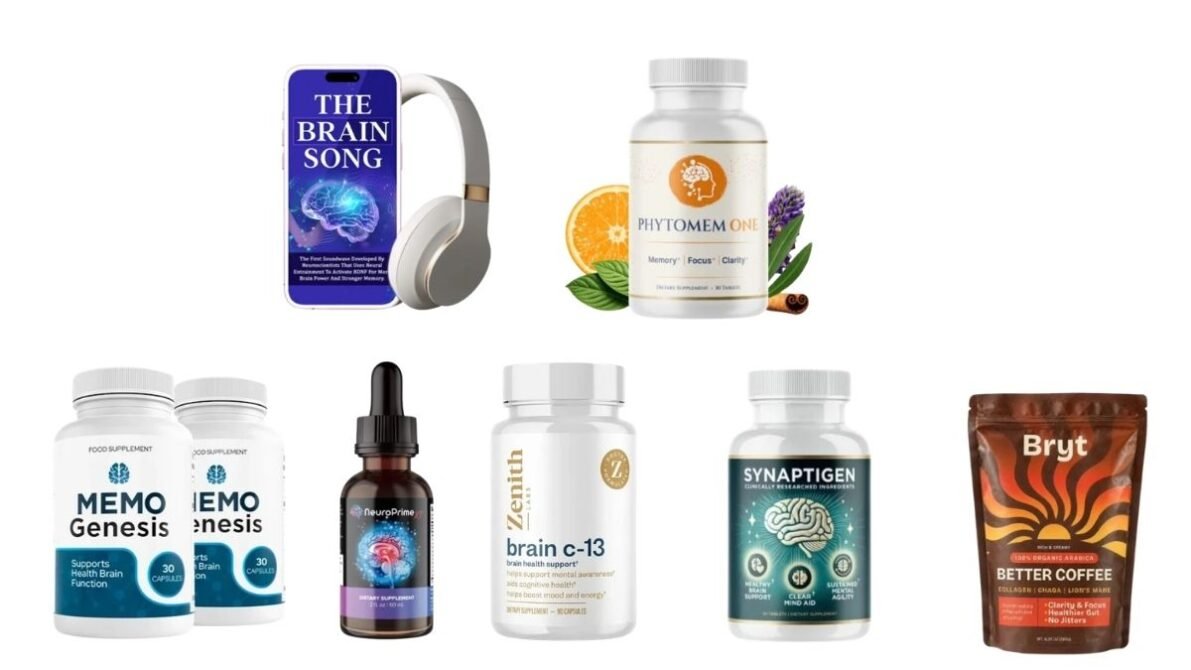
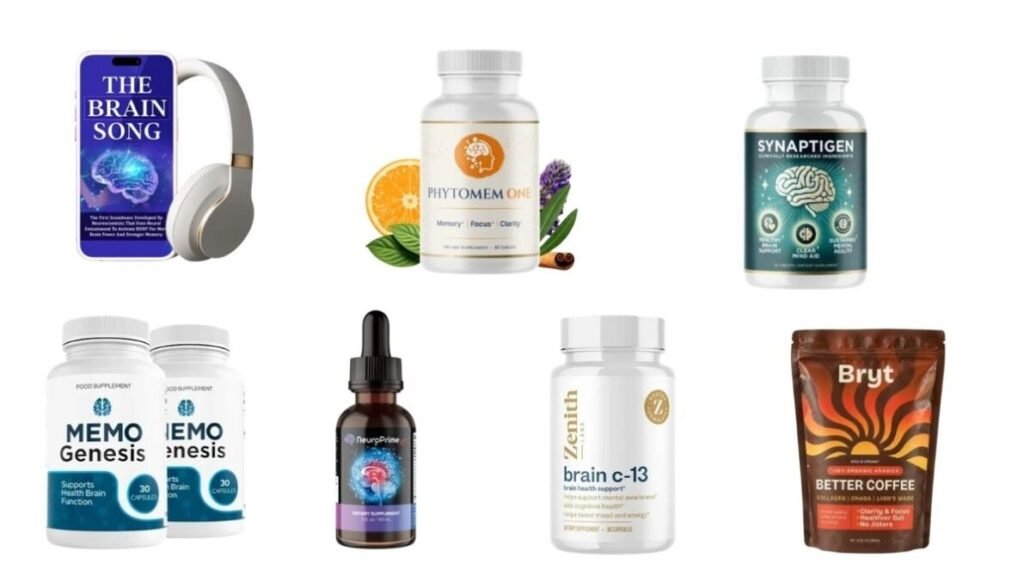
Our NeuroPrime review covers the clearest example: nine botanicals in a liquid dropper, one drop per day. The formula names bacopa, ginkgo, lion’s mane and six others, and publishes no amount for any of them.
The arithmetic is what decides it, and it isn’t close. A standard dropper delivers about twenty drops per millilitre, so one drop is roughly 0.05 mL — call it 50 mg, generously, since most of a tincture is carrier. Nine ingredients share that.
Now the studied doses. A meta-analysis of nine randomised controlled trials found bacopa improved speed of attention and reaction time — at 300 to 450 mg daily, for at least twelve weeks. Lion’s mane’s best-known cognitive trial used 3,000 mg daily. Ginkgo’s largest trial used 240 mg.
Those three alone come to roughly 3,500 mg of daily material against a vehicle that holds about 50 mg of everything combined.
Our MemoGenesis review covers a product with the same structural issue, plus a complication of its own — see the section on unstable names below. <!– BRAIN C-13 — REINSERIR APÓS PUBLICAR –>
Our Brain C-13 review covers a third formula in this group, where the same question applies: does the published amount match what the research used?
The check for this group: find the ingredient the product is built around, search it plus “randomized trial,” find the daily dose, and compare. That’s the dose test, and the next section makes it concrete.
The Dose Test
Four steps. It works on any swallowed supplement, in any category, including products that don’t exist yet.
1. Identify the anchor ingredient. Usually the one named first or featured in the marketing.
2. Search it with “randomized trial” or “meta-analysis.” You’re looking for the daily amount, not the conclusion.
3. Find the product’s amount. On the label, or in the supplement facts panel. If it’s inside a proprietary blend with no individual figures, that’s your answer already — you can’t run the test, which tells you something.
4. Compare.
Here’s what that looks like with the ingredients in this category:
| Ingredient | Studied dose | Notes |
|---|---|---|
| Bacopa monnieri | 300–450 mg/day, 12+ weeks | Meta-analysis of 9 RCTs |
| Lion’s mane | 3,000 mg/day, 16 weeks | Effects faded after stopping |
| Ginkgo biloba | 240 mg/day | Largest trial found no effect — see below |
| Saffron | 30 mg/day | 5 RCTs, non-inferior to two prescription drugs |
| L-theanine | 100–200 mg | Usually paired with caffeine |
Two things this table shows that are worth sitting with.
A dose can match and still not work. Ginkgo is the cautionary case. The Ginkgo Evaluation of Memory study randomised 3,069 adults aged 75 and over to 240 mg of standardised ginkgo daily and followed them for a median of 6.1 years — finding no effect on the incidence of dementia or Alzheimer’s disease. That’s the studied dose, in a large trial, over years. Matching the dose is necessary, not sufficient.
And a dose can fit and still be unverifiable. Saffron’s clinical dose is 30 mg — a small number. In a 458 mg blend it occupies 6.5%, less than an even split across ten ingredients would give it. So it fits comfortably. The problem isn’t capacity; it’s that proprietary blends are ordered by weight without quantities, so you can’t tell whether saffron is the largest component or a trace at the bottom.
Those are different criticisms, and conflating them weakens both. “It can’t fit” is an arithmetic claim you can check. “It might not be there” is a transparency claim. Use whichever one the numbers actually support.
Bet Two: The Gut-Brain Axis
A completely different wager, and better supported than you might expect.
Your gut and brain communicate bidirectionally — through the vagus nerve, immune signalling, and short-chain fatty acids produced when gut bacteria ferment fibre. The term “psychobiotics” exists in the literature for interventions targeting this.
A meta-analysis of 21 randomised controlled trials found that probiotics’ effects on cognitive performance appeared primarily in older age groups, with significant effects on overall cognitive performance, processing speed, memory and spatial ability. An earlier pooled analysis of seven controlled human trials found a significant improvement with an effect size of 0.24 and no heterogeneity between studies — meaning the trials agreed with each other, which is unusual.
An effect size of 0.24 is small. Real, measurable, not transformative. But the direction is favourable and the effects concentrate in exactly the demographic buying these products.
Our Synaptigen review covers this approach, and it’s where the check changes.
For a probiotic, the question isn’t milligrams — it’s the strain code. Probiotic effects are strain-specific, not species-specific. The organisms with published cognitive research are named precisely: Lactobacillus rhamnosus GG, Bifidobacterium breve A1, Bifidobacterium longum BB68S. Two strains of the same species can behave completely differently.
L. reuteri is a species. L. reuteri DSM 17938 is a strain. Only the second connects to a study.
Synaptigen names six strains and identifies exactly one to strain level — B. lactis BL-04, a real commercial strain with its own research programme. One of six is partial credit, and it’s more than most products in this category manage. What isn’t published is any CFU count.
Bet Three: Metabolic and Multi-Pathway
The third approach targets the brain indirectly, through metabolism.
Our Phytomem One review covers a formula built on saffron and berberine, framed around brain insulin resistance.
Saffron is the strongest cognitive botanical in this entire category, and that deserves saying plainly. A systematic review of 5 RCTs in 325 patients with Alzheimer’s and mild cognitive impairment found saffron at 30 mg/day significantly better than placebo and non-inferior to donepezil and memantine — two prescription drugs — over 16 to 52 weeks. That’s a genuinely remarkable result for a botanical.
Berberine is where it gets complicated. Its cognitive evidence is substantial and entirely animal: a 2024 meta-analysis of 22 studies in 453 animals found improvements in spatial learning, amyloid deposition and tau. But the Alzheimer’s Drug Discovery Foundation states plainly that no studies have specifically tested whether berberine affects human cognitive function or prevents dementia.
That’s a gap the dose test can’t close. You can have the right amount of an ingredient whose human cognitive evidence doesn’t exist yet.
Bet Four: The Direct Stimulant
The fourth approach is the most honest about what it does, and the fastest-acting.
Caffeine paired with L-theanine is the most-studied combination for focus without jitters. Caffeine blocks adenosine receptors, increasing alertness; L-theanine, an amino acid from tea, appears to smooth the edge. The effect arrives in under an hour rather than over months, and you can tell whether it’s working.
Our Bryt coffee review covers a functional coffee built on this, and it’s notable for a reason that has nothing to do with the mechanism: it publishes its amounts. Caffeine content, mushroom blend total, collagen dose, and whether the mushrooms are fruiting body or mycelium.
That means you can run the dose test on it. When you do, the results split: the collagen sits inside the studied range, and the mushroom total divides to well under 300 mg each against single-mushroom trials using grams.
A product that lets you find the gap is a different proposition from one that hides it — and after reviewing a lot of products that publish nothing, that’s worth acknowledging even when the numbers don’t all land.
Bet Five: When There’s No Dose to Check
The fifth approach breaks the framework entirely, and it’s useful precisely because it does. <!– THE BRAIN SONG — REINSERIR APÓS PUBLICAR –>
Our The Brain Song review covers a product that isn’t a supplement at all — it’s audio. There’s nothing to swallow, no ingredient list, no milligrams.
So the dose test doesn’t apply, and neither do most of the checks in this article. No proprietary blend to interrogate. No strain code to look for. No interaction with your medication. In safety terms, that’s genuinely lower risk than anything else on this page.
What replaces the dose question is a harder one: is there evidence that this specific product does what it claims?
That’s the same standard every product here faces — and a media product can’t lean on ingredient research the way a capsule can. A capsule containing bacopa borrows credibility from bacopa’s trials, however tenuously. An audio track has no equivalent to borrow from unless the specific programme has been tested.
The useful reframe: removing the dose problem doesn’t remove the evidence problem. It just makes the evidence question the only one left.
When the Names Don’t Stay Still
One pattern deserves its own section, because it’s the fastest disqualifier in this category and it takes sixty seconds to check.
Search the product name and count how many sites present themselves as official.
One is normal. Two or three might be regional variants. When you find five or more — especially with near-miss spellings, the kind you’d reach by mistyping — you’ve found something structural.
Our MemoGenesis review documents the clearest case: five domains, and five different ingredient lists. Not five descriptions of one formula — five formulas.
Why that matters practically, beyond the obvious:
You can’t run any check. The dose test, the strain check, the ingredient comparison — all of them assume there’s one formula to examine. If the “official” sites disagree, there’s nothing stable to test.
“I read it on the official site” stops meaning anything, because there isn’t one.
And the refund terms that apply to you are the ones on the page you actually bought from — which may differ from the page that convinced you.
This isn’t unique to one product. Across categories, we’ve found brands operating across seven, eight, nine domains with divergent formulas and guarantees. Whichever page you buy from, screenshot the ingredient list and the refund terms on the day you order.
What the Evidence Genuinely Supports
Setting products aside, here’s what actually has support for cognition.
Saffron, at 30 mg daily, has the strongest botanical evidence in this category — non-inferiority to two prescription drugs across five randomised trials.
Bacopa, at 300 to 450 mg daily for at least twelve weeks, has meta-analytic support for speed of attention and reaction time. It’s slow, and the trials are clear about that.
Caffeine with L-theanine for immediate focus. Well studied, fast, and cheap.
Probiotics, modestly, in older adults — small effect sizes, but consistent across trials.
And the interventions that outperform all of them, with far better evidence than anything in a capsule:
Managing blood pressure. Midlife hypertension is one of the strongest modifiable risk factors for later cognitive decline.
Treating hearing loss. Hearing aids are associated with better cognitive outcomes, and untreated hearing loss is among the most significant modifiable risk factors identified.
Physical activity, which has more consistent cognitive data than any supplement here.
Sleep, including getting sleep apnoea assessed if you snore and wake unrefreshed.
Staying socially and mentally engaged.
None of that is a product, which is exactly why it doesn’t get marketed.
When to See a Doctor, Not Buy a Supplement
Some memory changes are a shopping question. Others aren’t, and the difference matters.
Ordinary and usually not concerning: occasionally forgetting a name and recalling it later, misplacing keys, walking into a room and forgetting why, needing longer to learn something new.
Warranting medical assessment:
- Memory loss that disrupts daily life — missing appointments, repeating questions within a conversation
- Difficulty with familiar tasks you’ve done for years
- Getting lost in familiar places
- Changes in personality, mood or judgement noticed by people around you
- Word-finding trouble that’s worsening rather than occasional
- Confusion about time or place
And get seen urgently for: sudden confusion, sudden severe headache with confusion, memory loss following a head injury, or any of the above appearing alongside weakness, slurred speech or vision changes.
Here’s the part worth knowing before you buy anything. Several common causes of memory symptoms are treatable and reversible:
Vitamin B12 deficiency, which causes cognitive symptoms and is corrected with supplementation once diagnosed. Thyroid dysfunction. Sleep apnoea, which impairs memory substantially and is very treatable. Depression, which frequently presents as cognitive difficulty in older adults. Medication side effects — several common drug classes affect memory, and that’s often adjustable.
A blood test and a conversation identify most of those. No supplement does, and the months spent trying one are months not spent finding out.
How to Choose Brain and Memory Supplements
Five checks, in the order that eliminates the most products fastest.
1. Which of the five mechanisms is it? Botanical nootropic, gut-brain, metabolic, stimulant, or non-ingestible. They aren’t comparable, and the right check differs for each.
2. Run the dose test — but only where it applies. Anchor ingredient, studied dose, published amount, compare.
3. For probiotics, look for the strain code. Letters and numbers, not just a species name.
4. Count the official websites and compare their ingredient lists. If they disagree, stop here.
5. Ask what the product replaces. One positioned alongside proper assessment is being sold honestly. One positioned as a reason to skip the appointment isn’t — and in this category, what gets skipped includes a B12 test.
The Full Library, by Mechanism
Conventional botanical nootropics
- NeuroPrime review — nine botanicals in one drop, and the arithmetic that decides it
- MemoGenesis review — five domains, five ingredient lists, nothing stable to check
- Brain C-13 review — the same dose question applied to a third formula
Gut-brain axis
- Synaptigen review — six strains named, one carrying a code you can look up
Metabolic and multi-pathway
- Phytomem One review — saffron’s strong evidence, berberine’s missing human trials
Direct stimulant
- Bryt coffee review — caffeine and L-theanine, with the doses published
Non-ingestible format
- The Brain Song review — no dose to check, and what replaces that question
Head-to-head
- NeuroPrime vs Synaptigen — botanical nootropics against the gut-brain approach
Frequently Asked Questions
Do brain supplements actually work?
Some ingredients have real evidence at specific doses — saffron at 30 mg daily has five randomised trials showing non-inferiority to two prescription drugs, and bacopa at 300 to 450 mg has meta-analytic support for attention speed. What most products don’t demonstrate is delivering those amounts.
And one cautionary case is worth knowing: ginkgo at its studied dose of 240 mg daily showed no effect on dementia incidence in a trial of 3,069 adults followed for over six years.
How much bacopa do I need for it to matter?
Trials generally use 300 to 450 mg of standardised extract daily, for at least twelve weeks — the effects are slow and the research is clear about that. If a product contains bacopa but won’t say how much, the trial evidence doesn’t transfer to it.
Does ginkgo biloba improve memory?
The largest trial says no. The Ginkgo Evaluation of Memory study randomised 3,069 adults aged 75 and over to 240 mg daily and followed them for a median of 6.1 years, finding no effect on dementia incidence.
That’s the studied dose, in a large sample, over years — which makes ginkgo a useful reminder that matching a clinical dose doesn’t guarantee an effect.
Do probiotics help cognition?
Modestly, and mainly in older adults. A meta-analysis of 21 randomised trials found significant effects on overall cognitive performance, processing speed and memory, concentrated in older age groups.
A pooled analysis of seven trials reported an effect size of 0.24 — small but consistent. Look for strain codes rather than species names, since the research was done on specific lineages.
What’s the difference between a strain and a species?
A species is the broad category; a strain is the specific lineage, written with letters and numbers. Lactobacillus reuteri is a species. Lactobacillus reuteri DSM 17938 is a strain. Probiotic effects are strain-specific, so a label naming only the species doesn’t connect to any published study.
Is caffeine with L-theanine better than a nootropic blend?
Different, not better — and easier to evaluate. The combination is well studied for focus without jitters, works within an hour, and you can tell whether it’s helping. Botanical nootropics work over weeks to months, which makes them much harder to assess personally. If you want an effect you can notice, the stimulant route is the honest one.
Why do so many of these products have several official websites?
t’s common in direct-response commerce, and it creates a real problem: the sites often disagree on the formula, the price and the refund terms. One product covered here appears across five domains with five different ingredient lists. When that happens, none of the usual checks can be run, because there’s no stable formula to check.
When should I see a doctor about memory problems?
When memory loss disrupts daily life, when familiar tasks become difficult, when you get lost in familiar places, or when people close to you notice changes in personality or judgement. Get seen urgently for sudden confusion or memory loss after a head injury. And know that several common causes are treatable — B12 deficiency, thyroid problems, sleep apnoea, depression and medication side effects all cause cognitive symptoms, and a blood test identifies most of them.

Raphael Albert is the founder and content creator of Nutra Pulse. Passionate about health, nutrition, fitness, and wellness, he spends his time researching scientific studies, health trends, and evidence-based lifestyle strategies to create informative and easy-to-understand content. While he is not a doctor or licensed healthcare professional, his goal is to help readers make more informed wellness decisions. All content is for educational purposes only and should not replace professional medical advice. Always consult a qualified healthcare provider regarding your health concerns.