Affiliate disclosure: This article contains affiliate links. If you purchase Brain C-13 through a link on this page, we may receive a commission at no additional cost to you.
FDA disclaimer: These statements have not been evaluated by the Food and Drug Administration. Brain C-13 is not intended to diagnose, treat, cure, or prevent any disease. Talk with a qualified healthcare professional before using any supplement, especially if you take medication, are pregnant or nursing, or have a medical condition.
Some supplement reviews come down to whether the ingredients sound familiar. This one comes down to a more basic question: how much of each ingredient is actually in the capsule?
The Brain C-13 review question is especially relevant because the official product page names saffron and Huperzine-A as key ingredients, but it does not display a complete Supplement Facts panel or provide the individual amount of either ingredient.
That does not automatically make the product ineffective. It does, however, limit what a careful buyer can verify.
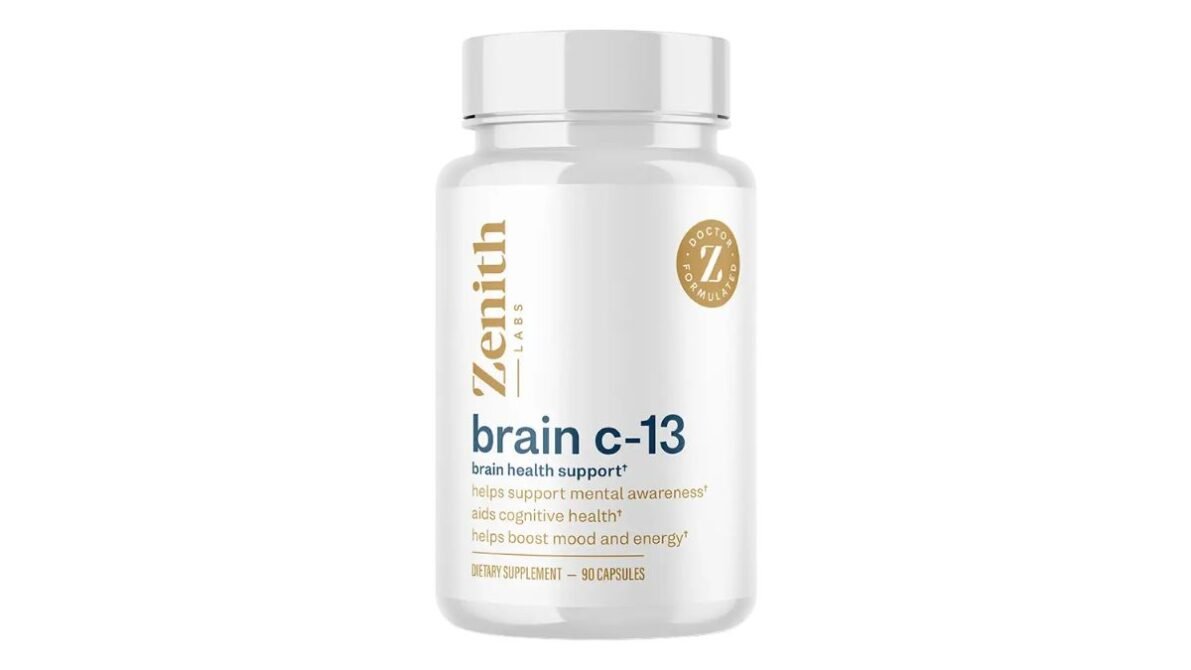
Brain C-13 is marketed by Zenith Labs as a capsule intended to support healthy brain chemistry, memory recall, mood, and mental performance. The official page recommends taking three capsules per day and identifies the product as being sold through ClickBank.
This review looks at what can be confirmed, what cannot, and how the product’s stated formula compares with the doses used in published research.
Quick Answer: Is Brain C-13 Worth Considering?
Brain C-13 has two ingredients with genuine research interest: saffron extract and Huperzine-A. However, the official offer page does not disclose their individual doses.
That missing information is the central limitation.
Clinical studies on saffron and Huperzine-A used specific preparations and measured amounts. Without knowing how much Brain C-13 contains, or whether its saffron extract is standardized in the same way, it is not possible to assume that the product delivers the quantities used in those studies.
The product does have several positive practical details:
- Zenith Labs is identified as the manufacturer.
- A physical address and customer-service phone number are provided.
- The product page states that ClickBank is the retailer.
- A 180-day money-back guarantee is advertised.
- The recommended serving is clearly stated as three capsules per day.
My overall view is cautious rather than dismissive. Brain C-13 may be worth comparing with other options, but the undisclosed doses make it difficult to judge formula transparency or research alignment.
What Is Brain C-13?
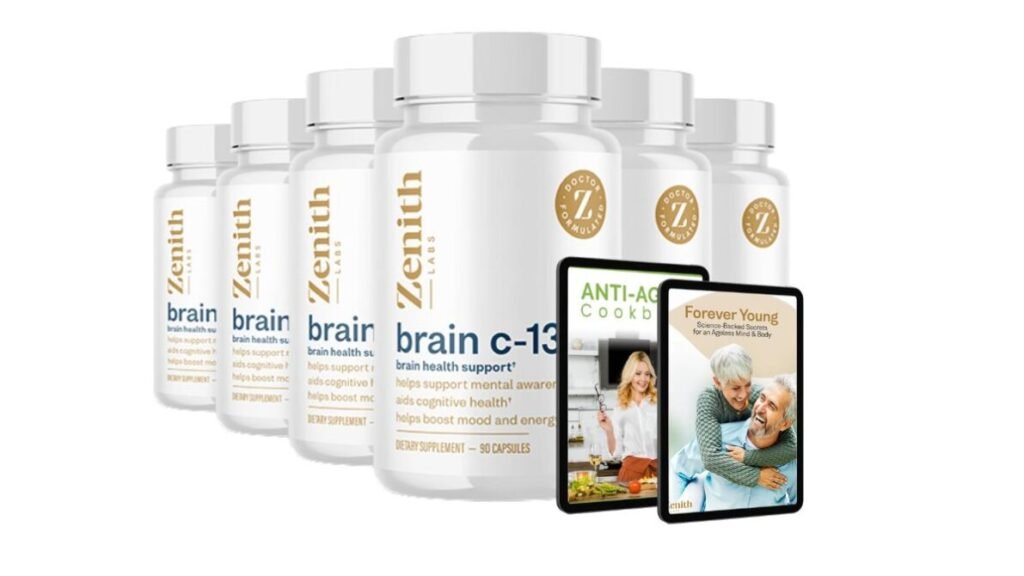
Brain C-13 is a multi-ingredient dietary supplement sold in capsule form. The official page describes it as a product for healthy cognitive function and mental performance.
The offer page specifically highlights:
- Saffron
- Huperzine-A
- Memory recall support
- Mood support
- Quick thinking
- Three capsules per day
The page does not provide a complete visible label showing the amount of each ingredient per serving.
Some other websites associated with the Brain C-13 name display different ingredient lists. Those pages mention combinations that may include ingredients such as Bacopa, Rhodiola, DMAE, Ginkgo, turmeric, phosphatidylserine, citicoline, Mucuna, Gotu Kola, rosemary, or vinpocetine.
Because these lists do not consistently match one another, they should not be treated as a verified Supplement Facts label. For this review, the only ingredients treated as confirmed headline ingredients are saffron and Huperzine-A, because both are named on the current offer page.
How We Reviewed Brain C-13
The review focused on five questions:
- Does the official page identify the manufacturer?
- Is the full label available?
- Are the individual doses of saffron and Huperzine-A disclosed?
- Do published studies use comparable preparations and amounts?
- Are the purchasing and refund terms clear enough for a buyer to evaluate the offer?
This approach matters because an ingredient name alone does not establish that a commercial product contains the same extract, concentration, or dose used in a clinical trial.
A named ingredient is a starting point for investigation, not proof of an expected result.
The Main Finding: The Ingredients Are Named, but the Doses Are Not
The official page uses phrases such as “a potent serving of saffron” and “a potent dose of Huperzine-A.” Those descriptions sound reassuring, but they do not tell the buyer how many milligrams or micrograms are present.
The page does state that the recommended intake is three capsules daily. It does not state:
- The amount of saffron per capsule
- The amount of saffron per three-capsule serving
- The amount of Huperzine-A per capsule
- The amount of Huperzine-A per three-capsule serving
- The saffron extract ratio or standardization
- Whether the Huperzine-A amount is measured as a specific extract or isolated compound
- The full quantity of any additional ingredients
That distinction is important. Three capsules per day tells you the serving size, not the amount of the active ingredients.
Brain C-13 Review: Why Dose Transparency Matters
A clinical study may use a specific extract, a defined chemical profile, and a measured daily amount. If a commercial formula does not disclose those details, the study cannot be directly transferred to the product.
This is not an argument that every supplement must reproduce a clinical trial. It is an argument for honest uncertainty.
For Brain C-13, the available evidence supports saying that saffron and Huperzine-A have been researched. It does not support saying that Brain C-13 has been clinically proven to produce the same results.
Saffron: Interesting Research, but Preparation and Dose Matter
Saffron comes from Crocus sativus. Its compounds, including crocins and safranal, have been studied in relation to mood and cognitive function.
One randomized controlled trial in healthy adults with self-reported low mood examined a standardized saffron extract at 22 mg or 28 mg per day for four weeks. The study reported improvements in some mood-related measures compared with placebo, but it was not a clinical trial proving that every saffron supplement improves memory.
A systematic review of randomized trials examining saffron and cognitive function found potentially positive results but also noted important limitations. The studies used different comparison groups, cognitive scales, and research settings. Several studies were conducted in Iran, and the authors advised caution because of possible bias and limited generalizability.
A separate clinical trial used 30 mg per day of saffron extract in people with mild-to-moderate cognitive impairment associated with a medical condition. That study must not be used to market Brain C-13 as a treatment, and it does not establish that an undisclosed amount of saffron in a commercial blend has the same effect.
The practical conclusion is straightforward:
- Saffron has legitimate research interest.
- Some studies used approximately 22–30 mg per day.
- Extract type and standardization matter.
- Brain C-13 does not publicly disclose its individual saffron dose.
- The formula cannot be directly compared with those trials.
Huperzine-A: A Mechanistically Plausible Ingredient With Important Limits
Huperzine-A is a compound derived from Huperzia serrata. It has been studied because it can inhibit acetylcholinesterase, an enzyme involved in the breakdown of acetylcholine.
That mechanism is scientifically interesting, but mechanism is not the same as a guaranteed real-world benefit.
In a phase II clinical trial, researchers evaluated Huperzine-A at 200 micrograms twice daily and 400 micrograms twice daily in people with mild-to-moderate cognitive impairment associated with a medical condition. The lower dose did not produce a significant improvement in the primary cognitive outcome. Some secondary findings at the higher dose were more encouraging, but the overall results were mixed.
Another randomized crossover study in healthy adults examined a single 200-microgram dose during exercise and did not establish a consistent cognitive benefit.
These studies illustrate why the missing Brain C-13 dose is important. The difference between 200 micrograms and 400 micrograms twice daily is not a minor labeling detail. It changes the comparison.
Brain C-13’s official page does not disclose whether the product contains:
- 50 micrograms per serving
- 200 micrograms per serving
- 400 micrograms per serving
- A different amount entirely
Nor does it provide enough information to confirm whether the Huperzine-A preparation is comparable with the material used in clinical research.
Ingredient Evidence Summary
| Ingredient | Research status | Examples of studied amounts | Brain C-13 transparency |
|---|---|---|---|
| Saffron extract | Preliminary to moderate, depending on the outcome studied | Approximately 22–30 mg/day in cited trials | Individual dose not disclosed |
| Huperzine-A | Preliminary to moderate, with mixed findings and important safety considerations | 200–400 mcg twice daily in one clinical trial; 200 mcg acutely in another | Individual dose not disclosed |
| Other ingredients | Cannot be reliably assessed from the current official page | Not applicable | Complete formula not visibly provided |
The evidence should therefore be described as ingredient-level research, not product-level proof.
What I Liked
The Manufacturer Is Identified
The official page identifies Zenith Labs as the company behind Brain C-13 and provides a physical address in Aurora, Colorado, along with a customer-service telephone number.
This is useful information for a buyer and is different from an offer page that provides no identifiable business contact details.
The Serving Instructions Are Clear
The page recommends three capsules per day and suggests taking one capsule with breakfast, lunch, and dinner.
That does not resolve the dose-transparency problem, but it does make the basic usage instructions easy to understand.
The Guarantee Is Clearly Advertised
The offer page advertises a 180-day money-back guarantee. The manufacturer’s return policy states that the guarantee is based on the order date, not the delivery date.
The policy also states that unopened bottles must be returned, while opened or empty bottles do not need to be returned. Return shipping is the customer’s responsibility, and refunds may take five to seven business days after the returned products are received.
The offer page says that empty bottles can be returned for a refund, while the general return policy says opened or empty bottles do not need to be returned. That wording is not necessarily contradictory, but buyers should retain the order information and contact customer support before sending anything back.
The Product Uses a Recognizable Retail Infrastructure
The official offer page states that ClickBank is the retailer. The HopLink supplied for this review is:
The link redirects to the Brain C-13 offer hosted at brainclarity.net/cb/.
The exact affiliate payout, commission percentage, rebill terms, and refund-rate information were not publicly verifiable from the link itself. Those details require access to the relevant ClickBank account or Marketplace listing and should not be presented as confirmed in the article.
Things to Consider
The Full Supplement Facts Panel Is Missing
This is the most important concern.
Without the complete label, the reader cannot independently verify the amount of saffron, Huperzine-A, or any other ingredient. It also becomes difficult to compare Brain C-13 with products that disclose exact doses.
The issue is transparency, not a conclusion that the product is unsafe or ineffective.
The Formula Appears Differently Across Websites
Several websites using the Brain C-13 name present different ingredient combinations. That makes it difficult to determine whether those pages describe the same formula, an outdated version, or unrelated promotional material.
The current review does not treat those inconsistent lists as a verified label.
Marketing Language Is Broader Than the Evidence
The offer page refers to memory recall, mood, quick thinking, and brain chemistry. Those are broad wellness claims.
The available studies on saffron and Huperzine-A do not prove that Brain C-13 will improve memory for every user. Individual results may vary, and an ingredient study cannot be used as a substitute for a product-specific clinical trial.
No Independent Product Trial Was Located
I did not find a publicly available randomized clinical trial testing the finished Brain C-13 formula.
That means the best available interpretation is ingredient-based. The product should not be described as clinically proven unless a product-specific study becomes available.
Safety and Medication Considerations
“Natural” does not automatically mean risk-free.
Huperzine-A may affect cholinergic activity and can be relevant to people using medications that influence acetylcholine or heart rate. Potential concerns may include nausea, vomiting, diarrhea, sweating, dizziness, headache, muscle effects, or changes in heart rate.
Saffron may also cause side effects in some people. Caution is appropriate for anyone with a bleeding risk, anyone using anticoagulant or antiplatelet medication, or anyone who is pregnant or trying to become pregnant. The appropriate decision depends on the individual’s health history and the actual dose.
Speak with a qualified healthcare professional before using Brain C-13 if you:
- Take prescription or over-the-counter medication
- Have a heart rhythm, blood-pressure, seizure, liver, or kidney condition
- Are pregnant or nursing
- Have a history of medication sensitivity
- Are considering the product for persistent or worsening memory changes
Do not use a supplement as a replacement for an evaluation. Persistent memory loss, confusion, changes in personality, or difficulty managing daily activities deserve professional assessment.
Who Should Avoid Brain C-13 Unless a Clinician Approves It?
A healthcare professional should review the product before use if you:
- Take medication affecting heart rate or blood pressure
- Use products that influence cholinergic or neurotransmitter systems
- Take anticoagulants or antiplatelet drugs
- Have a history of seizures
- Are pregnant or nursing
- Have a diagnosed neurological or psychiatric condition
- Are already using another nootropic or cognitive-support supplement
Because the Huperzine-A amount is not disclosed, it is difficult to assess cumulative exposure when the ingredient is also present in another product.
What Real Users Are Saying
The official Brain C-13 page includes testimonials and general statements about customer results. Those testimonials are promotional material supplied through the sales page, not independent evidence.
I did not identify a sufficiently reliable, independently verifiable body of reviews that would justify summarizing a consistent user pattern. It would therefore be misleading to claim that users generally report a particular memory, focus, or mood outcome.
A buyer considering the product should distinguish between:
- Testimonials displayed by the seller
- Reviews hosted by an independent retailer
- Verified purchase reviews
- Unmoderated discussion posts
- Claims repeated across affiliate pages
Those sources do not carry the same evidentiary weight.
Brain C-13 and Zenith Labs
Zenith Labs is identified as the manufacturer of Brain C-13 and also operates other supplement offers, including TitanFlow.
That shared manufacturer is noted here as an operational consistency point only. It is not, by itself, evidence that Brain C-13 is unsafe, ineffective, or part of a problematic product network.
The more relevant editorial issue is whether each product presents clear labeling, consistent claims, and verifiable purchasing information. For Brain C-13, the main unresolved point remains the absence of individual ingredient doses.
Where to Buy Brain C-13
Brain C-13 is sold through the official offer associated with Zenith Labs and ClickBank.
You can review the current offer here:
Visit the official Brain C-13 website
Before ordering, confirm:
- The current price
- Shipping charges
- The selected bottle quantity
- The order date for purposes of the 180-day guarantee
- The current return instructions
- Whether the offer still displays the same formula and serving directions
Prices and promotional terms may change.
Related Reading
For a formula that at least names one probiotic strain with a checkable code, see our Synaptigen review.
Final Verdict
Brain C-13 has a more credible starting point than a supplement with no identifiable manufacturer, no customer-service contact, and no refund policy.
Zenith Labs is identified, the official page provides an address and phone number, the serving instructions are clear, and a 180-day guarantee is advertised. The relationship with ClickBank is also disclosed on the offer page.
Still, the absence of individual doses is a meaningful limitation.
Saffron and Huperzine-A have real scientific literature associated with mood, cognition, and cholinergic mechanisms. But the cited studies used defined amounts and, in some cases, standardized preparations. Since Brain C-13 does not disclose the individual amounts, a reader cannot determine whether the formula resembles those research conditions.
My conclusion is cautious consideration, not a strong recommendation. The product may be an option for an adult who understands the labeling limitation and has checked it with a healthcare professional. It should not be presented as a proven way to improve memory, and it should never replace an evaluation for persistent memory problems.
Frequently Asked Questions
What is Brain C-13?
Brain C-13 is a three-capsule-per-day dietary supplement marketed by Zenith Labs for memory, focus, mood, and general cognitive support. Its sales page names saffron and Huperzine-A among the featured ingredients.
Does Brain C-13 disclose the doses of saffron and Huperzine-A?
No. The current offer page does not show a complete Supplement Facts panel or disclose the individual amount of saffron or Huperzine-A per capsule or per three-capsule serving. This makes it impossible to compare the formula directly with the doses used in published studies.
Is Brain C-13 clinically proven to improve memory?
No product-specific clinical trial was located for the finished Brain C-13 formula. Saffron and Huperzine-A have been studied individually, but ingredient research does not prove that Brain C-13 will produce the same results. Individual outcomes may vary.
Who should speak with a healthcare professional before using Brain C-13?
Anyone taking medication, using anticoagulant or antiplatelet drugs, or managing a heart, blood-pressure, seizure, liver, kidney, neurological, or psychiatric condition should seek professional advice first. The same applies to people who are pregnant, nursing, or experiencing persistent or worsening memory problems.

Raphael Albert is the founder and content creator of Nutra Pulse. Passionate about health, nutrition, fitness, and wellness, he spends his time researching scientific studies, health trends, and evidence-based lifestyle strategies to create informative and easy-to-understand content. While he is not a doctor or licensed healthcare professional, his goal is to help readers make more informed wellness decisions. All content is for educational purposes only and should not replace professional medical advice. Always consult a qualified healthcare provider regarding your health concerns.