Affiliate Disclosure: This article contains affiliate links supplied through Smart ADV. If you purchase MemoGenesis through the link on this page, we may receive a commission at no additional cost to you. Our editorial assessment is based on the product information publicly available at the time of review. The affiliate relationship does not change our findings about the product’s formula, labeling, safety, or evidence.
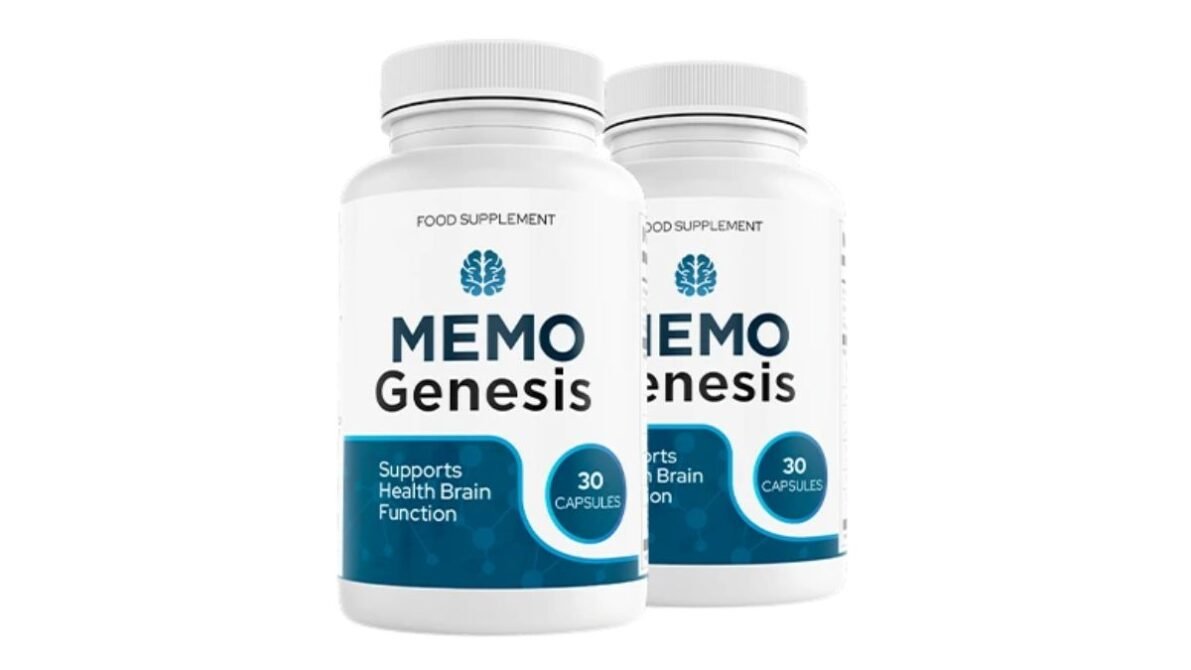
MemoGenesis review requires more than checking whether the product name appears on a sales page. The name is used across several domains that present different ingredient combinations, different serving instructions, and different claims about manufacturing and testing.
The pages reviewed name ingredients such as Bacopa monnieri, Ginkgo biloba, Lion’s Mane, phosphatidylserine, Huperzine-A, Rhodiola rosea, L-theanine, Alpha-GPC, vitamins, and St. John’s wort. However, none of the versions examined provides a complete, consistent Supplement Facts panel showing the amount of each ingredient.
That makes the central issue one of transparency. The available pages do not establish that every product sold under the MemoGenesis name contains the same formula.
Quick Answer: What Does This MemoGenesis Review Find?
MemoGenesis has several ingredients with published research interest, but the commercial formula cannot be evaluated with confidence because the pages disagree about what the product contains and do not consistently disclose doses.
The most important findings are:
- Five separate MemoGenesis pages or domains display materially different ingredient combinations.
- Some versions list St. John’s wort, while others do not.
- Serving directions vary between one version and another.
- No page reviewed provides a complete, verifiable Supplement Facts panel with milligram or microgram amounts.
- Claims such as “FDA Approved,” “clinically dosed,” and “third-party tested” are not supported by publicly displayed certificates, laboratory reports, or product-specific documentation.
- No published clinical trial testing the complete MemoGenesis formula was identified.
- Studies of individual ingredients do not prove that the commercial combination works as advertised.
This does not, by itself, prove that MemoGenesis is fraudulent. It does mean that a careful buyer cannot independently confirm which formula is being purchased or compare its contents with the doses used in research.
Five MemoGenesis Pages, Five Different Formula Presentations
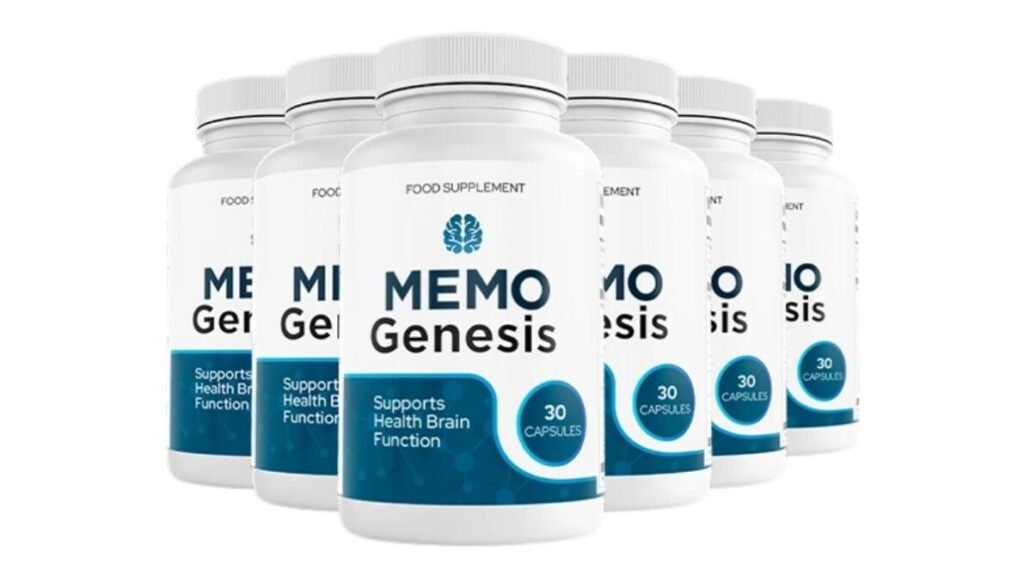
The name MemoGenesis appears across multiple domains and landing pages. The differences are not limited to spelling or marketing language. The ingredient lists themselves change.
| Page reviewed | Ingredients named or emphasized | Dose information shown |
|---|---|---|
| memogenesis.org | Ginkgo biloba, St. John’s wort, Bacopa monnieri, N-acetyl L-carnitine, Huperzine-A, phosphatidylserine complex, B-complex vitamins | No individual doses or clear serving size shown |
| us-en-memogenesis.com | Ginkgo biloba, St. John’s wort, Bacopa, N-acetyl L-carnitine, Huperzine-A, phosphatidylserine, Rhodiola, L-theanine, Lion’s Mane | Two capsules daily, but no ingredient amounts |
| en-en-memogenesis.com | Ginkgo biloba, Bacopa, Lion’s Mane, phosphatidylserine, L-theanine, Rhodiola, N-acetyl L-tyrosine | Two capsules daily, but no ingredient amounts |
| memoegenesis.com/ingredients | Bacopa, Ginkgo, Lion’s Mane, Alpha-GPC, phosphatidylserine, L-theanine, Rhodiola, Huperzine-A, acetyl-L-carnitine, B vitamins | Claims “precision-dosed amounts,” but no amounts are displayed |
| memogeniesis.com | Lion’s Mane, Bacopa, phosphatidylserine, Ginkgo, Rhodiola, Alpha-GPC, Huperzine-A, pterostilbene, vitamin D3, B-vitamin complex | No per-serving amounts or clear daily capsule count shown |
The differences are significant. One version includes St. John’s wort and N-acetyl L-carnitine. Another includes L-theanine and Lion’s Mane. A separate page lists Alpha-GPC, pterostilbene, and vitamin D3.
These pages may represent different versions, outdated landing pages, or unrelated marketing funnels using the same product name. The public information does not clearly explain which possibility is correct.
For a supplement intended for daily use, this is not a minor editorial detail. The identity of the formula determines how its evidence, safety, and medication interactions should be assessed.
The Label Problem: “Two Capsules” Is Not a Dose
Some MemoGenesis pages instruct users to take two capsules daily. That tells the reader the number of capsules, but not the amount of active material inside those capsules.
The pages do not consistently state:
- The amount of Bacopa per serving
- The percentage of standardized bacosides
- The amount or extract ratio of Ginkgo biloba
- The amount of Lion’s Mane or its beta-glucan content
- The amount of phosphatidylserine
- The amount of Huperzine-A
- The amount of St. John’s wort or its hypericin/hyperforin standardization
- The quantity of Alpha-GPC, Rhodiola, L-theanine, or other compounds
- The percentage of each ingredient in any proprietary blend
This matters because ingredient names alone are not enough to reproduce research findings. A study may use a standardized extract, a defined concentration, and a measured daily intake. A product page that only says “Bacopa” or “Huperzine-A” does not show whether the product resembles the studied material.
The same concern appeared in our Brain C-13 review, where recognizable ingredients were named but the individual doses were not disclosed. MemoGenesis presents a broader version of the same transparency problem because the ingredient lists also change between domains. MemoGenesis presents a broader version of the same transparency problem because the ingredient lists also change between domains.
St. John’s Wort Is the Most Important Safety Finding
St. John’s wort, also known as Hypericum perforatum, is clearly named on at least two MemoGenesis versions: memogenesis.org and us-en-memogenesis.com.
Its presence should be treated as a central safety issue, not as a minor botanical detail.
The National Center for Complementary and Integrative Health states that St. John’s wort has a high risk of drug interactions because it can induce cytochrome P450 enzymes and intestinal P-glycoprotein. In practical terms, this may accelerate the clearance of certain medicines and reduce their blood concentrations.
Documented interaction concerns include medicines such as:
- Some oral contraceptives
- Warfarin and other anticoagulants
- Cyclosporine and other immunosuppressants
- Digoxin
- Certain HIV medicines
- Some benzodiazepines
- Certain cancer treatments
- Some antidepressants
St. John’s wort can also create serotonin-related risks when combined with certain antidepressants or other serotonergic products. The interaction may not be obvious immediately, and the effects of enzyme induction may continue after the supplement is discontinued.
Readers can find a more detailed explanation in our guide, St. John’s Wort Drug Interactions.
Because MemoGenesis does not disclose the amount or standardization of St. John’s wort on the pages reviewed, a buyer cannot determine how much is present or whether the extract is comparable with products used in safety research.
Anyone taking prescription medication should speak with a qualified healthcare professional before considering a MemoGenesis version that lists St. John’s wort. This is particularly important for people using anticoagulants, transplant medicines, hormonal contraception, antidepressants, heart medicines, or cancer treatments.
Ginkgo and Huperzine-A Add Further Questions
Ginkgo biloba appears on nearly every version reviewed. Ginkgo has been studied for cognitive and circulation-related outcomes, but its evidence is not uniform across populations, extracts, and doses.
Ginkgo may also be relevant to people who use anticoagulant or antiplatelet medication. A review of herbal supplements and bleeding complications identified Ginkgo among the botanicals requiring attention in the context of bleeding risk and medication combinations. See the PubMed record on bleeding complications associated with herbal supplements and the more recent analysis available through PMC.
Huperzine-A appears on several MemoGenesis pages, including the versions that describe the product as containing ten “clinically studied” compounds. Huperzine-A affects acetylcholinesterase and therefore belongs to a class of ingredients that may be relevant to people using medicines or supplements that influence cholinergic activity, heart rate, or related neurological pathways.
A phase II trial evaluated Huperzine-A at defined doses in people with mild-to-moderate Alzheimer’s disease and produced mixed findings. That research cannot be transferred directly to MemoGenesis because the product’s Huperzine-A amount is not disclosed and the finished formula was not tested in that trial.
The presence of Ginkgo, Huperzine-A, and St. John’s wort in overlapping product versions makes the missing dose information more important. It is difficult to assess cumulative exposure or interaction risk when the label is not stable.
What Does the Research Say About the Individual Ingredients?
Several MemoGenesis ingredients have been studied independently.
Bacopa Monnieri
A systematic review of randomized controlled trials found that Bacopa research generally involved standardized extracts administered over approximately 12 weeks. The reviewed studies used doses ranging from about 300 to 450 mg of extract per day.
Read the Bacopa monnieri systematic review on PubMed.
Those findings may justify describing Bacopa as an ingredient with research interest. They do not establish that a product containing an unknown amount of Bacopa will produce the same results.
Ginkgo Biloba
Ginkgo has been evaluated in studies involving different extracts, populations, and cognitive outcomes. One randomized trial examined a combination of Ginkgo and Bacopa in healthy adults, but even that study used defined preparations and cannot be used to validate an undisclosed commercial formula.
See the randomized trial of Ginkgo and Bacopa.
Lion’s Mane
Lion’s Mane, or Hericium erinaceus, has generated interest because of laboratory and early human research. Some studies have examined cognitive outcomes in people with mild cognitive impairment, but the findings depend on the particular preparation, dose, duration, and participant population.
MemoGenesis does not identify the quantity of Lion’s Mane, the extract ratio, or the relevant active-compound content on the pages reviewed.
Phosphatidylserine
Phosphatidylserine has also been studied in older adults and people with cognitive complaints. A recent randomized, double-blind, placebo-controlled trial examined a phosphatidylserine-containing supplement in older adults with mild cognitive impairment. However, the presence of phosphatidylserine in a commercial product does not prove that the product contains the same amount or produces the same outcome.
See the phosphatidylserine trial on PubMed.
Huperzine-A
Huperzine-A has been tested in controlled research using measured amounts, including 200–400 micrograms twice daily in one clinical trial. MemoGenesis does not disclose whether its product contains 50 micrograms, 200 micrograms, 400 micrograms, or another amount.
That difference is clinically relevant. A study of a defined dose cannot be used to establish the effectiveness or safety of a product with an undisclosed dose.
“Clinically Dosed” Does Not Replace a Supplement Facts Panel
One MemoGenesis page says that each ingredient is “clinically dosed.” Another describes the formula as containing “precision-dosed amounts.” Those statements sound specific, but they do not provide the information needed to verify them.
A clinically dosed ingredient claim should ideally be accompanied by:
- The exact amount per serving
- The extract name or ratio
- Standardization details
- The research used to justify the dose
- The identity of the testing laboratory
- A current certificate of analysis
- A batch or lot number connected to the documentation
None of that documentation was publicly displayed on the pages reviewed.
The phrase “clinically studied” is also different from “clinically proven.” An ingredient may have been examined in a clinical trial without the finished product being tested. In MemoGenesis’s case, the available evidence concerns individual ingredients, not the complete commercial blend.
The “FDA Approved” Claim Needs Careful Interpretation
Some MemoGenesis pages use phrases such as:
- “FDA Approved”
- “FDA-approved facility”
- “FDA-registered facility”
- “GMP Certified”
That distinction is important:
- A facility may be registered with the FDA.
- A manufacturer may be expected to follow current Good Manufacturing Practices.
- Neither fact means that the FDA approved the MemoGenesis product.
- Facility registration is not the same as FDA approval of a formula, label, claim, or clinical effect.
The pages also include standard disclaimers stating that the FDA has not evaluated the statements. That disclaimer is more consistent with a conventional dietary-supplement structure than with the stronger “FDA Approved” wording used elsewhere on the pages.
The product pages do not identify the specific facility, provide an FDA approval number for the supplement, or display documentation supporting the approval language.
“Third-Party Tested” Without a Report
The memogeniesis.com page states that every batch is “third-party tested for purity, potency, and safety.”
That may be a meaningful quality-control practice if it can be documented. However, no laboratory name, certificate of analysis, test date, lot number, or test results were displayed with the claim.
A responsible buyer should be able to ask for:
- The testing laboratory’s name
- The tested batch number
- The date of analysis
- The methods used
- Results for identity, purity, potency, and contaminants
- Confirmation that the report applies to the product currently being sold
Without those details, “third-party tested” remains an unverified marketing statement rather than independently reviewable evidence.
Is There a Clinical Trial of the Complete MemoGenesis Formula?
A search for a product-specific clinical trial did not identify a published randomized trial testing the complete MemoGenesis formula.
Search results can sometimes be affected by product-name changes, unpublished studies, or records that are not indexed in major databases. However, the public pages reviewed do not provide a trial registration number, peer-reviewed publication, protocol, participant details, or results for a study of the finished product.
This creates an important distinction:
- Ingredient-level evidence: Bacopa, Ginkgo, Lion’s Mane, phosphatidylserine, and Huperzine-A have each been studied in various contexts.
- Product-level evidence: No publicly verifiable trial was located for the exact MemoGenesis blend represented by the sales pages.
- Formula identity: Because the pages disagree, it is not even clear which combination would need to be tested.
A product cannot reasonably be described as clinically proven solely because several of its ingredients have appeared in scientific literature.
What I Could Confirm
The following points were visible across one or more MemoGenesis pages:
- The product is marketed as a cognitive or memory-support supplement.
- Multiple pages claim that it is made in the United States.
- Several pages refer to GMP-certified or FDA-registered manufacturing facilities.
- Some pages advertise 60-day money-back guarantees.
- Several pages list familiar cognitive-support ingredients.
- At least two pages list St. John’s wort.
- Some pages provide a two-capsule daily instruction.
What I Could Not Confirm
The following information was not consistently available:
- The legal identity of the manufacturer or brand owner
- A stable ingredient list
- Individual ingredient doses
- Extract ratios and standardization
- The amount of St. John’s wort
- The amount of Huperzine-A
- A current Supplement Facts panel
- A named independent testing laboratory
- Certificates of analysis
- A product-specific clinical trial
- Documentation supporting the “FDA Approved” wording
Safety and Medical Disclaimer
MemoGenesis should not be used as a substitute for evaluation of persistent memory loss, confusion, personality changes, or difficulty managing daily activities.
Consult a qualified healthcare professional before using any version of the product if you:
- Take prescription or over-the-counter medication
- Use anticoagulants or antiplatelet drugs
- Take antidepressants or other serotonergic products
- Use hormonal contraception
- Take transplant, heart, cancer, or seizure medication
- Have a diagnosed neurological or psychiatric condition
- Are pregnant or nursing
- Already use another nootropic or cognitive-support supplement
Because the formulas differ and the doses are not disclosed, it is especially difficult to assess possible interactions or duplicate exposure.
Where to Buy MemoGenesis
MemoGenesis is promoted through an offer connected to Smart ADV. Readers who choose to review the current offer can access it here:
This is an affiliate link. If a purchase is made through the link, the publisher may receive a commission at no additional cost to the buyer.
The existence of an affiliate relationship does not establish that MemoGenesis is FDA-approved, clinically proven, independently tested, or manufactured by a clearly identified legal entity. Before purchasing, readers should review the current Supplement Facts panel, ingredient amounts, manufacturer information, refund terms, and testing documentation.
Because the MemoGenesis pages reviewed display different ingredient combinations, buyers should also confirm that the formula shown at checkout matches the product information they intend to purchase.
Final Verdict
This MemoGenesis review finds a product name associated with multiple public formulas rather than one clearly documented formula.
The pages mention several ingredients with legitimate research interest, but the commercial product lacks the information needed to compare its contents with clinical studies. The formula changes between domains, individual doses are not shown consistently, the legal manufacturer is not clearly identified, and claims about FDA approval, clinical dosing, and third-party testing are not supported by publicly displayed documentation.
The presence of St. John’s wort on some versions raises the most important safety concern because of its well-documented potential to alter the effects of numerous medications. Ginkgo and Huperzine-A create additional interaction questions, particularly when the amount of each ingredient is unknown.
The fairest conclusion is cautious rather than accusatory: MemoGenesis may contain ingredients that have been studied individually, but the public evidence does not establish that the exact product being sold is consistently formulated, appropriately dosed, independently tested, or clinically proven.
A buyer should request the current Supplement Facts panel, exact ingredient amounts, manufacturer identity, and batch-specific testing documentation before considering use.
MemoGenesis Review FAQ
What is MemoGenesis?
MemoGenesis is marketed as a brain and memory support supplement. Different websites using the MemoGenesis name display different ingredient combinations, including Bacopa, Ginkgo biloba, Lion’s Mane, phosphatidylserine, Huperzine-A, Rhodiola, and, on some versions, St. John’s wort.
Does MemoGenesis disclose its ingredient doses?
Not consistently. The pages reviewed do not provide one stable Supplement Facts panel with clear amounts for every ingredient. Some pages mention two capsules per day or use phrases such as “clinically dosed,” but capsule count and marketing language do not replace individual milligram or microgram amounts.
Is MemoGenesis FDA approved?
The public pages use phrases such as “FDA Approved” or refer to FDA-registered facilities, but those terms do not establish that the MemoGenesis supplement itself was approved by the FDA. The FDA generally does not approve dietary supplements or their claims before they are marketed.
Does MemoGenesis contain St. John’s wort?
At least two versions reviewed list St. John’s wort, while other MemoGenesis pages do not. Because the formulas differ between domains, buyers should verify the current label before use. St. John’s wort can interact with many medications by affecting drug-metabolizing enzymes and P-glycoprotein.
Can MemoGenesis interact with medications?
Yes, depending on the formula. St. John’s wort may reduce or alter the effects of several medicines. Ginkgo may be relevant to people using anticoagulant or antiplatelet medication, while Huperzine-A may be relevant to medicines or supplements that affect cholinergic activity or heart rate. Anyone taking medication should consult a qualified healthcare professional before using the product.
Has the complete MemoGenesis formula been clinically tested?
No publicly verifiable randomized clinical trial testing the complete MemoGenesis formula was identified. Some individual ingredients have been studied, but ingredient-level research does not prove that the exact commercial combination is effective or safe.
Why are the different MemoGenesis formulas a concern?
The differences make it difficult to determine what a buyer will actually receive. They also prevent a reliable comparison with clinical studies, because the ingredient combination, extract type, standardization, and dose may change from one page or product version to another.
Is MemoGenesis a scam?
The available information does not, by itself, prove that MemoGenesis is a scam. However, the inconsistent formulas, undisclosed doses, unclear legal manufacturer identity, and unsupported claims about FDA approval, clinical dosing, and third-party testing are significant transparency concerns.
What should buyers request before purchasing MemoGenesis?
A buyer should request the current Supplement Facts panel, exact amounts per serving, extract standardization details, the legal identity of the manufacturer, and batch-specific third-party testing documentation. Anyone using prescription medication should also ask a healthcare professional to review the specific formula.

Raphael Albert is the founder and content creator of Nutra Pulse. Passionate about health, nutrition, fitness, and wellness, he spends his time researching scientific studies, health trends, and evidence-based lifestyle strategies to create informative and easy-to-understand content. While he is not a doctor or licensed healthcare professional, his goal is to help readers make more informed wellness decisions. All content is for educational purposes only and should not replace professional medical advice. Always consult a qualified healthcare provider regarding your health concerns.