
This review contains two affiliate links. If you buy through them, this site may earn a commission at no extra cost to you. Nothing here is medical advice. If you or a relative has memory loss that is getting worse, see a doctor. A supplement is not a substitute for a diagnosis.
Synaptigen Review: Four Organisms, No Strain Codes for Three of Them
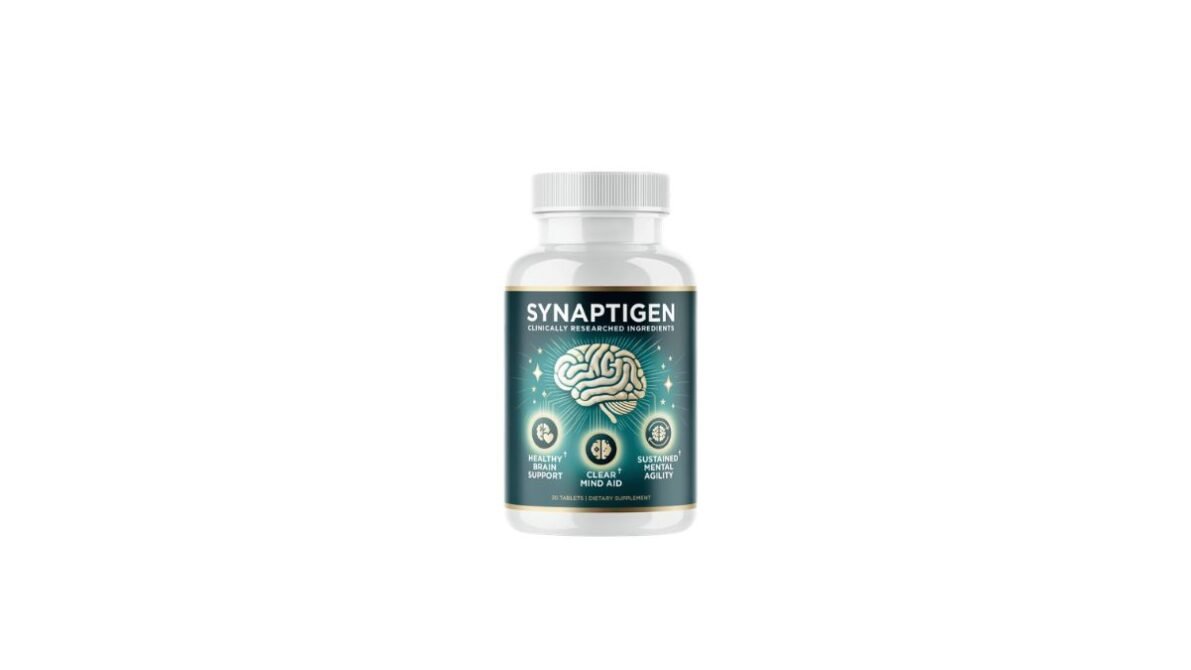
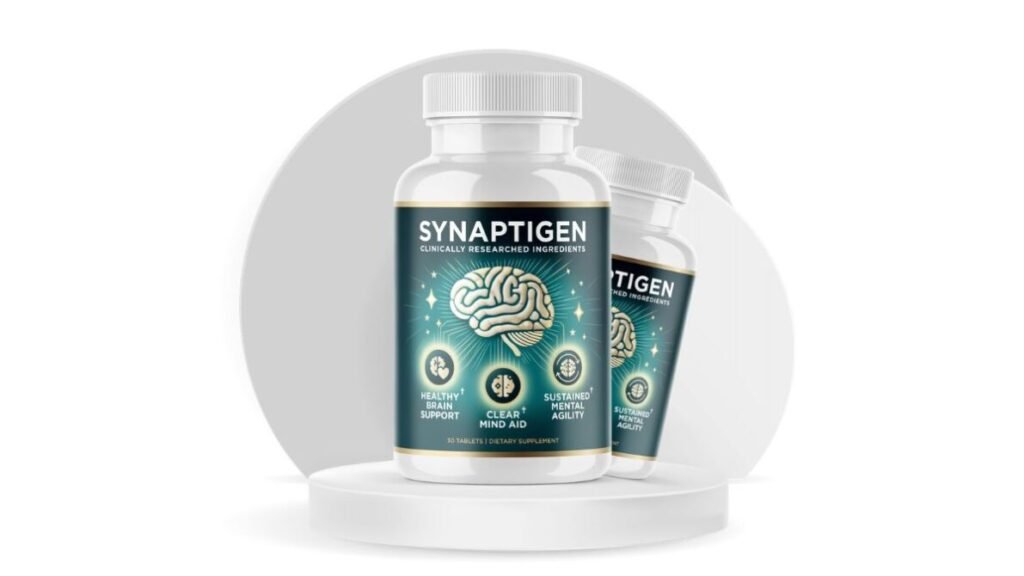
This Synaptigen review begins with a count the older write-ups got wrong. Some sites describe Synaptigen as a six-strain probiotic with Lactobacillus rhamnosus, fermentum and Streptococcus thermophilus. The label on the seller’s page lists four organisms: Lactobacillus paracasei, Lactobacillus reuteri, Bifidobacterium lactis BL-04 and Streptococcus salivarius. Only one of them, BL-04, comes with a strain name.
Synaptigen is a chewable tablet sold on its own page, with ClickBank as the retailer. It is pitched as a “brain health formula” that “works by clearing sugar buildup from neurons.” Below I compare the page, the label and the page’s own reference list.
What the Label Shows
| Item | Amount on the label |
|---|---|
| Inulin powder (chicory root) | 100 mg |
| Proprietary Probiotic Blend: L. paracasei, L. reuteri, B. lactis BL-04 | 20 mg total (3.5 billion CFU at time of manufacture) |
| Streptococcus salivarius | 20 mg, no CFU or strain given |
| Other ingredients | Tricalcium phosphate, microcrystalline cellulose, natural strawberry flavor, peppermint essential oil |
One container is 30 tablets. The label says to take one tablet “once or twice daily,” while the page FAQ says one tablet a day. If you take two, a bottle lasts 15 days. The label names a distributor, Synaptigen, at 285 Northeast Ave, Tallmadge, OH 44278, with a contact email.
Three things stand out against the sales page. The page ingredient list shows tricalcium phosphate, strawberry extract and peppermint extract as if they were active ingredients, while the label puts them under “Other Ingredients” as filler and flavor. S. salivarius is on the label but not in the page’s ingredient list. And the page calls the formula “optimally dosed” when the label gives only a combined weight and a total CFU count for the probiotics.
The Probiotic Dose
Probiotic evidence is strain-specific. A result for one strain of L. paracasei says little about another, which is why trials name the strain with a code. Only BL-04 is named here. The other two have no strain code, so you can’t tell which research applies.
The total is 3.5 billion CFU “at the time of manufacture,” not at the end of shelf life, spread over three strains in the blend. That works out to roughly 1 billion each if they are equal, though the label doesn’t say. Many human probiotic trials use a few billion to tens of billions of CFU of a named strain, so this is on the low side, but it can’t be compared properly without the strain codes.
What the 25 References Are About
The page ends with a list of scientific references, and reading the titles tells you more than the “clinically researched ingredients” label does.
- Several are mouse studies: L. paracasei in diabetic mice, L. paracasei PS23 in aging mice, L. reuteri with another ingredient in mice with colitis, a mouse study on the microbiome and memory, and inulin in mice with a schizophrenia model.
- Others are about ingredients that are on the label only as flavoring, such as peppermint, spearmint, strawberries and rosmarinic acid.
- One concerns inulin and blood sugar in women with type 2 diabetes.
- Some have no connection to a probiotic tablet: a paper on sugar crystals and the cerebrum, a study on hand-clenching and memory, a Mayo Clinic video on whether Alzheimer’s is “type 3 diabetes,” and newspaper pieces on added sugar.
One human trial in older adults appears (the PROMOTe trial in Nature Communications), but I could not confirm that its intervention matches this product. None of the references I could identify tests Synaptigen or this combination of strains for memory. The page’s central claim, that it clears “sugar buildup from neurons,” doesn’t match any reference title I could see.
What the Research on Probiotics and the Brain Does Show
The gut-brain axis is a real research field. Small human trials of specific probiotic strains, mostly in people with Alzheimer’s disease or mild cognitive impairment, have reported modest changes in test scores. They are short and small, and results differ by strain. There is no good evidence that a general probiotic improves memory in healthy adults. Mouse results, which fill most of this page’s reference list, often don’t carry over to people. The same pattern, a brain-sugar story with little human evidence behind it, shows up in my Phytomem One review.
Price, Bonuses and Guarantee
| Package | Crossed-out price | Price | Supply |
|---|---|---|---|
| 2 bottles | $358 | $158 | 60 days |
| 3 bottles (2 + 1) | $537 | $207 | 90 days |
| 6 bottles (3 + 3) | $1,074 | $294 | 180 days |
The six-bottle order, which works out to $1.63 a day at one tablet, includes free shipping and three guides: “Deep Sleep Blueprint,” “Sharp Mind in 7 Days” and “10 Proven Ways to Learn Faster and Boost Memory,” with “retail” values of $79, $89 and $79. The shipping table shows free U.S. delivery in 5 to 7 working days and $15.95 for Canada, the UK, Ireland, Australia and New Zealand.
The page offers a 180-day money-back guarantee, says it is a one-time purchase “with no hidden autoship,” and claims “based on 12,643 reviews” and that “96% of customers order 6 bottles.” It names no source for either number, and I treat them as marketing. At the six-bottle checkout I saw $294.00, free shipping and $0.00 tax. The checkout states a ClickBank guarantee of “return or replacement of any product within 180 days,” and the charge appears as CLKBANK*Synaptigen. Note that the checkout says “return or replacement,” not a refund on request, so read the refund policy before you pay.
You can see the current offer on the Synaptigen website.
Safety
Probiotics are usually well tolerated, with mild gas or bloating in the first weeks. People with weakened immune systems, a central venous catheter or serious illness should ask a doctor first, because live bacteria carry rare infection risks in those groups. Inulin can add to gas and bloating in sensitive people. The tablet also contains peppermint oil. Pregnant or nursing women should ask a doctor.
What I Liked
- A real Supplement Facts panel with a total CFU count.
- B. lactis BL-04 is a named, studied strain.
- A 180-day guarantee that the checkout confirms, a one-time payment and free U.S. shipping.
- No stimulants and a short ingredient list.
Things to Consider
- L. paracasei, L. reuteri and S. salivarius come without strain codes.
- The probiotic amounts are given as a combined weight and total CFU, not per strain.
- The label says one or two tablets a day, the page says one.
- Flavors and fillers appear on the page as if they were active ingredients.
- The reference list is mostly mouse studies and unrelated papers, and none tests the product.
- The claim that it clears “sugar buildup from neurons” has no support I could find.
- “12,643 reviews” and “96% order 6 bottles” have no source.
Who Should Be Careful
- Anyone with memory loss that is new or worsening. Get it assessed first.
- People with weakened immune systems or serious illness.
- People on medication for dementia. Don’t replace prescribed treatment.
- Pregnant or nursing women.
Final Verdict
Synaptigen is a small chewable tablet with three probiotic strains, a fourth organism, 100 mg of inulin and flavoring, sold with a story about clearing sugar from the brain. The label is honest about the total CFU, but only one strain is named, and the research behind the page is mostly in mice. If you want a probiotic, choose one that names every strain and gives CFU per strain. For memory, a doctor’s check, sleep, exercise and blood pressure control have far better evidence.
If you still want to try it, the official website is the only place the page says it is sold, and the 180-day guarantee lowers the cost of finding out.
Frequently Asked Questions
What are the ingredients in Synaptigen?
Per the label: inulin (100 mg), a probiotic blend of L. paracasei, L. reuteri and B. lactis BL-04 (20 mg, 3.5 billion CFU), Streptococcus salivarius (20 mg), plus tricalcium phosphate, microcrystalline cellulose, strawberry flavor and peppermint oil.
Does Synaptigen work for memory?
No trial of the finished product is cited. The page’s references are mostly mouse studies and unrelated papers. Small human trials of specific strains exist, mostly in people with cognitive impairment, and they don’t show the same for a general tablet.
How many tablets should I take?
The page FAQ says one tablet a day. The label says one tablet once or twice daily. Ask the seller which applies before you plan how many bottles to buy.
Is there a money-back guarantee?
The page says 180 days, and the checkout states a ClickBank guarantee of return or replacement within 180 days. Read the refund policy for the exact conditions.
Can it treat Alzheimer’s or dementia?
No. No supplement treats or prevents dementia. Memory problems need a medical assessment.
These statements have not been evaluated by the Food and Drug Administration. This product is not intended to diagnose, treat, cure, or prevent any disease. Talk to your doctor before starting any supplement.

Raphael Albert is the founder and content creator of Nutra Pulse. Passionate about health, nutrition, fitness, and wellness, he spends his time researching scientific studies, health trends, and evidence-based lifestyle strategies to create informative and easy-to-understand content. While he is not a doctor or licensed healthcare professional, his goal is to help readers make more informed wellness decisions. All content is for educational purposes only and should not replace professional medical advice. Always consult a qualified healthcare provider regarding your health concerns.
4 thoughts on “Synaptigen Review: Four Organisms, No Strain Codes for Three of Them”