On incentives: this article contains one link to each product, and both pay this site a commission. Neither comes out recommended without qualification, and the verdict points you toward buying single ingredients at stated doses instead — which is not what a commission buys.
These statements have not been evaluated by the Food and Drug Administration. These products are not intended to diagnose, treat, cure, or prevent any disease. Memory changes that are new, worsening, or affecting daily life deserve a proper assessment — thyroid problems, vitamin B12 deficiency, sleep apnoea, medication side effects and depression all present that way, and all are treatable.
Most supplement comparisons pit two versions of the same idea against each other.
This NeuroPrime vs Synaptigen comparison doesn’t.
These two products want the same outcome — sharper memory, better focus, less mental fog — and they get there by mechanisms that have almost nothing in common.
NeuroPrime bets on the conventional nootropic shortlist: ginkgo, bacopa, lion’s mane. Ingredients with decades of research behind them, delivered as drops you add to a drink.
Synaptigen bets on the gut-brain axis — the idea that your gut microbiome influences cognition through the vagus nerve, immune signalling and microbial metabolites, so improving the gut improves the brain. Probiotic strains and prebiotic fibre, in a melt-in-the-mouth tablet.
So “which works better” isn’t quite the right question. The real question is which premise you find more plausible, and then whether the product actually delivers on it.
On the first question, one of these has considerably better support than I expected. On the second, both run into the same wall.
What Each One Is
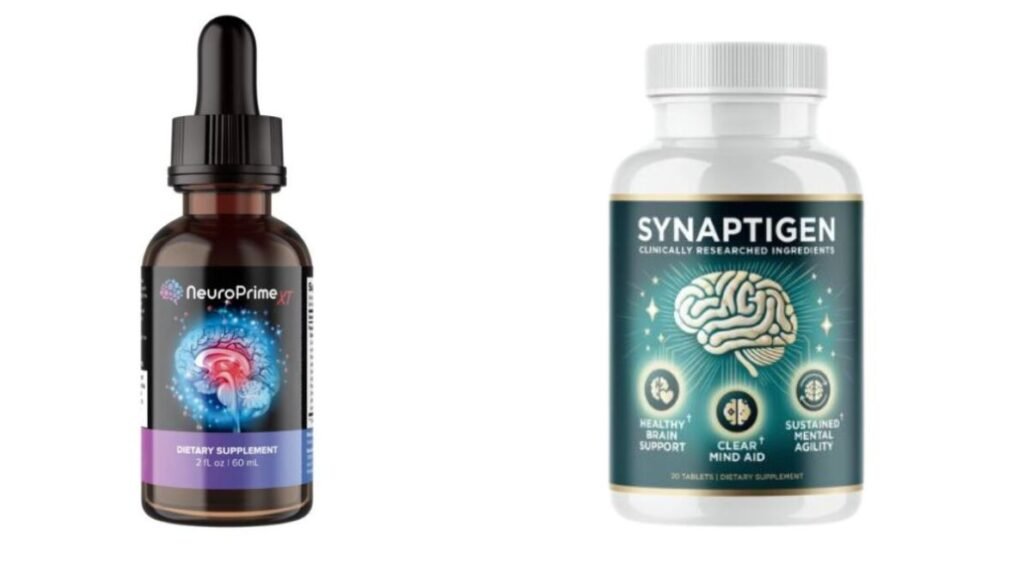
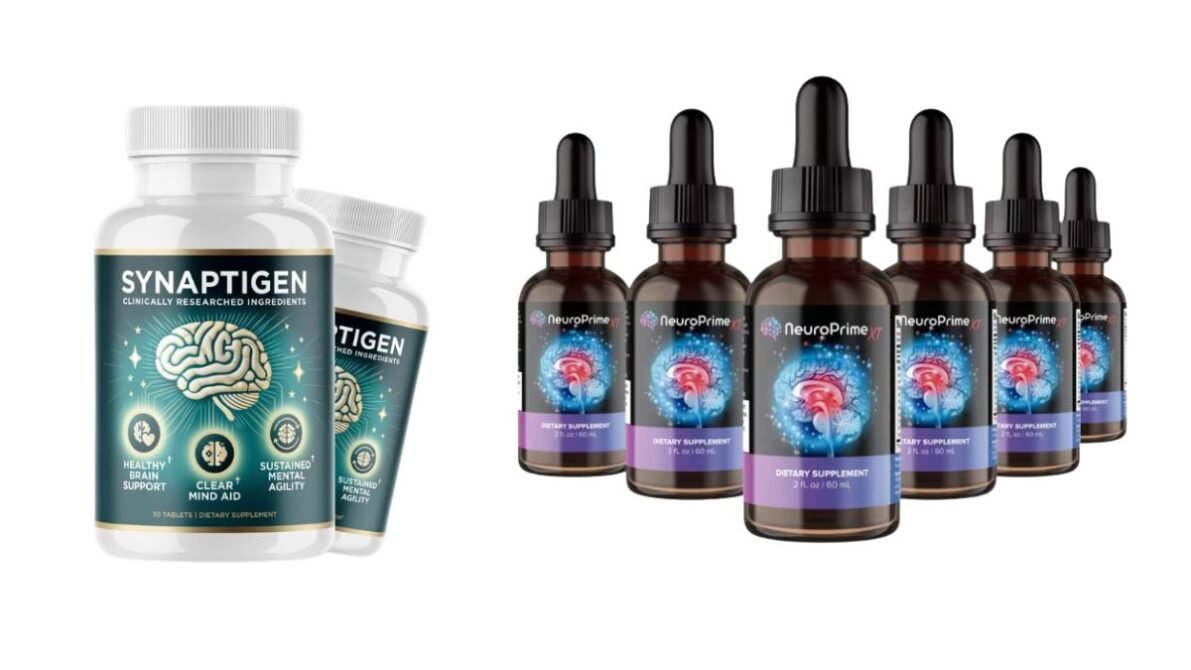
NeuroPrime is a liquid. One drop per day, taken straight or stirred into a drink. Nine botanicals: ginkgo biloba, bacopa monnieri, lion’s mane, pine bark extract, moringa, tamarind, chlorella, spirulina and neem. No amount is published for any of them. There’s a 365-day money-back guarantee.
Synaptigen is a tablet that dissolves in your mouth, once daily. Its named components are three probiotic strains — Lactobacillus paracasei, Lactobacillus reuteri and Bifidobacterium lactis BL-04 — plus prebiotic inulin and plant extracts including strawberry and peppermint. No CFU count or dose is published. There’s a 180-day money-back guarantee.
Both are stimulant-free. Both are sold direct to consumers.
NeuroPrime’s Bet: Familiar Ingredients, Impossible Volume
The ingredient shortlist here is defensible. Bacopa and lion’s mane have genuine human trials; ginkgo is the most-studied botanical in this entire category.
The problem is arithmetic, and it’s not close.
A standard dropper delivers roughly twenty drops per millilitre, so one drop is about 0.05 mL — call it 50 mg, and that’s generous, since a tincture is mostly carrier. Nine ingredients share that.
Now the doses those ingredients were studied at. A meta-analysis of nine randomised controlled trials found bacopa improved speed of attention and reaction time — at 300 to 450 mg daily, for at least twelve weeks. Lion’s mane’s best-known cognitive trial used 3,000 mg daily. Ginkgo’s largest trial used 240 mg daily.
Those three alone come to roughly 3,500 mg of daily material, against a drop that can physically hold about 50 mg of everything combined.
And there’s a second problem with the flagship ingredient. The Ginkgo Evaluation of Memory study randomised 3,069 adults aged 75 and over to 240 mg of standardised ginkgo daily and followed them for a median of 6.1 years — finding no effect on the incidence of dementia or Alzheimer’s disease, and no slowing of cognitive decline in a companion analysis.
So ginkgo failed at a dose NeuroPrime cannot approach. Even if it worked, this format couldn’t deliver it.
Synaptigen’s Bet: The Gut-Brain Axis
A completely different wager, and it deserves a fair hearing before any criticism.
The gut-brain axis is real, well-characterised, and actively researched. Your gut and brain communicate bidirectionally through the vagus nerve, immune signalling, enteroendocrine pathways and microbial metabolites — short-chain fatty acids produced when gut bacteria ferment fibre. The term “psychobiotics” exists in the literature for interventions targeting this pathway.
The question is whether taking probiotics measurably improves cognition in people. And here the evidence is better than I expected.
An earlier meta-analysis pooling seven controlled human trials found a significant improvement in cognitive function, with an effect size of 0.24 and no heterogeneity between studies — meaning the trials agreed with each other, which is unusual and encouraging.
Two honest qualifications. An effect size of 0.24 is small — real, measurable, and not transformative. And a separate meta-analysis of five trials in Alzheimer’s and mild cognitive impairment described the clinical findings as controversial, calling for higher-quality studies.
But the direction is favourable, and — crucially — the effects concentrate in older adults, which is precisely who buys products like this.
On the premise alone, Synaptigen’s bet is the better-supported one. That surprised me, and it’s worth saying plainly.
The Strain Test: One Passes, Partly
Here’s the check we apply to any probiotic, and it separates these two.
Probiotic effects are strain-specific, not species-specific. The trials cited above were conducted on named strains — Lactobacillus rhamnosus GG, Bifidobacterium breve A1, Bifidobacterium longum BB68S. Two strains of the same species can behave completely differently, so a species name alone doesn’t connect to any study.
Synaptigen names Bifidobacterium lactis BL-04 — with the alphanumeric strain code. That’s a real, identified commercial strain with its own research programme. It passes the test for that one ingredient, which is more than most products in this category manage.
Its other two, L. paracasei and L. reuteri, are named at species level only. So the research on specific L. reuteri strains doesn’t transfer.
One of three identified. Partial credit, genuinely earned — and the first time in this category that a product has earned any.
Transparency: Neither Publishes What You Need
This is where the two converge, and it’s the finding that limits both.
NeuroPrime publishes no amount for anything. Nine botanicals, no milligrams, no blend total.
Synaptigen publishes no CFU count and no doses. For a probiotic, CFU is the equivalent of milligrams — it’s how potency is measured, and how you’d compare against the trials.
There’s also an inconsistency worth knowing: Synaptigen’s ingredient description varies between its websites. Some pages add lion’s mane, ginkgo biloba and B vitamins to the probiotic base; others describe only probiotics, inulin and plant extracts. Which formula you’d receive isn’t resolvable from the outside.
So neither product can be checked against the research it invokes. The difference is that Synaptigen invokes research that supports its category, and NeuroPrime invokes ingredients whose doses it cannot deliver.
Where Synaptigen’s Marketing Falls Down
Having given the premise its due, the presentation deserves the same scrutiny.
The central mechanism claim doesn’t match the evidence. Synaptigen’s pages describe the product as working by “removing extra sugar from brain cells” and “clearing harmful sugar buildup around nerve cells,” gesturing at advanced glycation end products. AGEs are real and associated with cognitive ageing. There is no evidence that probiotics clear them from around neurons, and none of the meta-analytic research above tested that mechanism.
And the website situation is a problem. Searching the product returns nine or more sites presenting themselves as official, several with names that differ from each other by a letter or two — the kind of address you reach by mistyping.
They don’t say the same things. One page states: “Our Quietum Plus supplement is crafted with all-natural ingredients” — Quietum Plus is an unrelated hearing product. Another calls Synaptigen “the most effective oral health product.” A third describes it as “a new pineal-focused supplement,” which has nothing to do with the gut-brain axis or anything else in the formula.
Those are template artefacts — copy reused across unrelated products without being updated. They don’t make the capsule harmful. They do tell you how much care went into the pages you’re being asked to trust.
NeuroPrime’s equivalent problem is its reference list: four of its five citations concern melatonin, which isn’t in the product, and two of those don’t appear to correspond to real published papers.
Advantage: neither. Both have presentation problems; they’re just different ones.
Price, Guarantee, and Practical Terms
| NeuroPrime | Synaptigen | |
|---|---|---|
| Format | Liquid drops, once daily | Dissolving tablet, once daily |
| Mechanism | Conventional botanical nootropics | Gut-brain axis via probiotics |
| Doses published | None | None (no CFU count) |
| Strain codes | N/A | One of three (BL-04) |
| Guarantee | 365 days | 180 days |
NeuroPrime’s 365-day window is the longest in this category and materially reduces the risk of trying it. Synaptigen’s 180 days is still generous by ordinary standards.
Current terms are on the NeuroPrime and Synaptigen sites.
NeuroPrime vs Synaptigen: Which Bet Suits Whom
Neither product publishes what you’d need to evaluate it. That’s the honest headline. But the bets differ, and so does who they suit.
Synaptigen’s premise is the stronger one. The gut-brain axis has meta-analytic support across 21 randomised trials, with effects concentrated in exactly the demographic buying it. It names one strain properly. And its mechanism — feeding and shifting a microbiome — is one where “how much” matters somewhat less than it does for a botanical, since bacteria colonise and multiply rather than acting purely by dose.
If you have a digestive history — irregularity, bloating, a course of antibiotics, or you simply eat little fibre — Synaptigen’s approach makes more sense for you. You’d potentially get gut benefits regardless, with cognitive effects as the uncertain upside.
NeuroPrime’s ingredients are the more familiar ones, and if you specifically want bacopa or lion’s mane, that’s a reasonable thing to want. The problem is that this format cannot deliver either at a studied dose — so wanting them is an argument for buying them individually, not for buying this.
If focus and memory are your direct target and your digestion is fine, neither product serves you well, and the honest answer is that single ingredients at stated doses do. Bacopa is sold standalone at 300 mg with the milligrams printed on the bottle. Lion’s mane is sold at gram doses. Both cost less than a multi-bottle package here.
A third approach worth knowing about, since it works differently again: caffeine paired with L-theanine is the most-studied combination for focus without jitters, and it acts immediately rather than over months. Our Bryt coffee review covers a product built on that — and notably, it publishes its caffeine content, its mushroom total and its collagen dose, which neither product here does.
And the part that outperforms all three: for memory specifically, managing blood pressure, treating hearing loss, physical activity, sleep and staying socially engaged have far stronger evidence than any supplement in this category. If memory changes are new or worsening, get assessed — B12 deficiency, thyroid dysfunction and sleep apnoea all cause cognitive symptoms and all are treatable.
For the full analysis of each, see our NeuroPrime review — which covers the dosing arithmetic and the reference list in detail — and our Synaptigen review.
Frequently Asked Questions
Does the gut-brain axis really affect memory?
The pathway is real and well characterised — vagus nerve, immune signalling, and metabolites produced when gut bacteria ferment fibre. For probiotics improving cognition specifically, a meta-analysis of 21 randomised trials found significant effects on overall cognitive performance, processing speed and memory, concentrated in older adults. The effect sizes are small — one pooled analysis reported 0.24 — but consistent across studies.
Which one names its probiotic strains?
Synaptigen names Bifidobacterium lactis BL-04 with a proper strain code, which is what connects an ingredient to published research. Its other two are given at species level only. NeuroPrime contains no probiotics, so the question doesn’t apply — its equivalent gap is that it publishes no milligram amount for any of its nine botanicals.
Is one drop of NeuroPrime enough?
No. A drop is roughly 50 mg including carrier, shared among nine ingredients. Bacopa trials use 300 to 450 mg daily, lion’s mane 3,000 mg, ginkgo 240 mg. That’s a gap of roughly seventyfold before you account for the carrier, and no delivery method changes the volume a drop can hold.
Which has the better guarantee?
NeuroPrime, at 365 days versus 180. Both are generous by the standards of this market, and both give you long enough to judge honestly — which matters, since the research on either mechanism describes effects over weeks to months rather than days.

Raphael Albert is the founder and content creator of Nutra Pulse. Passionate about health, nutrition, fitness, and wellness, he spends his time researching scientific studies, health trends, and evidence-based lifestyle strategies to create informative and easy-to-understand content. While he is not a doctor or licensed healthcare professional, his goal is to help readers make more informed wellness decisions. All content is for educational purposes only and should not replace professional medical advice. Always consult a qualified healthcare provider regarding your health concerns.