
Worth saying up front: two links below go to the seller, and if you buy through them this site earns a commission. You’ll notice pretty quickly that it didn’t buy a favourable verdict.
These statements have not been evaluated by the Food and Drug Administration. This product is not intended to diagnose, treat, cure, or prevent any disease. Memory changes can have many causes, some of them treatable — if yours are new, worsening, or affecting daily life, that’s a conversation for your doctor, not a supplement purchase.
Let’s do something unusual and start with arithmetic instead of adjectives.
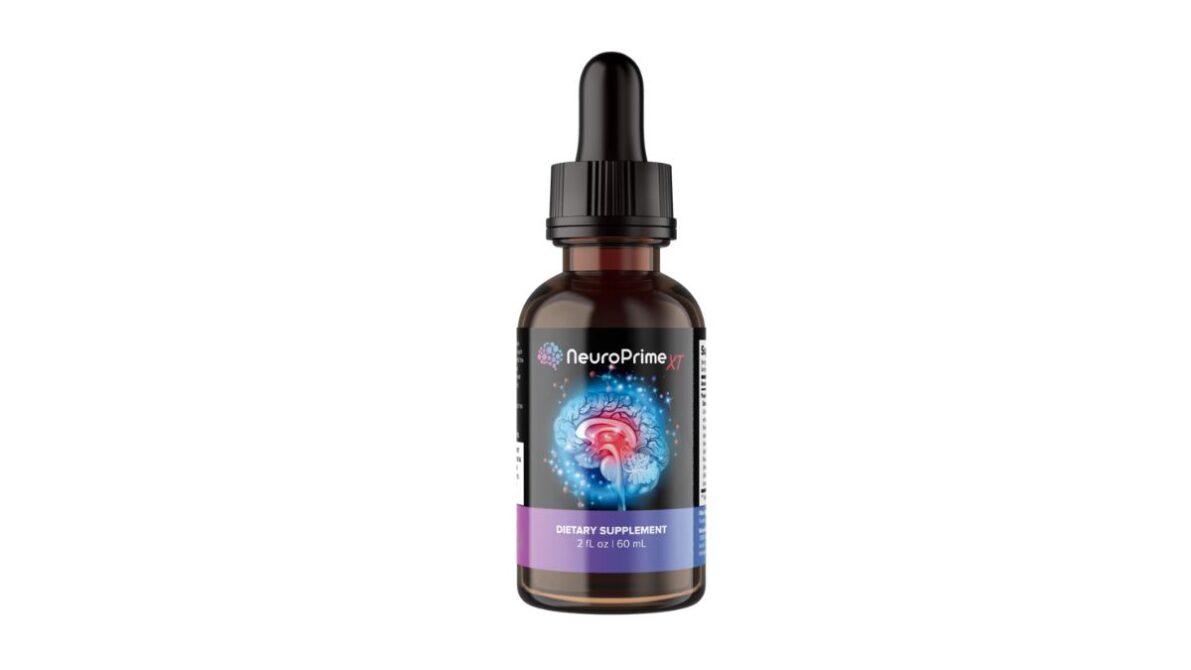
NeuroPrime is a liquid. The instructions say one drop per day. A standard dropper delivers roughly twenty drops per millilitre, so one drop is about 0.05 mL — call it 50 milligrams, and that’s being generous, because a liquid tincture is mostly carrier: glycerin, oil, or alcohol. Whatever’s actually active is a fraction of that 50 mg.
Now the other side of the ledger. Nine botanicals share that drop. The clinical dose of bacopa is 300–450 mg per day. Ginkgo’s largest trial used 240 mg per day. The best-known lion’s mane study used 3,000 mg per day. Those three alone come to roughly 3,500 mg of daily material, against a drop that can physically hold about 50 mg of everything combined, carrier included.
That’s a gap of roughly seventyfold, and it’s the reason this NeuroPrime review reads the way it does. This isn’t a judgment call about evidence quality or a debate about whether herbs work. It’s volume. You cannot put a clinical dose of nine ingredients into one drop, and no delivery technology changes that.
Everything below is the detail behind that number.
What’s Listed on the Label
NeuroPrime is sold as drops through the NeuroPrime official website, with ClickBank handling checkout. One drop daily, ideally in the morning, taken straight or stirred into a drink.
Nine ingredients are named: ginkgo biloba, bacopa monnieri, lion’s mane mushroom, pine bark extract, moringa, tamarind, chlorella, spirulina, and neem.
What isn’t named is any amount. There’s no supplement facts panel on the page — not a proprietary blend total, not a per-ingredient breakdown, nothing. Most sellers at least publish a label image. Here you get a list of nine plants and the phrase “unique blend of extremely hard to source ingredients.”
The claims language is unusually hedged, and I’ll give credit where it’s due: the site says NeuroPrime is “designed to help support memory function” and is “based off a closely guarded formula that’s said to be able to help support memory function.” That’s careful, compliance-aware writing. It also means the product promises remarkably little in writing while the surrounding presentation implies rather more.
Ginkgo Biloba: The Biggest Trial, and a Negative Result
Ginkgo is the headline ingredient in half the brain supplements on the market, so it’s worth knowing what the definitive study found.
The Ginkgo Evaluation of Memory study enrolled 3,069 adults aged 75 and over, randomised them to 120 mg of standardised EGb761 twice daily or placebo, and followed them for a median of 6.1 years. It’s the largest trial ever conducted on ginkgo and dementia. The result: ginkgo had no effect on the incidence of dementia or Alzheimer’s disease, and no effect on the rate of progression in people who already had mild cognitive impairment. A companion analysis published the following year found no slowing of cognitive decline either.
The trial’s lead investigator put it plainly at the time: despite early indications that ginkgo might preserve memory, it turned out to have no impact on the development of dementia.
That’s the ingredient’s best evidence, at 240 mg per day, over six years. NeuroPrime delivers an unstated fraction of a single drop. Even if ginkgo worked, the dose here wouldn’t reach the threshold that failed.
Bacopa and Lion’s Mane: Real, Modest — and Dose-Dependent
Here’s where I’ll push back on the cynics, because two ingredients in this formula do have genuine human evidence.
Bacopa monnieri is the strongest of them. A meta-analysis pooling nine randomised controlled trials with 437 analysable subjects found measurable improvements in speed of attention and reaction time — faster Trail B completion and shorter choice reaction times. Not dramatic, not memory restoration, but real and statistically solid.
Read the methods, though, and the conditions are strict. Every included trial ran at least 12 weeks. Doses ranged from 300 to 450 mg of standardised extract daily. And the picture isn’t uniformly positive — a 12-week trial in 87 adults aged 40 to 70 with self-reported memory complaints found no cognitive improvement at all.
Lion’s mane has one frequently-cited trial: 30 Japanese adults with mild cognitive impairment, 3,000 mg daily for 16 weeks, with improvement on a cognitive scale that faded after the supplement stopped. Small, single-site, and a long way from definitive — but a legitimate signal worth further study.
Both of these are ingredients I’d want in a memory formula. Both are also ingredients whose entire evidence base rests on daily doses measured in hundreds or thousands of milligrams, sustained for months. That’s the recurring problem: the ingredient list is defensible, and the format makes the ingredient list irrelevant. If you’re comparing options in this category, our Phytomem One review covers another herbal formula in the same space.
The Filler Half of the Formula
Four of the nine ingredients have essentially no business being in a memory product, and I say that without much hesitation.
Chlorella and spirulina are algae. They’re perfectly good nutritional foods with respectable protein and micronutrient profiles. Neither has meaningful human evidence for memory or cognition.
Moringa is in the same position — nutritionally interesting, cognitively unstudied in humans at any serious scale.
Tamarind is the one the company actually cites, and it’s instructive. Their reference is a 2022 paper on the anti-cognitive-decline potential of Tamarindus indica, which is an in-vivo, in-vitro and in-silico investigation. In plain English: rodents, cell cultures, and computer modelling. It’s real research and it was published in a real journal. It is not evidence that tamarind improves memory in a human being.
Pine bark extract is the least objectionable of the four — there are small cognitive studies on standardised pine bark preparations — but the same dosing problem applies, and those studies used defined extracts at defined amounts.
Nine ingredients sounds thorough. In practice, adding four ingredients with no cognitive evidence to a drop that can’t dose the other five isn’t formulation; it’s a longer list.
Neem Is the Odd One Out
This is the ingredient that made me stop and go looking.
Neem has a long traditional role in South Asia, mostly topical and dental. What it doesn’t have is any cognitive rationale — it isn’t a nootropic in any tradition I can find, and no one puts it in memory formulas.
What it does have is a documented toxicity profile. Neem oil, pressed from the seed kernels, is the concerning preparation. NIH’s LiverTox database maintains an entry for margosa oil as a probable rare cause of clinically apparent liver injury, noting a Reye-like syndrome pattern. The case literature is genuinely alarming: infants and children who ingested small amounts developing vomiting, seizures, metabolic acidosis, and encephalopathy, with deaths recorded. In adults it’s rarer but reported — including a 73-year-old who developed seizures and toxic encephalopathy after ingesting neem oil.
Now, fairness matters here, so let me be precise about what this does and doesn’t mean.
Those cases involve neem oil in volumes of millilitres to tens of millilitres. Neem leaf is a different preparation with a much milder profile, consumed traditionally in far larger quantities than a drop. A trace amount of neem in a daily drop is very unlikely to poison anyone, and I’m not suggesting it will.
But NeuroPrime doesn’t say which neem it uses, which plant part, or in what preparation — and it’s an oil-based liquid. When an ingredient’s main claim to fame in the medical literature is toxicity case reports, “we won’t tell you which form or how much” is not a comfortable answer. It’s the one thing on this label I’d want specified before swallowing it daily for six months.
Medication Interactions Worth Raising
Even at low doses, two ingredients here deserve a mention to your pharmacist.
Ginkgo affects platelet function and has a well-documented association with bleeding risk. If you take warfarin, a DOAC, clopidogrel, or daily aspirin — or if you have surgery or dental extraction scheduled — ginkgo belongs on the list you disclose. Standard surgical guidance is to stop it a couple of weeks beforehand.
Neem has documented antifertility effects in animal research, which makes it a poor choice for anyone trying to conceive, and it’s not appropriate in pregnancy or breastfeeding.
The company’s own FAQ handles this reasonably: it advises showing the bottle to your doctor if you take prescription medication. That’s better advice than most sales pages give, and it’s worth actually following — though it’s slightly undercut by the fact that a bottle with no ingredient amounts gives your doctor very little to assess.
About Those “Scientific References”
At the bottom of the sales page there’s a section headed “scientific reference” with five entries. I read all five, and the result is the strangest thing in this review.
Four of the five are about melatonin and sleep. Melatonin is not in NeuroPrime. Two of those four are Harvard Health Blog posts — consumer articles, not studies.
The remaining two melatonin entries don’t hold up as citations at all. One reads “Kyoto University. (2021). Neuroprotective effects of melatonin in cognitive decline. Journal of Pineal Research” — an institution listed as author, no authors named, no volume or page numbers. The other reads “University of Pittsburgh. (2022). Melatonin’s role in preventing neuron damage associated with cognitive decline. 9(2), 145-158. doi:10.1234/jad.2023.006.” That one has no journal name at all, is dated 2022 while carrying a DOI reading 2023, and uses the prefix 10.1234 — which is the placeholder prefix used in DOI documentation to illustrate what a DOI looks like. I could not locate either of these as real published papers.
The fifth reference, the tamarind study, is real. It’s also the only one connected to anything actually in the bottle, and it’s a rodent study.
So: a memory supplement whose published evidence file consists of four items about an ingredient it doesn’t contain, two of which are blog posts and two of which don’t appear to exist, plus one rodent paper. You can verify every word of that in about five minutes.
One more small thing, offered as an observation rather than a conclusion: the product bottle images on the official site are filed under names beginning neuroXT_, and one checkout template is labelled npxt. Whether NeuroPrime was previously marketed under a different name, I can’t say for certain — but it’s worth knowing the asset trail is there.
Does Sublingual Delivery Change the Math?
The affiliate press releases lean hard on this, so it deserves a direct answer.
Sublingual absorption is real. Holding a substance under the tongue lets some compounds enter the bloodstream through the mucous membrane, bypassing first-pass liver metabolism. For certain small, fat-soluble molecules, it genuinely improves bioavailability.
Two problems. First, most botanical extracts are large, complex, poorly-soluble molecules that don’t absorb well sublingually — the technique works for things like nitroglycerin and some hormones, not for bulk plant extracts. Second, and more fundamentally: better absorption of a very small amount is still a very small amount. If a drop contains five milligrams of bacopa and sublingual delivery doubles absorption, you’ve absorbed ten milligrams against a clinical dose of three hundred.
Improved efficiency doesn’t solve a volume problem. It’s the difference between a more efficient teaspoon and needing a bucket.
What I Liked
The compliance language is careful. “Designed to help support memory function” is restrained by the standards of this category. Nobody is promising to reverse dementia.
The FAQ tells you to talk to your doctor. Explicitly, about prescription medication. Plenty of sellers skip that.
A 365-day guarantee is genuinely long. A full year is more runway than almost anyone offers, and it materially reduces the risk of trying a bottle.
Bacopa and lion’s mane are real choices. Whoever picked the list knew which botanicals have human trials behind them, even if the format doesn’t deliver them.
Things to Consider
No doses. Anywhere. Not a panel, not a blend total, not a single milligram figure. This is the central issue and everything else follows from it.
One drop cannot carry nine clinical doses. The arithmetic at the top of this NeuroPrime review isn’t a quibble; it’s the whole review.
The flagship ingredient failed its flagship trial. Ginkgo, 3,069 people, six years, no effect.
The reference list is about a different ingredient. And at least two entries don’t appear to correspond to real papers.
No third-party testing is mentioned. No certificate of analysis, no independent verification, for a product with unnamed quantities of nine plants including one with a toxicity literature.
“97% of customers order 6 bottles.” An unverifiable statistic positioned to make the $294 option feel normal.
Price, Guarantee, and the Review Trail
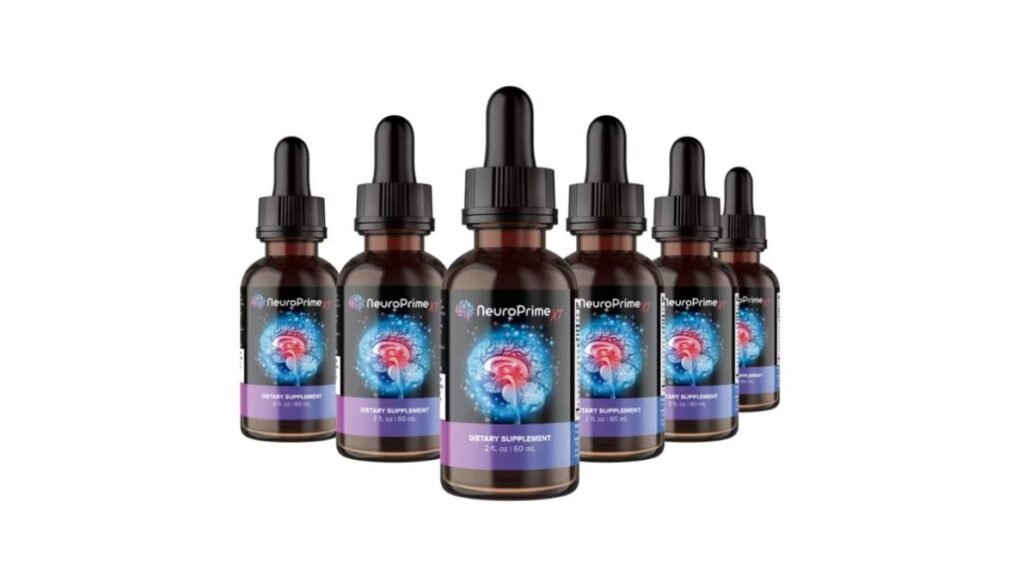
Pricing is $69 for one bottle, $59 each for three ($177), and $49 each for six ($294), with free shipping over three bottles and a 365-day money-back guarantee. Current pricing is on the NeuroPrime site.
On what other people say, I’d rather give you the honest state of things than a fabricated consensus.
There are no independent reviews. The product is sold direct only, so there’s no verified-purchase pool. What fills the search results is a wire-service operation: press releases distributed through ACCESS Newswire that then appear on Morningstar and Yahoo Finance. If you land on one of those, it looks like financial journalism vouched for the product. It didn’t — those outlets syndicate press releases and both carry disclaimers saying the content isn’t verified by them. Several of the pieces disclose affiliate commissions in the fine print.
The rest are PDFs uploaded to the file-upload directories of unrelated legitimate websites — a hospital foundation, a dental practice, a forestry organisation — which is a well-known spam SEO technique, not evidence of anything about the product.
These sources also contradict each other on basic facts. Two different company addresses in two different states. Two different phone numbers, one of which isn’t a valid US format. One describes the product as capsules. Refund instructions differ: the official FAQ says return what you haven’t used, while an affiliate page insists you must return all bottles even if empty. If you do order, get the refund terms from the seller directly and in writing.
Final Verdict
NeuroPrime isn’t a scam in the sense of taking your money and shipping nothing. It’s something more ordinary and, for a buyer, just as unhelpful: a plausible ingredient list in a format that can’t deliver it, sold with a reference section that doesn’t match the product.
Two of the nine ingredients have real human evidence. Both need hundreds to thousands of milligrams daily for months. One drop can’t carry that, sublingual delivery doesn’t rescue it, and the label won’t tell you what’s in there anyway. The flagship ingredient, meanwhile, has been tested more rigorously than almost any supplement in history and came back negative.
Who it might suit: honestly, nobody I can describe with a straight face. If the 365-day guarantee tempts you into trying one bottle, that’s a defensible $69 experiment — just don’t order six, and set a calendar reminder well inside the refund window.
Where I’d put the money instead: if you want a botanical memory formula, insist on three things — a published supplement facts panel with per-ingredient amounts, doses that match the trials the ingredients are famous for, and third-party testing. Those exist. Our Synaptigen review looks at another option in this category if you’re comparing.
And the unglamorous part that outperforms every drop on the market: sleep, blood pressure control, hearing correction, exercise, and social engagement all have stronger evidence for protecting cognition than any supplement in this category. If memory changes are new or getting worse, see a doctor — some causes are treatable, and a drop won’t find them.
Frequently Asked Questions
How long would NeuroPrime take to work?
There’s no published trial on this formula, so any timeline is invention. For context, the ingredients with real evidence took 12 to 16 weeks at full clinical doses to show modest effects. The 365-day guarantee is your practical test window.
Is NeuroPrime safe?
At the amounts a single drop can hold, acute harm is unlikely. The honest answer is that safety can’t be properly assessed without knowing quantities, and neem in particular has a toxicity literature that makes an undisclosed amount and preparation uncomfortable. If you take blood thinners, discuss the ginkgo content with your pharmacist.
Is sublingual really better absorbed?
For some small molecules, yes. For bulk botanical extracts, generally not — and improved absorption of a tiny quantity still yields a tiny quantity. Delivery efficiency doesn’t compensate for a dose that’s an order of magnitude too low.
What actually helps protect memory as I age?
Managing blood pressure and hearing loss, regular physical activity, decent sleep, not smoking, and staying socially and mentally engaged carry far stronger evidence than any supplement on the market. Unglamorous, free, and genuinely effective — and if your memory has changed noticeably, get it properly assessed rather than self-treating.

Raphael Albert is the founder and content creator of Nutra Plus. Passionate about health, nutrition, fitness, and wellness, he spends his time researching scientific studies, health trends, and evidence-based lifestyle strategies to create informative and easy-to-understand content. While he is not a doctor or licensed healthcare professional, his goal is to help readers make more informed wellness decisions. All content is for educational purposes only and should not replace professional medical advice. Always consult a qualified healthcare provider regarding your health concerns.
1 thought on “NeuroPrime Review: The Problem Isn’t the Ingredients — It’s the Dose”