A note on how this site earns: a couple of links below go to the seller, and buying through them pays this site a commission at no extra cost to you. It didn’t soften the review — the concerns below are the same ones I’d raise if there were no commission at all.
These statements have not been evaluated by the Food and Drug Administration. This product is not intended to diagnose, treat, cure, or prevent any disease. Bladder leaks, urgency, and frequent urination are symptoms of real medical conditions that deserve a proper evaluation. Nothing in this article is a substitute for seeing your own doctor — please treat it as background reading before that appointment, not instead of it.
Nobody talks about this at dinner parties. You sneeze and something happens. You map your errands around where the bathrooms are. You wake up twice a night and tell yourself it’s just age. Somewhere between the fifth and fiftieth time, you start typing things into a search bar at 11pm, and eventually an ad finds you.
That’s usually how women arrive at a product like this one, and it’s why this FemiCore review is written more carefully than most. When a supplement is aimed at a symptom that’s genuinely embarrassing, the marketing gets to lean on something powerful — the fact that you’d rather solve this quietly than say it out loud to a doctor. So let’s do this properly. What’s actually in it, what the research supports, and what the sales page claims that the research doesn’t.
The short version: the underlying science isn’t fake, but the causal story built on top of it is much bigger than the evidence allows.
The Claim at the Center of FemiCore
The sales page states its premise plainly. FemiCore is described as targeting a microbiome imbalance which causes involuntary muscle contractions and sudden leaks.
Read that again, because everything else follows from it. It’s not saying bacterial balance is associated with bladder symptoms. It’s saying imbalance is the cause, and by extension that rebalancing bacteria addresses the cause.
That’s a strong claim, and it’s the one worth testing hardest — because if it holds up, a probiotic approach makes sense, and if it doesn’t, you’re buying a solution aimed at the wrong mechanism.
What the Urobiome Research Actually Shows
Here’s where the picture gets more interesting than either the marketing or the cynics would suggest.
For decades, medicine taught that urine was sterile. That turned out to be wrong. Better culturing techniques and DNA sequencing revealed that healthy bladders host their own microbial communities, and this “urobiome” is now a legitimate, active research field. Studies have found real differences between the urinary bacteria of women with and without incontinence — reduced Lactobacillus levels and different community patterns show up repeatedly in women with urgency symptoms.
So far, so supportive. Now the part the sales page leaves out.
Almost all of this work is cross-sectional. Researchers photograph two groups at one moment and note that they look different. That tells you nothing about direction. Do altered bacteria cause the symptoms, or does a symptomatic bladder — with its different voiding patterns, medications, and inflammation — end up hosting different bacteria? The field says this openly: causality remains undetermined, and whether correcting the microbiome reduces symptoms is still unknown.
There’s an awkward wrinkle too. One study comparing women with overactive bladder found higher Lactobacillus in the group with confirmed detrusor overactivity — the opposite direction from “restore your lactobacilli and the contractions settle.”
And there’s a category problem underneath all of it. Leaking when you cough, laugh, or lift something is stress incontinence, and it’s mechanical: the pelvic floor and urethral support aren’t holding under pressure. No bacterial community explains that. Lumping it in with urgency symptoms under one microbiome story is where the marketing stops tracking the science.
What’s in the Capsule — and What Isn’t Disclosed
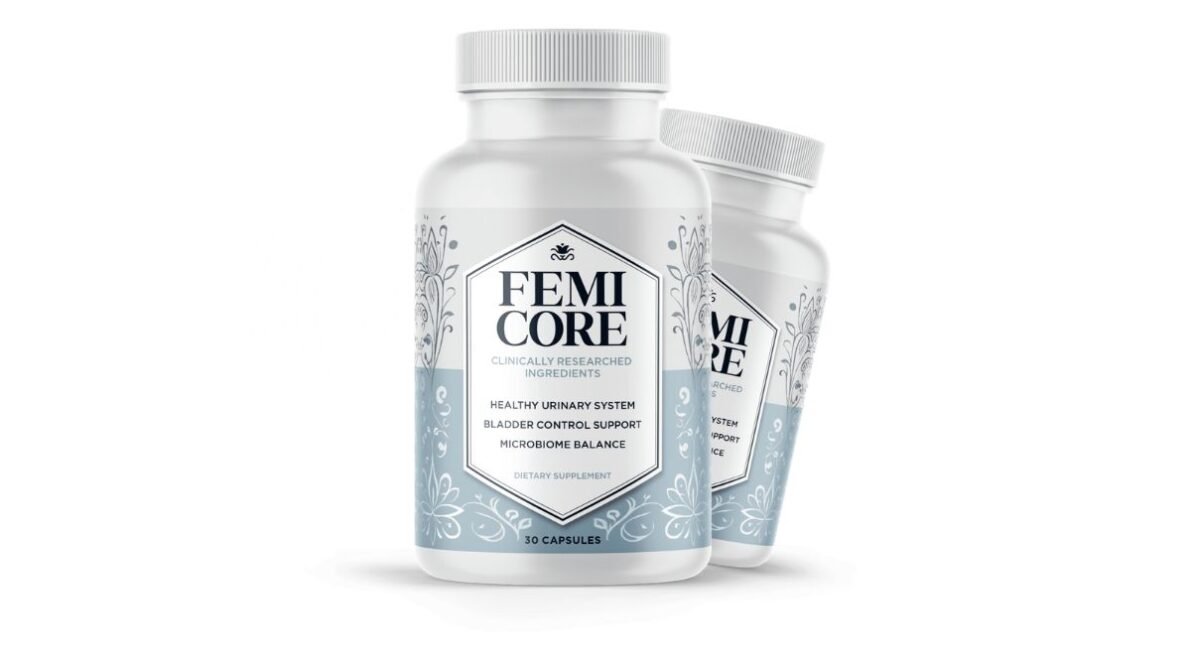
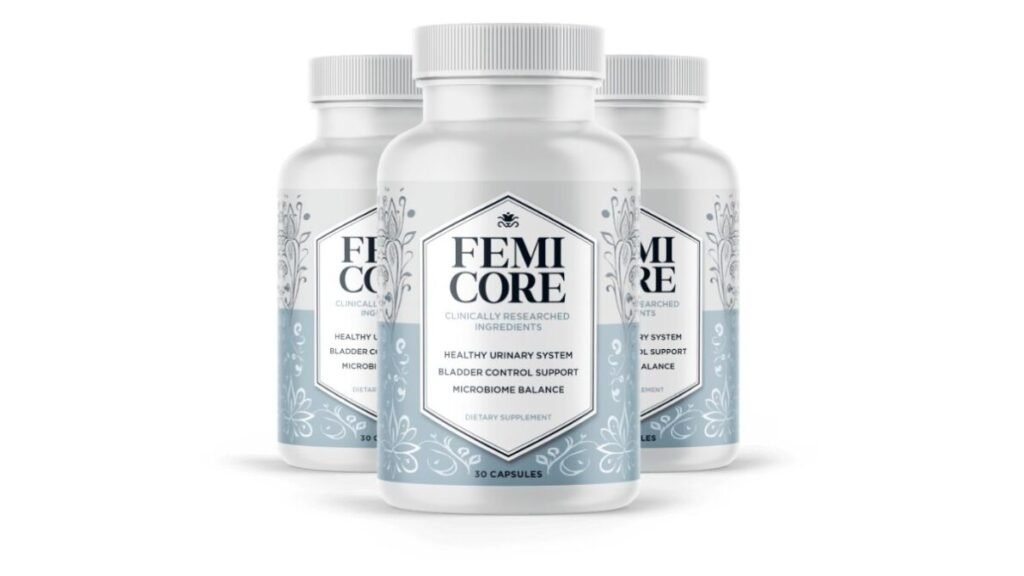
One capsule daily, sold only through the FemiCore official website with ClickBank handling checkout. Nine listed ingredients:
Four botanicals — mimosa pudica, bearberry (uva-ursi), cranberry extract, and berberine — plus five Lactobacillus strains: crispatus, acidophilus, plantarum, gasseri, and casei.
The dosing situation is the first real problem. The site describes it as “an optimally dosed proprietary blend,” which is a phrase that means the opposite of what it sounds like: a proprietary blend is precisely a formula where individual amounts aren’t disclosed. You’re told the total, not the breakdown.
A paid advertorial published this year lists the blend as 350 mg of the four herbs combined, plus 50 mg of the probiotic blend. I couldn’t independently verify those figures and the label is published only as an image, so treat them as brand-stated rather than confirmed. But if they’re accurate, they matter enormously — and I’ll come back to why in a moment.
Ingredient by Ingredient: Grading the Evidence
| Ingredient | Best-supported use | Evidence for bladder control |
|---|---|---|
| Cranberry | Preventing recurrent UTIs | Strong for UTIs — not the same thing |
| L. crispatus | Vaginal microbiome | Moderate, but for vaginal delivery |
| Bearberry | Short-course urinary antiseptic | None; plus duration limits |
| Berberine | Metabolic markers | Preliminary — rodent bladder data |
| L. plantarum / acidophilus / gasseri / casei | General/vaginal microbiome | Preliminary |
| Mimosa pudica | — | Essentially none |
Cranberry has the strongest data here, and it’s genuinely good data. A Cochrane review of 50 trials covering 8,857 people found moderate-certainty evidence that cranberry products reduce symptomatic, culture-verified UTIs in women with recurrent infections. That’s a real finding from a rigorous source.
It’s also a finding about infections, not continence. Recurrent UTIs and urgency incontinence are different problems with different mechanisms. If your issue is recurrent UTIs, cranberry is a reasonable thing to want. If your issue is leaking, this evidence doesn’t reach it. Worth noting too: the effect appears tied to proanthocyanidin content, with around 36 mg often cited as the working threshold — another number the proprietary blend won’t tell you.
L. crispatus is the most scientifically interesting inclusion, and also the most misapplied. The serious research on this organism is LACTIN-V, a live biotherapeutic delivered intravaginally — applied directly, after a course of antibiotics, in a controlled trial. Even under those conditions, only about 30% of recipients achieved crispatus-dominant colonization, and the benefit was partial.
FemiCore is a swallowed capsule. Getting a specific Lactobacillus strain from the stomach, through the digestive tract, and established in the bladder or vagina in meaningful numbers is a much harder problem than applying it locally, and it isn’t one this product has published evidence of solving.
Mimosa pudica is the odd one out. It’s a fixture of “gut parasite cleanse” protocols, and the company’s own citation for it is an in-vitro antioxidant and antibacterial paper. Test tubes. Nothing connecting it to bladder function in a human being.
The Bearberry Problem
This is the section I’d want a friend to read before ordering six bottles.
Bearberry, or uva-ursi, works through arbutin, which the body converts into hydroquinone and excretes into the urine, where it acts as an antiseptic. It has a genuine traditional role in short-course urinary infection care.
Emphasis on short. The European Medicines Agency’s herbal monograph for bearberry leaf is unambiguous: it is not to be used for more than one week. Standard herbal guidance adds a second limit — no more than about five short courses in a year — because of concerns about long-term hydroquinone exposure, including liver and kidney effects. It’s contraindicated in pregnancy and breastfeeding.
Now look at how FemiCore is sold. Daily capsule. Six-bottle bundle as the headline offer, with the page claiming 96% of customers choose it. That’s a 180-day supply of an ingredient with a one-week regulatory ceiling.
In fairness, there’s a counterargument worth stating. A 2013 toxicological risk assessment concluded that at recommended therapeutic doses, free hydroquinone exposure from bearberry sits well below the threshold of concern, and found no human evidence of it causing liver or kidney damage or promoting tumors. That paper was authored by researchers affiliated with a company producing bearberry preparations, which doesn’t invalidate it but is worth knowing.
Here’s the resolution, and it cuts both ways. If the 350 mg figure for the whole botanical blend is right, the bearberry portion is a small fraction of the roughly 400–800 mg of arbutin used therapeutically — far too little to raise the toxicity concern, and also far too little to do what bearberry is known to do. That’s the recurring shape of this formula: doses low enough to be safe, and low enough to question whether they’re doing much.
Berberine and Your Medication List
Berberine is the ingredient most likely to matter if you take prescription medication, and the sales page doesn’t mention it.
Berberine inhibits CYP3A4 — the enzyme that metabolizes roughly half of all medications — along with P-glycoprotein, a transporter that controls how much of a drug you absorb. In practice that puts several drug classes on the watch list: certain statins, immunosuppressants like cyclosporine, some anticoagulants, and digoxin. It also lowers blood glucose, which can stack with metformin, sulfonylureas, or insulin.
It’s also contraindicated in pregnancy and breastfeeding. Berberine crosses the placenta and can displace bilirubin from albumin, which in newborns carries a risk of kernicterus, a form of brain injury.
Whether the amount in a shared 350 mg blend is enough to trigger any of this is unknown — trials of berberine typically use 500 mg two or three times daily, so it’s plausibly far below interaction thresholds. But “probably too little to matter” is a thing your pharmacist should say, not a supplement’s sales page by omission.
Who Should Skip FemiCore Entirely
Given the bearberry and berberine content, this list is not short:
- Anyone pregnant or breastfeeding — both ingredients are contraindicated, and this is not a grey area
- Anyone on statins, immunosuppressants, blood thinners, digoxin, or diabetes medication — talk to a pharmacist before, not after
- Anyone with kidney or liver disease
- Anyone with blood in the urine, fever, back pain, or burning — that’s a same-week doctor’s appointment, not a supplement
- Anyone whose symptoms started suddenly or changed recently — sudden change in bladder habits needs evaluation, full stop
- Anyone who’s never had this properly assessed — you can’t pick the right approach without knowing whether you’re dealing with stress, urgency, mixed, or overflow symptoms, and those need different things
That last one is the important one. A supplement bought at 11pm skips the step where you find out what’s actually happening.
What I Liked
The reference page is real. After reviewing a lot of these products, this genuinely stands out: FemiCore publishes actual citations with DOIs to real, findable papers. Most sellers in this space don’t bother. Credit where it’s due.
The urobiome premise isn’t invented. Plenty of supplements are built on mechanisms that don’t exist. This one is built on a real and active area of research. The problem is how far past the evidence it runs, not that the evidence is fabricated.
Cranberry and L. crispatus are serious ingredient choices. Somebody read the literature. These aren’t filler botanicals picked for exotic-sounding names.
A 60-day guarantee on a single-purchase model. No subscription trap, and two months to decide.
Things to Consider
Proprietary blend. You cannot evaluate what you can’t see, and “optimally dosed” is a claim, not a disclosure.
The causal claim isn’t supported. Association is not causation, and the sales page states causation outright.
Stress incontinence isn’t a bacterial problem. If sneezing is your trigger, the mechanism this product targets isn’t your mechanism.
Oral delivery of vaginal-strain probiotics is unproven. The crispatus evidence comes from a product applied directly, not swallowed.
“Based on 19,263 reviews” appears on the sales page with no link to where those reviews live.
The bonus material is a tell. Bonus #1 is a guide promising to make your husband “chase you obsessively.” It has nothing to do with bladder health, and it says something about who the marketing thinks it’s talking to.
Reading FemiCore’s Own Reference List
I went through all 23 citations. It’s a genuinely useful exercise, because the list quietly contradicts the sales pitch.
The urobiome papers are legitimate — Carnes 2024, Komesu 2018, Price 2020, Govender 2019. Every one of them is an association or cross-sectional study. Not one demonstrates that changing bacteria changes continence.
The ingredient-specific citations are weaker than they look. Berberine’s entry is a study on diabetic rats. Mimosa pudica’s is in-vitro. Bearberry’s is a study protocol — a description of a planned trial, not results. Cranberry’s is a 1984 laboratory adherence paper rather than the Cochrane review that actually exists. L. gasseri’s citation is a blog post from a commercial testing company.
And then there’s a cluster that has nothing to do with the product at all: a New York Post article about a TikTok tampon scare, a Time magazine piece on tampons, a Reuters story about FDA tampon complaints, a WHO dioxins fact sheet, and a study on PCB exposure in mice. Those aren’t ingredient evidence. They’re the fear narrative — the “here’s what’s been poisoning you” setup that the sales video is presumably built around, filed under “Scientific References.”
None of this means the ingredients do nothing. It means the company’s own evidence file doesn’t support the specific claim on the front page, and you can verify that yourself in about ten minutes.
The Option With Better Evidence Than Any Capsule
If you read nothing else here, read this.
Pelvic floor muscle training has evidence that no bladder supplement on the market comes close to. A Cochrane review of 31 trials involving 1,817 women across 14 countries concluded that PFMT can cure or improve symptoms of stress and other types of urinary incontinence, reducing both leakage episodes and volume, and that it belongs in first-line conservative management. Women who did it were more satisfied and less likely to seek further treatment.
It’s free. It has no drug interactions. It’s safe in pregnancy. And it’s what a urogynecologist or pelvic floor physiotherapist would start you on.
The catch is that it’s genuinely hard to do correctly without guidance — a lot of women squeeze the wrong muscles for months and conclude it doesn’t work. A referral to a pelvic floor physio is the single highest-value thing you can do with this problem, and it’s the one thing no supplement ad will ever tell you.
Structural support matters alongside the muscle work, which is why connective tissue health keeps coming up in this area — you can read more in our Advanced Collagen Plus review, though I’d treat that as complementary background rather than a substitute for the training itself.
Price, Guarantee, and What Users Actually Say
Pricing runs roughly $79 per bottle for two, $69 each for three, and $49 each for the six-bottle bundle, with free shipping on the largest order and a 60-day money-back guarantee. Current pricing is on the FemiCore site.
On user feedback, I’ll give you the honest finding rather than a manufactured consensus: there isn’t reliable independent feedback available.
The product is sold direct only, so there’s no verified-purchase review pool. What fills the search results instead is a wall of affiliate content that contradicts itself. One page claims to have verified reviews from Amazon, BBB, Reddit, and Consumer Reports — for a product with no Amazon listing. Another rates it an outright scam. A third openly labels itself a paid advertorial. Several point to a completely different domain as the official site, which is its own consumer-safety issue: if you do order, make sure you’re on the seller’s actual page.
Treat every FemiCore testimonial you encounter, glowing or damning, as unverified.
Final Verdict
FemiCore is a more thoughtful product than most in this category, sold with claims that outrun what its own citations support.
The formula contains ingredients chosen by someone who read research. The urobiome premise is real science. And the specific promise — that rebalancing bacteria addresses the cause of leaks and involuntary contractions — is not something the evidence currently supports, particularly for stress incontinence, which is a mechanical problem that no capsule addresses.
Who it may reasonably suit: a woman whose main issue is recurrent UTIs rather than leaking, who isn’t pregnant or breastfeeding, who takes no interacting medication, who has already had her symptoms properly assessed, and who wants to try a cranberry-and-probiotic approach with a refund window. That’s a narrow group, and if you’re in it, one or two bottles is the sensible test — not six.
Who should look elsewhere: anyone hoping this replaces a proper evaluation, anyone whose leaks happen when they cough or laugh, anyone on the medication list above, and anyone pregnant or nursing.
And whichever way you go on the capsule, get the pelvic floor referral. That’s the part with the evidence behind it.
Frequently Asked Questions
How long would FemiCore take to do anything?
Affiliate pages suggest two to four weeks. There’s no published trial on this specific formula, so any timeline is a guess. If you try it, the 60-day guarantee is your real window — decide within it rather than ordering six bottles on faith.
Can a probiotic actually reach the bladder?
That’s the open mechanistic question. The strongest Lactobacillus crispatus research used a product applied directly to the vagina, not swallowed, and even then colonization succeeded in a minority of participants. Oral delivery reaching the urinary tract in meaningful numbers hasn’t been demonstrated for this product.
Is FemiCore safe during pregnancy?
No. Both bearberry and berberine are contraindicated in pregnancy and breastfeeding, and berberine specifically carries a kernicterus risk for newborns. This is one of the clearest lines in the whole review.
What should I do instead if leaks are my main issue?
Ask your GP for a proper assessment and a referral to a pelvic floor physiotherapist. Pelvic floor muscle training has Cochrane-level evidence behind it, costs nothing, and carries no interaction risk — which is more than any supplement in this category can claim.

Raphael Albert is the founder and content creator of Nutra Plus. Passionate about health, nutrition, fitness, and wellness, he spends his time researching scientific studies, health trends, and evidence-based lifestyle strategies to create informative and easy-to-understand content. While he is not a doctor or licensed healthcare professional, his goal is to help readers make more informed wellness decisions. All content is for educational purposes only and should not replace professional medical advice. Always consult a qualified healthcare provider regarding your health concerns.