
Transparency note: some links here send you to the seller’s site, and a purchase made through them may earn this site a commission. That arrangement doesn’t buy a positive write-up — the criticisms below stayed in.
These statements have not been evaluated by the Food and Drug Administration. This product is not intended to diagnose, treat, cure, or prevent any disease. Nothing here replaces advice from your own doctor or pharmacist, particularly if you take prescription medication or manage an ongoing health condition.
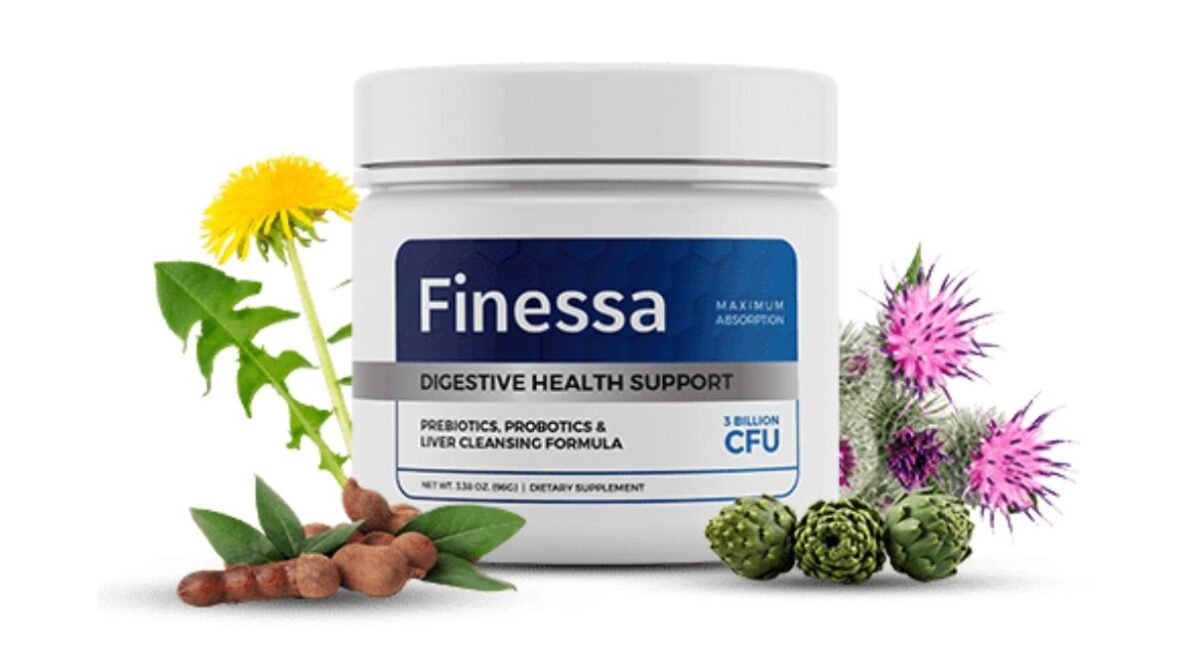
Most digestion powders pick a lane. They’re a fiber scoop, or a probiotic, or a “detox” tea. Finessa tries something different: it targets the gut and the liver at the same time, on the theory that the two are talking to each other constantly and that fixing one without the other leaves you halfway there.
That’s a more interesting premise than most, and it’s the reason this Finessa review took longer than usual to put together. The formula contains ingredients with real human trial data behind them. It also contains one ingredient that the FDA pulled from over-the-counter laxative status more than twenty years ago — an ingredient the manufacturer suggests you take daily for at least six months. Both things are true at once, and you deserve to know both before you decide.
Here’s what the research actually supports, what it doesn’t, and who should probably walk away.
What Finessa Is, In Plain Terms
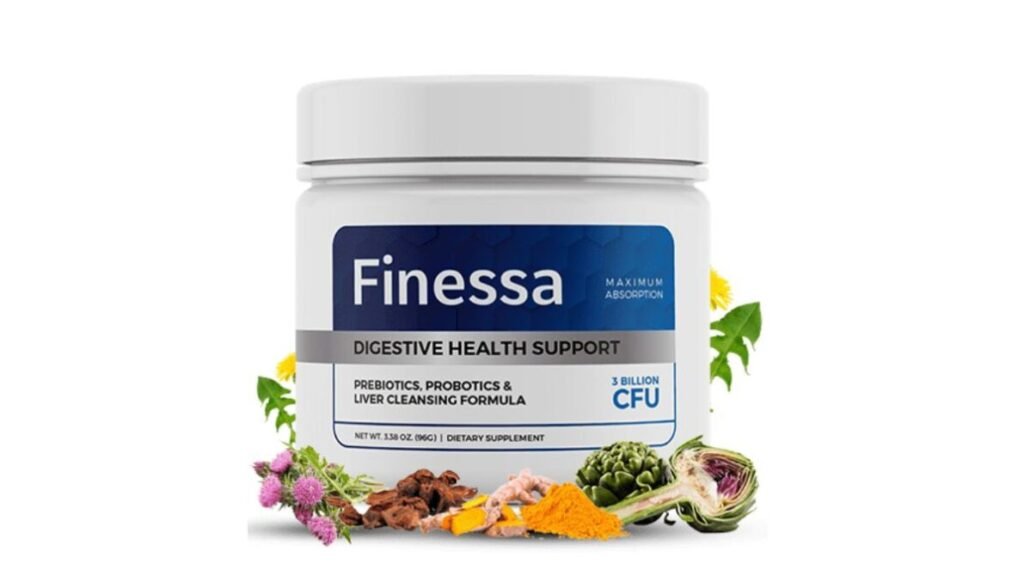
Finessa is a powdered supplement, not a capsule. One scoop mixed into water each morning. It’s sold direct-to-consumer through the Finessa official website and processed through ClickBank — you won’t find it on Amazon or in a pharmacy, which matters later when we get to reviews.
The marketing angle is a “flatter belly” and easier, more predictable bathroom visits. The mechanism it claims is bile flow: get the liver producing bile properly, get the gut bacteria fed, and digestion supposedly stops feeling like a chore. Eight ingredients do the work — dandelion, milk thistle, cascara sagrada, artichoke, turmeric, licorice, a probiotic blend, and a polyphenol blend.
Worth flagging early: the supplement facts panel is published on the sales page as an image, and the marketing copy itself never states how much of anything you’re getting. That’s not unusual in this category, but it’s a limitation that runs through everything below. You can’t evaluate a dose you can’t see.
Is the Gut-Liver Axis a Real Thing, or Marketing?
It’s real. The gut-liver axis is established physiology, not invented copywriting. Blood from your intestines travels to the liver through the portal vein before it goes anywhere else, carrying bacterial metabolites with it. The liver sends bile back the other way. Researchers have been publishing on this two-way relationship for years, and it’s genuinely central to how the field now thinks about metabolic liver conditions.
So the concept checks out. What doesn’t automatically follow is that a morning powder meaningfully moves that axis in a healthy adult. “This system exists” and “this scoop optimizes it” are separated by a lot of unproven ground, and the sales page treats them as the same claim. Keep that gap in mind.
Ingredient Spotlight: Grading the Evidence One by One
I looked up the primary research for each component rather than taking the sales page’s word for it. The picture is uneven.
| Ingredient | What it may do | Evidence strength |
|---|---|---|
| Probiotics | Stool frequency, transit time | Moderate — but strain-specific |
| Artichoke (inulin) | Feeds bifidobacteria | Moderate (human RCT) |
| Milk thistle (silymarin) | Liver markers | Moderate for liver, not digestion |
| Cascara sagrada | Bowel movements | Effective, but regulatory baggage |
| Turmeric (curcumin) | Gut comfort | Preliminary |
| Dandelion | Motility, bile | Preliminary (mostly rodent) |
| Licorice | Soothing GI effects | Preliminary, with real risks |
| Polyphenols | Prebiotic effect | Preliminary as a generic blend |
Probiotics have the strongest digestion data here. A meta-analysis of 14 randomized trials covering 1,182 adults found that probiotics cut whole-gut transit time by roughly half a day and added over one bowel movement per week. Encouraging — with a catch the sales page skips. Those benefits were strain-specific. Bifidobacterium lactis delivered; Lactobacillus casei Shirota didn’t. Finessa doesn’t name its strains, so there’s no way to know whether its probiotics resemble the ones that worked or the ones that didn’t.
Artichoke is the quiet standout. A double-blind crossover trial in 32 healthy adults showed that very-long-chain inulin from globe artichoke significantly increased bifidobacteria compared to placebo. Solid human evidence. The trial used 10 grams per day, though, and a single scoop containing eight ingredients almost certainly isn’t delivering 10 grams of artichoke inulin.
Milk thistle has the best liver data of the group. A 24-week randomized, placebo-controlled trial in 83 patients found that silymarin reduced liver stiffness and GGT levels. Real result, real trial. But read the rest of that paper: silymarin showed no significant effect on liver fat, aminotransferases, blood lipids, BMI, or waist-to-hip ratio. It didn’t help anyone lose weight. For a product filed under weight and belly claims, that’s a meaningful gap.
Dandelion and turmeric are where the sales copy stretches. The dandelion motility claim traces back to rodent work, not human trials. And the specific turmeric study the page describes — a 2023 paper in Frontiers in Microbiology on stool weight and water content — doesn’t appear anywhere in the reference list the company itself provides. Both ingredients may well help; the evidence just isn’t the caliber the copy implies.
The Cascara Sagrada Question
This is the part of the Finessa review that matters most, so I’d rather over-explain it than bury it.
Cascara sagrada is a stimulant laxative. It contains anthraquinone compounds that make the intestinal muscles contract. It works — that isn’t in question. The question is what it’s doing in a product you’re told to take every morning for six months minimum.
In November 2002, the FDA issued a final rule declaring cascara sagrada no longer generally recognized as safe and effective as an over-the-counter laxative ingredient, because manufacturers hadn’t produced the safety data the agency asked for. It stayed legal in supplements, where the premarket bar is lower, but the regulatory judgment didn’t change.
Here’s the detail that made me raise an eyebrow. The sales page cites the University of Rochester as evidence for cascara’s benefits. That URMC page is real, and I read it. It’s the same page that documents the FDA’s 2002 ruling, warns against use in irritable bowel syndrome, Crohn’s, ulcerative colitis, and ulcers, and notes reports of liver toxicity with long-term use or use beyond six consecutive days. The source cited as support is, in substance, a warning label.
The World Health Organization’s guidance for cascara is to keep use under two weeks, because of electrolyte loss. The manufacturer’s own FAQ recommends six months. Those two positions can’t both be right, and only one of them is coming from someone selling you the product.
None of this makes Finessa dangerous for a healthy adult trying a bottle. It does mean the “take it forever” framing deserves real skepticism, and it means this isn’t the gentle daily wellness powder the branding suggests.
What I Liked
The formula isn’t lazy. Artichoke inulin, silymarin, and a probiotic blend are legitimate choices with human trial support. Someone building this read actual research, even if the marketing then oversold it.
Powder over capsule is a defensible call. For prebiotic fibers especially, you need gram-level quantities, and you can’t fit those into a couple of capsules. The format matches the ingredients.
The gut-liver framing is scientifically coherent. It’s not a made-up mechanism dressed up in lab coat language. The axis exists and bile really does drive fat digestion and motility.
180 days is an unusually long guarantee. Whatever else is going on, that’s more runway than most sellers offer, and it means a bottle you dislike doesn’t have to become a sunk cost.
Things to Consider
No doses, anywhere. The panel is an image and the copy stays silent on amounts. Given that the artichoke evidence rests on a 10-gram daily dose, this isn’t a minor omission.
Unnamed probiotic strains. The one meta-analysis the product leans on found that strain identity determined whether the effect appeared at all. Without strain names, that research doesn’t transfer.
“No known side effects” is not accurate. The FAQ says exactly that. A formula containing a stimulant laxative and whole licorice has a documented side effect profile, and pretending otherwise isn’t a small rounding error.
Weight claims outrun the evidence. The best trial on its flagship liver ingredient found no change in BMI or waist measurements. A flatter belly from more regular bowel movements is not the same thing as fat loss, and the copy blurs that line.
A Reference Page That Belongs to a Different Product
This one is strange enough that I checked twice.
Finessa’s website has a dedicated references page. Click it and you get 27 citations about brown adipose tissue, cold-induced thermogenesis, resveratrol, quercetin, green tea catechins, fucoxanthin, ginseng, cinnamon, and piperine — a thermogenic fat-burning formula. None of those ingredients are in Finessa. Cascara, licorice, artichoke, and the probiotics don’t appear once. Only two entries touch a Finessa ingredient at all, and both link to consumer health articles rather than primary research.
The most plausible explanation is a copy-paste from another product’s funnel that nobody caught. It doesn’t mean the ingredients don’t work. It does tell you something about the editorial care behind the claims, and it’s the kind of detail worth knowing before you commit to a six-bottle order.
Who Should Be Cautious — or Skip It Entirely
Given the cascara and licorice content, this list is longer than it would be for a plain probiotic.
Talk to a doctor first, or pass, if you:
- Have inflammatory bowel disease, IBS, diverticulitis, ulcers, or any undiagnosed abdominal pain
- Are pregnant or breastfeeding
- Have high blood pressure, heart failure, kidney disease, or a history of low potassium
- Are managing a diagnosed liver condition — a liver-support powder is not a substitute for hepatology care
- Have an Asteraceae allergy (ragweed, chrysanthemum, marigold, daisy) — dandelion, artichoke, and milk thistle all belong to that family
- Are significantly immunocompromised, where live probiotics warrant medical input
And a flat rule regardless of who you are: bleeding, persistent pain, or a sudden lasting change in bowel habits is a doctor visit, not a supplement purchase.
Medication Interactions Worth Raising
Licorice is the one people underestimate. Glycyrrhizin blocks an enzyme that normally deactivates cortisol in the kidney, which can drive up blood pressure and push potassium down — a picture clinicians call pseudohyperaldosteronism. Published case reports include hospitalizations for severe hypokalemia. If you take blood pressure medication, a diuretic, or digoxin, this ingredient needs to be part of the conversation.
Cascara plus licorice together compounds that risk, since stimulant laxatives also deplete potassium. Two potassium-lowering ingredients in one daily scoop is a combination worth flagging out loud.
Milk thistle interacts modestly with the CYP450 enzyme system, which puts warfarin, certain statins, and diabetes medications on the watch list. Human data are reassuring at typical doses, but “reassuring” isn’t “irrelevant” when the drug has a narrow therapeutic window.
Turmeric deserves respect in a liver product. The Drug-Induced Liver Injury Network published ten cases of turmeric-associated liver injury, with a median patient age of 56 and most cases in women — squarely the demographic this product markets to. Rare, but not zero, and the irony of a liver-support formula is hard to miss.
What Real Users Are Saying
I’ll be straight with you: I couldn’t find trustworthy user feedback, and that’s the honest finding.
Finessa isn’t sold on Amazon, so there’s no verified-purchase review pool. I found no established Trustpilot presence. What search results do return is a wall of affiliate-built “review” pages — Google Sites blogs, PDFs hosted on unrelated domains, wire-service press releases — that contradict each other on basic facts. Some list the single bottle at $59, others at $69. Some describe the guarantee as 180 days, others as 90. Several assert “thousands of verified reviews” without pointing to where those reviews live.
Rather than pretend a consensus exists, I’d rather tell you there isn’t one. Treat any Finessa testimonial you encounter — including glowing ones — as unverified until it’s attached to a purchase someone can confirm.
Where to Buy and What It Costs
Only the official site. One bottle runs $59 plus shipping, three bottles work out to $49 each, and six drop to $39 each with free US shipping. Bulk orders include three digital bonus guides.
The 180-day money-back guarantee is the genuinely useful part of the offer, and it changes the math on trying it: a bottle you dislike is refundable rather than wasted. Just keep your order confirmation and be prepared for the process to take some back-and-forth — refund friction is the single most consistent complaint across the review pages I read, thin as they are. You can review current pricing on the Finessa site directly.
Final Verdict
Finessa is better formulated than the average “detox” powder and worse documented than its marketing suggests. That’s the summary of this Finessa review in one sentence.
The artichoke inulin, the probiotics, and the silymarin are defensible ingredients with human data behind them. If Finessa were those three things at disclosed doses, it’d be an easy product to recommend to the right person.
The cascara sagrada is what complicates it. A stimulant laxative can absolutely make you regular — and regularity you’re relying on a stimulant to produce isn’t quite the same as digestion that’s working on its own. Paired with the six-month usage recommendation and the licorice, it’s a formula I’d want a doctor to sign off on rather than one I’d casually suggest to a stranger.
Who it may suit: an otherwise healthy adult, not on blood pressure or blood-thinning medication, dealing with occasional sluggishness, who wants to try it for a month with a clear plan to stop rather than a standing subscription — and who values that long refund window.
Who should look elsewhere: anyone on medication that interacts with licorice or milk thistle, anyone with a diagnosed gut or liver condition, and anyone wanting a supplement they can take indefinitely without thinking about it. This isn’t that product, whatever the sales page says.
If the stimulant laxative timeline concerns you, it’s worth comparing gentler, non-laxative approaches to liver support — our HepatoBurn vs Milk Thistle vs Berberine comparison breaks down three alternatives that don’t carry the same FDA history.
Frequently Asked Questions
How long before Finessa might do anything?
The cascara component acts fast — stimulant laxatives typically work within six to eight hours. The parts that may matter more, the prebiotic and probiotic ingredients, work on a slower timeline; trials in this area generally run two to eight weeks. Quick results aren’t evidence the formula is doing what you actually want it to do.
Is Finessa safe to take every day, long term?
That’s the open question. The cascara content is why: WHO guidance recommends keeping such ingredients under two weeks, while the manufacturer suggests six months. Continuous daily use is worth discussing with a doctor rather than assuming.
Will Finessa help me lose weight?
Probably not in the way you’re hoping. The best trial on its main liver ingredient showed no change in BMI or waist measurements. Reduced bloating and more regular bowel movements can make your midsection feel and look flatter — that’s a real effect, and it isn’t fat loss.
Can I take Finessa with blood pressure medication?
Ask your doctor before you do. The licorice content may raise blood pressure and lower potassium, and the cascara can lower potassium further. That combination genuinely warrants a professional opinion rather than a guess.

Raphael Albert is the founder and content creator of Nutra Plus. Passionate about health, nutrition, fitness, and wellness, he spends his time researching scientific studies, health trends, and evidence-based lifestyle strategies to create informative and easy-to-understand content. While he is not a doctor or licensed healthcare professional, his goal is to help readers make more informed wellness decisions. All content is for educational purposes only and should not replace professional medical advice. Always consult a qualified healthcare provider regarding your health concerns.
1 thought on “Finessa Review: A Gut-Liver Powder With Genuine Science — and One Ingredient That Needs a Conversation”