
Quick note on incentives: two links here go to the seller and pay this site a commission if you buy. Given where this review ends up, you can judge for yourself how much that mattered.
These statements have not been evaluated by the Food and Drug Administration. This product is not intended to diagnose, treat, cure, or prevent any disease. Difficulty losing weight can involve thyroid function, medication side effects, sleep disorders, insulin resistance, and other things a capsule won’t address — and some of them are treatable. If weight has changed unexpectedly or nothing you try works, that’s worth investigating properly with a doctor.
There’s one claim on the CitrusBurn sales page you can check in about sixty seconds, and it’s worth doing before anything else.
The page lists the product’s features in a tidy row of icons. One of them reads “Stimulant-Free & Jitter-Free.” Scroll up thirty seconds and you’ll find the ingredient list, where the headline compound is Seville orange peel — bitter orange, standardised for p-synephrine.
The National Collegiate Athletic Association lists synephrine on its banned drugs list, filed under stimulants. The NFL and Major League Baseball prohibit it too. And the same formula contains green tea, which brings caffeine along with it.
So a product built on bitter orange and green tea describes itself as stimulant-free. Whatever else this CitrusBurn review turns up, that contradiction sits at the top of the page and it isn’t a matter of interpretation. Either the label is wrong or the marketing is.
That’s the tone of what follows. The ingredients here aren’t nonsense — several have real research. But the gap between what the studies show and what the page claims is wider than in almost anything I’ve looked at, and there’s one dosing instruction that runs directly against what regulators advise.
What CitrusBurn Is
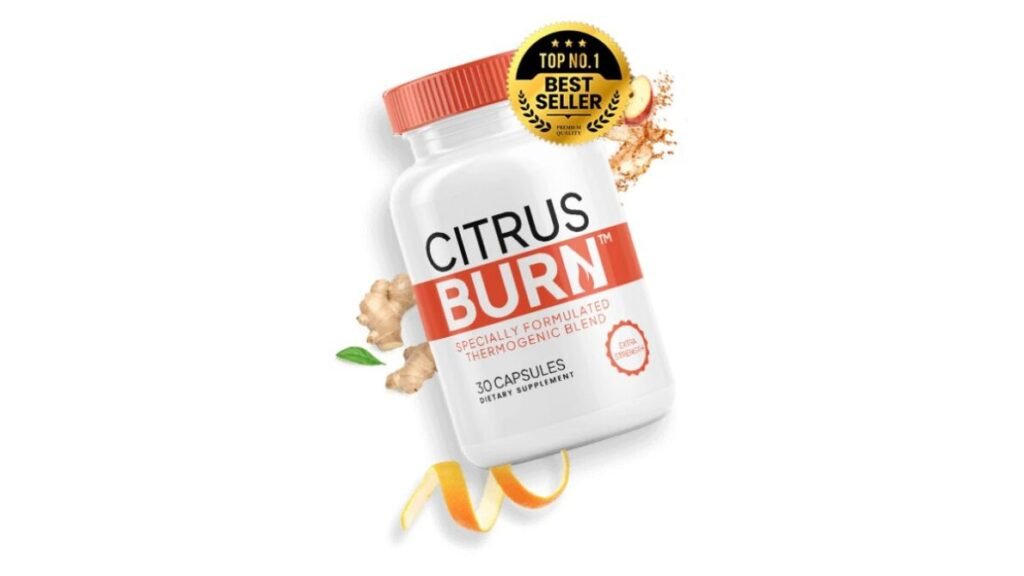
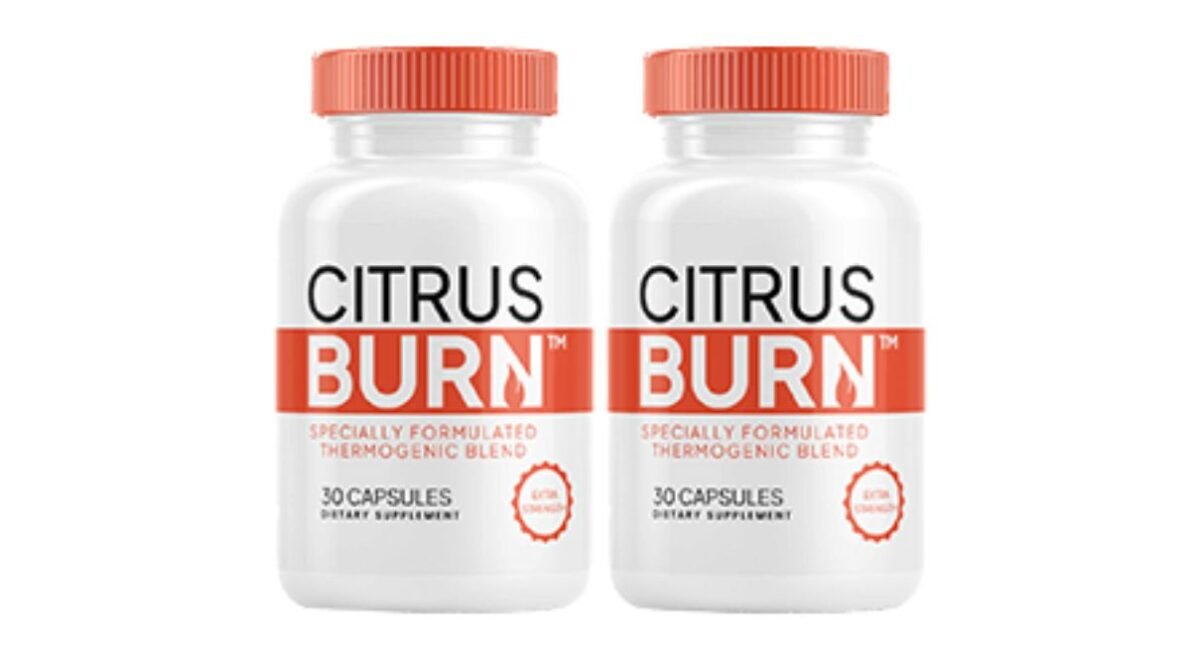
A capsule, one per day, taken in the morning before breakfast. Sold through the CitrusBurn official website with ClickBank handling payment, in two, three, or six-bottle packages.
Seven botanicals are named: Seville orange peel, Spanish red apple vinegar, Andalusian red pepper, Himalayan mountain ginger, ceremonial green tea, berberine, and Korean red ginseng.
Note the geography in that list. Seville, Andalusia, the Himalayas — the branding leans hard on exotic origin. Botanically, these are bitter orange, apple cider vinegar, capsicum, and ginger. Where a plant grew doesn’t change its pharmacology, and “Andalusian red pepper” is doing marketing work rather than describing anything a chemist would recognise as distinct.
The FAQ describes the formula as proprietary. No supplement facts panel is published, and no ingredient has a stated amount. That matters more here than usual, and I’ll come back to why.
“Thermogenic Resistance” Isn’t a Recognised Condition
The sales page builds its entire premise on this: a condition called thermogenic resistance, said to prevent your metabolism from entering fat-burning mode, especially after 35 and especially in women.
It’s a persuasive frame because it relocates the problem. Your weight isn’t about food or movement — it’s a specific malfunction, and here’s the specific fix.
The trouble is that thermogenic resistance isn’t a recognised medical or physiological condition. It doesn’t appear in the endocrinology literature, it has no diagnostic criteria, and no clinician can test you for it. Thermogenesis itself is real — it’s the energy your body spends on digestion, movement, and temperature regulation, and it does decline modestly with age, mostly because muscle mass declines. But that’s ordinary physiology with an ordinary answer, not a named disorder with a proprietary cure.
Inventing a condition and then selling its treatment is one of the oldest structures in this business. It’s worth naming when you see it.
The Harvard, Mayo Clinic, and Barcelona Problem
Directly under the thermogenic resistance section, the page states that research from Harvard, the Mayo Clinic, and the University of Barcelona shows the compound in Seville orange peel increases thermogenesis by up to 74%. Institutional logos appear nearby.
Two things about that.
First, the page’s own reference list — twelve citations, all real papers — contains nothing from Harvard, the Mayo Clinic, or Barcelona. Not one. The synephrine citations come from a small group of researchers I’ll get to shortly. The 74% figure has no citation attached to it anywhere on the page.
Second, immediately beneath those logos sits a line stating that CitrusBurn is not endorsed by, sponsored by, or affiliated with any of these organisations.
That combination — display the logos, make the association, disclaim it in small print — is a borrowed-credibility structure. It’s legal precisely because of the disclaimer. It works precisely because most people don’t read it.
Bitter Orange: What the Evidence Actually Says
Here I want to be genuinely balanced, because the picture is more contested than either the marketing or the alarmists suggest.
Bitter orange became popular for a specific reason: after the FDA banned ephedra from supplements in 2004, bitter orange was promoted as the ephedra alternative. p-Synephrine is structurally similar to ephedrine, though its pharmacology differs.
The case for safety is real and comes mainly from one research group. Their 2012 review of human clinical studies concluded the accumulated data don’t support cardiovascular concerns, arguing that p-synephrine binds poorly to the adrenergic receptors that would drive heart effects. That paper is reference number one on CitrusBurn’s list.
Read to the end of it, though, and you’ll find the authors’ own disclosure: all of them served as consultants for a company that markets bitter orange extracts, and that company supplied some of the unpublished research the review drew on. That doesn’t make the findings wrong. It does mean that three of the four synephrine papers CitrusBurn cites share an author with a commercial interest in the ingredient — and CitrusBurn presents them as neutral science.
The case for caution comes from elsewhere. The NIH’s complementary health centre notes reports of serious events — abnormal heart rhythms, heart attacks, strokes — in people taking bitter orange products, while cautioning that most involved multi-ingredient formulas, so causation is unclear. Its summary is that the cardiovascular evidence is inconclusive. A 2022 systematic review found cardiac adverse events to be the most commonly reported problem associated with synephrine intake, listing hypertension, tachyarrhythmia, QT prolongation, and more, while noting the prevalence is unknown and that there’s little basis for definitive safety statements either way.
One point both sides agree on: the concern rises when synephrine is combined with caffeine. CitrusBurn contains green tea.
Honest summary: at modest doses, in healthy people, bitter orange is probably not dangerous. It is also, on the efficacy side, nothing like a switch that makes your body burn fat automatically. And since CitrusBurn publishes no amount, “at modest doses” is an assumption you’re making, not a fact you’ve been given.
Take It Before Breakfast — the One Thing Regulators Warn Against
This is the finding I’d most want a reader to see, and it’s specific enough to act on.
Green tea extract is not the same thing as green tea. Brewed tea is fine. Concentrated extracts are among the better-documented causes of supplement-associated liver injury. The European Food Safety Authority concluded that green tea catechins at or above 800 mg of EGCG per day are associated with elevated liver enzymes, and — importantly — that it was not possible to identify a dose that could be considered safe. One product caused liver injury at around 375 mg. The US Pharmacopeia’s review concluded severe hepatotoxicity can result from green tea extract and recommended label warnings. Health Canada mandated them. The EU capped daily servings and required warnings for under-18s, pregnancy, and breastfeeding.
The EU warning also includes something else: a caution against taking it on an empty stomach. That isn’t arbitrary. Animal and human data indicate that repeated bolus doses of green tea extract during fasting significantly increase toxicity.
Now read CitrusBurn’s own instruction: one capsule daily with a full glass of water, ideally in the morning before breakfast.
That is fasting-state dosing of a green tea extract, recommended by the seller, in a product filed under liver and weight support. I don’t know how much EGCG is in the capsule — nobody outside the company does — and it may well be far below any threshold of concern. But the direction of the advice is exactly opposite to the direction of the regulatory guidance, and that’s not a subtlety. If you take this, take it with food.
Vinegar, Pepper, and Ginger: Real Studies, Wrong Format
The remaining ingredients follow a pattern that will be familiar to anyone who reads these labels carefully.
Apple cider vinegar has genuine, if modest, human evidence — and CitrusBurn cites it. The trial they reference found reductions in body weight, body fat, and triglycerides in obese Japanese subjects over twelve weeks. That trial used vinegar measured in tablespoons daily. A single capsule cannot hold a tablespoon of liquid. Whatever vinegar is in there, it isn’t what the study used, and their own citation is what tells you that.
Capsaicin from red pepper does modestly increase energy expenditure — the systematic review they cite supports a small effect on appetite and thermogenesis. The page translates that into “increases calorie burn by 25% after meals,” a precise figure with no citation attached to it. Even taken at face value, a 25% increase in the thermic effect of a meal is a rounding error in daily energy balance, because the thermic effect of food is only about 10% of intake to begin with.
Ginger gets “reduces cravings by 54%,” again uncited. The study they list found ginger enhanced the thermic effect of food and increased feelings of fullness in overweight men — without affecting metabolic or hormonal parameters. Real, small, and a long way from halving anyone’s cravings.
Green tea has the most-cited weight evidence, and the meta-analysis CitrusBurn itself references is instructive: pooled trials show green tea catechins produce small weight loss and modest weight maintenance effects — on the order of a kilogram or so. That’s their evidence, and it describes a barely perceptible effect.
Add it up and the formula’s honest ceiling is somewhere around one to two kilograms over several months, in people who also change something else. The page promises a metabolism that burns more calories no matter what you eat.
Berberine and Ginseng: The Interaction Nobody Mentions
Two ingredients here belong in a conversation with a pharmacist, and neither gets a mention on the sales page.
Berberine inhibits CYP3A4 — the enzyme that metabolises roughly half of all prescription drugs — along with P-glycoprotein. That puts statins, certain immunosuppressants, some anticoagulants, and digoxin on the watch list. It also lowers blood glucose meaningfully. It’s contraindicated in pregnancy and breastfeeding, because it crosses the placenta and can displace bilirubin, which in newborns carries a kernicterus risk.
Korean red ginseng also affects blood glucose and has documented interactions with warfarin.
Put those two together in one capsule and you have two glucose-lowering agents stacked. For someone on metformin, a sulfonylurea, or insulin, that’s an additive effect worth knowing about before rather than after. Add bitter orange’s potential blood pressure effect and green tea’s caffeine, and this is not the inert botanical blend the “100% natural” framing implies.
What I Liked
The reference list is real. Twelve citations, properly formatted with authors, journals, years, and working links to actual papers. After the products I’ve reviewed where citations were bare URLs, blog posts, or belonged to a different formula entirely, this is a step up and deserves saying.
Several citations are genuinely on-topic. The vinegar, capsaicin, ginger, and green tea papers are real research about those ingredients in relation to weight. The problem is the gap between what they found and what the page claims — not fabrication.
A 180-day guarantee is unusually long. Six months is more runway than almost anyone offers, and it materially reduces the downside of trying it.
One-time payment, no subscription. Clearly stated, no auto-rebill, which in this category is not a given.
The disclaimer under the institutional logos exists. It shouldn’t be necessary, but the company did state plainly that it isn’t affiliated with those organisations rather than leaving the implication unqualified.
Things to Consider
“Stimulant-free” is contradicted by the formula. Synephrine is classified as a stimulant by the NCAA; green tea carries caffeine.
No doses for anything. A proprietary blend means you can’t check the synephrine amount, the EGCG amount, or the berberine amount — the three things that most determine whether this is safe for you.
“Thermogenic resistance” is an invented condition.
The 74% figure has no source. Neither do the 25% and 54% claims.
Institutional names are invoked and then disclaimed.
Take-before-breakfast runs against green tea extract guidance.
Three of four synephrine citations share an author with disclosed industry ties.
No interaction warnings for berberine or ginseng anywhere on the page.
The Testimonials and the Countdown Clock
Two things here are checkable in seconds, which is why they’re worth pointing out.
The page carries a countdown timer reading “Spot Reserved For: 09:59 Minutes,” alongside “Stock Level: LOW” and “Sale Status: Live.” Refresh the page and the clock resets to 09:59. It’s a script, not a reservation, and there is no evidence of any stock constraint. Manufactured urgency of this kind has drawn FTC attention in other contexts.
The testimonials repay attention too. Near the top, a buyer named Joanne P appears twice with the same photograph — but the quote changes. In one placement she says she can see the results and has finally found something that works. In the other, the same name and photo carry a quote about losing 15 pounds almost immediately. The attribution stayed put while the text was swapped, which is what happens when testimonial copy is edited as marketing material rather than reproduced as something a person said.
Elsewhere the claims are specific: 22 pounds, 17 pounds, 14 pounds, all labelled “Verified Purchase” with no verification mechanism disclosed. One says a doctor noticed improved wellness markers. The page also states that 96% of customers choose the six-bottle pack, a figure with no source.
And on independent feedback, the honest position is that there isn’t any. CitrusBurn is sold direct only, so no verified-purchase pool exists. Search results are entirely affiliate content: newswire advertorials (at least one of which openly labels itself a paid advertorial and, to its credit, explains that “under investigation” refers to its own editorial review rather than any actual regulatory action), forum posts written as personal experience, and PDFs uploaded to the file-upload directories of unrelated organisations — a state recycling agency and a forestry certification body among them. That last technique is spam SEO, and it tells you about the promotion, not the product.
Price, Guarantee, and Who Should Skip This
Two bottles run $79 each, three run $69 each, six run $49 each — $294 for the largest package, presented as a saving of $900 against a $1,194 list price that no one has ever paid. Current pricing is on the CitrusBurn site.
The 180-day guarantee is the genuinely useful part. Keep your order confirmation, and if you try it, start the refund conversation well before the window closes rather than on the last day.
Skip this, or check with a doctor or pharmacist first, if you:
- Have high blood pressure, arrhythmia, angina, or any cardiac history — bitter orange plus caffeine is the combination that concerns cardiologists
- Take blood pressure, heart rhythm, or blood-thinning medication
- Take medication for diabetes — berberine and ginseng both lower glucose, and stacking them with a prescription can drop you further than intended
- Take statins, immunosuppressants, or digoxin, because of berberine’s CYP3A4 and P-glycoprotein effects
- Are pregnant or breastfeeding — berberine is a clear no here
- Have any liver condition, or take other supplements containing green tea extract
- Have thyroid disease, anxiety disorder, or glaucoma, where sympathomimetics warrant caution
- Compete in a drug-tested sport — synephrine is on the NCAA banned list
- Have surgery scheduled
And see a doctor rather than self-treating if weight has changed without explanation, or if fatigue, hair loss, cold intolerance, or mood changes came with it. Thyroid dysfunction, medication effects, and sleep apnoea all present that way and are all treatable. A capsule won’t find them.
Final Verdict — What Actually Moves the Needle
CitrusBurn is a competently marketed thermogenic built on an invented condition, sold with a stimulant-free claim its own ingredient list contradicts, at a price several times what the same botanicals cost separately.
The ingredients aren’t fake and the citations are real. That’s the frustrating part — someone did the reading. But the vinegar trial used tablespoons and this is a capsule; the green tea meta-analysis they cite shows about a kilogram; the capsaicin and ginger effects are real and tiny; and the flagship ingredient’s safety case rests substantially on papers whose authors disclose consulting for a bitter orange supplier. Meanwhile the page tells you to take a green tea extract on an empty stomach, which is the one administration condition regulators specifically caution against.
Who might reasonably try it: someone with no cardiac history, on no interacting medication, not pregnant, who understands they’re buying a modest appetite and thermogenesis nudge rather than a metabolic reset, who takes it with food, and who buys two bottles rather than six and uses the refund window.
Who should skip it: anyone on the medication list above, anyone who’s ever been told to watch their blood pressure, and anyone expecting the page’s promises.
What actually works, unglamorously: a calorie deficit you can sustain, protein and fibre high enough to manage hunger, resistance training to protect the muscle that drives your resting metabolism, and sleep — because short sleep reliably increases appetite and undermines every other effort. If you’ve done all that consistently and it hasn’t worked, prescription weight-management medication now exists with effect sizes an order of magnitude beyond anything in this category. That’s a conversation with a doctor, and it’s a better use of $294 than six bottles of anything.
Worth reading alongside this: supplements sold for weight and liver support routinely contain ingredients carrying their own liver risk — green tea extract here, and a stimulant laxative with a regulatory history in the product covered in our Finessa review. It’s a pattern in this category, not a coincidence, and knowing it changes how you read every label.
Frequently Asked Questions
Is CitrusBurn really stimulant-free?
Not by the standards sports bodies use. Its main ingredient is bitter orange standardised for p-synephrine, which the NCAA lists as a banned stimulant, and the formula also contains green tea, which carries caffeine. You may not feel jittery, particularly if the doses are low — but “stimulant-free” isn’t accurate as a description of what’s in the capsule.
Should I take it before breakfast like the label says?
I’d take it with food instead, and it’s worth asking a pharmacist. Green tea extract is associated with liver injury at higher doses, and both regulatory guidance and the underlying research specifically flag fasting-state dosing as increasing that risk. Since the EGCG amount isn’t published, taking it with a meal is the cautious choice.
Can I take it with my diabetes or blood pressure medication?
Ask your prescriber first. Berberine and ginseng both lower blood glucose and can add to what your medication is already doing, and bitter orange combined with caffeine is the pairing most associated with blood pressure and heart rate effects. Without published doses, neither you nor your pharmacist can estimate the size of the interaction.
How much weight could it realistically cause me to lose?
Based on the research CitrusBurn itself cites, the honest answer is very little on its own — the green tea meta-analysis they reference found effects around a kilogram, and the capsaicin and ginger findings are smaller still. Any larger result you experience will mostly reflect the diet and activity changes people tend to make when they start something new.

Raphael Albert is the founder and content creator of Nutra Plus. Passionate about health, nutrition, fitness, and wellness, he spends his time researching scientific studies, health trends, and evidence-based lifestyle strategies to create informative and easy-to-understand content. While he is not a doctor or licensed healthcare professional, his goal is to help readers make more informed wellness decisions. All content is for educational purposes only and should not replace professional medical advice. Always consult a qualified healthcare provider regarding your health concerns.
1 thought on “CitrusBurn Review: The “Stimulant-Free” Claim Doesn’t Survive the Ingredient List”