Before anything else: two links below go to the seller, and a purchase through them earns this site a commission. Read the safety section and you’ll see the commission didn’t buy much.
These statements have not been evaluated by the Food and Drug Administration. This product is not intended to diagnose, treat, cure, or prevent any disease. Persistent trouble sleeping is a symptom, not a diagnosis — it can point to sleep apnoea, thyroid problems, depression, medication side effects, or several other things a supplement won’t touch. If poor sleep has lasted more than a few weeks, that’s a conversation with your doctor before it’s a purchase.
Most supplement sales pages promise results. This one does something cleverer, and it’s worth understanding before you look at a single ingredient.
Yu Sleep tells you that you’ll notice improvements within days — but that the real work, the “full restoration of your sleep pressure system,” takes three to six months. It compares itself to physiotherapy after a broken bone: you feel better quickly, but stop early and you’re back where you started. Then it explains that this is precisely why the product is sold only in minimum two-month packages, a decision the page attributes to acting “as scientists, not salespeople.”
Sit with that structure for a second. If the product works, it works. If it doesn’t work, you stopped too soon. There is no outcome that counts as evidence against it, and the same reasoning happens to make the six-month, $294 package feel like the responsible choice rather than the expensive one.
That’s the frame this Yu Sleep review has to work around, because an unfalsifiable promise can’t be evaluated — only the ingredients underneath it can. So let’s do that. Some of what’s in here is better than I expected. One thing in here should stop you cold if you take a common class of medication.
What Yu Sleep Actually Is
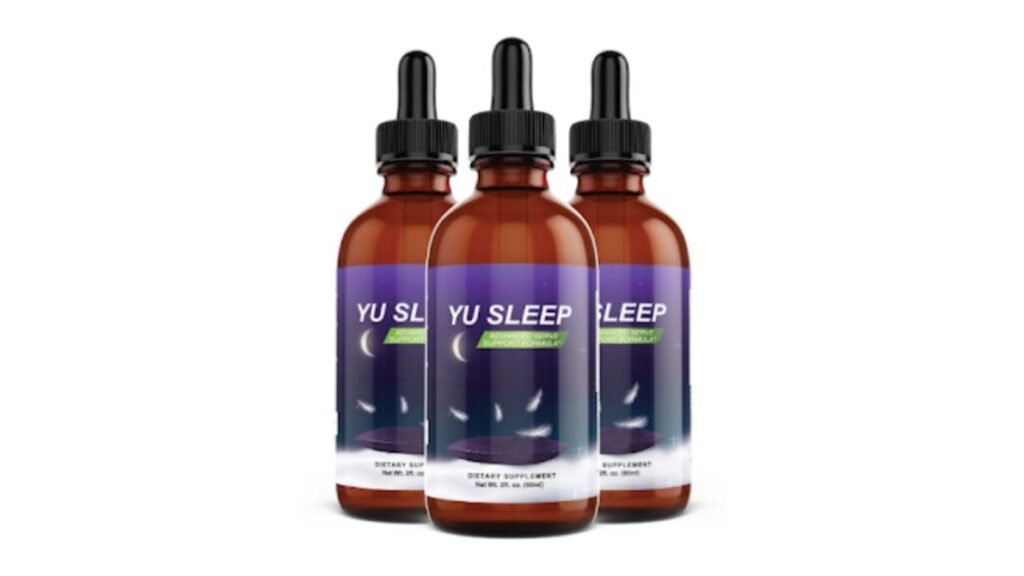
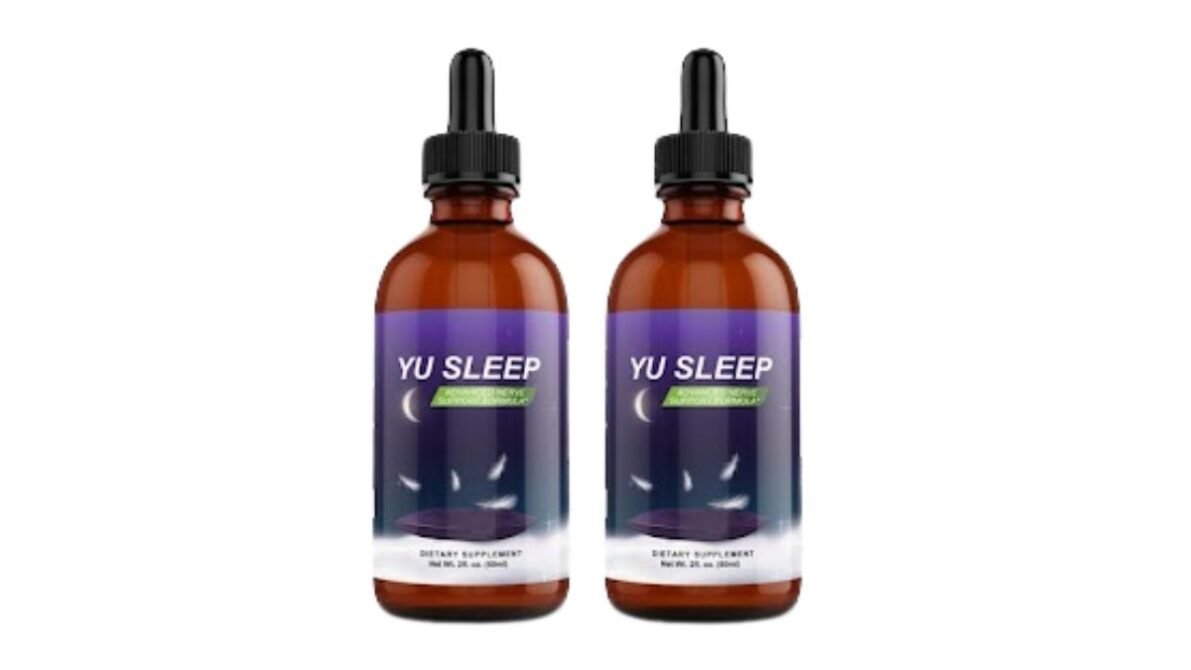
A liquid taken with a dropper: two droppers, roughly 30 minutes before bed. Sold only through the Yu Sleep official website, with ClickBank processing payment, in two, three, or six-month packages. There’s no single-bottle option.
Ten ingredients are named: red tart cherry extract, 5-HTP, vitamins B6 and B2, magnesium glycinate, apigenin, lemon balm extract, L-theanine, melatonin, and GABA. The formula is described as “nano-enhanced,” a term the page never defines and which has no standard meaning in supplement manufacturing.
Exactly one ingredient has a published amount. We’ll start there, because it’s the best thing about the product.
The One Number They Publish — and It’s a Good One
Melatonin, at 0.9 mg per serving.
That deserves genuine credit, and not only for being disclosed. Walk into any pharmacy and the melatonin gummies on the shelf run 5 mg, 10 mg, sometimes more — doses far above anything your body produces naturally, which is where the next-day grogginess people complain about comes from. A sub-milligram dose is a physiologically sensible choice, and the page is right that it’s a deliberate departure from the high-dose norm.
I want to be precise rather than generous, though. The claim that lower is better is a marketing position, not a settled finding. A dose-response meta-analysis of 26 randomised trials found melatonin’s effect on sleep onset increasing with dose, peaking around 4 mg per day, with 2 mg outperforming 1 mg and 3 to 4 mg outperforming 2 mg. So 0.9 mg sits at the gentle end of the curve. Fewer side effects, plausibly less effect.
Still — a disclosed, physiologically reasonable dose in a market full of undisclosed everything is worth acknowledging. It’s the most honest thing on the page.
But Melatonin Can’t Do What This Product Promises
Here’s where the good dose runs into the wrong problem.
Yu Sleep is sold almost entirely on stopping 3 AM wake-ups. The headline promises it. The testimonials are built around it. The bonus guides are about it.
Melatonin doesn’t do that. It’s a circadian timing signal — it tells your body when night is, which mainly affects how quickly you fall asleep. It is not a sedative that holds you under. And immediate-release melatonin has a half-life of roughly 35 to 45 minutes, meaning a 0.9 mg dose taken at 10 PM is functionally gone from your system long before 3 AM arrives.
The size of the effect matters too. A meta-analysis of 19 trials covering 1,683 subjects found melatonin reduced time to fall asleep by about 7 minutes and increased total sleep time by roughly 8 minutes, with the authors describing the effects as modest and smaller than other pharmacological options. Real, measurable, and a long way from “sleep like a baby again.”
That paper, incidentally, is reference number 15 on Yu Sleep’s own list.
There’s a related claim worth flagging. The FAQ says the product works by supporting “adenosine buildup — your body’s sleep fuel.” Sleep pressure driven by adenosine accumulation is real physiology, properly established. But none of the ten ingredients has any documented action on adenosine. Caffeine is the compound famous for interacting with that system, by blocking it. Nothing in this bottle builds it.
The Dropper Problem
Two droppers is roughly 2 millilitres. That’s the entire vehicle for ten ingredients, and it constrains what’s possible more than the marketing lets on.
Melatonin fits easily — 0.9 mg is a speck. L-theanine, studied around 200 mg, is tight but conceivable. Same for GABA at the 100 to 300 mg used in trials, if the liquid is heavily concentrated.
Magnesium glycinate is where it collapses. To deliver even 200 mg of elemental magnesium you need roughly 2 grams of magnesium glycinate, and you cannot dissolve 2 grams of anything into 2 millilitres of liquid. It isn’t a formulation challenge; it’s a solubility ceiling. Whatever magnesium is in this dropper is a fraction of a meaningful dose.
Tart cherry has the same shape of problem from the opposite direction. The sleep research on it used tart cherry juice at around 240 millilitres twice daily — roughly half a litre of liquid, versus 2 millilitres of a blend. Concentrated extracts exist and change the maths somewhat, but nobody has shown that a few drops reproduce what half a litre did.
Add 5-HTP at its studied 50 to 300 mg range on top of all that, and the honest conclusion is that some of these ingredients are present at plausible amounts and others are present as label decoration. Without a supplement facts panel, you can’t tell which is which.
5-HTP Is the Reason to Read This Before You Order
This is the section that matters most, and I’d rather over-explain it than have anyone skim past it.
5-HTP is the direct precursor to serotonin. Your body converts it, and brain serotonin rises. That’s the mechanism, and it’s a real one.
It’s also why it can be dangerous alongside a large and very common class of medication. Antidepressants — SSRIs, SNRIs, MAOIs, tricyclics — work by raising serotonin activity. Add a serotonin precursor on top and you can push the system into serotonin syndrome: agitation, tremor, sweating, racing heart, high blood pressure and temperature, and in severe cases seizures, arrhythmia, or loss of consciousness. It can develop within hours.
Memorial Sloan Kettering’s monograph advises that people taking SSRIs, MAOIs, tricyclics, or other serotonergic drugs should avoid 5-HTP without their physician’s supervision, and notes a case report of mania following combined MAOI and 5-HTP use. America’s Poison Centers document a case of a woman who developed nausea, agitation, hallucinations, tremor, and an elevated heart rate after taking 5-HTP while on sertraline.
The list extends past antidepressants: triptans for migraine, tramadol, St John’s wort, SAM-e, and dextromethorphan all touch the same system.
In fairness, some researchers consider the risk lower than the warnings imply, and controlled studies have combined 5-HTP with antidepressants without incident. But the amount in Yu Sleep isn’t published, and “we don’t know how much you’re getting” is a poor foundation for a risk you’d want to calculate.
What makes this genuinely troubling is the audience. This product is marketed to adults in their forties, fifties, and sixties struggling with sleep and low mood — demographically, one of the highest antidepressant-using groups there is. The testimonials talk about mood lifting. And the sales page never mentions the interaction once.
If you take anything that affects serotonin, do not start this without asking your prescriber first. That’s not a disclaimer. It’s the single most useful sentence in this review.
GABA, Apigenin, and the Rest of the Formula
GABA is the brain’s main inhibitory neurotransmitter, and the page says it “quiets overactive brain activity.” The complication is that oral GABA struggles to reach the brain — the blood-brain barrier largely excludes it, which is why benzodiazepines work by acting on GABA receptors rather than by supplying GABA itself. A systematic review of oral GABA in humans found limited evidence for stress benefits and very limited evidence for sleep benefits. Some small trials do show reduced sleep latency, and there’s a plausible indirect route via the gut and vagus nerve. But “very limited evidence” is that review’s own phrase — and that review is reference number 10 on Yu Sleep’s list.
Apigenin is called “nature’s gentle sedative” on the page. It’s the flavonoid people point to when explaining why chamomile tea is calming, and it does bind benzodiazepine receptor sites in laboratory work. Human trials of isolated apigenin for sleep are essentially nonexistent. Notably, the company’s own reference list contains no citation for it at all.
Lemon balm gets the boldest single claim on the page: that it reduces cortisol and therefore “you’ll STOP waking up at 3 AM.” Lemon balm has some small trials for anxiety and mild sleep complaints. Nothing supports a categorical promise about a specific hour of the night. There’s no citation for it either.
L-theanine is the most defensible of the group after melatonin — reasonable evidence for calm without sedation, typically at 200 mg. Tart cherry has small pilot studies in older adults with insomnia, at juice volumes discussed above. B6 and B2 are cofactors in melatonin synthesis, which is a real biochemical role, though supplementing them helps mainly if you’re deficient. Worth knowing: sustained high-dose B6 can cause peripheral nerve damage, and the amount here isn’t published.
Magnesium glycinate has genuinely mixed evidence for sleep even at full oral doses, and as covered above, this format can’t deliver one.
What I Liked
A published melatonin dose, and a sensible one. After six products in this category, this is the first time a company has told me an amount that also happens to be defensible. That’s worth something.
A reference list of real papers. Twenty citations, with titles, linking to actual PubMed records — not bare URLs, not a wall of blue text, not references belonging to a different product. Several are directly on-topic systematic reviews. This is the best-sourced page I’ve reviewed in this category, and I want to say so plainly.
Explicit anti-high-dose positioning. The page argues against the 5 and 10 mg melatonin norm. That’s a correct and consumer-friendly position, whatever else is going on.
Sixty-day guarantee, no subscription. One-time payment, clearly stated, with no auto-renewal.
L-theanine and low-dose melatonin is a rational pairing. If you stripped this formula down to those two at stated doses, you’d have a modest, honest, inexpensive sleep aid.
Things to Consider
One dose disclosed out of ten ingredients.
No 5-HTP interaction warning anywhere on the page. Given the target demographic, this is the most serious omission.
The mechanism doesn’t match the promise. Melatonin times sleep onset; it doesn’t hold you asleep at 3 AM, and its half-life makes that mechanically implausible.
“Adenosine buildup” isn’t supported by any listed ingredient.
The dropper can’t carry a magnesium dose. Solubility, not marketing, decides that one.
“Permanent fix” is an extraordinary claim. No supplement has been shown to permanently restore sleep architecture such that benefits persist after you stop. The page asserts it outright.
“Nano-enhanced” means nothing verifiable.
“Based on 36,498+ reviews” appears with no link to where those reviews live.
Their Own References Say Less Than the Sales Page Does
Because the reference list is unusually good, it’s unusually informative to read carefully. And what it shows is a consistent gap between the citations and the copy.
The melatonin meta-analysis they cite reports a roughly 7-minute improvement and calls the effects modest. The GABA systematic review they cite concludes the sleep evidence is very limited. Those are the two ingredients doing most of the rhetorical work on the page, and their own sources describe outcomes far smaller than “sleep like a baby.”
Then there are the gaps and the stretches. Three ingredients — apigenin, lemon balm, and magnesium glycinate — have no citation at all among the twenty. One B2 entry links to a general StatPearls monograph on riboflavin rather than anything about sleep; another links to a commercial wellness website. A 5-HTP citation covers sleep terrors in children. Another covers Parkinson’s disease. A B6 citation is about dream recall, which isn’t sleep quality, and another is about ferroptosis in sleep-deprived animals.
None of this makes the ingredients useless. It means the evidence file, read honestly, supports a modest sleep aid — and the page in front of it promises a complete restoration of your sleep architecture. Those are different products.
The Testimonials, and What the Footer Reveals
Six testimonials appear on the page, each marked “Verified Purchase,” each attributed to a first name and a US city.
Every one of them uses the identical avatar image. Same file, repeated six times. You can confirm this yourself by right-clicking any two of the photos and comparing the image addresses — they’re the same URL.
The content is worth reading with that in mind. One customer reports being down two dress sizes. Another reports her deep sleep rising from 37 minutes to over an hour, her readiness score climbing from the mid-50s to the high 80s, and her heart rate variability doubling. Those are specific, quantified, unverifiable claims of a kind the FTC takes a particular interest in. The site’s own footer states that testimonials are not claimed to represent typical results.
That same footer contains something else. Alongside standard policy links sit a “Legal & Testimonial Disclaimer” link pointing to a slimming tea domain and an “Anti Spam Policy” pointing to a glucose cleanse tea domain — and the page carries a weight-loss disclaimer explaining that weight loss is typically achieved through a reduced-calorie diet and exercise, which has nothing to do with a sleep product.
The straightforward reading is that this page was built from a template used across several unrelated supplement funnels by the same operation. That doesn’t make the product harmful. It does tell you the “as scientists, not salespeople” framing is describing a direct-response marketing operation.
Price, Guarantee, and Who Should Be Careful
Two months runs $138, three months $177, and six months $294 — roughly $69, $59, and $49 per bottle against a stated $99 list price. Sixty-day money-back guarantee. Current pricing is on the Yu Sleep site.
Note the tension there: the guarantee is 60 days, and the product’s own theory says the meaningful results take three to six months. By the time the promised restoration is supposed to arrive, your refund window closed months ago. If you buy, judge it inside 60 days on whether you’re sleeping better — not on the three-to-six-month story.
Skip this, or ask a doctor first, if you:
- Take any antidepressant, triptan, tramadol, St John’s wort, SAM-e, or other serotonergic medication — this is the firm one
- Are pregnant or breastfeeding
- Take sedatives, benzodiazepines, or drink alcohol at night, since additive sedation is a fall risk
- Have surgery scheduled — serotonergic agents are commonly paused beforehand
- Have liver or kidney disease
- Have a history of bipolar disorder or mania
And get assessed rather than self-treating if: you snore heavily, gasp or stop breathing in your sleep, wake with headaches or a dry mouth, or feel unrefreshed no matter how long you sleep. That cluster is how obstructive sleep apnoea usually presents in adults over 40, it carries real cardiovascular risk, and sedating supplements can make the breathing side worse rather than better. The same goes for insomnia arriving with low mood, weight change, or anything new — those want a proper look.
Final Verdict — and the Thing With Far Better Evidence
Yu Sleep is a modest sleep aid sold as a cure, with one real safety omission and a promise designed so it can’t be tested.
The good parts are real: a disclosed, sensible melatonin dose, L-theanine, a reference list of genuine papers, and a company willing to argue publicly against the high-dose melatonin norm. Strip the formula to melatonin and theanine at stated amounts and you’d have something defensible and cheap.
What’s wrapped around it doesn’t hold. The mechanism can’t produce the headline benefit. The dropper can’t carry several of the doses. The unnamed 5-HTP is a genuine interaction risk for a demographic full of people on antidepressants. And a claim of permanent restoration, coupled with a built-in explanation for any failure, isn’t science — it’s an architecture that converts.
Who it might reasonably suit: someone not on any serotonergic medication, without symptoms suggesting sleep apnoea, who mainly has trouble falling asleep, who’s been taking 10 mg melatonin gummies and wants something gentler, and who buys the two-month package and judges it inside the refund window.
Who should look elsewhere: anyone on an antidepressant. Anyone whose main problem is staying asleep. Anyone hoping to fix a sleep problem they haven’t had assessed.
What actually works, and it isn’t close. Cognitive behavioural therapy for insomnia is the recommended first-line treatment for chronic insomnia in adults — the American College of Physicians recommends that all adults with chronic insomnia receive CBT-I as initial treatment, ahead of medication, a position also held by the American Academy of Sleep Medicine and endorsed internationally. It matches sleeping pills in the short term and beats them in the long term, with far fewer harms. It’s available through digital programmes and apps, not only in-person clinics, and it costs a fraction of $294.
One last connection worth making, because it’s real and often missed: sleep and joint pain feed each other. Poor sleep lowers pain thresholds, and pain fragments sleep, which is why people managing joint discomfort often find the two problems arrive together and improve together. If that describes your situation, our Joint Genesis review covers the other half of that loop.
Frequently Asked Questions
Can I take Yu Sleep with my antidepressant?
Ask your prescriber before you do — do not simply try it. Yu Sleep contains 5-HTP, a serotonin precursor, and combining serotonin precursors with SSRIs, SNRIs, MAOIs, or tricyclics carries a risk of serotonin syndrome. The amount isn’t published, which makes the risk impossible to estimate on your own. The same caution applies to triptans, tramadol, and St John’s wort.
Will it stop me waking at 3 AM?
That’s the central promise and the weakest part of the case. Melatonin is a sleep-timing signal with a half-life under an hour, so a bedtime dose isn’t present by 3 AM. If night waking is your main issue, it’s worth having assessed — sleep apnoea, alcohol, reflux, and untreated anxiety are all common causes that a supplement won’t address.
Is the 0.9 mg melatonin dose too low?
It’s a reasonable dose, and lower than most products on the shelf, which reduces next-day grogginess. Dose-response research suggests the sleep-onset effect keeps improving up to around 4 mg, so 0.9 mg is gentle rather than optimal. Either way, melatonin’s total effect is measured in single-digit minutes.
Do I really need three to six months?
There’s no published trial on this formula, so that timeline isn’t a research finding — it’s a claim from the seller. Note also that the refund window is 60 days, which closes well before the promised restoration is supposed to happen. Judge results inside the guarantee period.

Raphael Albert is the founder and content creator of Nutra Plus. Passionate about health, nutrition, fitness, and wellness, he spends his time researching scientific studies, health trends, and evidence-based lifestyle strategies to create informative and easy-to-understand content. While he is not a doctor or licensed healthcare professional, his goal is to help readers make more informed wellness decisions. All content is for educational purposes only and should not replace professional medical advice. Always consult a qualified healthcare provider regarding your health concerns.