

This article contains affiliate links, and a purchase made through one of them may earn this site a commission at no extra cost to you. That doesn’t change what I report. Nothing here is medical advice, and nothing here replaces a conversation with your own doctor or pharmacist, especially if you take prescription medication, have a bleeding disorder or diabetes, are scheduled for surgery, or are pregnant or breastfeeding.
Counting the Page’s “14 Trials” Against Its Own Reference List
This Joint Genesis review began with a count. The sales page says its star ingredient, Mobilee, was “rigorously tested in 14 randomized, placebo-controlled and double-blind clinical trials.” The page also ends with a list of scientific references. So I counted that list and sorted every entry by what its printed title says it is.
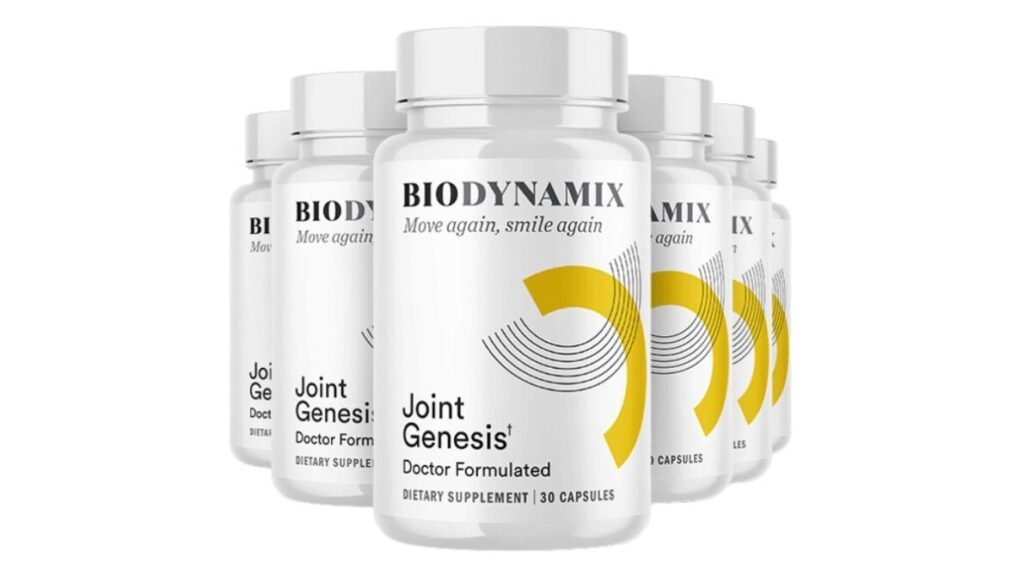
Joint Genesis is a once-daily capsule from BIODYNAMIX built around Mobilee, a hyaluronic acid ingredient, plus French maritime pine bark, ginger, Boswellia serrata and BioPerine. The page’s claims are bold. Its bibliography is more modest, and in a few places it says something different from the copy above it.
New to this category? Our guide, Skin and Joint Supplements: The 3 Delivery Routes That Decide Whether Anything Works, covers how these products differ.
The Count: 27 Entries, 25 Unique Works
The “Scientific References” section contains 27 entries. Two are printed twice: Rohdewald’s pine bark review (J Med Food, 2018) and Cisár and colleagues’ pine bark paper (Phytother Res, 2008). That leaves 25 distinct works, grouped here by the role their titles suggest:
| Group | Entries | What the titles indicate |
|---|---|---|
| Background on joint disease | CDC MMWR (2017); Wallace et al. (2017); Sawitzke et al. (2008) | OA prevalence, and a glucosamine/chondroitin trial. Neither ingredient is in this product. |
| Hyaluronan biology | Tamer (2013); Necas et al. (2008); Levick (2007); Jung (2020); Temple-Wong et al. (2016); Nicholls et al. (2017); Ingram et al. (2008) | Reviews, a magazine article, a synovial fluid measurement study, and one study in rabbit joints |
| Oral hyaluronan in general | Oe et al. (Nutrition Journal); Tashiro et al. (2012) | A review, and a 12-month double-blind trial of “polymer hyaluronic acid,” which is not named as Mobilee |
| Comb extract / Mobilee | Möller et al. (2009); Kalman et al. (2008); Martinez-Puig et al. (2013); Sánchez et al. (2013); Moriña et al. (2013) | One retrospective cohort, one pilot RCT, one RCT, and two conference abstracts |
| Pine bark | Rohdewald (2018, listed twice); Cisár et al. (2008, listed twice); Mulek et al. (2017) | A review, a knee OA study, and an RCT on where the extract’s compounds distribute |
| Ginger | Altman and Marcussen (2001); Mashhadi et al. (2013); Bartels et al. (2015) | A knee pain study, a narrative review, and a meta-analysis of RCTs |
| Boswellia | Yu et al. (2020); Siddiqui (2011) | A systematic review and meta-analysis, and an overview |
No title anywhere on the list mentions BioPerine or black pepper.
Where “14 Trials” Meets the Bibliography
Five entries concern the hyaluronic acid ingredient the page calls Mobilee. Here is how each one describes itself.
- Möller, Martinez-Puig and Chetrit (2009), Clinical Nutrition Supplements. The title calls it “a retrospective cohort study” in knee OA with synovitis. The page cites this journal for the study in which 80 mg a day for 6 months “was shown to promote joint comfort,” and presents it as one of the trials. A retrospective cohort looks back at existing patient records. It isn’t a randomized trial and has no placebo group. The title also doesn’t state a dose or a duration, so I can’t confirm the 80 mg or the 6 months from the list.
- Kalman et al. (2008), Nutrition Journal. The title describes a “pilot randomized double-blind placebo-controlled trial” of “a natural extract of chicken combs with a high content of hyaluronic acid” in knee OA. It is the one entry that matches the page’s wording, and its own title calls it a pilot.
- Martinez-Puig et al. (2013), Mediterranean Journal of Nutrition and Metabolism. A randomized, double-blind, placebo-controlled study, and its title names Mobilee. It tested yoghurt supplemented with the ingredient, in adults with mild joint discomfort.
- Sánchez et al. (2013), Annals of Nutrition and Metabolism. The title is about blood cell transcriptomics as biomarkers of joint health. The citation format (volume 63, supplement 1, a single page number) points to a conference abstract. It isn’t an efficacy trial.
- Moriña et al. (2013), same supplement. A “subject-level meta-analysis” of a low-fat yogurt with rooster comb extract in mild knee pain, also cited in abstract format.
So the page’s reference list contains two titles describing randomized, placebo-controlled trials of the comb extract. Only one of them names Mobilee, and that one used yogurt as the delivery vehicle, not a capsule. The other twelve trials the page claims may exist, but they aren’t on this list, and I won’t assume what they found.
The two randomized studies also used different populations: knee OA in one, “mild joint discomfort” in the other. A result in one group doesn’t automatically carry over to the other.
The Sweet Potato and the Rooster Comb
The page builds its opening around Yuzurihara, a Japanese village where it says older farmers stay limber thanks to a purple sweet potato called the satsumaimo, “rich in a joint-supporting molecule called hyaluronan.” That story leads straight into the line “With that, Joint Genesis was born.”
The reference list tells a different origin story for the actual ingredient. Two of its titles describe the extract as made from chicken combs or rooster comb. Nothing on the list mentions sweet potato, and the page itself never says what Mobilee is made from. The village frames the ingredient, while the page’s own sources point to a poultry by-product.
That matters for more than storytelling. Someone who chooses this product because of a plant-based narrative may not realize that the key ingredient appears to be animal-derived.
Two more claims don’t trace cleanly to the list:
- “Multiply hyaluronan levels in the joints by a factor of 10.” No reference title mentions a tenfold increase. The FAQ phrases it differently, calling Mobilee’s hyaluronan “10 times more effective than standard hyaluronan.” Those are two different claims, and neither is supported by a listed title.
- “Diminished hyaluronan concentrations in their synovial fluid,” attributed to Nutrition Journal. The Nutrition Journal entry by Oe and colleagues is titled “Oral hyaluronan relieves knee pain: a review.” The entry that does measure synovial fluid concentrations with age is Temple-Wong and colleagues in Arthritis Research & Therapy.
The Levick quote is consistent with its source: the listed magazine article is titled “Hyaluronan, the guardian of joints.” It’s a Physiology News magazine piece, not a clinical study.
What’s Actually in the Capsule: A Joint Genesis Review of the Label
The page describes a “proprietary formula,” but the Supplement Facts panel in the label image gives an individual dose for every active line. There is no hidden blend, so no blend math is needed. That’s to the product’s credit. One caveat: the label image I saw carries a “SAMPLE” watermark.
| Label line | Amount per capsule | What the label adds |
|---|---|---|
| Ginger powder (Zingiber officinale, root) | 200 mg | Plain powder, no standardization stated |
| Boswellia extract (B. serrata, gum resin) | 100 mg | Standardized to 65% boswellic acid, about 65 mg |
| Hyaluronic acid matrix | 80 mg | 60 to 80% hyaluronic acid (48 to 64 mg), over 5 to 15% polysaccharides, over 5 to 20% collagen type II |
| Pine bark extract (Pinus pinaster) | 150 mg | No standardization or brand stated |
| Black pepper (Piper nigrum, fruits) | 5 mg | “Standardized to 95% Piperine” and “standardized to 50:1” |
The serving size is one capsule, with 30 per bottle. Other ingredients are a cellulose capsule, magnesium stearate and silica.
How the label lines up with the claims:
- Mobilee at 80 mg. The label’s “Hyaluronic acid matrix” line is 80 mg, which matches the dose the page credits to Mobilee. The panel itself doesn’t use the name Mobilee. The 80 mg is the whole matrix, so the hyaluronic acid part is 48 to 64 mg by the label’s own percentages.
- Pine bark. The cited review describes “a proprietary extract from pine bark.” The label lists a generic Pinus pinaster extract without a brand or standardization, so I can’t tell whether the capsule contains the extract that was studied.
- Ginger. The cited Altman paper studied “a ginger extract,” and the Bartels meta-analysis in Osteoarthritis and Cartilage pooled RCTs in OA patients. The label lists ginger powder, which is a different preparation from an extract.
- Boswellia. The Yu meta-analysis pooled Boswellia studies in OA. The label states total boswellic acids (65%) but not specific fractions such as AKBA, so the product can’t be matched to a particular studied extract.
- Black pepper. The two standardizations printed together (95% piperine and 50:1) are ambiguous.
None of the ingredient references gives a dose in its title, so I won’t compare these milligram amounts to study doses I can’t confirm from the page. What I can say is narrower: for three of the five ingredients, the label doesn’t let you confirm that the form in the bottle matches the form in the cited research.
Route, Population and the Synovial Fluid Claim
Before efficacy, two checks: does the compound reach the joint when swallowed, and was it studied in people like you?
The pine bark claim is the most interesting case. The page says a Nutrients study found its antioxidants “distributed directly into the synovial fluid.” The listed paper, Mulek and colleagues in Nutrients, is titled as a randomized controlled trial of how constituents and metabolites distribute into serum, blood cells and synovial fluid of patients with severe OA. That is an oral-route study, and it addresses the right question for a capsule. It shows where the compounds go. Its title doesn’t say it tested joint comfort, and nothing in it covers whether pine bark “works in tandem” with Mobilee. The page draws that link itself.
The hyaluronan biology entries don’t test the product either. Ingram et al. studied rabbit joints. Tamer, Necas, Jung and Nicholls are reviews. Temple-Wong measured synovial fluid in people. None of them shows that swallowing 80 mg of a comb extract changes human synovial fluid.
Where the list does include oral human research, the populations vary: knee OA with synovitis (Möller), knee OA with a different polymer hyaluronic acid (Tashiro and colleagues), and mild joint discomfort (Martinez-Puig). A trial in diagnosed knee OA doesn’t establish a benefit for general stiffness, and the reverse is also true.
The page’s own expectations are a fair yardstick. Its FAQ says “for the majority, noticeable changes typically occur after three months of consistent, daily use,” with some people noticing changes in 3 to 4 weeks.
Safety: Where the Real Ingredients Carry Real Interactions
Every dose is disclosed on the label I saw, but that doesn’t make the ingredients interaction-free.
- Blood thinners and antiplatelet drugs (warfarin, clopidogrel, daily aspirin and others). Ginger and pine bark extracts are flagged for possible additive effects on bleeding. Stacking them with these drugs, or with NSAIDs, deserves a clinician’s review. Ask before any surgery or dental procedure.
- BioPerine and other medications. Piperine is included specifically to increase absorption, and the page says so. That effect isn’t selective: piperine can raise blood levels of some prescription drugs. If you take medicines with narrow safety margins, ask your pharmacist before adding a piperine product.
- Diabetes medication. Ginger and pine bark have both been studied for effects on blood sugar. If you use insulin or glucose-lowering drugs, monitor more closely when you start.
- Immunosuppressants and autoimmune conditions. Boswellia and pine bark are promoted for immune and inflammatory effects. If you take drugs that suppress the immune system, get a clinician’s input.
- Poultry and other allergies. The page says the formula is free of egg and crustaceans. But two of the page’s own references describe the hyaluronic acid ingredient as a chicken or rooster comb extract, and the label lists collagen type II within it. Anyone with a poultry allergy or a strict dietary restriction (vegetarian, vegan, religious) should treat this as an animal-derived product.
- Pregnancy and breastfeeding. The page’s legal footer tells pregnant or nursing people to consult a physician. That’s the right call. None of the listed studies is described as involving pregnant people.
When to See a Doctor
Joint symptoms can come from conditions that a supplement won’t touch. See a clinician promptly if you have:
- A hot, red, swollen joint, especially with fever or chills. That can be infection or gout and needs same-day care.
- Pain after a fall or twist with locking, the knee giving way, or inability to bear weight.
- Morning stiffness lasting more than about an hour, or swelling in several small joints of the hands or feet on both sides. These can be signs of inflammatory arthritis.
- Night pain that wakes you, or joint pain with unexplained weight loss.
- A swollen, painful calf, which can signal a blood clot rather than a joint problem.
- Unusual bruising, nosebleeds, black stools or blood in urine, especially if you also take a blood thinner.
- Hives, facial swelling or trouble breathing after a dose. Get emergency care.
Price, Shipping and the 180-Day Guarantee
ClickBank is the retailer, according to the page footer. The pricing boxes I opened quoted shipping to Brazil: $19.95 on the 2- and 3-bottle packages and free on 6 bottles. The checkout for the 6-bottle package (“6-Month Supply + Digital Bonuses”) showed $294.00, shipping and handling free, and $0.00 tax. It also offers an optional $6.95 shipping insurance add-on and asks for a phone number for marketing text messages. The 2- and 3-bottle checkouts weren’t checked.
| Package | Per bottle | Total before shipping | Cost per day before shipping |
|---|---|---|---|
| 2 bottles (60 days) | $79 | $158 | about $2.63 |
| 3 bottles (90 days) | $69 | $207 | about $2.30 |
| 6 bottles (180 days) | $49 | $294 | about $1.63 |
The savings math checks out against the $79 per-bottle price: on 3 bottles, $237 minus $207 is $30, as stated; on 6 bottles, $474 minus $294 is $180, as stated. The 6-bottle tier adds two bonuses, “17 Joint-Supporting Smoothies” and “Youthful Joints For Life,” which the page values at $59.90 together.
The body text also offers a 30-day supply “for the special one-time price of just $129 $59,” which works out to about $1.97 per day before shipping. However, no single-bottle option appears in the pricing boxes I saw.
Guarantee and billing, as the page states them:
- The checkout states a ClickBank guarantee: “return or replacement of any product within 180 days from the date of purchase.” The sales page calls it a 180-day “empty bottle” guarantee on every package, with a refund of “100% of the purchase price” even if the bottles are used up.
- Contact details for refunds “will be on the packaging.” Neither the page nor the checkout says who pays return shipping. Read ClickBank’s return policy before ordering.
- One-time payment, with no auto-ship.
- Delivery in 5 to 7 business days in the U.S., and up to two weeks elsewhere.
- A two-year shelf life.
What the Page Says About Itself
Testimonials. The page shows 17 testimonials, each with a name, a U.S. state and five stars, and says “thousands of U.S. seniors” use the product. None of this can be independently verified, and the footer states that testimonials are “not intended to represent or guarantee” similar results.
Dr. Mark Weis, M.D. The page says he heads BIODYNAMIX and serves as its Medical Research Director. It lists medical school and postgraduate training at the University of Kansas School of Medicine, primary care and emergency work (including Chief of Staff) at a rural Kentucky hospital, civilian physician roles with the U.S. Army at Fort Knox and Fort Riley, and a lead primary care role in the RESPECT-Mil program at Walter Reed. The page calls him “award-winning” but names no award.
Manufacturing. The page states the product is made under cGMP in an “FDA-inspected facility” in the USA. It names no facility and shows no certificate or audit. The FDA does not approve dietary supplements before sale, so this is a claim about the factory, not an endorsement of the product.
Address. The page footer lists BIODYNAMIX at 7362 Remcon Circle, El Paso, TX 79912. The label image I saw (marked “SAMPLE”) lists BioDynamix as distributor at 19655 E 35th Drive, Suite 100, Aurora, CO 80011. The checkout footer names ClickBank (Click Sales Inc., Boise, ID) as the seller. The page doesn’t explain the difference.
“As Featured On.” The page shows a banner under this heading and then states that BIODYNAMIX is not endorsed by, sponsored by or affiliated with any of the organizations shown.
The Verdict on This Joint Genesis Review
The label is more transparent than the sales copy. Every ingredient has a stated dose, there is no proprietary blend, and the guarantee is long. Those are real points in its favor.
The evidence story is where the page overreaches. “Fourteen randomized, placebo-controlled, double-blind trials” becomes, on the page’s own reference list, two randomized titles for the comb extract, one of them a pilot and one tested in yogurt. The “Clinical Nutrition Supplements” study cited as a 6-month trial is listed as a retrospective cohort. The tenfold claim has no listed source. And the sweet potato that launches the story doesn’t appear anywhere in the research behind the ingredient.
If you have mild knee stiffness, aren’t on blood thinners and can live with an animal-derived ingredient, this is a transparently labeled capsule. The 180-day guarantee caps your downside, so judge the product by the small evidence base its own list supports, not by the headline numbers. Current pricing and refund terms are on the official website.
If you’re comparing joint options, see how a multi-source collagen powder handles its label in our Advanced Collagen Plus review.
What I Liked
- Every active ingredient has an individual milligram dose on the label I saw.
- The hyaluronic acid line spells out its composition by percentage.
- The page cites real, checkable references, and many include DOIs.
- The 180-day “empty bottle” guarantee applies to every package.
- The page says it’s a one-time payment with no auto-ship.
- At about $1.63 a day before shipping, the 6-bottle tier is notably cheaper per day than the smaller tiers.
Things to Consider
- The page claims 14 RCTs, but its own list contains two randomized titles for the comb extract.
- The study the page calls a 6-month trial is listed as a retrospective cohort.
- The sweet potato origin story doesn’t match the comb extract named in two of the references.
- The tenfold hyaluronan claim has no listed source.
- Ginger powder, unbranded pine bark and unspecified Boswellia fractions may not match the studied forms.
- Ginger, pine bark and piperine raise interaction questions with blood thinners and other medicines.
- The address differs between the label and the page, the award isn’t named and the facility isn’t named.
- Return shipping isn’t addressed on the page or at checkout, and an optional $6.95 insurance add-on and a marketing-text consent field appear at checkout.
Frequently Asked Questions
Is oral hyaluronic acid the same as the hyaluronic acid knee injections my doctor mentioned?
No. Injections, often called viscosupplementation, place hyaluronic acid directly into the joint space and are given in a clinic. A capsule is swallowed and digested first. Results from injection studies can’t be applied to a supplement, and the reverse is also true.
What does “standardized to 65% boswellic acid” actually tell me?
It means the manufacturer adjusts the extract so a set share of its weight is boswellic acids, which here works out to about 65 mg. It doesn’t tell you which boswellic acids are present. Some branded extracts are standardized to a specific one, such as AKBA, so two products with the same percentage can still differ.
Can I take it with ibuprofen or naproxen?
Ask your pharmacist first. NSAIDs already carry a stomach-bleeding risk, and combining them with ingredients like ginger is a common reason pharmacists want to review a regimen. This is especially true for older adults and anyone with a history of ulcers.
These statements have not been evaluated by the Food and Drug Administration. This product is not intended to diagnose, treat, cure, or prevent any disease. This article is informational and is not medical advice. Consult a qualified healthcare professional before starting any supplement, particularly if you take prescription medication, a blood thinner or diabetes medication, have surgery scheduled, or are pregnant or nursing.

Raphael Albert is the founder and content creator of Nutra Pulse. Passionate about health, nutrition, fitness, and wellness, he spends his time researching scientific studies, health trends, and evidence-based lifestyle strategies to create informative and easy-to-understand content. While he is not a doctor or licensed healthcare professional, his goal is to help readers make more informed wellness decisions. All content is for educational purposes only and should not replace professional medical advice. Always consult a qualified healthcare provider regarding your health concerns.
3 thoughts on “Joint Genesis Review: 14 Randomized Trials Claimed, 2 Cited”