On transparency: this article contains no affiliate link. The Sleep Revive offer doesn’t clear the bar we’d need to send a reader to checkout — it advertises “clinically dosed” ingredients without naming or dosing a single one, promises results in a few days, and makes detox and circadian claims the page never substantiates. No manufacturer is clearly identifiable. When an offer discloses this little, the honest move is to say so, not to link it.
These statements have not been evaluated by the Food and Drug Administration. This product is not intended to diagnose, treat, cure, or prevent any disease. Ongoing sleep trouble deserves a real evaluation, not a guess — insomnia that lasts weeks can stem from stress, anxiety, depression, thyroid problems, sleep apnea or medication effects, and each has a specific treatment. A supplement is not a diagnosis. If your sleep problems persist or affect your daytime safety, talk with a qualified healthcare professional before relying on any product.
This Sleep Revive review runs into a wall on the very first question a careful buyer asks: what’s actually in it? The offer’s answer is a promise — “clinically dosed,” “science-backed,” “five key ingredients” — with the ingredients themselves left blank.
New to this category? Our guide to skin and joint supplements breaks down how these products actually differ, and which claims hold up.
That gap is the whole review. A sleep aid that won’t tell you what it contains, or how much, can’t be checked against any research — and everything it does tell you (fast results, a circadian “reset,” a plastics “detox”) is exactly the kind of claim that needs the missing detail to mean anything.
Five “Clinically Dosed” Ingredients — None of Them Named
The core problem is a contradiction the offer never resolves. It leans on the phrase “clinically dosed,” which is meant to signal that each ingredient is present at the amount used in trials. But it names no ingredient and states no dose. “Clinically dosed” with nothing disclosed is a claim about numbers that refuses to show the numbers.
It gets stranger when you look across the wider network of pages selling Sleep Revive, because they don’t agree with each other. One “official” page describes a familiar stack — melatonin, valerian root, chamomile, magnesium, L-theanine, passionflower, GABA. Another builds the story around rutaecarpine, lemon balm, valerian and magnesium instead. Even the maker’s name shifts between pages — “Sleep Revive Labs” in one place, “Critical Nutrition Labs” in another, and a personal name elsewhere. When the ingredient list and the company both change depending on which tab you open, you’re not looking at a formula you can evaluate. You’re looking at marketing layers over a product that won’t hold still.
The 3-to-5-Day Promise Runs Ahead of the Science
Set the missing formula aside for a moment and take the offer’s timeline at face value: noticeable results in three to five days. Even in the most generous reading — assuming the melatonin-based version — that promise outpaces what the research actually shows.
Melatonin isn’t a sedative; it’s a timing signal. For simply falling asleep a little faster, a dose-response meta-analysis of 26 randomized trials found the effect modest — on the order of a few minutes of reduced sleep-onset latency, peaking around 4 mg. And the thing Sleep Revive actually promises — a circadian reset — is a slower process still. Melatonin’s genuine strength is phase-shifting the body clock, but that realignment builds over two to four weeks of consistent, correctly timed dosing — not three to five days. A product promising a clock “reset” in under a week is describing a timeline the underlying ingredient doesn’t support.
The “Circadian Reset” and BPA “Detox” Claims
The most distinctive Sleep Revive claim is that it resets your circadian rhythm by helping your body flush “sleep-disrupting toxins” — specifically BPA and phthalates from plastics — via rutaecarpine, a compound from the Evodia plant. It’s an unusual, science-flavored story, and it’s worth being precise about where it stands.
Rutaecarpine is a real alkaloid with some laboratory research, including effects on caffeine metabolism. But there is no clinical evidence that taking it in a supplement meaningfully “detoxifies” BPA or phthalates in humans, and none that doing so resets sleep. More to the point, actual circadian science says the clock is reset mainly by behavioral cues — light exposure, consistent sleep and meal timing — adjusted gradually, an hour or so at a time. The body doesn’t have a “toxin” that a capsule flushes to fix sleep. It’s a plausible-sounding mechanism dressed in citations, but the leap from “rutaecarpine does something in a lab” to “this product resets your clock in five days” is exactly the leap the offer never earns — and, because the dose is hidden, can’t even be examined.
Why the Total Opacity Is Worse Than a Bad Formula
Here’s the contrast that sharpens this Sleep Revive review. We recently examined another sleep product in this category, and it had a genuine problem — but it was a problem we could see.
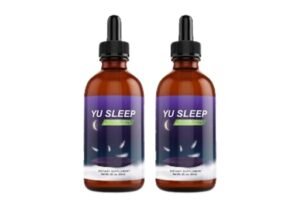
In our Yu Sleep review, the formula was disclosed: melatonin, 5-HTP and others, at stated amounts. That disclosure let us do real safety work — flagging, for instance, that 5-HTP carries a serotonin-syndrome risk when combined with antidepressants. A disclosed formula can be criticized, compared to the literature, and checked for interactions. That’s what transparency buys: the ability to make an informed decision, even a cautious “no.”
Sleep Revive doesn’t allow even that. With no named ingredients and no doses, there’s nothing to run a safety check against. We can’t tell you whether it interacts with your medication, whether the melatonin dose is 1 mg or 10, or whether the “five ingredients” include something you should avoid — because the offer withholds all of it. Total opacity isn’t the absence of a problem; it’s the absence of the information you’d need to find one. In that sense it’s a worse position for a buyer than a disclosed formula with a visible flaw.
The Commercial Picture

For completeness: Sleep Revive is sold at roughly $47–$59 per bottle for a monthly supply, with the usual “limited time” discounting and a 60-day money-back guarantee. Those terms aren’t unusual for the category, and the guarantee is a genuine plus if it’s honored. But a refund window doesn’t substitute for disclosure — and a “risk-free trial” of a product you can’t identify still means entering a subscription for something the seller won’t fully describe. Read the recurring-billing and cancellation terms carefully before committing, and confirm the current price and guarantee at checkout rather than from any review, including this one.
When to See a Doctor Instead of Buying a Sleep Aid
This matters more than any purchase decision, so don’t skip it. Occasional bad nights are normal. But sleep trouble that sticks around has causes worth identifying — and a capsule bought instead of that evaluation can delay real help.
Talk to a clinician — not a supplement — if:
- You have difficulty sleeping at least three nights a week for three months or more (the clinical threshold for chronic insomnia)
- Poor sleep is affecting your mood, concentration, or making driving or work unsafe
- You snore loudly or someone has noticed you stop breathing in your sleep (possible sleep apnea)
- Sleep problems arrived alongside anxiety, depression, or a major life stressor
- You’ve tried sensible sleep habits for weeks without improvement
For chronic insomnia, the first-line treatment isn’t a pill at all — major guidelines point to Cognitive Behavioral Therapy for Insomnia (CBT-I), which outperforms sleep supplements for lasting results. A product promising to fix your sleep in five days can quietly postpone the evaluation that would actually address why you’re not sleeping.
Who Should Be Cautious?
Sleep Revive is a poor fit for anyone who:
- Takes any medication — without an ingredient list, interactions can’t be checked at all
- Is pregnant, breastfeeding, or has a medical condition
- Has had persistent insomnia for months (get evaluated, don’t self-treat)
- Needs to know exactly what — and how much — they’re taking
- Wants an identifiable manufacturer and a consistent formula
- Is drawn in mainly by the “results in days” or “toxin detox” promises
Where to Buy Sleep Revive
We’re not linking a purchase, and the reasons are the review itself: the offer names none of its five ingredients and discloses no doses, the formula and even the manufacturer differ across pages, and the headline promises — fast results, a circadian reset, a BPA “detox” — aren’t supported by anything the offer provides. That combination is exactly when directing readers to checkout would be irresponsible.
None of this proves the capsules do nothing. It means this offer can’t be verified before purchase. If you want to try a sleep supplement, choose one with a full Supplement Facts panel showing each ingredient and its dose, a single consistent formula, and a named manufacturer — and if your sleep trouble is ongoing, start with a clinician, not a countdown timer.
Final Verdict
The honest core of this Sleep Revive review is that there’s remarkably little to evaluate, and that absence is the verdict. Some of the ingredients hinted at across its pages — melatonin, valerian, magnesium — are real and modestly useful at known doses. But the offer names none of them, doses none of them, changes its story from page to page, and promises a timeline and a mechanism the science doesn’t back.
Compared with a product that at least shows its formula — flaws and all — Sleep Revive asks for more trust while giving less information. That’s the wrong trade.
Our verdict: an unverifiable offer built on fast-result promises it doesn’t substantiate. Until Sleep Revive publishes a full formula with doses, settles on one manufacturer, and drops claims it can’t support, treat it as unproven — and treat persistent sleep trouble as a reason to see a clinician, not a reason to buy in a hurry.
Related Reading
For a direct contrast — a sleep product that does disclose its formula, which let us assess a real interaction risk — see our Yu Sleep review. And for the checks that filter out most of this market fast, see our guide to skin and joint supplements.
Frequently Asked Questions
What are the ingredients in Sleep Revive?
The offer advertises “five clinically dosed ingredients” but doesn’t name or dose them. Across its various pages, named lists conflict — some cite melatonin, valerian, chamomile and magnesium; others cite rutaecarpine and lemon balm — which makes any evaluation impossible.
Does Sleep Revive work in 3 to 5 days?
That timeline outruns the evidence. Melatonin’s effect on falling asleep is modest, and the circadian “reset” it’s best at takes two to four weeks of consistent, well-timed use — not a few days.
Does Sleep Revive really “detox” BPA and phthalates to reset sleep?
There’s no clinical evidence that a rutaecarpine supplement meaningfully clears BPA or phthalates in humans, or that doing so resets sleep. Circadian rhythm is reset mainly by light exposure and consistent timing, adjusted gradually.
Is Sleep Revive safe?
It can’t be fully assessed, because the ingredients and doses aren’t disclosed — so interactions with medication can’t be checked. Anyone on medication, pregnant, or with a health condition should consult a professional first.
Why doesn’t this Sleep Revive review include a buy link?
Because the offer can’t be verified — unnamed, undosed ingredients, a shifting formula and manufacturer, and unsupported claims. Linking to checkout under those conditions goes against how we review.

Raphael Albert is the founder and content creator of Nutra Pulse. Passionate about health, nutrition, fitness, and wellness, he spends his time researching scientific studies, health trends, and evidence-based lifestyle strategies to create informative and easy-to-understand content. While he is not a doctor or licensed healthcare professional, his goal is to help readers make more informed wellness decisions. All content is for educational purposes only and should not replace professional medical advice. Always consult a qualified healthcare provider regarding your health concerns.