On transparency: this article contains no affiliate link. Nitric Boost doesn’t clear the bar we’d need to send a reader to checkout — no manufacturer is identifiable by name or address, no individual ingredient dose is disclosed, and its broad promises (erections, testosterone, mental clarity) rest on testimonials rather than any trial of the formula. One of its ingredients also has a specific human study pointing the opposite way from the claim. When that’s the picture, the honest move is to say so, not to link it.
These statements have not been evaluated by the Food and Drug Administration. This product is not intended to diagnose, treat, cure, or prevent any disease. Persistent erectile difficulty deserves a real evaluation, not a guess — it’s often an early warning sign of diabetes, cardiovascular disease, or a hormonal problem, and each needs specific care. A supplement can mask that signal while the underlying condition goes untreated. If you have ongoing symptoms, or take any medication, talk with a qualified healthcare professional before starting a nitric-oxide product.
This Nitric Boost review turns on a single, unusually clean fact: the product sells one of its ingredients as a testosterone booster, and the one specific human study on that ingredient, in men like its target buyer, found it did the opposite.
New to this category? Our guide to men’s health supplements breaks down how these products actually differ, and which claims hold up.
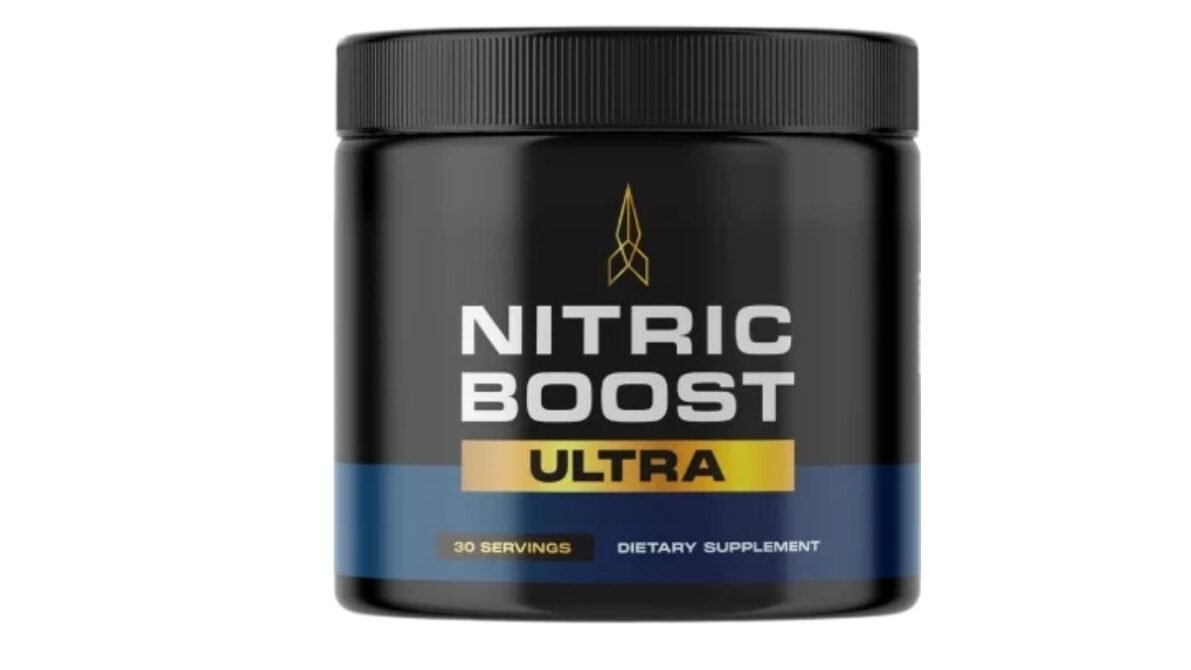
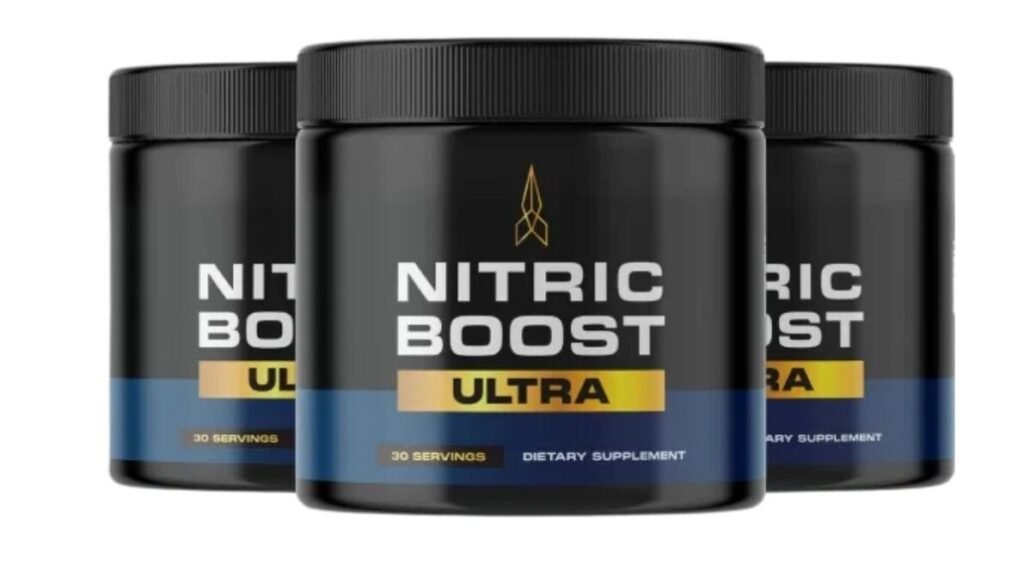
Nitric Boost (often sold as “Nitric Boost Ultra”) is a powdered men’s performance formula built around the nitric-oxide pathway — better blood flow, stronger erections, more energy, and, on several of its pages, hormonal “support.” The nitric-oxide idea is legitimate as far as it goes. The trouble starts when you check the specific claims against the specific evidence.
The Testosterone Claim — and the Study That Contradicts It
Here’s the center of this Nitric Boost review. The formula includes D-aspartic acid (DAA), and it’s positioned as hormonal/testosterone support — the implied promise being higher testosterone, more drive, more vitality.
The most relevant human trial says the opposite. In a study of resistance-trained men — essentially the active, performance-minded buyer this product targets — researchers tested 3 g and 6 g of D-aspartic acid daily. The result: 6 g/day significantly reduced both total and free testosterone (a roughly 12.5% drop in total testosterone), while 3 g/day did nothing at all. That’s not a null finding dressed up as a warning; it’s a measured decrease, in the exact population most likely to buy a “boost” powder.
The broader evidence only deepens the problem. A systematic review of D-aspartic acid and testosterone found the human results “inconsistent” — some rise in infertile or sedentary men, no benefit or an outright decrease in trained men. So the single most specific, verifiable data point about this ingredient runs against the product’s implied claim. And because Nitric Boost doesn’t disclose how much DAA is in a scoop, you can’t even tell whether you’re taking the inert 3 g or the testosterone-lowering 6 g. A hormonal claim built on an ingredient whose clearest trial shows the reverse effect, at an undisclosed dose, is the definition of unverifiable.
L-Citrulline: A Real ED Ingredient, but Not at an Unknown Dose
To be fair, not everything here is borrowed or backwards. L-citrulline — a nitric-oxide precursor that appears in most versions of the formula — has genuine, if modest, evidence for erectile function.
In the most-cited trial, men with mild ED took 1.5 g of L-citrulline daily for a month, and half improved from “mild ED” to “normal” erection hardness, versus 8% on placebo. That’s a real signal — the mechanism is sound: citrulline converts to arginine, which fuels nitric oxide, which relaxes penile blood vessels. It’s the same pathway prescription ED drugs act on, just from an earlier step.
But two caveats gut its usefulness here. First, that trial was small (24 men) and limited to mild ED. Second, and decisively, ingredient evidence isn’t product evidence. The study used 1.5 g of isolated citrulline; Nitric Boost buries an undisclosed amount inside a multi-ingredient blend. If a scoop delivers a fraction of 1.5 g, the trial doesn’t transfer. A real ED ingredient at an unknown dose, in an untested combination, is a reason for hope — not a reason to expect the trial’s result.
A Formula That Changes From Page to Page
Compounding both problems: there isn’t one stable product this Nitric Boost review can evaluate. Across its various “official” pages, the ingredient deck shifts noticeably. Some versions list L-arginine, beetroot, horny goat weed, ginkgo biloba and D-aspartic acid. Others center on L-citrulline, L-arginine, glutathione and vitamin C. Still others add tribulus or grape seed. No page publishes a full Supplement Facts panel with per-ingredient amounts, and no single legal manufacturer, address, or accountable company is clearly named — just a rotating set of sales domains.
When the formula, the doses, and the maker all move depending on which tab you open, “does Nitric Boost work?” becomes unanswerable. You can’t assess a product that won’t hold still long enough to be measured.
Interactions: The Nitric-Oxide Pathway Cuts Both Ways
The very mechanism Nitric Boost sells — vasodilation — is also where its clearest safety issue lives, and it’s specific enough to matter.
Because L-citrulline and L-arginine widen blood vessels through nitric oxide, they can stack dangerously with anything else that lowers blood pressure. Interaction references repeatedly flag that L-citrulline’s vasodilation is additive with nitrates, PDE-5 inhibitors, and antihypertensives, raising the risk of symptomatic low blood pressure — dizziness or fainting. Two combinations deserve bold caution:
- Nitrates (nitroglycerin, isosorbide) for heart conditions + a nitric-oxide booster: a well-recognized route to a dangerous blood-pressure drop.
- ED medications (sildenafil/Viagra, tadalafil/Cialis) + Nitric Boost: the exact same pathway, doubled — precisely the interaction that guidance warns against, and precisely the buyer this product targets.
- Blood-pressure medication of any kind: additive lowering that needs medical supervision.
Add horny goat weed and ginkgo (present in some versions), which carry their own bleeding and cardiovascular cautions, and the undisclosed-dose problem becomes a safety problem: you can’t gauge an interaction whose size you can’t see. Anyone on medication should treat this as a “check with a pharmacist first” product, not a casual try.
When to See a Doctor, Not a Booster
This matters more than any purchase decision. Erectile dysfunction isn’t only a bedroom issue — it’s frequently the first visible sign of a vascular or metabolic problem, because the small penile arteries show trouble before the larger ones do.
See a clinician — not a supplement — if you have:
- Persistent or worsening erectile difficulty (it can be an early marker of diabetes or heart disease)
- Chest pain, breathlessness, or reduced exercise tolerance alongside ED
- Symptoms of low testosterone (fatigue, low mood, loss of muscle) — which need a blood test, not a guess
- Any new symptom while taking heart, blood-pressure, or ED medication
A “boost” powder bought instead of that evaluation can delay the diagnosis that actually protects your heart. Getting ED assessed is one of the more useful checkups a man over 40 can have.
Who Should Be Cautious?
As this Nitric Boost review has shown, it’s a poor fit for anyone who:
- Takes nitrates, PDE-5 inhibitors (Viagra/Cialis), or blood-pressure medication
- Is buying it mainly for the testosterone claim (the key ingredient’s clearest trial shows a decrease)
- Has undiagnosed or persistent ED (get evaluated first)
- Has low blood pressure, or is scheduled for surgery within two weeks
- Needs to know exact per-ingredient doses before buying
- Wants an identifiable manufacturer and a single consistent formula
Where to Buy Nitric Boost
We’re not linking a purchase, and the reasons are specific: no manufacturer is identifiable, no doses are disclosed, the formula changes across pages, the testosterone claim is contradicted by its own ingredient’s clearest study, and the nitric-oxide mechanism carries real interaction risks with common medications. Those gaps are why we won’t send readers to checkout.
None of this proves the powder does nothing for every individual — L-citrulline is a legitimate ingredient. It means this product can’t be verified before purchase. If you want to try the approach, choose a single, clearly labelled product that discloses its citrulline dose, names its manufacturer, and doesn’t bundle in an undisclosed amount of D-aspartic acid — and if you take any heart or ED medication, clear it with a pharmacist first.
Final Verdict
The honest core of this Nitric Boost review is a mismatch between claim and evidence. The nitric-oxide concept is real, and L-citrulline has genuine (if modest) support for mild ED. But the product sells a testosterone benefit through an ingredient whose clearest human trial showed a reduction, at a dose it won’t disclose; it buries a real ED ingredient in an untested blend; it changes formula from page to page; and it names no accountable manufacturer — all while carrying interaction risks with the exact medications its buyers are likely to take.
Real ingredients can’t rescue a product that contradicts its own claims and hides its doses.
Our verdict: a nitric-oxide powder whose headline hormonal claim runs backwards against the evidence, sold by no one you can name. Until Nitric Boost discloses its doses, settles on one formula, identifies its manufacturer, and drops a testosterone claim its own ingredient’s study contradicts, treat it as unproven — and treat persistent ED as a reason to see a clinician, not a scoop to buy.
Related Reading
For how these ingredients stack up across the category — and the checks that separate a real formula from a marketing claim — see our guide to men’s health supplements. For another product whose research citation didn’t match its claim, see our TitanFlow review.
Frequently Asked Questions
Does Nitric Boost raise testosterone?
The evidence points the other way. Its D-aspartic acid is sold for testosterone, but the clearest human trial found that 6 g/day lowered testosterone in resistance-trained men, and 3 g/day did nothing. Because the dose isn’t disclosed, you can’t tell which you’d be getting.
Does Nitric Boost help with erections?
One of its ingredients, L-citrulline, has modest evidence for mild ED at 1.5 g/day. But Nitric Boost doesn’t disclose its citrulline dose or test the full formula, so that trial result can’t be assumed to apply.
Is Nitric Boost safe to take with ED or blood-pressure medication?
Use extreme caution. Its nitric-oxide ingredients cause vasodilation that stacks with nitrates, PDE-5 inhibitors (Viagra, Cialis) and antihypertensives, which can cause a dangerous drop in blood pressure. Check with a pharmacist or doctor first.
Who makes Nitric Boost?
That’s part of the problem — no clearly identifiable legal manufacturer, address, or accountable company is named across its sales pages, and the ingredient list changes from page to page.
Why doesn’t this Nitric Boost review include a buy link?
Because the product can’t be verified — no disclosed doses, no named manufacturer, a shifting formula, a testosterone claim contradicted by its own ingredient’s study, and real medication-interaction risks. Linking under those conditions goes against how we review.

Raphael Albert is the founder and content creator of Nutra Pulse. Passionate about health, nutrition, fitness, and wellness, he spends his time researching scientific studies, health trends, and evidence-based lifestyle strategies to create informative and easy-to-understand content. While he is not a doctor or licensed healthcare professional, his goal is to help readers make more informed wellness decisions. All content is for educational purposes only and should not replace professional medical advice. Always consult a qualified healthcare provider regarding your health concerns.