On transparency: this article contains no affiliate link. TitanFlow’s ingredients are legitimate — that’s not the issue. The issue is that its headline proof (a Johns Hopkins finding and a “20%+ flow improvement”) comes with no citation anyone can verify, the individual doses aren’t disclosed on the offer, and the maker is named only as a brand. When the science-flavored claims can’t be checked, the honest move is to say so, not to link it.
These statements have not been evaluated by the Food and Drug Administration. This product is not intended to diagnose, treat, cure, or prevent any disease. Urinary changes in men deserve a proper evaluation — weak flow, urgency and nighttime trips are usually benign prostate enlargement, but the same symptoms can point to infection, or occasionally prostate cancer. Blood in the urine, pain, or an inability to urinate is a medical emergency. See a clinician before self-treating, especially if you take medication or have a health condition.
This TitanFlow review is unusual for us, because the product gets something right that most of the market gets wrong: its ingredients are real, studied compounds for prostate and urinary health. So this isn’t a “the formula is nonsense” review. It’s a “the proof doesn’t exist where the marketing says it does” review — and that turns out to matter just as much.
New to this category? Our guide to men’s health supplements breaks down how these products actually differ, and which claims hold up.
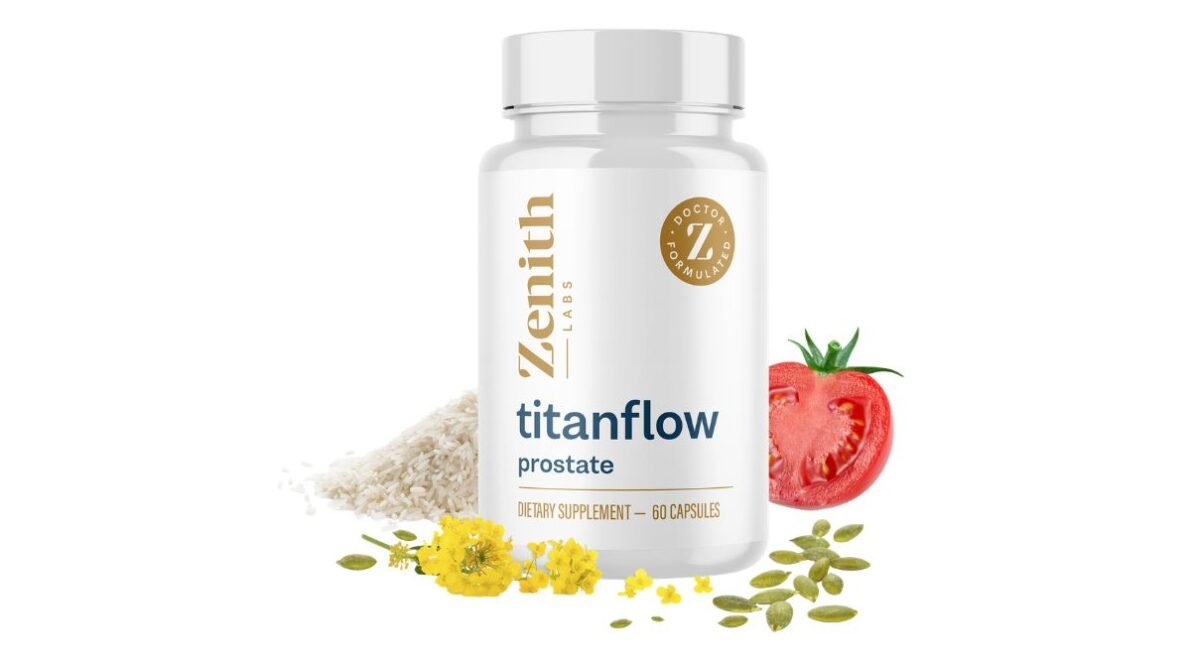
TitanFlow, by Zenith Labs, is built on one memorable hook: forget shrinking the prostate — the real problem is weakened urethra walls, and Johns Hopkins research proves it. It’s a genuinely novel angle. It’s also the single claim on the page you cannot verify, and everything distinctive about the product rests on it.
The Johns Hopkins Claim — and Why Nobody Can Source It
Here’s the center of this TitanFlow review. The official pages state that “groundbreaking discoveries from Johns Hopkins” show that for 50% of men over 40, the real cause of poor flow is that the urethra’s epithelial wall cells have weakened and get squeezed shut — and that TitanFlow is “the first formula in the world” built to strengthen them. Alongside it sits a “20%+ improvement in urinary flow” figure.
The problem is simple and disqualifying: there’s no citation. No study title, no author, no journal, no year, no link — nothing that would let you confirm the research exists, that it says what the page claims, or that it has anything to do with TitanFlow. “Johns Hopkins” is invoked as a credibility prop, exactly the way we’ve documented “Harvard” and “Mayo Clinic” attributions on other products — institutional names doing the work that evidence should. A real, named institution attached to an unnamed, unlinkable study isn’t proof. It’s the appearance of proof.
The “20%+ flow” number deserves the same scrutiny. There is a real figure close to it in the prostate literature — a roughly 23% increase in peak urine flow — but it comes from a meta-analysis of pygeum, not from any “urethra wall” mechanism and not from a study of TitanFlow. Borrowing a genuine number from an ingredient’s general research and re-presenting it as if it validates the product is precisely the move that makes a claim unverifiable. The statistic is real; its attribution isn’t.
The Ingredients Are Real — That’s the Frustrating Part
Now the fair half, and it’s a genuine half. Unlike products built on invented compounds, TitanFlow’s named ingredients are among the better-studied options in men’s urinary health. This is a formula with real bones.
Beta-Sitosterol
The strongest item here. A Cochrane systematic review of four randomized trials in 519 men found beta-sitosterol significantly improved urinary symptom scores and flow measures versus placebo — roughly a 5-point IPSS improvement and a peak-flow increase of about 4 mL/s — though it did not shrink the prostate. Effective doses in trials ran around 60–130 mg/day. It’s a legitimately evidence-backed ingredient.
Pygeum Africanum
Also well-studied. A meta-analysis of 18 trials in 1,562 men found pygeum roughly doubled the odds of symptom improvement, cut nighttime urination by about 19%, and raised peak flow by around 23% — the real source of that “20-something percent” figure the marketing gestures at.
Pumpkin Seed Oil, Lycopene, Broccoli Sprout Extract
Pumpkin seed oil has smaller but positive trials for BPH symptoms; lycopene and broccoli-sprout sulforaphane bring antioxidant rationale with lighter human evidence for flow specifically. As a category, these are reasonable inclusions — not filler.
Real Ingredients, Unverifiable Product: The Two Are Separate
Here’s the distinction that defines this review. Good ingredients and a good product are not the same claim, and TitanFlow passes the first while stumbling on the second.
Two gaps do the damage. First, the individual doses aren’t disclosed on the offer in a way you can verify against a Supplement Facts panel — and dose is exactly what separates the trial results above from a token sprinkle. Beta-sitosterol worked at 60–130 mg; if a capsule carries a fraction of that split across five ingredients, the Cochrane data doesn’t transfer.
Second, there’s no clinical trial on TitanFlow itself. Ingredient studies aren’t product studies: a blend can under-dose, and combinations aren’t the sum of their parts. The formula also shifts across pages — some list five ingredients, others nine (adding saw palmetto, nettle, quercetin, zinc, D3) — which further muddies what “TitanFlow” actually contains. Worth noting: saw palmetto, when it appears, is the one big-name prostate herb that a 2024 Cochrane review of 27 trials found does not improve symptoms.
So the honest read is narrow and specific: the shopping list is credible; the product-level proof and the signature “urethra wall / Johns Hopkins” mechanism are not.
About Zenith Labs and the Commercial Picture
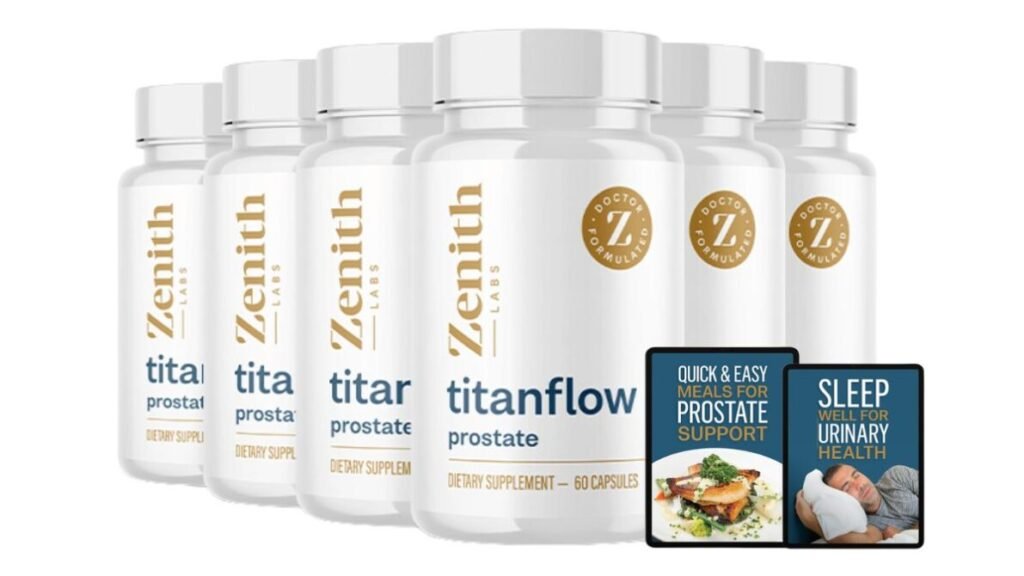
To be even-handed: Zenith Labs is a more visible brand than most in this space, with a listed Colorado address and a named formulator, and TitanFlow carries a long 180-day money-back guarantee — a genuine plus. But “more visible” isn’t the same as independently documented.
There’s no full corporate registration surfaced on the offer, no third-party verification of the Johns Hopkins claim, and the “90-day test” and survey percentages (“82% reported better flow”) are presented without any accessible methodology. Pricing runs roughly $39–$69 per bottle depending on the bundle. The guarantee lowers the financial risk of trying it; it doesn’t substitute for the missing evidence.
Safety and Medication Considerations
The named ingredients are generally well tolerated, but a few points matter.
- Don’t let a supplement replace evaluation. Beta-sitosterol and similar compounds can ease symptoms without shrinking the prostate — and can mask symptoms of something that needs diagnosis. Get urinary changes checked first.
- Beta-sitosterol and PSA. Prostate supplements can influence how you feel without changing PSA predictably; tell your doctor what you take before a PSA test or prostate assessment.
- Interactions. If the nine-ingredient version’s zinc is present, it can affect absorption of some antibiotics and levothyroxine. Anyone on medication should check with a pharmacist.
- Sitosterolemia. The rare genetic condition sitosterolemia is a reason to avoid added phytosterols.
When to See a Doctor, Not a Supplement
This matters more than the purchase decision. Weak flow and nighttime trips are usually benign, but some signs need prompt medical care — not a capsule:
- Blood in the urine, or pain/burning when you urinate
- Inability to urinate (acute retention) — this is an emergency
- Fever with urinary symptoms (possible infection)
- Sudden or rapidly worsening symptoms, or unexplained weight loss
- Ongoing symptoms that haven’t been evaluated — a simple exam and PSA discussion come first
A supplement marketed to fix flow can quietly delay the evaluation that rules out infection or, rarely, prostate cancer. The guarantee window is generous — but a clinician’s assessment is the step that actually protects you.
Who Might Consider It — and Who Shouldn’t
In fairness, a man over 40 with mild, already-evaluated urinary symptoms, who wants an evidence-informed botanical stack and is comfortable that the doses aren’t fully disclosed, could reasonably try TitanFlow under the long guarantee. The ingredients justify that much.
But be cautious if you:
- Have urinary symptoms you haven’t had checked (get evaluated first)
- Are swayed mainly by the “Johns Hopkins” or “urethra wall” claims (unverifiable)
- Need to know exact per-ingredient doses before buying
- Take medication and haven’t cleared it with a pharmacist
- Expect a supplement to replace prostate evaluation or PSA follow-up
Where to Buy TitanFlow
We’re not linking a purchase, and the reasons are specific: the signature Johns Hopkins claim and “20%+ flow” figure carry no verifiable citation, the individual doses aren’t disclosed on the offer, the ingredient list changes across pages, and there’s no trial on the product itself. Those gaps — not the ingredients — are why we won’t send readers to checkout.
This is a milder verdict than for many products we cover, because the formula is credible. If you decide to try it, buy from a source with a full Supplement Facts panel and per-ingredient doses, keep the 180-day guarantee in mind, and treat any urinary symptom as a reason to see a clinician first — not a claim to take on faith.
Final Verdict
The honest core of this TitanFlow review is a split. On ingredients, TitanFlow is better than most of its category: beta-sitosterol and pygeum have real, measurable evidence for urinary symptoms, and the formula is built on legitimate compounds rather than invented ones.
But the product sells itself on the one thing it can’t back up — a Johns Hopkins “urethra wall” discovery and a 20%+ flow number with no source, no product trial, undisclosed doses, and a shifting ingredient list. Credible ingredients can’t validate an unverifiable claim, and the claim is what the marketing leads with.
Our verdict: a legitimately-formulated supplement wrapped around a headline nobody can source. Until TitanFlow cites the actual Johns Hopkins research, discloses its doses, settles on one formula, and tests the product itself, treat the “urethra wall” story as marketing — judge it on its ingredients, not its unverifiable proof, and see a clinician about urinary symptoms first.
Related Reading
For how these ingredients stack up across the category — and the checks that separate a real formula from a marketing claim — see our guide to men’s health supplements. For a product that borrowed institutional credibility the same way, see our CitrusBurn review
Frequently Asked Questions
Is the Johns Hopkins research behind TitanFlow real?
There’s no way to confirm it. The pages cite “Johns Hopkins” and a “20%+ flow” figure without any study title, author, journal or link. A named institution attached to an unlinkable study isn’t verifiable evidence.
Are TitanFlow’s ingredients backed by science?
Individually, yes — beta-sitosterol and pygeum have solid meta-analyses for urinary symptoms, and pumpkin seed oil has smaller positive trials. But those studies tested the ingredients, not TitanFlow, and the product doesn’t disclose its per-ingredient doses.
Does TitanFlow really strengthen urethra walls?
That’s the product’s signature claim, and it’s the least supported part. There’s no verifiable published research tying a “urethra wall strengthening” mechanism to this formula, and no trial on the product.
Is TitanFlow safe?
The named ingredients are generally well tolerated. The bigger risk is using it instead of getting urinary symptoms evaluated — some causes (infection, rarely cancer) need medical care. Check with a clinician, especially if you take medication.
Why doesn’t this TitanFlow review include a buy link?
Because its headline proof can’t be verified, its doses aren’t disclosed, and there’s no trial on the product — even though the ingredients themselves are legitimate. Linking under those conditions goes against how we review.

Raphael Albert is the founder and content creator of Nutra Pulse. Passionate about health, nutrition, fitness, and wellness, he spends his time researching scientific studies, health trends, and evidence-based lifestyle strategies to create informative and easy-to-understand content. While he is not a doctor or licensed healthcare professional, his goal is to help readers make more informed wellness decisions. All content is for educational purposes only and should not replace professional medical advice. Always consult a qualified healthcare provider regarding your health concerns.