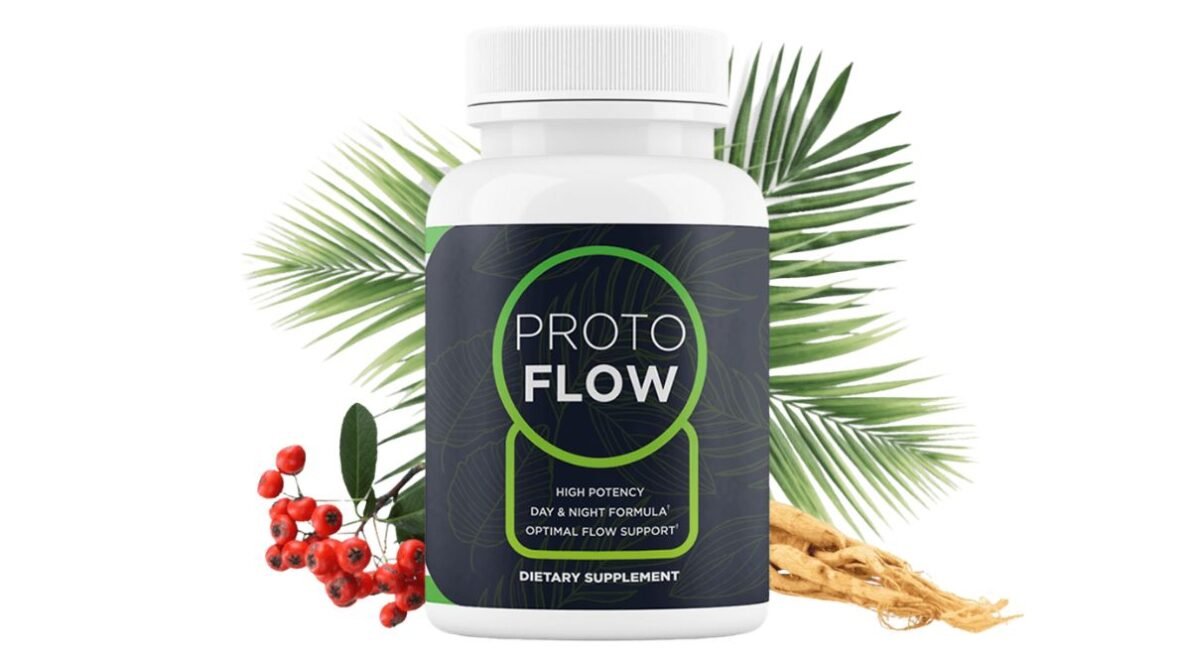
On transparency: this article contains no affiliate link. Protoflow doesn’t clear the bar we’d need to send a reader to checkout — no manufacturer is clearly identifiable, not one of its eight ingredients carries a disclosed dose, and its evidence comes mostly from testimonials rather than any trial of the formula. When a prostate product tells you this little, the honest move is to say so, not to link it.
These statements have not been evaluated by the Food and Drug Administration. This product is not intended to diagnose, treat, cure, or prevent any disease. Urinary changes in men deserve a proper evaluation — weak flow and nighttime trips are usually benign prostate enlargement, but the same symptoms can signal infection, and occasionally prostate cancer. Blood in the urine, pain, or an inability to urinate is a medical emergency. See a clinician before self-treating, especially if you take medication.
This Protoflow review keeps running into the same two walls: you can’t find out how much of anything is in the capsule, and you can’t quite tell what the formula is even for.
New to this category? Our guide to men’s health supplements breaks down how these products actually differ, and which claims hold up.
Protoflow is sold as a prostate and urinary support supplement for men over 40 — fewer bathroom trips, stronger flow, better sleep. Its eight botanicals are named openly, which is more than some products manage. But the amounts are hidden inside a proprietary blend, and the ingredient list itself tells a story the marketing doesn’t: half of it isn’t really about your prostate at all.
Eight Ingredients, Not One Disclosed Dose
The core of this Protoflow review is simple. The label names eight plant extracts — Chinese ginseng, cayenne pepper, damiana, saw palmetto, muira puama, Epimedium (horny goat weed), hawthorn berry, and catuaba — but wraps them in a proprietary blend that discloses no individual amounts.
That single choice makes the product impossible to evaluate against research. Saw palmetto’s trials used 320 mg/day; beta-sitosterol’s used 60–130 mg. If you don’t know whether a capsule delivers a research-relevant dose or a token pinch spread across eight herbs, the studies behind those herbs simply don’t transfer. An independent chemist who examined the formula reached the same conclusion: credible ingredient names, but a proprietary blend that “prevents verification of individual doses” and “cannot be confirmed to match clinical research dosing.” Worth adding: the number of ingredients even shifts across Protoflow’s own pages — eight on some, “10+,” “12,” or “14” on others — which muddies what you’d actually be buying.
The Borrowed List: A Prostate Product Wearing a Libido Formula
Here’s the part the marketing glides past, and it’s the most revealing finding. Line up Protoflow’s eight ingredients by what they’re actually studied for, and the formula splits cleanly in half.
- Ostensibly for the prostate/urinary tract: saw palmetto, and arguably cayenne and hawthorn (circulation).
- Traditionally for libido and sexual vitality: damiana, muira puama, Epimedium (horny goat weed), and catuaba — all classic aphrodisiac herbs, not urinary-flow ingredients.
That’s four of eight ingredients borrowed from an adjacent category. It’s a pattern we’ve documented before — a formula lifting its ingredient list from a different problem than the one it’s sold for — except here it happens inside men’s health, blurring prostate support and sexual performance as if they were the same complaint. They aren’t. A man with nighttime urgency and a weak stream has a mechanical/urinary issue; an aphrodisiac herb doesn’t address it. Blending the two lets the product gesture at “male vitality” broadly while implying prostate specificity it doesn’t really have. (Tellingly, this exact eight-herb stack also appears under other brand names — a sign of a shared template, not a purpose-built formula.)
What the Evidence Actually Says, Ingredient by Ingredient
Take the two halves on their own terms and the picture gets worse, not better, for the product’s core promise.
Saw Palmetto — the “hero,” and the weakest link
Saw palmetto is the one ingredient carrying the prostate claim, and the evidence has turned against it. A 2023 Cochrane review of 27 randomized trials in 4,656 men concluded that saw palmetto, alone or combined with other botanicals, does not improve urinary symptoms or quality of life — short-term or long-term. The NIH-funded CAMUS trial found no benefit even at triple the standard dose. The ingredient Protoflow leans on hardest is the one large trials have most clearly found wanting.
Damiana, Muira Puama, Epimedium, Catuaba — the libido half
These carry the “vitality” half, and their human evidence is thin to absent. WebMD notes that for muira puama, “there is currently no evidence that it can help improve sex drive or sexual performance”. Catuaba’s benefits, per independent reviews, come only from lab and animal studies, with no human trials confirming them — and “catuaba” isn’t even one standardized plant. Damiana’s libido reputation is traditional, not clinically established at supplement doses. None of these is a urinary-flow ingredient, and none has the human evidence to headline a health claim.
Chinese Ginseng, Cayenne, Hawthorn
These bring circulation and antioxidant rationale, which is reasonable as supporting cast — but “may support blood flow” is a general wellness idea, not evidence for shrinking a prostate or fixing a stream. At undisclosed doses, their contribution is unknowable.
Testimonials Are Not Evidence
With the ingredient evidence this mixed, Protoflow’s marketing leans heavily on customer stories — “I stopped waking up three times a night,” “my confidence came back.” Those testimonials may be sincere, but they aren’t clinical proof. There’s no published trial on the Protoflow formula itself, and self-reported sleep and bathroom habits are exactly the outcomes most prone to placebo and to natural week-to-week variation. A wall of five-star quotes tells you the copywriting works; it tells you nothing verifiable about whether the product does.
Safety and Medication Considerations
The named herbs are generally well tolerated, but the mix — at unknown doses — carries interactions worth flagging.
- Hawthorn can interact with blood-pressure and heart medications (including digoxin); anyone with a cardiac condition should check first.
- Epimedium (horny goat weed) may affect bleeding risk and interact with blood thinners, and can interact with drugs metabolized by the liver.
- Ginseng can affect blood sugar and interact with anticoagulants and some antidepressants.
- Cayenne may add to bleeding risk and irritate reflux.
- Undisclosed doses make the true size of any of these interactions impossible to gauge — a reason for caution in itself.
When to See a Doctor, Not a Supplement
This matters more than any purchase decision. Weak flow and nighttime trips are usually benign, but some signs need prompt medical care — not a capsule:
- Blood in the urine, or pain/burning when you urinate
- Inability to urinate (acute retention) — this is an emergency
- Fever with urinary symptoms (possible infection)
- Sudden or rapidly worsening symptoms, or unexplained weight loss
- Ongoing symptoms that haven’t been evaluated — a simple exam and PSA discussion come first
A supplement marketed to fix flow can quietly delay the evaluation that rules out infection or, rarely, prostate cancer. Get urinary symptoms assessed before you self-treat.
Who Should Be Cautious?
Protoflow is a poor fit for anyone who:
- Has urinary symptoms they haven’t had evaluated (get checked first)
- Needs to know exact per-ingredient doses before buying
- Takes blood-pressure, heart, blood-thinning, or diabetes medication
- Is buying it specifically for prostate/urinary relief (the prostate ingredient has the weakest evidence)
- Wants a clearly identifiable manufacturer and a single consistent formula
- Expects a supplement to replace prostate evaluation or PSA follow-up
Where to Buy Protoflow
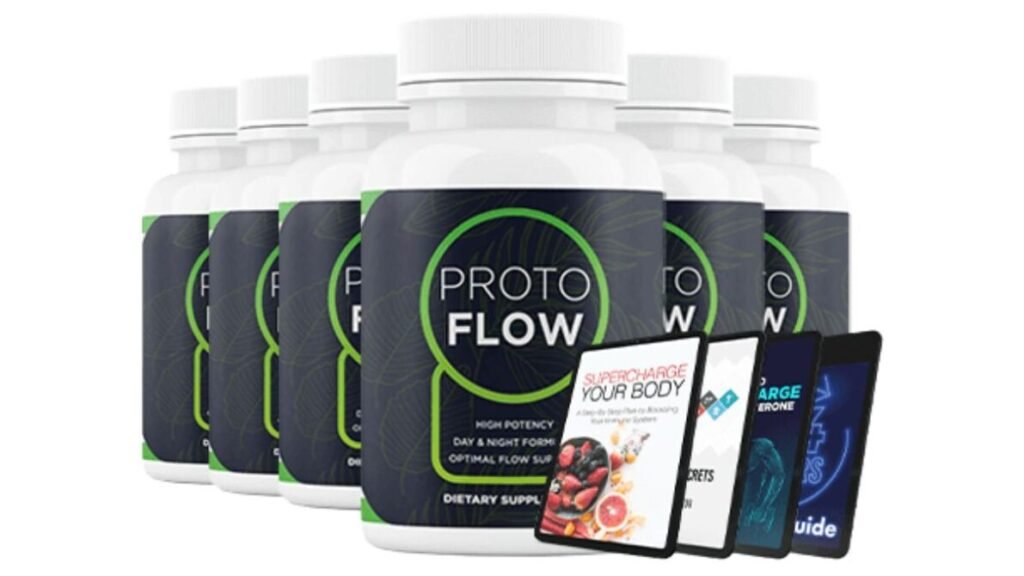
We’re not linking a purchase, and the reasons are specific: no individual doses are disclosed, no manufacturer is clearly identifiable, the ingredient count shifts across pages, the formula’s strongest urinary ingredient has the weakest evidence, and the case rests on testimonials rather than any trial. Those gaps are why we won’t send readers to checkout.
None of this proves the capsules do nothing for any individual. It means this product can’t be verified before purchase. If you want botanical prostate support, choose a product with a full Supplement Facts panel showing each dose, a named manufacturer, and a formula built around ingredients with actual urinary evidence — and get symptoms evaluated by a clinician first.
Final Verdict
The honest core of this Protoflow review is that its problems aren’t hidden — they’re right there in the ingredient list, if you read it closely. The doses are undisclosed, so nothing can be checked against research. The one true prostate ingredient, saw palmetto, is the one large trials have found doesn’t work. And half the formula is aphrodisiac herbs borrowed from an adjacent category, blurring “prostate support” into a vaguer “male vitality” pitch that the evidence doesn’t back.
Named ingredients aren’t the same as a working, verifiable product — and a formula assembled from a shared template, sold on testimonials, isn’t a substitute for either evidence or a doctor’s evaluation.
Our verdict: a testimonial-driven blend that mixes prostate and libido herbs, discloses no doses, and leads with its weakest-evidence ingredient. Until Protoflow reveals its doses, names a real manufacturer, settles on one formula, and builds around ingredients with genuine urinary evidence, treat it as unproven — and treat urinary symptoms as a reason to see a clinician, not a reason to buy.
Related Reading
For how these ingredients stack up across the category — and the checks that separate a real formula from a borrowed one — see our guide to men’s health supplements. For another product that borrowed its ingredient list from an adjacent category, see our Quietum Plus review.
Frequently Asked Questions
What are the ingredients in Protoflow?
Eight botanicals: Chinese ginseng, cayenne pepper, damiana, saw palmetto, muira puama, Epimedium (horny goat weed), hawthorn berry, and catuaba. They’re named, but the individual doses aren’t disclosed — the formula is a proprietary blend.
Does Protoflow work for prostate or urinary symptoms?
There’s no trial on the product, and its main prostate ingredient, saw palmetto, was found ineffective for urinary symptoms in a 2023 Cochrane review of 27 trials. Four of its eight ingredients are libido herbs, not urinary-flow ingredients.
Why does Protoflow mix prostate and libido ingredients?
It blends saw palmetto (prostate) with damiana, muira puama, Epimedium and catuaba (traditional aphrodisiacs), packaging both as “male vitality.” But sexual-vitality herbs don’t address the mechanical urinary symptoms the product is sold for.
Is Protoflow safe?
The named herbs are generally well tolerated, but several (hawthorn, Epimedium, ginseng, cayenne) can interact with heart, blood-pressure, blood-thinning or diabetes medication — and the undisclosed doses make those risks hard to gauge. Check with a pharmacist, and see a clinician about urinary symptoms first.
Why doesn’t this Protoflow review include a buy link?
Because the product can’t be verified — no disclosed doses, no clearly identifiable manufacturer, a shifting ingredient count, and evidence based on testimonials rather than a trial. Linking under those conditions goes against how we review.

Raphael Albert is the founder and content creator of Nutra Pulse. Passionate about health, nutrition, fitness, and wellness, he spends his time researching scientific studies, health trends, and evidence-based lifestyle strategies to create informative and easy-to-understand content. While he is not a doctor or licensed healthcare professional, his goal is to help readers make more informed wellness decisions. All content is for educational purposes only and should not replace professional medical advice. Always consult a qualified healthcare provider regarding your health concerns.