On transparency: this article contains no affiliate link. RevaNail doesn’t clear the bar we’d need to send a reader to checkout — the “official” pages can’t agree on what the product even is, some of them carry copy that clearly belongs to unrelated products, no formula lists a dose, and the headline claim outruns the evidence. When a product can’t be pinned down, the honest move is to say so, not to link it.
These statements have not been evaluated by the Food and Drug Administration. This product is not intended to diagnose, treat, cure, or prevent any disease. Nail fungus is a medical condition that deserves a real diagnosis — about half of abnormal-looking nails aren’t fungal at all, and psoriasis, trauma and other causes mimic it. A confirmed diagnosis comes before any treatment. If you’re pregnant, nursing, diabetic, taking medication, or managing a health condition, talk with a qualified healthcare professional first.
This RevaNail review begins with a problem that usually takes a few paragraphs to surface but here hits on the first click: the “official” RevaNail isn’t one product. It’s a shifting set of them, and some of the pages selling it are running copy that belongs to something else entirely.
New to this category? Our guide to skin and joint supplements breaks down how these products actually differ, and which claims hold up.
Line up the pages side by side and RevaNail is, variously: a topical liquid you brush onto the nail; a daily oral capsule; a blend of antifungal essential oils; and a nail-strengthening vitamin stack. Different formulas, different formats, different “creators,” different guarantees, and prices that swing wildly before all landing, suspiciously, at the same \$49. That inconsistency is the first finding, and it decides how much weight any single claim can carry: very little.
The Conflicting Formula: Four RevaNails, One Name
A trustworthy supplement has one formula and one label. RevaNail has at least four, depending on which “official” site you land on.
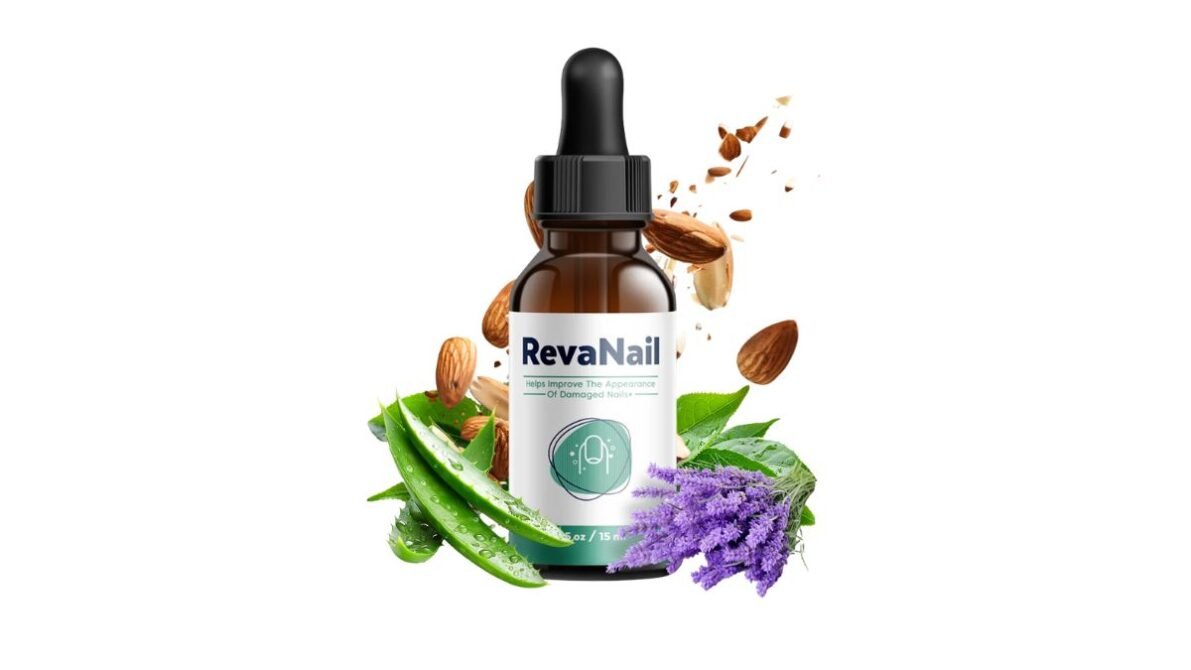
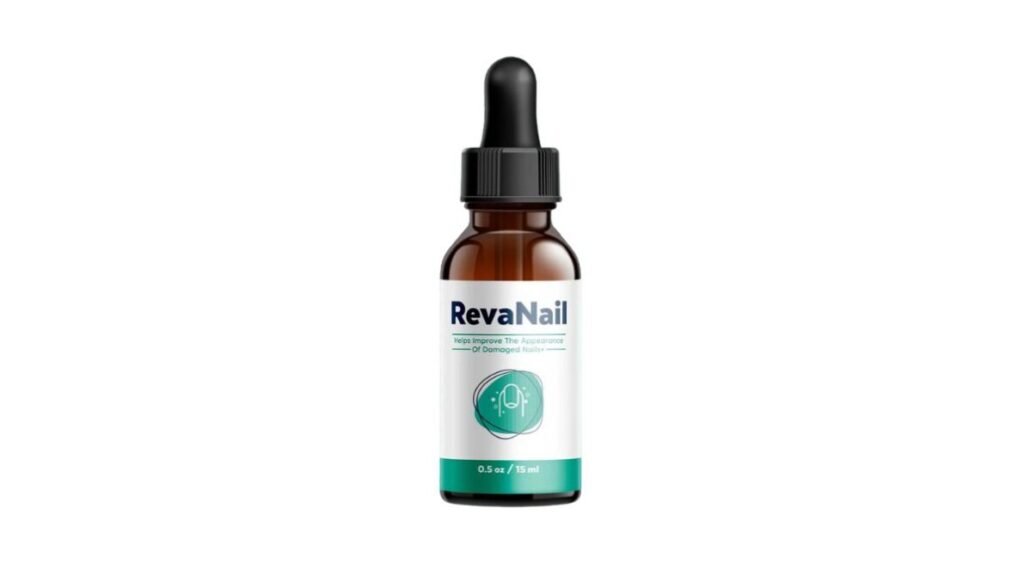
- Topical oil version: tea tree oil, aloe vera, lemongrass, almond oil, flaxseed oil, undecylenic acid — sold as a 0.5 oz liquid with a brush applicator.
- Antifungal herb version: garlic bulb extract, olive leaf, oregano compounds.
- Oral capsule version: biotin, zinc, selenium, vitamin C, vitamin E, turmeric.
- Nail-strength version: biotin, zinc, silica, vitamin C.
These aren’t minor tweaks. A topical essential-oil liquid and an oral vitamin capsule are different products with different mechanisms, sold under one name as if they were interchangeable. One page credits a “Robert Keane” as the formulator; another names a “Dr. Emily Rhodes.” Guarantees read 60 days on some pages and imply 180 on others. Regular prices are quoted as \$147, \$414, even \$1,027 — each slashed to \$49. When the fundamentals shift this much, you’re not looking at a formula. You’re looking at a name being reused across a shifting catalogue.
Content Contamination: When the Page Forgets Which Product It’s Selling
Here’s the detail that turns “recycled template” into something more telling. Recycling a layout is common in this market. Leaving another product’s copy inside the text is a different order of sloppiness — and RevaNail does it.
One “RevaNail” fungus page describes the product as “GMP Certified Ear Drops” and claims it “boosts nerve health, memory, and heart strength.” Those are the selling points of an ear-and-cognition supplement, not a nail product — the words simply weren’t swapped out. Elsewhere in the same operator’s network sits a blood-sugar product (CelluFend, built on green tea, theobromine, cinnamon and gymnema), and the same content-bleed pattern shows up: language from one funnel surfacing inside another. This isn’t a reviewer’s guess about “shared operators.” It’s the product’s own page telling on itself. If the page can’t keep straight whether it’s selling ear drops or a nail remedy, you can’t trust it to be accurate about what’s in the bottle.
The Delivery Route: RevaNail’s One Genuine Point of Interest
Now the fair part — and it’s worth being precise, because it’s the one place RevaNail’s oral versions have a real argument. To see why, you have to look at how the nail is actually built and fed.
The nail plate — the hard part you see — is dense, avascular keratin. It’s a deliberate barrier, which is exactly why topical antifungals struggle: they penetrate the plate poorly, so only a fraction of the drug reaches the target. But the fungus doesn’t live on the plate. It lives in the nail bed and matrix underneath — and those tissues are richly supplied with blood, fed by digital arteries and a dense capillary network. Substances reach them by diffusion from that blood supply.
That’s the whole logic behind oral treatment. It’s why the gold-standard drug for nail fungus, terbinafine, is taken by mouth: it travels through the bloodstream and accumulates in the nail bed and newly growing nail, working from the inside. We’ve walked through this same reasoning for topical nail products in our ProNail Complex review; here it cuts the other way. Of the four nail products we’ve examined, RevaNail’s oral capsule is the most physiologically plausible route, because the tissue that needs reaching is vascular, and oral delivery reaches vascular tissue.
Credit where it’s due. But keep the two problems separate, because that’s the point.
Plausible Route, Missing Everything Else
A sensible delivery route does not rescue a formula with no dose and no trial. These are independent questions, and RevaNail passes one while failing the other.
Even granting that an oral capsule can reach the nail bed, three things still have to be true for it to matter: the ingredients have to be antifungal, at an effective amount, proven in the actual product. RevaNail clears none of them. No version discloses an individual dose. There’s no published clinical trial on RevaNail itself. And the oral versions lean on biotin — whose only solid nail evidence is for a completely different problem.
Biotin: The Borrowed-Evidence Problem
Biotin is real, and it has genuine nail research — for brittle nails. Trials at 2.5 mg per day over roughly six months improved firmness and thickness in onychoschizia (splitting, brittle nails). That’s a cosmetic, structural benefit. It is not antifungal, and it does nothing to clear an infection. Selling a brittle-nail ingredient as a fungus fighter is borrowing evidence from one category to make claims in another. As a broad review of nail supplements put it plainly: manufacturers aren’t required to prove efficacy or safety, and for most of these products the evidence is scarce.
“Destroy the Fungus at Its Root” vs What the Evidence Shows
The claim that anchors RevaNail’s marketing — eliminating fungus “at its root” — sits well ahead of what any supplement has been shown to do.
Onychomycosis is stubborn precisely because of where it hides. The evidence-based treatment is oral antifungal medication. A JAMA Dermatology systematic review found continuous terbinafine (250 mg/day for 12 weeks) to be the most effective oral option, and even then complete cure rates run only about 38–76% — with blood tests to monitor the liver, and 12–18 months for a clear nail to grow out. No dietary supplement has demonstrated anything close to that, and none is an approved treatment for nail fungus. A botanical capsule promising to “destroy” the infection is making a drug-level claim on food-level evidence.
Get a Diagnosis First
This is the part that matters most, so don’t skip it. About half of abnormal-looking nails aren’t fungal at all. Psoriasis, old trauma, and other conditions produce the same yellowing and thickening — and no antifungal, botanical or pharmaceutical, will help if there’s no fungus there. Guidelines are consistent: confirm the diagnosis before starting treatment.
The real risk with a product like RevaNail isn’t that a capsule of biotin and oils will hurt you. It’s that months spent “treating” the wrong thing — or a genuine infection with something that can’t clear it — let the problem entrench while a proper diagnosis and effective treatment wait. For a cosmetic issue that’s an annoyance. For someone with diabetes or poor circulation, an untreated nail infection can be a real foot-health problem.
Safety and Medication Considerations
The named ingredients are generally low-risk, but a few points are worth flagging.
- Biotin and lab tests. High-dose biotin can interfere with certain blood tests (including thyroid and cardiac assays), causing misleading results. Tell your clinician if you take it, and stop it before lab work.
- Zinc. Zinc can reduce absorption of some antibiotics and of levothyroxine; separate the timing and check with a pharmacist.
- Tea tree and other essential oils (topical versions). Can cause skin irritation or allergic contact dermatitis in some people; patch-test first.
- Nut allergy. The topical version’s almond oil is a consideration for anyone with a tree-nut allergy.
- Pregnancy, breastfeeding, diabetes, poor circulation. Nail infections in these groups warrant medical care rather than self-treatment.
Who Should Be Cautious?
RevaNail is a poor fit for anyone who:
- Has an undiagnosed nail change (get it confirmed first)
- Has diabetes, neuropathy, or poor circulation in the feet
- Is pregnant, breastfeeding, or planning pregnancy
- Needs to know the exact ingredients and doses before taking anything
- Wants a single, consistent formula from an identifiable manufacturer
- Expects a supplement to replace a diagnosed infection’s real treatment
Where to Buy RevaNail
We’re not linking a purchase, and the reasons are the review itself: the “official” pages disagree on the formula and even the format, some carry copy lifted from unrelated products, no version discloses its doses, the guarantee changes from page to page, and the central claim outruns the evidence. Those signals together are exactly when sending readers to checkout would be irresponsible.
None of this proves the ingredients can’t help brittle nails, or that the oral route is pointless. It means this product, as sold, can’t be verified. If you want to try the approach, look for a single, clearly labelled formula from a named manufacturer — and if you actually have nail fungus, start with a clinician and a confirmed diagnosis, not a \$49 bottle that can’t decide what it is.
Final Verdict
The honest core of this RevaNail review is a split decision. On delivery route, RevaNail’s oral versions have the most defensible logic of any nail product we’ve looked at — the nail bed is vascular, and oral dosing reaches it. That’s a real point, and we’ll give it.
But a plausible route can’t paper over the rest: four conflicting formulas under one name, page copy bled in from unrelated products, no disclosed doses, no product-specific trial, a shifting guarantee, and a “destroy the fungus at its root” promise that no supplement has earned. The one ingredient with real nail evidence, biotin, is evidence for brittle nails — not fungus.
Our verdict: a physiologically reasonable idea buried under an unverifiable, self-contradicting product. Until RevaNail settles on one formula, discloses its doses, names a real manufacturer, and drops claims it can’t support, treat it as unproven — and treat actual nail fungus with a diagnosis and evidence-based care.
Related Reading
For the delivery-route logic in full — and why it plays out differently for a topical nail product — see our ProNail Complex review. And for the checks that filter out most of this market quickly, see our guide to skin and joint supplements.
Frequently Asked Questions
Is RevaNail FDA approved?
No. The FDA does not approve dietary supplements, so any “FDA approved” wording is misleading by definition. Some RevaNail pages also carry copy from unrelated products, which is its own reason for caution.
What’s actually in RevaNail?
It depends which “official” page you see. Versions include a topical oil blend (tea tree, aloe, undecylenic acid), an antifungal herb mix (garlic, olive leaf, oregano), and oral capsules (biotin, zinc, selenium, vitamin C, turmeric). None lists individual doses.
Can RevaNail cure toenail fungus?
There’s no published trial on RevaNail, and no supplement is an approved treatment for nail fungus. The evidence-based option is oral antifungal medication under medical supervision, with cure rates around 38–76% and a confirmed diagnosis first.
Is the oral capsule better than the topical version?
The oral route is more physiologically plausible, because the nail bed and matrix are vascular and oral dosing reaches them. But a plausible route doesn’t fix an undisclosed dose or the lack of any product-specific evidence.
Why doesn’t this RevaNail review include a buy link?
Because the product can’t be verified: conflicting formulas, contaminated page copy, no disclosed doses, and a claim beyond the evidence. Linking to checkout under those conditions goes against how we review.

Raphael Albert is the founder and content creator of Nutra Pulse. Passionate about health, nutrition, fitness, and wellness, he spends his time researching scientific studies, health trends, and evidence-based lifestyle strategies to create informative and easy-to-understand content. While he is not a doctor or licensed healthcare professional, his goal is to help readers make more informed wellness decisions. All content is for educational purposes only and should not replace professional medical advice. Always consult a qualified healthcare provider regarding your health concerns.