Transparency note: this site normally earns a commission when readers buy through our links. There are no purchase links in this article — the individual reviews it points to carry their own disclosures, and one of them is published with no affiliate link at all, for reasons this guide explains.
These statements have not been evaluated by the Food and Drug Administration. These products are not intended to diagnose, treat, cure, or prevent any disease. Swelling in one leg, a joint that is hot and red, or sleep problems that affect your daytime function are reasons to see a doctor rather than compare products. Each of those is covered below.
This is the most mixed-up category on this site, and the reason is worth understanding before you buy anything in it.
Skin and joint supplements get grouped with sleep aids, lymphatic support and nail treatments under a single wellness banner — as though a cream you rub on your knee, a capsule you swallow for cartilage, and a dropper you take before bed were variations on one idea.
They aren’t. A fungal nail infection lives under a plate of dead keratin. Cartilage sits inside a joint capsule fed by blood. Sleep is regulated by hormones and brain chemistry. Those are three different biological problems, and what unites the products aiming at them is marketing rather than mechanism.
Across seven detailed reviews in this category, the single most useful pattern that emerged wasn’t about ingredients. It was that products fail on delivery far more often than on formulation — the compound is often reasonable, and it simply never reaches the tissue the problem lives in.
That gives you a test you can run in about a minute on any product here, including ones that don’t exist yet. Here’s how it works.
Three Delivery Routes, Three Different Questions
Everything in this category takes one of three approaches, and each raises a different question.
Topical — creams, sprays and oils applied to skin or nails. The question is whether the active ingredient can cross the barrier in front of it, and at what concentration.
Systemic — capsules, powders and liquids you swallow. The question is whether the ingredient survives digestion, reaches the target tissue through the bloodstream, and arrives in the amount the research used.
Symptom-targeted — products sold against a cluster of complaints rather than a diagnosis. The question here is different and more important: is the symptom actually caused by what the product addresses?
Match the route to the tissue and you’ve eliminated most of the market before reading a single ingredient list.
Route One: Topical Products
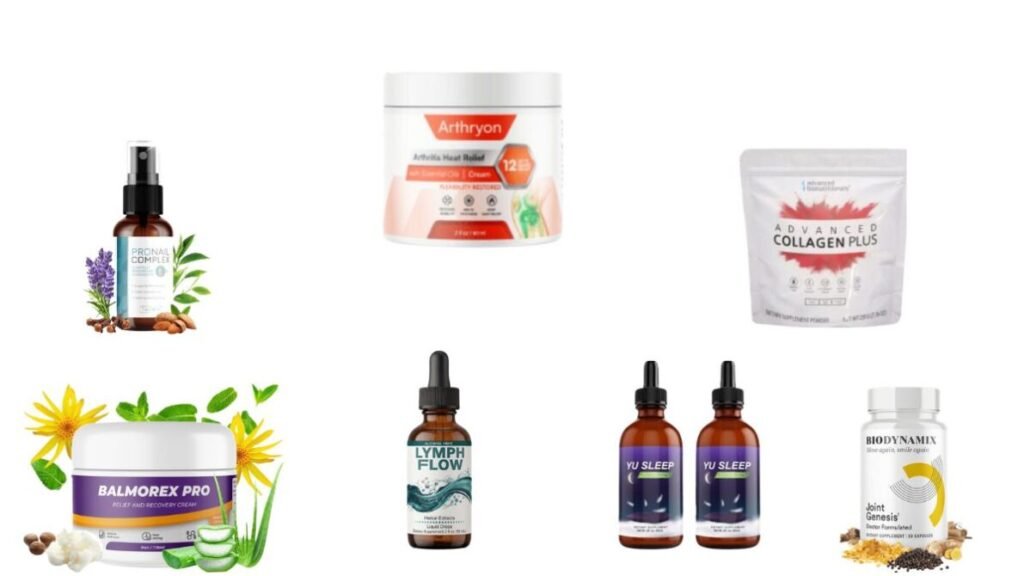
Three products in this category act on the surface, and they illustrate the range from defensible to unverifiable.
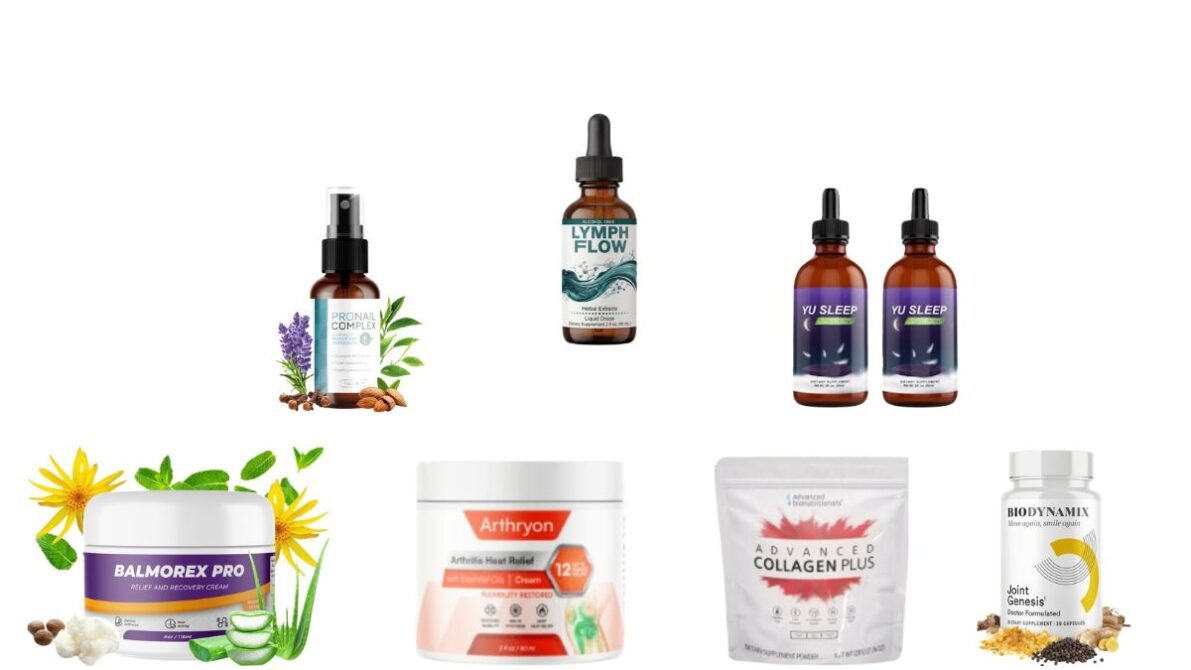
Our ProNail Complex review covers a mist spray for nail fungus containing undecylenic acid — a genuine antifungal — plus tea tree oil and a dozen carrier oils. The route is correct in principle: the infection is in and under the nail. The obstacle is the nail plate itself, which is dense, dead keratin. Prescription topicals at pharmaceutical concentration, applied daily for 48 weeks, achieve complete cure in fewer than one in five people. That’s the benchmark any oil is walking into.
Our Balmorex Pro review covers a joint cream whose ingredient shortlist would look sensible on a capsule label — MSM, boswellia, magnesium. The problem is that those ingredients were studied orally. MSM’s trials used around 5 grams a day by mouth; boswellia’s used 150 to 300 mg twice daily by mouth. Rubbing them on a knee is a different proposition, and transdermal magnesium in particular isn’t supported by the evidence.
Our Arthryon Heat Relief Cream review covers a product that can’t be assessed on route or ingredients, because it publishes neither. That one gets its own section below.
The Delivery Question Comes Before the Efficacy Question
This is the test worth internalising, and it works in both directions — which is what makes it a real principle rather than a slogan.
For nails, topical struggles and oral works. The nail plate blocks almost everything applied to it. But the nail grows from the nail matrix, which is living, vascularised tissue tucked under the skin at the base. Oral antifungals travel through the bloodstream, reach the matrix, and become incorporated into the nail as it grows out — arriving from underneath, where the infection is. Oral therapy has higher cure rates and shorter treatment periods than topical therapy, and terbinafine is recommended as first-line.
For a joint, the calculation flips again. A joint is deep, and cartilage has no blood supply of its own — it’s fed by diffusion from synovial fluid. So neither route is straightforward, and topical products in this space work mainly through counterirritation, producing a warming or cooling sensation that competes with the pain signal rather than treating the joint.
That’s genuine comfort and it isn’t fraudulent. It just isn’t disease-modifying, and it’s worth knowing which one you’re buying.
The practical version of the test: ask where the problem physically is, then ask whether the product can get there. If a topical is sold for something under a keratin plate or deep inside a joint capsule, the burden of proof is high. If a swallowed product is sold for a surface problem, the route is wrong regardless of the formula.
Route Two: Swallowed Products
Three products here work systemically, and the question shifts from “can it get there” to “is there enough of it.”
Our Joint Genesis review covers a formula built around Mobilee, a branded hyaluronan-rich ingredient with its own published research programme — a genuinely more considered choice than generic glucosamine. Worth checking against the label: the boswellia content sits around 100 mg daily, while the trials showing anti-inflammatory effects used 300 to 600 mg. That’s the recurring pattern in this category, and it’s the reason we describe products in terms of disclosed versus undisclosed dose rather than good versus bad.
Our Advanced Collagen Plus review covers a five-type collagen formula, and the collagen evidence deserves its own section — because “more types” turns out not to mean “more effective.”
Our Yu Sleep review covers a liquid dropper containing melatonin at 0.9 mg, which is the one disclosed dose and a physiologically sensible one — lower than the pharmacy gummies that often overshoot. The formula also contains 5-HTP, a direct serotonin precursor with a real interaction profile alongside antidepressants, triptans and tramadol, which the sales page doesn’t raise.
What the Collagen Evidence Actually Supports
This section applies to every collagen product you’ll ever compare, and it resolves the most common confusion in the category.
There are two collagen supplements, not one, and they work by completely different mechanisms at doses that differ by a factor of roughly 250.
Hydrolysed type I and III collagen is broken into small peptides that deliver absorbable dipeptides — Pro-Hyp and Hyp-Gly — which appear in circulation within a couple of hours and appear to signal fibroblasts and chondrocytes. Randomised trials support modest benefits at 2.5 to 10 grams per day for skin elasticity, hydration and wrinkle depth over 8 to 12 weeks, with joint trials generally using 10 to 15 grams.
Undenatured type II collagen (UC-II) works completely differently — through oral immune tolerance in gut-associated lymphoid tissue — and needs only 40 mg per day. A multicentre randomised, double-blind, placebo-controlled trial in 191 volunteers found that 40 mg of UC-II daily produced a significant reduction in total WOMAC score at 180 days compared with both placebo and glucosamine-chondroitin.
Two consequences follow, and they’re the useful part.
Grams and milligrams are not comparable here. A product listing “collagen” without specifying the form tells you nothing, because 40 mg of one form is a full clinical dose and 40 mg of the other is a rounding error.
And “five types” is a marketing structure, not an evidence structure. No clinical trial has shown that supplementing five types together outperforms one type at an effective dose, and types V and X have never been studied as standalone supplements in humans. If a five-type product delivers a few hundred milligrams total, it’s below the hydrolysed threshold and above the UC-II one — matching neither.
One more honest note: oral collagen doesn’t travel to your joint intact. The molecule doesn’t pass the gut whole. What it does is supply substrates and signalling peptides that your body uses. Effects are moderate, not transformative, and strongest for skin endpoints and joint pain.
Route Three: When the Symptom Is the Question
The third category is the one that needs the most care, because the product isn’t matched to a diagnosis — it’s matched to a feeling.
Our Lymph Flow review covers a product that opens with a symptom list: tight rings, puffy face, heavy legs, afternoon fog, bloating. Every item is real and bothers a lot of people. But every item also has multiple possible causes, and lymphatic sluggishness is neither the most common nor the most urgent of them.
The most common chronic cause of heavy, swollen legs isn’t lymphatic at all — it’s venous. And here’s the detail that makes the point: the product’s best-evidenced ingredient is horse chestnut, which has a Cochrane review of 17 randomised trials supporting it for chronic venous insufficiency — a vein condition the page never names, at 300 to 600 mg daily on its own.
So the ingredient may help, for a reason the marketing doesn’t describe, at a dose a shared blend can’t deliver.
The check for symptom-targeted products: before buying, ask what else could cause what you’re feeling. If the answer includes something that needs a diagnosis, that comes first.
Transparency: The Arthryon Case
One product in this category couldn’t be evaluated at all, and it’s worth explaining why — because the lesson generalises.
The Arthryon page publishes no ingredients whatsoever. Not a list, not a partial one, not a sentence describing the formula. Its purchase tiers are labelled by supposed effectiveness — the largest package as maximum efficiency, the smallest as lesser effect — which describes how many jars you own rather than anything about the cream. And its own disclaimer states that testimonial names and photographs have been changed and that individuals are remunerated.
We published that review without any affiliate link, and the reasoning applies to anything in this category: we can’t tell you whether a cream is safe for your skin, your allergies or your medications when nobody will say what’s in it.
There’s a specific, checkable point worth carrying forward. In the United States, a topical product marketed for pain relief is regulated as an over-the-counter drug. The FDA maintains a monograph covering external analgesic drug products listing the recognised actives — menthol, camphor, capsaicin, methyl salicylate among them — and products sold under it carry a Drug Facts panel with the active ingredient and its percentage.
That’s the black-bordered box on every muscle rub in every pharmacy. When you pick one up, you can read the active and its concentration before you pay. When a page publishes nothing, you pay first and find out later — and that comparison works on any topical product you’ll ever consider.
When to See a Doctor, Not Buy a Product
Three situations in this category are medical questions, and each has specific signs.
Leg swelling. Go to an emergency department if it comes with sudden breathlessness or chest pain, severe pain or colour change in one leg, or rapidly spreading redness with fever. Contact a doctor the same day for new swelling in one leg only — unilateral swelling is what clinicians assess for deep vein thrombosis before anything else — or for new swelling in both legs with breathlessness or weight gain over a few days. Swelling in pregnancy warrants a same-day call.
Joint pain. A joint that is hot, red, visibly swollen and painful — particularly with fever — needs urgent assessment, because septic arthritis and acute gout both present that way and the first is a medical emergency. Joint pain that wakes you at night, comes with unexplained weight loss, or affects many joints symmetrically also warrants a proper look rather than a cream.
Sleep. Chronic insomnia affecting your daytime function deserves assessment rather than self-treatment — and one pattern matters especially. Waking repeatedly in the early hours, unrefreshing sleep, and daytime tiredness in an adult over 40 is a classic presentation of obstructive sleep apnoea. A sedating supplement can worsen the respiratory side of that, which is why it’s worth raising before adding anything. The American College of Physicians recommends cognitive behavioural therapy for insomnia as first-line treatment for all adults with chronic insomnia, ahead of medication.
And for nails: roughly half of abnormal-looking nails aren’t fungal. A dark streak or patch under a nail that appears without injury needs prompt assessment, because subungual melanoma is frequently mistaken for a bruise or a fungal infection.
How to Choose Skin and Joint Supplements
Five checks, in the order that eliminates the most products fastest.
1. Where is the problem, and can the product reach it? Under a nail plate, inside a joint capsule, on the skin surface, or systemic. Match the route to the tissue before anything else.
2. Are the ingredients published? If a topical doesn’t list them, you cannot check it against your allergies, and for a pain product you’d normally expect a Drug Facts panel with percentages.
3. Are the amounts published, and do they match the research? Search the ingredient plus “randomized trial,” find the daily dose, and compare. For collagen specifically, check the form first — grams for hydrolysed, 40 mg for UC-II, and they aren’t interchangeable.
4. For topicals, is the concentration stated? With creams and oils, concentration is the dose. A trial using 50% arnica gel doesn’t transfer to an undisclosed fraction of a 27-ingredient blend.
5. Is it an addition or a substitute? A product positioned alongside proper assessment is being sold honestly. One positioned as letting you skip it isn’t — and in this category, the things you’d be skipping include a clot, a septic joint and a melanoma.
The Full Library, by Delivery Route
Everything covered above, with the central finding of each.
Topical — applied to skin or nails
- ProNail Complex review — the nail plate barrier, and why oral treatment outperforms topical here specifically
- Balmorex Pro review — sensible ingredients studied at oral doses, delivered by a route those studies didn’t use
- Arthryon Heat Relief Cream review — no ingredients published at all, and why we published it with no affiliate link
Systemic — swallowed
- Joint Genesis review — a branded hyaluronan ingredient with real research, and a supporting ingredient below its studied dose
- Advanced Collagen Plus review — five collagen types, and why the number of types isn’t the variable that matters
- Yu Sleep review — a sensible melatonin dose inside an unfalsifiable promise, plus a serotonergic ingredient the page doesn’t flag
Symptom-targeted
- Lymph Flow review — a symptom list with more than one possible cause, and an ingredient whose evidence points at a different condition
Frequently Asked Questions
Do topical pain creams actually work?
Menthol, camphor and capsaicin work as counterirritants — they create a sensation that competes with the pain signal, which is real comfort but not disease-modifying. For osteoarthritis specifically, topical NSAIDs have the strongest evidence among creams and are available in pharmacies with the active ingredient and percentage printed on the box. A cream that doesn’t publish its active ingredient can’t be compared to either.
How much collagen do I need for joints?
It depends entirely on the form, and this is the most common confusion in the category. Hydrolysed collagen trials for joints generally use 10 to 15 grams daily. Undenatured type II collagen (UC-II) works by a different mechanism and uses 40 mg daily — a 191-person randomised trial found that dose reduced WOMAC scores significantly over 180 days. They aren’t interchangeable, so check the form before the number.
Are five-type collagen supplements better than single-type?
No trial has shown that. Supplementing five types together hasn’t been demonstrated superior to one type at an effective dose, and types V and X have never been studied as standalone supplements in humans. The variable that matters is whether the type you need is present at the dose the research used.
Can a supplement fix nail fungus?
Topical treatments struggle because the nail plate is dense, dead keratin — even prescription topicals at pharmaceutical strength, applied daily for 48 weeks, completely cure fewer than one in five people. Oral antifungals work better because they reach the nail through the living matrix at its base. And around half of abnormal-looking nails aren’t fungal at all, so getting it tested comes first.
Why do so many joint creams contain ingredients studied orally?
Because the ingredient shortlist is borrowed from oral research. MSM, boswellia and magnesium have oral trials behind them at gram or hundreds-of-milligram doses. Whether those compounds cross skin and reach a joint in meaningful amounts is a separate question, and largely an unanswered one — transdermal magnesium in particular isn’t supported by the available evidence.
When is leg swelling an emergency?
Immediately if it comes with sudden breathlessness, chest pain, or severe pain and colour change in one leg. Same-day medical contact for new swelling in one leg only, for new swelling in both legs with breathlessness or rapid weight gain, or for any new swelling during pregnancy. Unilateral swelling is assessed for deep vein thrombosis before anything else.
Is melatonin safe to take every night?
Lower doses are generally better tolerated than the high-dose products common in pharmacies, and the effect size in trials is modest — around seven minutes faster to fall asleep. The bigger question is what’s causing the sleep problem. Chronic insomnia affecting daytime function warrants assessment, and cognitive behavioural therapy for insomnia is recommended as first-line treatment ahead of medication.
What should I check before buying skin and joint supplements?
Start with the route: where the problem physically is, and whether the product can reach it. Then whether ingredients and amounts are published, whether those amounts match the research, and — for topicals — whether the concentration is stated, since concentration is the dose. Finally, whether the product is presented as an addition to proper care or a substitute for it.

Raphael Albert is the founder and content creator of Nutra Pulse. Passionate about health, nutrition, fitness, and wellness, he spends his time researching scientific studies, health trends, and evidence-based lifestyle strategies to create informative and easy-to-understand content. While he is not a doctor or licensed healthcare professional, his goal is to help readers make more informed wellness decisions. All content is for educational purposes only and should not replace professional medical advice. Always consult a qualified healthcare provider regarding your health concerns.