
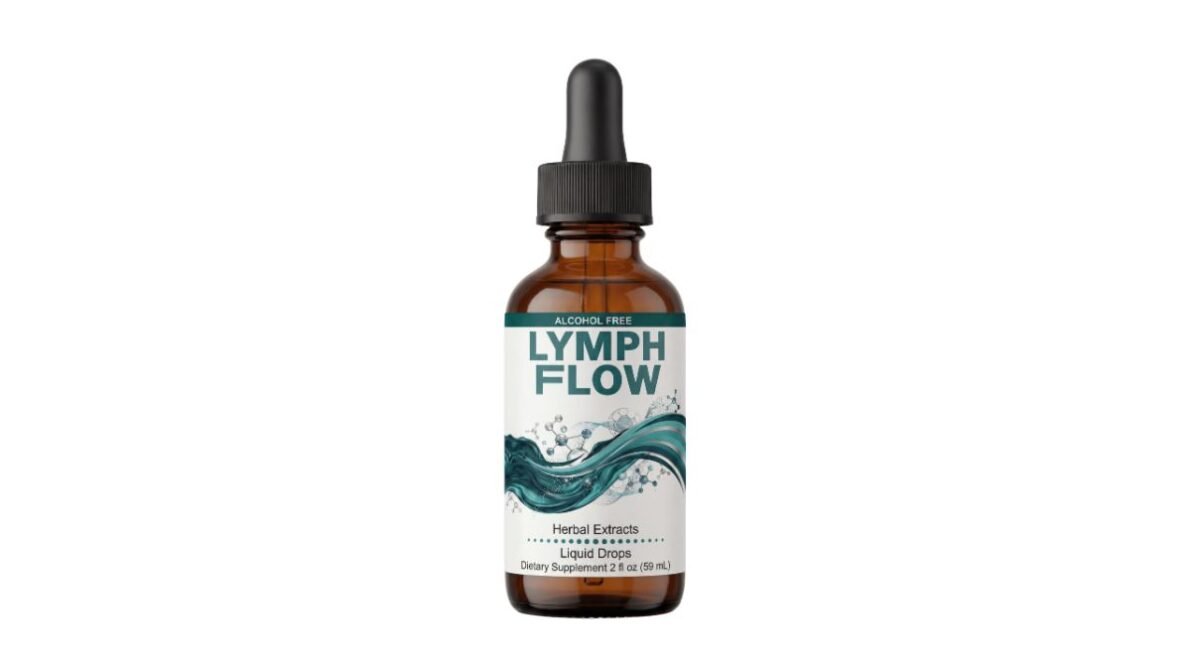
Transparency on the money: two links below go to the seller and pay this site a commission. A whole section of this review explains when swelling means you should be at a doctor’s office instead of a checkout page, so you can judge how much the commission shaped things.
These statements have not been evaluated by the Food and Drug Administration. This product is not intended to diagnose, treat, cure, or prevent any disease. Swelling in one leg, sudden swelling, or swelling with pain, warmth, redness, breathlessness, or chest discomfort needs medical attention, not a supplement. Please read the section on warning signs before you buy anything in this category.
The Lymph Flow sales page opens with a list, and it’s a good list — the kind that makes you nod.
Rings that fit yesterday and feel tight today. A puffy face in the morning mirror. Heavy, dragging legs after a long day standing. Afternoon fog no coffee touches. Bloat that lingers regardless of what you eat. Skin that doesn’t bounce back.
Then it tells you what the list means: “Most people brush these off as normal. They aren’t. They’re often the first whispers of a lymphatic system that’s running a little too slow.”
Here’s the problem, and it’s the reason this Lymph Flow review is written the way it is. That list is real — those symptoms genuinely bother millions of people. But every single item on it has multiple possible causes, and lymphatic sluggishness is neither the most common nor the most urgent of them. Swelling and puffiness can come from venous disease, heart failure, kidney or liver problems, thyroid dysfunction, medication side effects, pregnancy, prolonged sitting, or a blood clot. They feel roughly the same from the inside.
The single most common chronic cause of heavy, swollen legs isn’t lymphatic at all. It’s venous. And — as we’ll get to — the one ingredient in this bottle with genuinely strong evidence works on exactly that, for exactly that reason, which the page never mentions.
What Lymph Flow Is
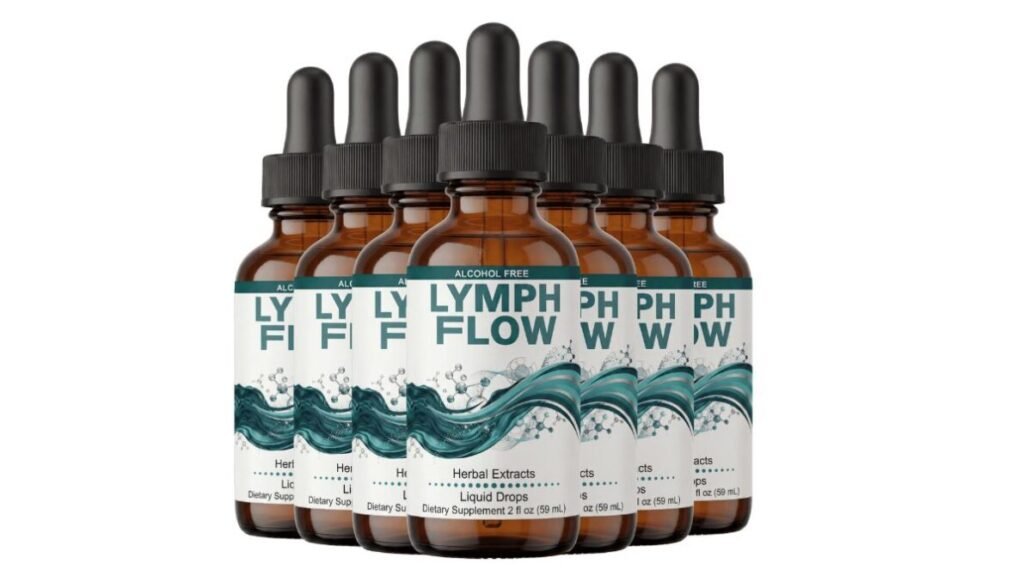
An alcohol-free liquid, two droppers stirred into water or juice once daily, sold through the Lymph Flow official website with ClickBank processing payment.
Each serving delivers a stated 600 mg proprietary blend of 13 botanicals and bio-actives, in a base of purified water, vegetable glycerin and natural flavouring. Thirty servings per bottle. Contains soy.
Six of the thirteen are named: boswellia serrata, curcumin, horse chestnut, gotu kola, quercetin phytosome, and ginger extract.
Two things deserve immediate credit, and I’ll give it plainly because it’s rarer than it should be. The page states a total blend weight — 600 mg — rather than hiding behind “proprietary” with no number at all. And it publishes an image of the actual supplement facts panel under a heading reading “Full Transparency.” Most products in this category do neither.
What it doesn’t do is break the 600 mg down. Thirteen ingredients share it, and you aren’t told in what proportions. That turns out to matter a great deal.
Horse Chestnut Is the Real Ingredient — for a Different System
Of the six named botanicals, one has evidence that would satisfy a vascular specialist.
A Cochrane review of 17 randomised controlled trials found horse chestnut seed extract improved leg pain, oedema and itching in chronic venous insufficiency. Six placebo-controlled trials covering 543 participants reported a clear reduction in leg pain. Six trials with 502 participants showed a meaningful reduction in leg volume. One trial suggested it performed comparably to compression stockings. Adverse events were mild and infrequent. An earlier systematic review reached the same conclusion — reduced lower-leg volume and reduced calf and ankle circumference.
That is genuinely good evidence, and horse chestnut deserves its place in any product aimed at heavy legs.
But read what the condition is. Chronic venous insufficiency is a problem with veins — the valves that should push blood back up your legs stop closing properly, blood pools, and fluid leaks into tissue. It is not lymphatic drainage failure. They are different systems with different mechanisms and different treatments.
So the product’s strongest ingredient works, and it works for a reason the sales page never mentions, on a condition the sales page never names. If your legs are heavy at 3pm, the venous explanation is more likely than the lymphatic one, and the horse chestnut is the part that might actually address it.
That reframing matters commercially too. Horse chestnut is widely sold on its own, standardised, with the aescin content printed on the label.
600 mg, Divided Thirteen Ways
Now the arithmetic, and it’s the crux of the whole review.
Horse chestnut trials use 300 mg of standardised extract once or twice daily — roughly 50 mg of aescin per dose. So 300 to 600 mg of horse chestnut extract per day, on its own, is the studied range.
Lymph Flow’s entire blend is 600 mg, shared among thirteen ingredients. Even in the most generous scenario — horse chestnut being the single largest component — you’d need it to account for half to all of the blend to reach the low end of the trial dose. Divided evenly, thirteen ingredients in 600 mg averages about 46 mg each.
The same problem repeats across the formula. Boswellia trials typically use 150 to 300 mg twice daily. Curcumin trials commonly run 500 mg and up, and curcumin’s poor absorption is why phytosome and piperine formulations exist. Quercetin studies generally use 500 mg or more. Gotu kola’s venous research uses standardised triterpene fractions at defined amounts.
Any two of those at trial dose would exceed the entire blend.
None of this means 46 mg of something does nothing. It means the published research on these ingredients was conducted at amounts this format cannot deliver, and the page doesn’t give you the breakdown that would let you check.
Boswellia, Curcumin, Gotu Kola, Quercetin
Gotu kola is the second-best choice here. It has genuine, if smaller, research in venous insufficiency — again, veins rather than lymph.
Boswellia has decent evidence for joint inflammation at oral doses in the hundreds of milligrams. Its relevance to fluid balance is more inferred than demonstrated.
Curcumin is a reasonable antioxidant inclusion with one caveat worth stating in a wellness product marketed largely to women in midlife: turmeric-associated liver injury is documented. The Drug-Induced Liver Injury Network published a case series with a median patient age in the mid-fifties, most cases in women. Rare, but real, and worth knowing if you take other turmeric products alongside this.
Quercetin phytosome is a smart formulation choice — phytosome technology genuinely improves absorption of poorly soluble flavonoids. Credit for that. The studied doses are still measured in hundreds of milligrams.
Ginger is pleasant, well tolerated, and unremarkable here.
The seven unnamed ingredients are the largest single unknown, and there’s nothing to say about them because nothing is said about them.
“Regeneration Phase” and “Stabilization Phase” Aren’t Things
The purchase-decision section describes a physiological timeline: a “lymphatic regeneration phase (90+ days)” followed by a “stabilization phase where your body locks in the improvements,” with “critical weeks 7–10 when transformation accelerates.”
These phases don’t exist. There is no described lymphatic regeneration phase in physiology, no stabilisation phase, and no literature identifying weeks seven to ten as a threshold for anything lymphatic. The lymphatic system is real and important — it moves interstitial fluid, transports immune cells, and absorbs dietary fats. It doesn’t have a documented multi-month regeneration cycle that a herbal drop initiates.
Inventing a timeline serves a specific commercial function: it makes the two-month package look inadequate by construction. And the page says so directly, describing the starter package as carrying “risk of running out during critical weeks 7–10.”
The Pressure Architecture
I’ve reviewed a lot of these pages, and the purchasing pressure here is among the more elaborate I’ve seen. Worth naming the pieces so you can recognise them.
A section headed “Running Out = Devastating,” walking you through a scenario in which you feel better at week eight, run out, and watch the puffiness creep back. A claim that reordering later will cost $129 per bottle — “$480 extra” — with the current price framed as available only on this visit. An assertion that stock sold out in six days last month and four days the month before. A statistic that 73% of customers choose the six-month supply. And a decision guide whose final line reads: “Not sure? → 6-Month.”
None of the scarcity claims carry a source. The “regular price” of $129 per bottle is the anchor that makes $49 look like a rescue; nobody appears to pay $129.
I’d also note the rating. The page displays “4.91 / 5 average rating” and “trusted by thousands of customers” with no link to where those ratings live and no count attached to the average.
Where the Testimonial Images Come From
Six testimonials appear, each labelled “Verified Customer” with a duration attached.
Look at the image filenames and a pattern emerges. They read testimonial-midage-woman, testimonial-midage-man, testimonial-latino-woman, testimonial-young-woman, testimonial-old-woman, testimonial-young-man.
Those are demographic category labels, not people. Photographs of actual customers tend to be filed under names or order numbers; assets organised by age bracket and ethnicity are organised the way a casting brief or a stock library is organised. You can verify this yourself by right-clicking any of the photographs and viewing the image address.
To the company’s credit, an asterisk below the testimonials states clearly that results may vary, are not typical, and are not a guarantee. That disclosure is legally correct and more prominent than many competitors manage. But a demographically-labelled image set sitting under a “Verified Customer” badge is worth knowing about before you weigh those stories.
What I Liked
A stated blend weight. 600 mg, printed. After a dozen products that publish nothing at all, this is a real difference and I won’t undersell it.
A published supplement facts panel. Under a heading that says “Full Transparency.” The breakdown is missing, but the panel exists and you can look at it.
Horse chestnut and gotu kola are evidence-led choices. Someone read the venous literature. The formula’s shortlist is defensible even where the format isn’t.
Quercetin phytosome over plain quercetin. A genuine formulation upgrade that costs more and improves absorption.
Refunds run through ClickBank. That matters more than it sounds. A guarantee administered by the payment processor rather than by the vendor’s own returns desk is materially easier to enforce.
The FAQ tells you to speak to a healthcare professional, specifically naming pregnancy, nursing, medication, and existing conditions.
Alcohol-free, and honest about the soy allergen. Small, but it’s the kind of detail that gets omitted when nobody’s paying attention.
Things to Consider
The blend isn’t broken down. 600 mg across thirteen ingredients, proportions undisclosed.
Horse chestnut’s evidence is venous, not lymphatic — and the page never mentions venous insufficiency at all.
Trial doses exceed the whole blend. Horse chestnut alone, at studied amounts, would be most or all of 600 mg.
“Regeneration phase” and “stabilization phase” are invented.
The scarcity claims carry no source, and the $129 anchor price appears to be a construct.
“4.91 / 5” has no count and no destination.
Testimonial images are filed by demographic category.
Near-identical products exist. At least one competing lymph supplement is described with the same core specification — a 600 mg proprietary blend in a glycerin base led by boswellia — which suggests a shared white-label formula sold under multiple brands rather than a unique proprietary development.
Several similarly-named domains exist, including at least one differing by a single letter. If you order, check you’re on the seller’s actual page.
When Swelling Isn’t a Supplement Question
This is the section I’d want read before any purchase in this category, and it’s short because it needs to be clear.
Go to an emergency department, or call emergency services, if leg swelling comes with:
- Sudden shortness of breath, or chest pain
- Severe pain, coolness, or colour change in one leg
- Coughing up pink, frothy sputum
- Rapidly spreading redness with fever
Contact a doctor the same day for:
- New swelling in one leg only. Unilateral swelling is the presentation clinicians assess for deep vein thrombosis first, before anything else. An untreated clot can travel to the lungs.
- New swelling in both legs together with breathlessness or weight gain over a few days — the pattern of heart failure decompensation
- Swelling with redness, warmth and tenderness, which can indicate cellulitis
- Swelling that’s worsening quickly without explanation
- Any new swelling during pregnancy, particularly if asymmetric
And some general orientation that’s genuinely useful. Swelling in both legs points toward systemic causes — heart, kidneys, liver, medication. Swelling in one leg points toward a clot, local venous disease, or lymphedema. Swelling that came on over hours or days is treated as acute; swelling that developed over months is more likely chronic venous disease or lymphedema. Swelling that leaves a dent when you press it tends to be venous or systemic; swelling that doesn’t tends to be lymphatic.
If it really is lymphedema, the established treatment is complete decongestive therapy — manual lymphatic drainage performed by a trained therapist, multilayer bandaging, and fitted compression garments. It’s effective, it’s what specialists do, and no oral supplement substitutes for it. True lymphedema usually has a specific cause: lymph node surgery, radiation, infection, or a congenital condition. It’s diagnosed, not guessed at.
And a note on medication: if you’re on a diuretic, a blood thinner, or medication for blood pressure or heart failure, talk to your pharmacist before adding herbal extracts aimed at fluid balance.
Price, Guarantee, and What Independent Reviews Show
Two bottles run $79 each ($158), three run $69 each ($207), and six run $49 each ($294) with free US shipping on the larger supplies. Current pricing is on the Lymph Flow site.
The guarantee is 60 days, refundable through ClickBank, minus shipping.
Now hold that against the page’s own recommendation. It urges the six-month supply on the grounds that the “regeneration phase” runs 90-plus days and the stabilisation phase follows. Sixty days is your refund window. By the seller’s own timeline, you are asked to decide about a refund one month before the phase you’re buying for has finished — and four months before the six-bottle course ends.
If you try this, buy the smallest package and set a reminder at day 45.
On independent feedback: none is available in a form I’d trust. The product is sold direct through ClickBank, so there’s no verified-purchase pool. What search results return is affiliate content, some of which discloses its commission arrangement and some of which doesn’t. I’d treat any specific figure or personal account you encounter as unverified, including the ratings on the sales page itself.
Final Verdict
Lymph Flow is a better-presented product than most in this category, built on a premise that quietly points at the wrong system.
The credits are real: a stated blend weight, a published panel, refunds through the payment processor, and two ingredients — horse chestnut and gotu kola — chosen by someone who read the vascular literature. That’s a genuinely higher standard than most of what’s sold alongside it.
What doesn’t hold is the framing and the format. Horse chestnut’s Cochrane evidence concerns chronic venous insufficiency, a vein condition the page never names, at doses of 300 to 600 mg on its own — against a 600 mg blend shared thirteen ways. The multi-phase regeneration timeline is invented. The scarcity claims are unsourced. And the refund window closes before the results the page describes are supposed to arrive.
Who this might reasonably suit: someone whose legs feel heavy at the end of a long day standing or sitting, who has had that assessed and been told it’s ordinary venous pooling rather than anything requiring treatment, who isn’t on diuretics or anticoagulants, and who wants a gentle daily botanical. Buy two bottles, not six, and decide inside 60 days.
Who should look elsewhere: anyone with swelling in one leg, anyone whose swelling is new or worsening, anyone who hasn’t had it looked at, and anyone hoping this substitutes for compression or for a diagnosis.
What I’d actually suggest first. If heavy legs are your issue and a doctor has ruled out the serious causes, three things beat this bottle. Standardised horse chestnut extract on its own, at the dose the trials used, with the aescin content printed on the label — cheaper and checkable. Properly fitted compression, which one Cochrane-included trial found comparable to horse chestnut. And movement: your lymphatic system genuinely has no pump and moves when you do, which is the one thing the sales page gets exactly right. Walking, calf raises, and getting up hourly are free.
If you’re comparing products built on similar promises, our Yu Sleep review examines a formula sold the same way — a daily dropper, a multi-month timeline, and a refund window that closes before that timeline finishes.
Frequently Asked Questions
Does Lymph Flow actually help lymphatic drainage?
There’s no published trial on this formula, so nobody can answer from evidence. What can be said is that its best-supported ingredient, horse chestnut, has Cochrane-level evidence for chronic venous insufficiency — a vein condition, not a lymphatic one — at doses of 300 to 600 mg daily on its own, against a 600 mg blend shared among thirteen ingredients here.
Is heavy, swollen legs a lymph problem?
Usually not. Chronic venous disease is the most common chronic cause. Other possibilities include heart failure, kidney or liver disease, thyroid problems, medication effects, and pregnancy. True lymphedema typically follows lymph node surgery, radiation, infection, or a congenital condition, and is diagnosed by a clinician rather than assumed.
When should I see a doctor instead of buying a supplement?
Immediately if swelling comes with breathlessness, chest pain, or severe one-sided leg pain or colour change. Same day for new swelling in one leg, for new swelling in both legs with breathlessness or rapid weight gain, or for swelling with redness, warmth and fever. New swelling in pregnancy also warrants a same-day call.
Should I buy the six-month supply?
I wouldn’t. The guarantee is 60 days and the page’s own recommended timeline runs well past that, so the larger packages commit you beyond the point where you can get your money back. The smallest package and a decision inside the refund window is the lower-risk route.

Raphael Albert is the founder and content creator of Nutra Plus. Passionate about health, nutrition, fitness, and wellness, he spends his time researching scientific studies, health trends, and evidence-based lifestyle strategies to create informative and easy-to-understand content. While he is not a doctor or licensed healthcare professional, his goal is to help readers make more informed wellness decisions. All content is for educational purposes only and should not replace professional medical advice. Always consult a qualified healthcare provider regarding your health concerns.
1 thought on “Lymph Flow Review: That Symptom List Has More Than One Answer”