
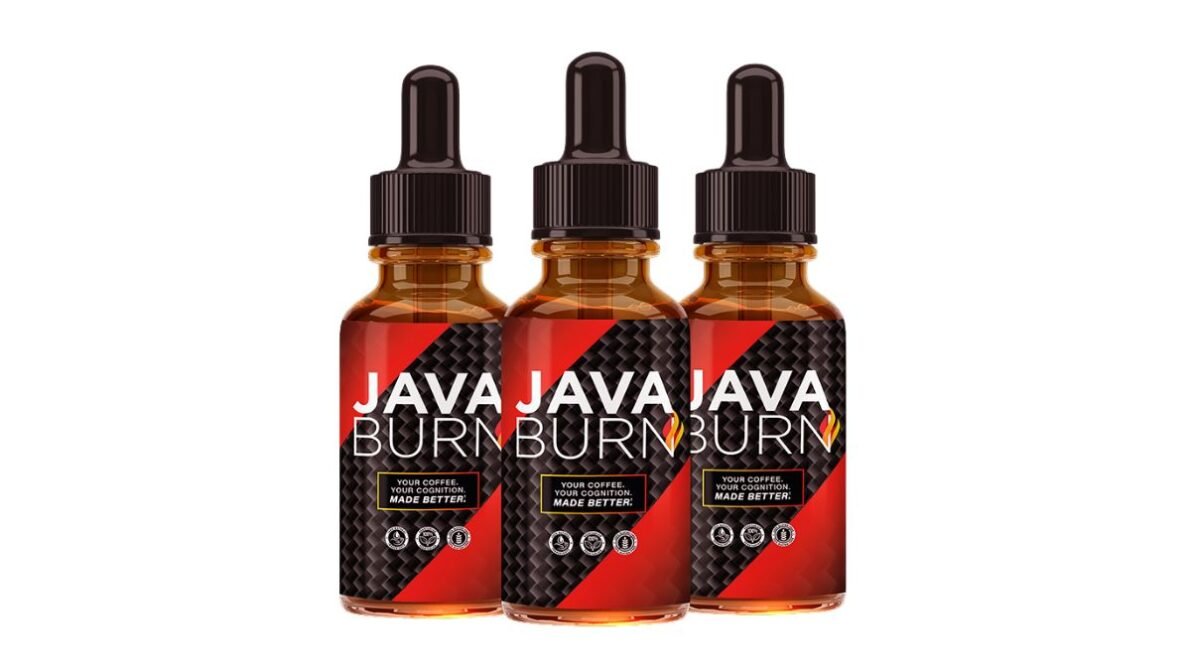
On the commercial side: two links below go to the seller and pay this site a commission. The first section of this review is about a federal enforcement action involving the main ingredient’s category, so you can weigh how much that commission shaped things.
These statements have not been evaluated by the Food and Drug Administration. This product is not intended to diagnose, treat, cure, or prevent any disease. If you take medication for blood sugar or blood pressure, or you have liver disease, speak to a pharmacist before adding any concentrated plant extract to your routine.
The first ingredient on Java Burn’s list is chlorogenic acid — the active compound in green coffee bean extract. Before anything else, it’s worth knowing what that ingredient’s category went through a decade ago, because it’s a matter of public record.
In September 2014, the Federal Trade Commission announced a settlement with Applied Food Sciences, a Texas company selling a green coffee ingredient to supplement makers. The FTC’s complaint alleged the study underpinning its weight-loss claims was “so hopelessly flawed that no reliable conclusions could be drawn from it”. According to the agency, the lead investigator repeatedly altered subjects’ weights and other key measurements, changed the length of the trial, and misstated which participants were on placebo. The company paid $3.5 million and agreed to substantiate any future weight-loss claim with at least two adequate, well-controlled human trials.
The paper built from that data — which had claimed users lost 17.7 pounds with or without diet and exercise — was retracted by its authors the following month, with a notice stating the sponsors could not assure the validity of the data.
One thing must be absolutely clear: that enforcement action was against an ingredient supplier. It was not against Java Burn, its makers, or anyone connected to this product. Java Burn has no part in that history whatsoever.
But it’s the reason this Java Burn review starts there. When a category’s flagship weight-loss claim was built on data a federal agency called unreliable and the authors themselves withdrew, the burden of proof on anything sold in that category afterwards is higher than usual. So let’s apply it.
What Java Burn Is
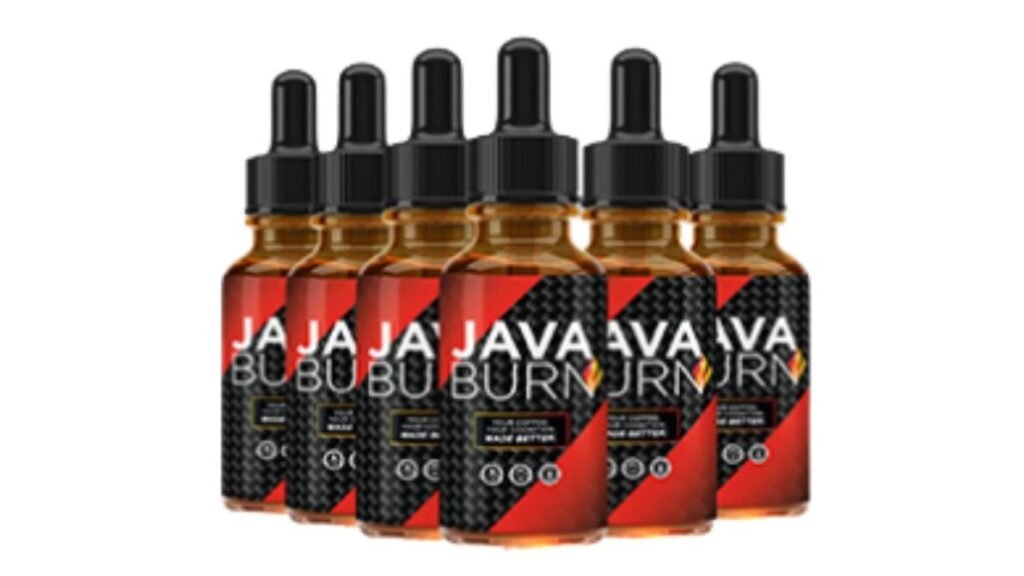
A tasteless liquid you add to coffee once a day, sold through the Java Burn official website with ClickBank processing payment.
Six components are named: chlorogenic acid, camellia sinensis (green tea), chromium, L-carnitine, L-theanine, and a “vitamin complex.” Earlier listings of the product described the vitamin portion as B6, B12, and D.
The formula is described as proprietary. No amounts are published for anything — not per serving, not per ingredient. The page carries superscript reference numbers running up to 47, but the reference list they point to isn’t on the page I reviewed.
The company behind it is Adonis Lifestyle LLC, with the product attributed to John Barban, a fitness and nutrition figure with a genuine background in weight-management programmes. That’s worth stating plainly: unlike several products in this category, the person on the label appears to be a real, identifiable professional rather than a stock photograph.
You’re Adding Coffee’s Own Compound Back Into Coffee
Here’s something the marketing doesn’t mention, and it’s the most quietly interesting fact in the formula.
Chlorogenic acids are not exotic. Coffee is the single largest dietary source of them in most people’s diets. The reason supplements use green — unroasted — coffee beans is that roasting degrades chlorogenic acids substantially. Roast the bean and much of the compound is gone; that’s why the extract industry exists.
So the product’s proposition, mechanically, is: take roasted coffee, which has lost much of its chlorogenic acid, and add chlorogenic acid back in.
That isn’t absurd on its face — topping up a compound that processing removed is a legitimate idea. But it reframes the pitch considerably. This isn’t a novel super-nutrient that transforms coffee into something else. It’s a coffee compound being returned to coffee, at an amount the label won’t specify.
And the amount is the whole question, because the trials that found anything used defined doses.
The Evidence That Survived
After the retraction, what’s actually left? Genuinely something, and I want to give it fair weight.
A review of the clinical literature found weight loss ranging from roughly 1 to 8 kg across trials, with a pooled mean difference of about 2.47 kg versus placebo. That’s a real signal. The same review is blunt about what surrounds it: trials ran only 4 to 12 weeks, chlorogenic acid doses varied from 81 mg to 400 mg, few studies complied with FDA guidance, and the authors concluded that all of the studies held significant limitations. More recent meta-analyses have looked at doses of 500 mg per day and above.
So the honest position on chlorogenic acid: modest short-term effects, low-quality evidence, at doses in the hundreds of milligrams daily.
There’s a second problem specific to this ingredient, and it’s uncomfortable. An analysis of 54 commercially available green coffee extracts found the average labelled chlorogenic acid dose was 233 mg while the average measured by laboratory analysis was 157 mg — meaning a typical buyer received a little more than half of what the label claimed. Only 28% of the products tested met the 50% chlorogenic acid content the industry treats as standard.
That study is about products that at least printed a number. Java Burn doesn’t. There is no figure to fall short of, and no way to compare what you’re taking against the doses that produced the modest results above.
Green Tea Extract in a Liver-Category Product
Camellia sinensis is green tea, and in supplement form that means concentrated catechins — principally EGCG.
Brewed green tea is fine. Concentrated extract is a different matter, and it’s among the better-documented causes of supplement-associated liver injury. The European Food Safety Authority concluded that green tea catechins at or above 800 mg of EGCG daily are associated with elevated liver enzymes, and — importantly — that it was not possible to identify a supplemental dose that could be considered safe. One product produced liver injury at around 375 mg. The US Pharmacopeia recommended label warnings; Health Canada made them mandatory; the EU capped daily servings and required cautions for under-18s, pregnancy, and breastfeeding.
The EU warning also cautions against taking green tea extract on an empty stomach, because fasting-state dosing appears to raise the risk.
Java Burn’s instruction is to add it to coffee, which many people drink before eating. The page notes it works “with or without food.” If you use this, use it with food, and if you already take another green tea extract product, count them together. As with everything else here, the EGCG amount isn’t published, so it may well sit far below any threshold of concern — but “may well” is doing a lot of work in a liver-adjacent product.
Chromium, L-Carnitine, and L-Theanine
Chromium is an essential trace mineral, and it’s the ingredient whose reputation most exceeds its evidence. Pooled analyses have generally found little to no meaningful effect on body weight or glycemic control in people who aren’t deficient — which, in a well-fed population, is nearly everyone. It’s not harmful at typical amounts. It’s just not doing much.
L-Carnitine has modest evidence for weight and body composition, and it’s a reasonable inclusion in principle. The complication is arithmetic: trials in this area use doses measured in grams per day, typically two or more. A tasteless liquid dose that dissolves invisibly into a cup of coffee is not carrying multiple grams of anything.
L-Theanine is the most defensible of the three. It has decent evidence for calm focus without sedation, it pairs sensibly with caffeine, and the typical studied dose is around 200 mg. Whether that’s what’s in here is, again, unknowable.
The vitamin complex — B6, B12, and D in earlier descriptions — is fine and unremarkable. These help if you’re deficient. Most people aren’t, and none of them burns fat.
The Serum-Versus-Powder Argument Doesn’t Hold
Java Burn used to be a powder. Sachets, one scoop stirred into coffee. It’s now sold as a “nutritional serum,” and the FAQ devotes a long section to explaining why a serum is superior to a powder.
Read that section carefully and you’re reading a company arguing against its own previous product. Every advantage now claimed for the serum is a disadvantage attributed to the format the same company sold for years.
The arguments themselves don’t survive scrutiny either. The page claims the serum delivers “rapid sublingual and stomach absorption.” Sublingual absorption means holding a substance under the tongue so it enters the bloodstream through the mucous membrane. You are stirring this into coffee and drinking it. Nothing sublingual is occurring.
The second claim is that powders “must be broken down first, then pass through the liver before they can be of significant metabolic benefit,” implying the serum doesn’t. It does. Anything absorbed from your digestive tract travels through the portal vein to the liver before reaching general circulation. Dissolving something in coffee rather than stirring in a powder doesn’t change that route, because by the time either one reaches your stomach they are both liquid.
None of this makes the product harmful. It means the central technical justification for the reformulation describes something that isn’t happening.
“Zero Side Effects Reported” and Other Absolutes
The FAQ contains several claims phrased with a certainty that nothing in this category earns.
“Java Burn is absolutely 100% natural, safe and effective.” “There have been absolutely zero side effects reported.” “Will Java Burn work for me? In a word..YES!” And the formula is described as “scientifically proven to increase both the speed and efficiency of metabolism to deliver unparalleled fat burning results.”
Zero side effects is not a plausible statement about a product containing concentrated green tea extract and chromium. Green tea extract has a documented adverse event literature, which is why three separate regulators require label warnings.
“Scientifically proven” is a claim about this specific formula, and I could find no published trial on the Java Burn formula itself — only research on individual ingredients at doses the product doesn’t disclose.
The page also states the product is made in an “FDA approved” facility. The FDA registers and inspects facilities; it does not approve them, and it does not approve dietary supplements. The phrasing is common in this industry and it’s inaccurate wherever it appears.
And the framing that opens the sales page — that up to 80% of Americans have inherited a slow metabolism, and that difficulty losing weight is therefore “not your fault” — carries no source. It’s also at odds with how metabolic rate actually varies: once you account for body size and muscle mass, differences between individuals are modest, and larger bodies typically have higher absolute metabolic rates, not lower.
What I Liked
A named, real formulator. John Barban is an identifiable professional with a genuine track record in this field. After reviewing products fronted by unverifiable physicians and stock photographs, that matters.
L-theanine and chlorogenic acid are sensible pairings with coffee. Theanine genuinely smooths caffeine’s edge, and chlorogenic acid is coffee’s own compound. Whoever designed this understood the vehicle.
No stimulant stacking. The product doesn’t add synephrine or yohimbine on top of your coffee’s caffeine, which is a restraint some competitors don’t show.
One-time payment, explicitly stated. No auto-ship, no subscription, said plainly and repeatedly.
The guarantee covers empty bottles. You don’t have to leave product sealed to qualify — a genuinely consumer-friendly term, and rarer than it should be.
It’s tasteless and easy. Trivial, but real: adherence is the hardest part of any routine, and something you add to a habit you already have is easier to sustain than a pill you must remember.
Things to Consider
No doses for anything, in a category where a laboratory analysis found labelled doses overstated by roughly a third even among products that print them.
No published trial on the formula itself, despite “scientifically proven” language.
“Zero side effects reported” is not credible for a formula containing concentrated green tea extract.
“FDA approved facility” is not a thing that exists.
The sublingual absorption claim describes something that doesn’t happen when you drink a beverage.
The serum argument contradicts the company’s own earlier product.
The 80% slow-metabolism premise has no source and sits awkwardly against how metabolic rate actually varies.
Struck-through prices of $394, $591, and $1,182 that nobody has paid.
A 30-minute countdown timer that resets when the page reloads.
The Guarantee Closes Before the Results Are Meant to Arrive
This is the practical point I’d most want you to take away, because it costs money.
The FAQ states: “Research shows it’s best to take Java Burn consistently for at least 90 – 180 days to experience optimal results,” and on that basis recommends the 180-day package.
The guarantee is 60 days.
Read those two sentences together. By the seller’s own stated timeline, the results you’re buying for arrive one to four months after your refund window has closed. If you buy the six-bottle package on the recommendation that you need 90 to 180 days, you will be at day 60 — decision deadline — having completed a third of the course the same page told you was necessary.
Two further details from the terms. The clock starts on your purchase date, not delivery, so shipping eats into it. And refunds are issued “less shipping and handling,” with the product returned.
If you buy this, the sensible move is the smallest package, a calendar reminder at day 45, and a decision made inside the window on whether you feel any different — not on the 90-to-180-day story.
Price and What Independent Reviews Show
Two bottles run $79 each ($158), three run $69 each ($207), and six run $49 each ($294) with free US shipping. Current pricing is on the Java Burn site.
On independent feedback, the honest finding is that reliable data isn’t available. The product is sold direct only, so there’s no verified-purchase pool to read.
What fills the search results is affiliate content, and it’s worth knowing how to read it. A large share consists of press releases distributed through newswire services and republished on financial and news portals, several of them titled as “investigation reports” — a framing that suggests independent scrutiny where none occurred. Others are PDFs uploaded to the file-upload directories of unrelated institutions, including at least one university web form. That’s a search-engine technique, and it tells you about the promotion rather than the product.
The content contradicts itself on basics — some describe a powder, some a serum, some list ingredients the current page doesn’t name, and at least one asserts the product raises metabolism by 500%, a figure with no basis I could locate. The page itself refers generically to thousands of people attesting to results; I have no way to verify that, and I’d treat any specific figure or personal account you encounter as unverified.
Final Verdict
Java Burn is a competent, unremarkable formula sold with claims that are considerably more certain than the evidence permits.
The ingredients aren’t foolish. Chlorogenic acid is coffee’s own compound with modest, low-quality evidence behind it. Theanine pairs sensibly with caffeine. Carnitine has a defensible rationale. The vehicle — add it to a habit you already have — is genuinely clever, and the formulator is a real person who can be looked up.
What doesn’t hold up is everything wrapped around it. No dose is published in a category where measured content has been shown to fall short of labelled content. No trial exists on the formula, despite “scientifically proven” language. The sublingual claim describes something that doesn’t occur. “Zero side effects” is asserted for a formula containing an extract that three regulators require warnings on. And the refund window shuts one to four months before the seller’s own stated results timeline.
Who this might reasonably suit: a daily coffee drinker, not on medication for blood sugar or blood pressure, without liver concerns, who wants a small, easy, non-jittery addition to an existing habit, who understands they may be buying a modest and short-term effect rather than a metabolic transformation — and who buys two bottles, not six, and decides inside 60 days.
Who should skip it: anyone taking another green tea extract product, anyone with liver disease, anyone expecting the page’s promises, and anyone who’d buy the 180-day package on a 60-day guarantee.
And the part with evidence beyond anything here: for metabolic health, a sustainable calorie deficit, protein and fibre high enough to manage hunger, resistance training to protect muscle, and adequate sleep outperform this entire category by a margin that isn’t close. Coffee itself — black, no additions — already provides caffeine’s genuine and modest thermogenic effect for the price of coffee.
If you’re comparing thermogenics, our Ignitra review covers another product in this space, and the two questions from this article carry over: does the label state a dose, and does a published trial exist on the formula rather than on its ingredients in isolation?
Frequently Asked Questions
Does chlorogenic acid actually help with weight loss?
Modestly, on low-quality evidence. Pooled trials suggest a mean difference of roughly 2.5 kg versus placebo, but they ran only 4 to 12 weeks, used doses ranging from 81 to 400 mg daily, and reviewers noted all of them carried significant limitations. It’s also worth knowing that the study which launched the ingredient’s popularity was retracted by its authors in 2014 after a federal enforcement action against the ingredient’s supplier — an action unrelated to Java Burn or its makers.
How much chlorogenic acid is in Java Burn?
The page doesn’t say, and neither does any material I could find. That matters more than usual here: a laboratory analysis of 54 commercial green coffee extracts found average measured content of 157 mg against an average labelled 233 mg. Java Burn publishes no figure at all, so there’s nothing to verify.
Is it safe to take with my medication?
Ask a pharmacist first. The green tea extract content warrants caution if you have liver disease or already take another green tea product, and chromium can interact with medications that affect blood sugar. Because no amounts are disclosed, neither you nor your pharmacist can size the interaction — which is itself a reason to have the conversation rather than assume.
Should I buy the 180-day package?
I wouldn’t. The FAQ recommends 90 to 180 days for optimal results while the guarantee runs 60 days from purchase, so the larger packages commit you well beyond the point where you can get your money back. If you want to try it, the smallest package and a decision inside the refund window is the lower-risk route.

Raphael Albert is the founder and content creator of Nutra Plus. Passionate about health, nutrition, fitness, and wellness, he spends his time researching scientific studies, health trends, and evidence-based lifestyle strategies to create informative and easy-to-understand content. While he is not a doctor or licensed healthcare professional, his goal is to help readers make more informed wellness decisions. All content is for educational purposes only and should not replace professional medical advice. Always consult a qualified healthcare provider regarding your health concerns.
1 thought on “Java Burn Review: What Happened the Last Time This Ingredient Was Sold This Way”