On incentives: this article contains one link to each product, and both pay this site a commission. Neither product comes out of this comparison recommended without qualification — which should tell you how much that shaped it.
These statements have not been evaluated by the Food and Drug Administration. These products are not intended to diagnose, treat, cure, or prevent any disease. Difficulty losing weight despite consistent effort deserves a proper look — thyroid problems, medication effects, sleep apnoea and insulin resistance all present that way, and all are treatable.
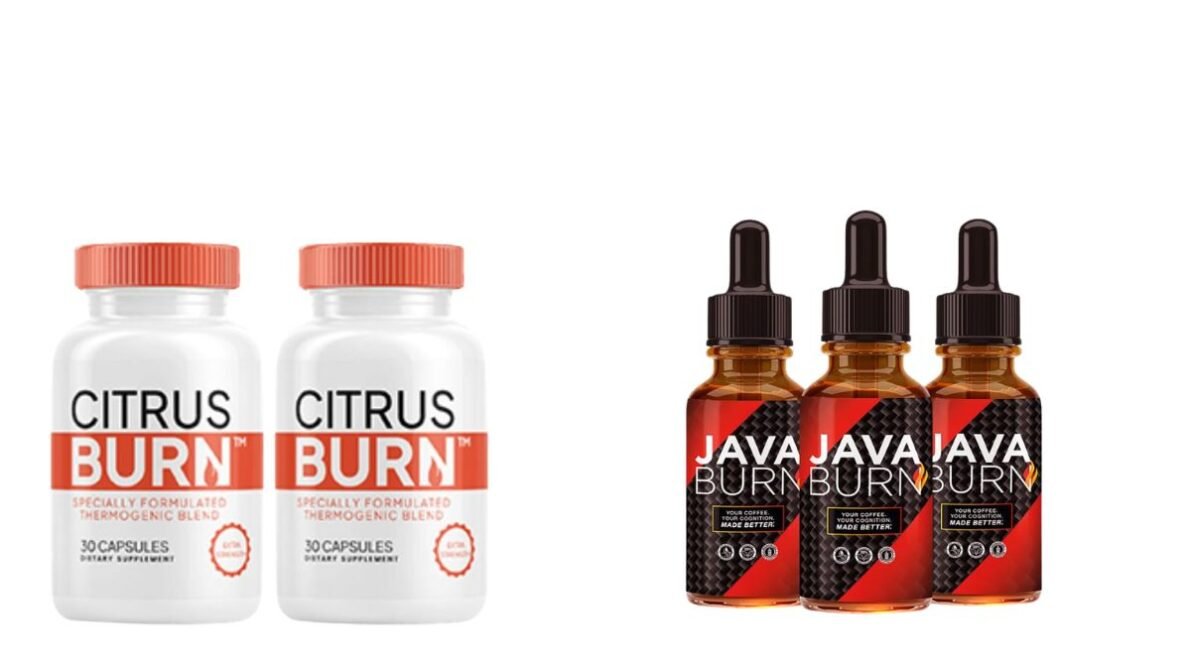
This Java Burn vs CitrusBurn comparison starts with the finding that shapes everything else:
Neither product publishes a dose for a single ingredient.
Both hide behind a proprietary formula. That means neither can be evaluated on efficacy — you cannot compare what’s in either bottle against the research on those ingredients, because neither tells you the amounts.
That could be where the comparison ends. But it isn’t, because everything else about these two products is checkable, and they separate clearly once you look. One is more honest about what it contains. The other publishes its references and offers three times the refund window. Neither is simply better than the other, and knowing which trade-offs you’re making is the useful part.
Here’s how they actually compare.
What They Genuinely Share
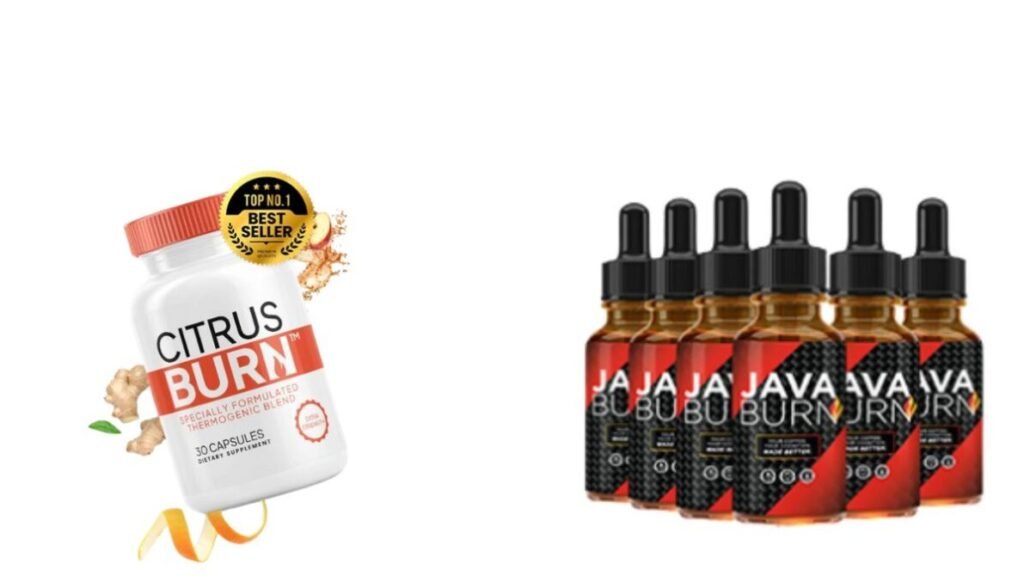
Both are built around green tea — Camellia sinensis — and both are sold on thermogenesis, the idea that you can raise the rate at which your body burns energy.
That shared ingredient matters, because the green tea weight-loss evidence is well characterised and modest. A meta-analysis of green tea catechin trials found small weight loss and modest weight maintenance effects — on the order of a kilogram over months.
Worth noting: that meta-analysis is CitrusBurn’s own reference number six. The product cites, as support, a paper describing an effect most people wouldn’t notice on a bathroom scale.
Where they diverge on ingredients:
Java Burn names chlorogenic acid — the active compound in green coffee bean extract — alongside chromium, L-carnitine, L-theanine and a vitamin complex.
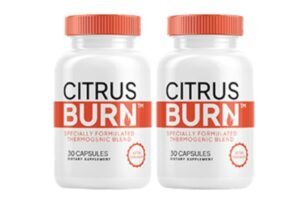
CitrusBurn names Seville orange peel standardised for p-synephrine, apple cider vinegar, red pepper for capsaicin, ginger, berberine and Korean red ginseng. It does not list chlorogenic acid.
So Java Burn’s second pillar is a coffee compound; CitrusBurn’s is a sympathomimetic from bitter orange. That difference drives most of what follows.
Format: Into Your Coffee, or Before Breakfast
This is the most practical difference, and it’s the one that affects daily use.
Java Burn is a liquid you add to coffee, once daily. That’s genuine habit-stacking — you’re modifying something you already do rather than remembering a new step. Adherence is the hardest part of any routine, and a product attached to an existing habit is easier to sustain. Credit where it’s due.
CitrusBurn is one capsule daily, taken in the morning before breakfast.
That instruction is where the format question becomes a safety question. Both products contain green tea, and concentrated green tea extract is among the better-documented causes of supplement-associated liver injury. The European Food Safety Authority concluded that green tea catechins at or above 800 mg of EGCG daily are associated with elevated liver enzymes, and that no supplemental dose could be identified as safe — and EU guidance specifically cautions against taking green tea extract on an empty stomach, because fasting-state dosing appears to increase risk.
CitrusBurn’s own instruction points at the condition regulators warn about. Java Burn, by being added to coffee — which many people drink alongside or after eating — sidesteps it partly by accident.
Neither publishes an EGCG amount, so both may well sit far below any threshold of concern. But if you take either, take it with food.
Advantage: Java Burn, on both practicality and the fasting-state issue.
The Stimulant Question
This is where CitrusBurn has a problem that Java Burn doesn’t.
CitrusBurn’s feature list includes “Stimulant-Free & Jitter-Free.” Its headline ingredient is Seville orange peel standardised for p-synephrine — which the NCAA lists on its banned drugs list under stimulants, and which the NFL and MLB also prohibit. The formula also contains green tea, which carries caffeine.
Whatever else is true, a product built on bitter orange and green tea isn’t stimulant-free by the standard sporting bodies apply.
There’s a safety dimension too, and it’s specific. Both sides of the bitter orange debate agree that the cardiovascular concern rises when synephrine is combined with caffeine. CitrusBurn contains both.
Java Burn makes no such claim. It’s added to coffee, so caffeine is obviously present, and the product doesn’t pretend otherwise. That’s honesty by omission rather than by disclosure — but it’s still the more accurate position.
Advantage: Java Burn.
The Mechanism Each One Sells
Both build their pitch on a named problem. Both problems have issues.
Java Burn’s framing is that up to 80% of Americans have inherited a slow, inefficient metabolism. No source is offered, and it sits awkwardly against how metabolic rate actually varies — once you account for body size and muscle mass, differences between individuals are modest, and larger bodies typically have higher absolute metabolic rates.
Java Burn also argues that its liquid format delivers sublingually, bypassing first-pass liver metabolism. You stir it into coffee and drink it. Nothing sublingual occurs, and everything absorbed from the gut passes through the liver regardless.
CitrusBurn’s framing is a condition called thermogenic resistance. That condition doesn’t exist in the endocrinology literature — no diagnostic criteria, no test, no clinician can assess you for it. Thermogenesis is real and does decline modestly with age, mostly because muscle mass declines. That’s ordinary physiology with an ordinary answer, not a named disorder with a proprietary cure.
CitrusBurn also attributes a 74% increase in thermogenesis to research from Harvard, the Mayo Clinic and the University of Barcelona, with institutional logos nearby. Its own twelve-item reference list contains nothing from any of those institutions, and the figure carries no citation anywhere. Beneath the logos sits a line stating the product isn’t endorsed by or affiliated with any of them.
Advantage: Java Burn, narrowly. An unsourced statistic is a smaller problem than an invented condition plus borrowed institutional credibility.
References: One Publishes Them, and They Undercut It
Here CitrusBurn earns a point, and it deserves to be stated plainly.
CitrusBurn publishes twelve real, properly formatted citations — authors, journals, years, working links. In a market where reference lists are frequently bare URLs, images, or absent entirely, that’s above the median.
The problem is what they say. The vinegar trial CitrusBurn cites used vinegar measured in tablespoons daily — which a capsule cannot hold. The green tea meta-analysis shows roughly a kilogram. The capsaicin and ginger findings are real and small. And three of the four synephrine references share an author who discloses, in the papers themselves, having consulted for a company that markets bitter orange extracts.
Java Burn carries superscript reference numbers running up to 47 throughout its copy, but the list they point to wasn’t present on the page I reviewed. Numbered claims with no accessible destination.
Advantage: CitrusBurn, for publishing checkable citations — even though checking them weakens its own case.
Safety: Where They Differ Most
Neither is dangerous for a healthy adult at whatever amounts a single serving holds. The interaction profiles differ.
CitrusBurn carries more to discuss. Synephrine plus caffeine is the pairing associated with blood pressure and heart rate effects, and it’s on the NCAA banned list. Berberine and Korean red ginseng both lower blood glucose — two glucose-lowering agents in one capsule, which is additive with metformin, a sulfonylurea or insulin. Berberine also inhibits CYP3A4 and P-glycoprotein, affecting a wide range of prescription drugs, and is contraindicated in pregnancy.
Java Burn’s profile is narrower: green tea extract, chromium, L-carnitine, L-theanine. The main considerations are the liver caution on green tea extract and the caffeine you’re already adding it to.
Advantage: Java Burn, on fewer interaction pathways.
Both warrant the same baseline: if you take medication for blood sugar, blood pressure or heart rhythm, ask a pharmacist first. And if you already take another green tea extract product or fat burner, count your exposures together.
Price, Guarantee, and the Terms That Matter
Setting Java Burn vs CitrusBurn side by side on price and guarantee:
| Java Burn | CitrusBurn | |
|---|---|---|
| Entry price | $69 (1 bottle) | $158 (2 bottles minimum) |
| Three-bottle | $59 each ($177) | $69 each ($207) |
| Six-bottle | $49 each ($294) | $49 each ($294) |
| Guarantee | 60 days | 180 days |
| Retailer of record | ClickBank | ClickBank |
Two things stand out.
Java Burn lets you buy one bottle. CitrusBurn’s smallest option is two. If you want to test something cheaply, that matters.
CitrusBurn’s guarantee is three times longer. Six months versus two, and that’s a genuine advantage — it materially reduces the risk of trying it.
There’s a wrinkle on Java Burn’s side worth knowing: its FAQ recommends taking the product for 90 to 180 days for best results, while the guarantee runs 60 days from purchase date, minus shipping and handling, with the product returned. The results you’re buying for are meant to arrive after your refund window closes.
Advantage: split. Java Burn on entry price and single-bottle access; CitrusBurn clearly on the refund window.
Java Burn vs CitrusBurn: Which Case Is Stronger, and For Whom
Neither has a strong case. That’s the honest headline, and pretending otherwise would be the wrong service.
But they fail differently, and the differences are decidable.
Java Burn’s case is stronger on honesty and practicality. It doesn’t claim to be stimulant-free while containing stimulants. It doesn’t invent a condition. Its formulator is a real, identifiable person rather than an unverifiable expert. The format attaches to a habit you already have. And it has fewer interaction pathways to worry about.
CitrusBurn’s case is stronger on documentation and terms. It publishes twelve real citations, which is more than Java Burn does. Its guarantee is three times longer. Those are meaningful, and they’re the reasons someone might reasonably choose it.
If you’re choosing between them: Java Burn is the more defensible product to try, mainly because it makes fewer claims that its own contents contradict. Buy one bottle, take it with food rather than on an empty stomach, and judge it inside the 60-day window rather than on the 90-to-180-day framing.
If the longer guarantee is what decides it for you, that’s a rational basis — just be aware you’d be accepting a stimulant-free claim that isn’t accurate, a mechanism that doesn’t exist in the literature, and two glucose-lowering ingredients that need a pharmacist’s input if you take diabetes medication.
And the thing neither of them changes: the green tea evidence both rest on describes about a kilogram over months, in studies at doses neither product discloses. Whatever you choose, that’s the ceiling the research supports — and a sustainable calorie deficit, adequate protein and fibre, resistance training and decent sleep outperform it by a margin that isn’t close.
You can check current terms on the Java Burn and CitrusBurn sites, and both transactions run through ClickBank.
For the full analysis of each, see our Java Burn review — which covers the regulatory history behind its flagship ingredient category — and our CitrusBurn review, which works through the invented condition and the institutional attribution in detail. Both sit inside our guide to liver and metabolic supplements, which sets out the four checks that eliminate most of this market in about ten minutes.
Frequently Asked Questions
Do Java Burn and CitrusBurn contain the same ingredients?
They share green tea, and both are sold on thermogenesis. Beyond that they differ: Java Burn names chlorogenic acid, chromium, L-carnitine and L-theanine; CitrusBurn names bitter orange for p-synephrine, apple cider vinegar, capsaicin, ginger, berberine and Korean red ginseng. Neither publishes an amount for anything.
Which one has better evidence?
Neither can be assessed on evidence, because neither discloses doses — you can’t compare an unstated amount against any study. What can be compared is the honesty of the claims around them, and there CitrusBurn has the larger problems: a stimulant-free claim contradicted by its own ingredients, and a condition that doesn’t exist in the medical literature.
Is bitter orange safe?
The evidence is genuinely contested. Some research concludes it doesn’t produce cardiovascular effects at typical doses; national health bodies note reports of serious events and describe the evidence as inconclusive. Both sides agree the concern rises when synephrine is combined with caffeine — and CitrusBurn contains green tea. It’s also on the NCAA banned list, which matters if you compete in a drug-tested sport.
Which has the better guarantee?
CitrusBurn, clearly — 180 days versus 60. Java Burn’s is shorter and runs from the purchase date rather than delivery, minus shipping, with the product returned. Note that Java Burn’s own FAQ recommends 90 to 180 days of use, which sits outside its refund window.

Raphael Albert is the founder and content creator of Nutra Pulse. Passionate about health, nutrition, fitness, and wellness, he spends his time researching scientific studies, health trends, and evidence-based lifestyle strategies to create informative and easy-to-understand content. While he is not a doctor or licensed healthcare professional, his goal is to help readers make more informed wellness decisions. All content is for educational purposes only and should not replace professional medical advice. Always consult a qualified healthcare provider regarding your health concerns.