
On incentives: two links below go to the seller and pay this site a commission. The section about diabetes medication is the one that matters most here, and it argues against a purchase.
These statements have not been evaluated by the Food and Drug Administration. This product is not intended to diagnose, treat, cure, or prevent any disease. Never stop, reduce, or skip diabetes medication because of a supplement. Two ingredients here lower blood glucose, which is additive with medication that does the same — and that combination can cause hypoglycaemia. If you take anything for blood sugar, this is a conversation with your prescriber before you order, not after.
Start with something you can verify in about a minute, because it frames everything that follows.
There are several websites presenting themselves as the official home of Gluco Extend. On one of them, the customer testimonials — the social proof, the part meant to convince you that real people got real results — repeatedly name a different supplement entirely. One describes planning to keep using GlucoTrust. Another thanks the GlucoTrust capsule for restored activity.
GlucoTrust is a separate product from a separate seller. It’s a direct competitor.
Nobody wrote those testimonials about Gluco Extend. They were copied from somewhere else and the product name wasn’t changed.
That’s the starting point of this Gluco Extend review, and it isn’t an isolated slip. The brand’s various sites don’t agree on what’s in the bottle either, the reference list cites no ingredient in the formula, and the university logos on the page are served out of a folder named after an unrelated supplement. Individually, each is a small thing. Together they describe how this page was assembled.
What Gluco Extend Is
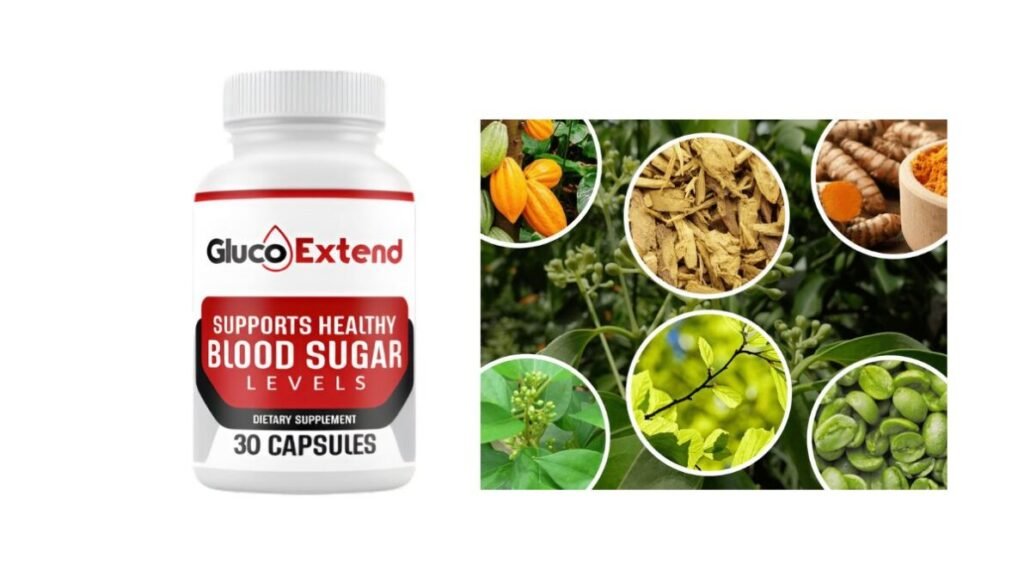
A capsule taken daily with water, sold through the seller’s site with ClickBank as the retailer of record and a stated 180-day money-back guarantee.
A wrinkle worth noting immediately: the page’s own file has three product names in it. The browser tab reads “Gluco Repair.” The page description reads “Gluco Extend Medical Secret.” The branding says Gluco Extend. Those are leftovers from a template that has been through more than one product.
The formula is described as a proprietary blend of “11+ ingredients and nutrients.” Six are actually named on the page: bean extract, berberine, cocoa, gymnema, “leaf extract,” and turmeric.
And a different site operating under the same brand name lists a substantially different formula — bitter melon, cinnamon, gymnema sylvestre and alpha-lipoic acid. Cocoa and turmeric don’t appear there. Bitter melon, cinnamon and ALA don’t appear here.
I can’t tell you which one describes what ships. What I can tell you is that “I read it on the official site” isn’t a reliable basis for a decision when there are several and they disagree.
Two things deserve credit before the criticism. ClickBank is the retailer of record, which means the refund runs through an established payment platform rather than the seller’s own desk. And the footer carries a genuinely good line: it encourages you to inform your physician of changes you make and to discuss concerns with a doctor. That’s correct advice and it’s more than several competitors offer.
Eleven Ingredients, Six Named, Four in the Box
The arithmetic on the page doesn’t reconcile with itself, and it takes thirty seconds to see.
“11+ ingredients” appears three separate times, described as clinically proven.
Six ingredients are actually named in the ingredient section.
Then, immediately below those six, a separate box is headed “Proprietary Blend of 4 Plants and Minerals” and lists four: turmeric, gymnema, leaf extract and cocoa.
Eleven, six, or four. The page says all three, within one screen of each other.
There’s also a naming problem. “Leaf extract” is not an ingredient. Leaf of what? Banaba leaf, mulberry leaf, and bay leaf all appear in blood sugar formulas and behave differently. Similarly, “bean extract” most likely means white kidney bean, a starch-blocker — but the page doesn’t say.
No amount is published for anything, which is expected for a proprietary blend and still means nothing here can be compared against the doses used in any published research.
Every Ingredient Has the Same Three Bullet Points
This one is worth looking at directly, because it’s the clearest signal on the page about how much thought went into it.
Each named ingredient gets three bullets. Here they are for bean extract: supports healthy blood sugar levels, helps support metabolic function, promotes natural energy without jitters.
Now berberine: supports healthy blood sugar levels, helps support metabolic function, promotes natural energy without jitters.
Cocoa: identical. Gymnema: identical. Leaf extract: identical. Turmeric: identical.
Six ingredients, one set of bullets, copied verbatim. Turmeric and berberine are pharmacologically different compounds with different mechanisms and different interaction profiles — and the page describes them in exactly the same words.
That’s not a formula being explained. It’s a template being filled.
Fifteen References, None About Any Ingredient
At the foot of the page sits a section headed “Scientific References,” with fifteen numbered citations formatted properly — authors, journals, years, volumes. After the products in this series that cite nothing at all, that looks like rigour.
Read what they’re about.
Reference 1 concerns skeletal muscle Akt and glucose homeostasis. Reference 3 is about the GNAS gene and insulin secretory capacity in pancreatic beta cells. Reference 4 covers pancreatic regulation of glucose homeostasis. Reference 6 is on circadian regulation of glucose and lipid metabolism. Reference 9 examines the impact of HbA1c testing at point of care. Reference 14 is about diabetes screening and diagnosis.
Not one of the fifteen is about bean extract, berberine, cocoa, gymnema, leaf extract, or turmeric.
They establish that blood glucose regulation is a real physiological process worth studying — which nobody disputes — and they say nothing whatsoever about whether this product does anything. One citation, number 11, appears to be from a dental journal.
This is the third product I’ve reviewed whose reference list is about the condition rather than the remedy. It’s a recognisable pattern, and now you can recognise it too: check whether the citations name the ingredients. If they don’t, the list is decoration.
The Harvard Logo Lives in Another Product’s Folder
Above those references sit four university logos: Harvard, Stanford, Yale and Columbia. No disclaimer accompanies them, so the impression is of institutional backing.
Right-click one and look at the image address. The files are served from a directory path that reads /images/getneurosurge/ — named after an unrelated supplement, not this one.
Two of the filenames are misspelled: havard.png and colombia.png.
I’ve encountered those exact misspelled files before, in the same folder path, on the sales pages for two entirely different products in entirely different health categories. The same asset directory is being reused across a portfolio.
None of this is dangerous. What it tells you is that the page you’re reading was assembled from a kit — and that the universities whose logos appear have no connection to any of the products involved.
What Berberine and Gymnema Actually Do
Two ingredients here have genuine pharmacological activity, and that’s precisely why the safety section below exists.
Berberine has the strongest evidence in the formula. A meta-analysis of randomised placebo-controlled trials found berberine significantly reduced triglycerides, fasting plasma glucose and waist circumference, along with LDL and total cholesterol. That’s a real result across real endpoints.
A useful counterweight from the same literature: a meta-analysis of nine trials in 547 patients with type 2 diabetes found berberine-family preparations lowered fasting glucose and HbA1c but produced no significant change in weight or BMI. So berberine is a glucose-and-lipid ingredient, not a weight ingredient — worth knowing given the bonus books here are about weight loss.
The dose in those trials is the recurring problem: 500 mg two or three times daily, so 1,000 to 1,500 mg per day. A single capsule shared among six-plus ingredients cannot approach that, and the page publishes no amount.
Gymnema sylvestre has traditional use and some human data for glucose, mostly small and methodologically limited. Its notable property is reducing sweet taste perception, which is genuine.
Cocoa has cardiovascular flavanol research at doses far above what a blended capsule holds. Turmeric has an association with liver injury that’s documented if uncommon. Bean extract, if it’s white kidney bean, blocks some starch digestion at gram doses.
Here’s the thing that matters more than any of the efficacy questions: berberine and gymnema both lower blood glucose. That’s the point of them. It’s also the risk.
What I Liked
ClickBank is the retailer of record, with an independent refund route stated plainly.
A 180-day guarantee is unusually long — six months of runway, and among the most generous windows in this category.
The footer gives correct advice, explicitly encouraging you to inform your physician of changes and discuss concerns with a doctor. That sentence does more good than most of the page.
The references are real papers, properly formatted, from real journals. Wrong subject entirely — but genuine research, not fabricated citations, which is a lower bar than it should be and still worth acknowledging.
Berberine and gymnema are legitimate choices for a blood sugar formula. Whoever picked the shortlist knew which botanicals have glucose literature behind them.
One-time payment, stated explicitly. No auto-ship, no subscription, said plainly in the FAQ.
No stimulants, consistent with the named ingredients.
Things to Consider
Testimonials on one brand site name a competitor product.
Brand sites disagree on the formula — cocoa and turmeric on one, bitter melon and cinnamon on another.
Three ingredient counts on one page: 11+, six named, four in the blend box.
“Leaf extract” and “bean extract” don’t identify a plant.
All six ingredients share identical bullet points, word for word.
Fifteen references, none about any ingredient.
University logos with no affiliation disclaimer, served from another product’s folder, two filenames misspelled.
Three product names in one page file — Gluco Repair, Gluco Extend Medical Secret, Gluco Extend.
“127,000 reviews” appears with no link to where any of them can be read.
The guarantee text and the FAQ describe different refund conditions — see below.
Who Should Be Careful
Anyone pregnant or breastfeeding. Berberine is contraindicated: it crosses the placenta and can displace bilirubin, carrying a kernicterus risk in newborns. This is a firm no.
Anyone taking statins, immunosuppressants, digoxin, or anticoagulants. Berberine inhibits CYP3A4 and P-glycoprotein — the enzyme and transporter handling a large share of prescription drugs.
Anyone with liver disease, given the turmeric content and the undisclosed amount.
Anyone scheduled for surgery. Agents that affect blood glucose are commonly paused beforehand; mention it to your surgical team.
Anyone already taking a berberine supplement — count the exposures together, because stacking is how people end up at doses nobody intended.
And the symptom note: unusual thirst, frequent urination, blurred vision, unexplained weight loss, or wounds healing slowly are reasons to get blood glucose tested rather than to buy a supplement. Undiagnosed diabetes is common, and it is far more manageable caught early.
If You Take Diabetes Medication, Read This First
This is the section that matters most in this article.
Berberine lowers blood glucose. Gymnema lowers blood glucose. That’s what they’re in the formula for.
If you already take metformin, a sulfonylurea, insulin, or another glucose-lowering medication, adding ingredients that do the same thing is additive. The result can be hypoglycaemia — blood sugar dropping below the safe range.
Know what that looks like: shakiness, sweating, a racing heart, sudden hunger, irritability, confusion, difficulty concentrating. At the severe end, loss of consciousness or seizure. It can come on quickly, and it’s more dangerous if it happens while you’re driving or asleep.
The handling isn’t complicated, and it isn’t “avoid the supplement reflexively.” It’s this:
Tell your prescriber before you start, not after. They may want to adjust something, and that’s a decision made deliberately rather than discovered by surprise.
Test more often in the first few weeks if you monitor at home. That’s how you catch a downward drift before it becomes an event.
Never reduce or skip your medication because you started a supplement. If your numbers improve, that’s a reason to show your doctor the log — it’s their call whether anything changes, made with lab work in hand.
And a point about this product specifically: because no dose is published, neither you nor your pharmacist can estimate the size of the effect. That uncertainty is itself the reason to have the conversation rather than assume the amounts are trivial.
Price, Guarantee, and What “180 Days” Actually Covers
Pricing is $79 per bottle for two ($158), $69 each for three ($207), and $49 each for six ($294), with free shipping on the larger packages and two bonus ebooks. Struck-through totals of $790, $828 and $1,176 appear beside them — reference figures nobody has paid. Current terms are on the seller’s site, with ClickBank handling the transaction.
Now read the guarantee carefully, because the page describes it two different ways.
The headline promise is emphatic: an iron-clad 180-day guarantee, and if you’re not impressed by the transformation in your blood sugar, write at any time in the next 180 days and every cent comes back.
The FAQ, further down the same page, says something narrower: you can “return what you haven’t used” for a refund.
Those aren’t the same. To find out whether your blood sugar transformed, you have to open bottles and take the capsules — which is exactly what the second version appears not to cover. The FAQ also recommends taking the product for three to six months, which points you toward the six-bottle package while the narrower refund reading would leave opened bottles outside the terms.
If you buy: keep bottles sealed until you’ve decided, screenshot both the guarantee text and the FAQ on the day you order, and confirm the refund conditions in writing with support before sending anything back. ClickBank’s buyer portal is your fallback.
On reviews: the page displays a rating based on 127,000 reviews with no link to where any of them live. The product is sold direct only, so there’s no verified-purchase pool, and search results consist of paid newswire advertorials and affiliate sites — including at least one citing a subreddit that doesn’t exist. Treat all of it as unverified.
Final Verdict
Gluco Extend contains two ingredients with genuine glucose research and is sold on a page that can’t keep its own product name straight.
Berberine is legitimate — meta-analytic support for fasting glucose, HbA1c and lipids, at 1,000 to 1,500 mg daily. Gymnema has real traditional use and some data. If this were those two at published doses with a printed label, it would be worth discussing seriously.
Instead: three ingredient counts on one page, two brand sites listing different formulas, six ingredients sharing one copied set of bullet points, fifteen references that name no ingredient, university logos borrowed from another product’s asset folder, and testimonials on a sister site that thank a competitor by name.
Who might reasonably try it: someone with prediabetes rather than diabetes, taking no glucose-lowering medication, not pregnant, who has discussed it with their doctor and understands they’re buying an unknown quantity of berberine. Even then, standalone berberine with the milligrams printed on the bottle costs a fraction of $294 and lets you and your pharmacist see what you’re taking.
Who should skip it: anyone on diabetes medication who hasn’t spoken to their prescriber, anyone pregnant, and anyone who would treat improving numbers as permission to reduce a prescription.
And what actually moves blood sugar, with evidence nothing in this bottle approaches: for prediabetes, structured lifestyle programmes reduce progression to type 2 diabetes more than any supplement ever tested — dietary pattern, physical activity, modest weight loss, and sleep. For diagnosed diabetes, your prescribed treatment is the intervention, and it works. Both are conversations with a doctor, and both are cheaper than six bottles of anything.
If you’re comparing products in this space, our GlucoBerry review covers another blood sugar formula — and the two questions from this article carry over: do the cited references name the ingredients in the bottle, and does the page tell you the same story twice?
Frequently Asked Questions
Can a blood sugar supplement cause hypoglycaemia?
It can, if you also take medication that lowers glucose. Berberine and gymnema both reduce blood glucose, and stacking them on metformin, a sulfonylurea or insulin is additive. Symptoms include shakiness, sweating, racing heart, confusion and, at the severe end, loss of consciousness. Tell your prescriber before starting anything in this category, and monitor more closely in the first few weeks.
What’s actually in Gluco Extend?
The page names six ingredients while claiming “11+,” and a box on the same page describes a blend of four. A different website under the same brand lists a substantially different formula, including bitter melon, cinnamon and alpha-lipoic acid, which don’t appear on the first. No amounts are published anywhere. Ask the company for a full ingredient list with milligram figures before ordering.
Is the 180-day guarantee reliable?
The headline says you can write any time within 180 days for a full refund. The FAQ on the same page says you can “return what you haven’t used,” which reads narrower. Get the terms confirmed in writing before you order, keep bottles sealed until you decide, and use ClickBank’s buyer portal if you need to escalate.
Can I take this instead of my diabetes medication?
No. Never stop, reduce or skip prescribed diabetes medication because of a supplement. If your readings improve, take the log to your doctor and let them decide whether anything changes — that’s a decision made with lab work, not alone.

Raphael Albert is the founder and content creator of Nutra Pulse. Passionate about health, nutrition, fitness, and wellness, he spends his time researching scientific studies, health trends, and evidence-based lifestyle strategies to create informative and easy-to-understand content. While he is not a doctor or licensed healthcare professional, his goal is to help readers make more informed wellness decisions. All content is for educational purposes only and should not replace professional medical advice. Always consult a qualified healthcare provider regarding your health concerns.
1 thought on “Gluco Extend Review: The Testimonials Name a Different Product”