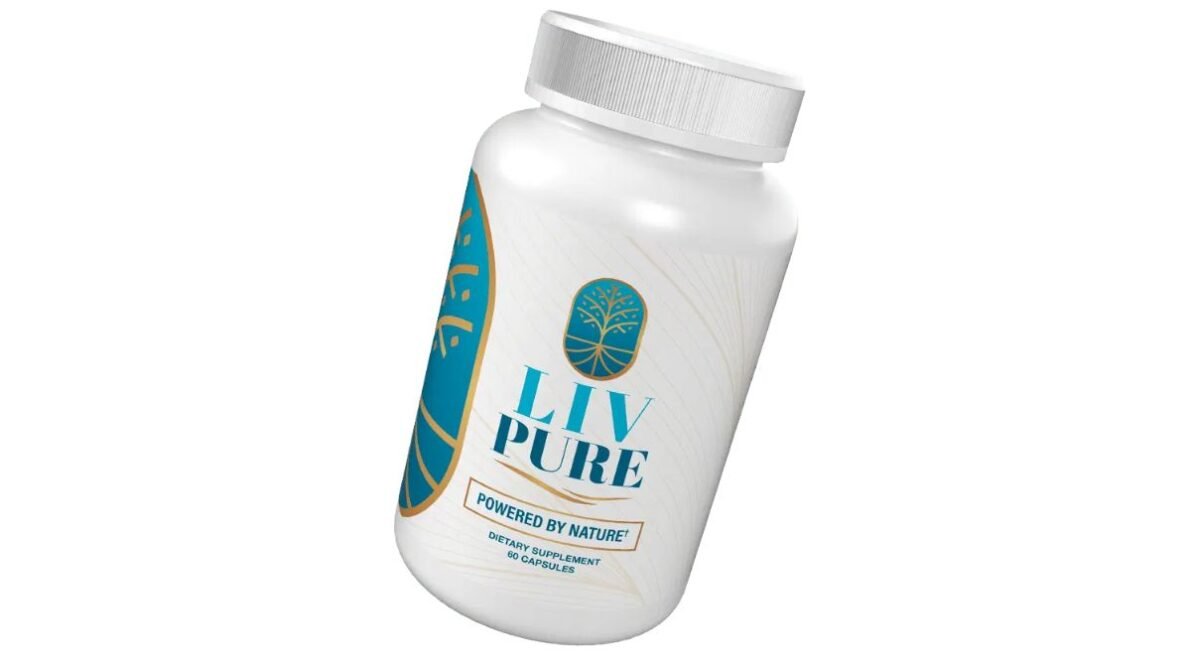
Housekeeping: two links below go to the seller and pay this site a commission. The section explaining why a liver supplement containing green tea extract deserves a second look is the one I’d read first, which should tell you how much that shaped things.
These statements have not been evaluated by the Food and Drug Administration. This product is not intended to diagnose, treat, cure, or prevent any disease. Fatty liver disease is a real medical diagnosis with real management, and it’s usually found on a blood test or scan rather than by how you feel. If you’ve been told you have it, that’s a conversation with your doctor — not a supplement purchase.
The Liv Pure sales page makes a specific, checkable promise about evidence. Its central claims carry superscript numbers — one, two, three, all the way to twenty — the standard academic signal that a source stands behind each statement.
So I went to check them.
They’re a picture.
The reference list is published as an image file. You cannot click a citation. You cannot copy a title into PubMed. You cannot see a journal name, an author, or a year without squinting at a low-resolution graphic. Twenty numbered sources, rendered in a format specifically unsuited to being read or verified.
That’s an unusual choice, and it’s where this Liv Pure review has to begin — because the entire premise of the page is that science has discovered something about your liver, and the science is a JPEG.
What follows is what I could verify independently. Some of it is better than I expected. The central claim is not.
What Liv Pure Is
A capsule taken daily with water, sold through the official Liv Pure site with ClickBank as the retailer of record and a 60-day money-back guarantee.
The formula is presented as two proprietary blends of five ingredients each.
The “Liver Purification Complex”: silymarin, betaine, berberine, molybdenum, glutathione.
The “Liver Fat-Burning Complex”: camellia sinensis, resveratrol, genistein, chlorogenic acid, choline.
Ten ingredients, named — which is more than several products in this category manage. What isn’t published is any amount. Not a milligram figure, not a blend total, not a percentage. Both complexes are proprietary.
The marketing frame is a Mediterranean ritual and a discovery dated to 2023. The page describes over 85,000 toxic substances regularly consumed through food, water and air, and states that with optimal liver function your liver cells can be up to fourteen times more efficient at burning fat and calories on autopilot.
That fourteen-times figure carries no visible citation. Neither does the 85,000. Both are presented as findings.
The Causal Story Runs Backwards
This is the substantive heart of the review, and it’s worth understanding because it applies to an entire category of products.
The page states that in 2023 researchers discovered one common factor in all overweight people — compromised liver function — and that the thing common to slim people is optimal liver function. From there: fix the liver, and the fat follows.
The relationship between liver and body fat is real, and I don’t want to dismiss it. The liver genuinely is central to how the body handles fat and glucose. But the direction of causation in the medical literature runs the other way.
Fatty liver disease — now called MASLD, metabolic dysfunction-associated steatotic liver disease — is described in the literature as the hepatic manifestation of metabolic syndrome, strongly associated with obesity, type 2 diabetes, hyperlipidaemia and hypertension, with insulin resistance as a central driver. Cleveland Clinic states it plainly: having obesity or type 2 diabetes are common causes of MASLD, and carrying extra weight around the belly increases the risk.
The mechanism is well described: fatty acids released from adipose tissue enter the liver in increased quantities, fat synthesis rises, fat oxidation falls, and the liver accumulates triglycerides. Fat travels from the body to the liver, not the other way round.
Now, in fairness — and this matters — the relationship becomes bidirectional once fatty liver is established. A fatty liver worsens insulin resistance, which worsens fat accumulation, which worsens the liver. It’s a feedback loop, and that’s genuinely part of why metabolic problems are hard to escape.
But “there is a feedback loop” is a very different claim from “compromised liver function is the root cause of your weight.” The first is accurate. The second reverses the primary direction, and it’s the one the page sells.
The practical consequence: if your liver is fatty because of excess weight and insulin resistance, the intervention that reverses it is weight loss and metabolic control — which is precisely what the literature recommends and what a doctor would prescribe. A capsule aimed at the liver is aimed downstream of the actual problem.
Glutathione Is the Wrong Ingredient for a Capsule
Glutathione is a genuinely important molecule — your body’s principal intracellular antioxidant, heavily involved in liver detoxification. Including it in a liver formula makes intuitive sense.
It also has the best-documented oral absorption problem of any ingredient in this bottle.
The human gut contains substantial amounts of an enzyme called gamma-glutamyl transpeptidase, which breaks glutathione down before it can be absorbed intact. A review of the human evidence notes that absorption of glutathione in humans has not been adequately demonstrated, and that this enzyme may prevent significant intact absorption from oral supplementation.
The clearest data point: a single oral dose of up to 3,000 mg of glutathione failed to raise plasma glutathione levels in healthy volunteers. Three grams — and no measurable change.
That’s why an entire formulation industry exists around this problem: liposomal encapsulation, S-acetyl glutathione, sublingual and intravenous routes. Each exists because plain oral glutathione doesn’t work well.
Liv Pure contains plain glutathione, in a capsule, sharing space with nine other ingredients. Whatever the amount is, it is unavoidably a fraction of the three grams that produced nothing.
There’s a fairer version of the argument worth stating: even degraded glutathione supplies cysteine, glycine and glutamate, which your body can use to build its own. That’s true. It’s also true of protein in food, which supplies the same amino acids in gram quantities for the price of an egg.
Green Tea Extract, in a Liver Supplement
Camellia sinensis is the tea plant. In supplement form it means concentrated catechins, principally EGCG — and this is the ingredient I’d want a reader to think about hardest, because of where it appears.
Brewed green tea is fine. Concentrated extract is among the better-documented causes of supplement-associated liver injury. The European Food Safety Authority concluded that green tea catechins at or above 800 mg of EGCG daily are associated with elevated liver enzymes, and — importantly — that it was not possible to identify a supplemental dose that could be considered safe. One product produced liver injury at around 375 mg. The US Pharmacopeia recommended label warnings; Health Canada made them mandatory.
So a supplement sold specifically to support your liver contains the botanical extract most associated with harming it, at an amount nobody outside the company knows.
I want to keep this proportionate. The dose here is almost certainly modest — it’s one of ten ingredients in a capsule, and capsule volume is limited. Most people who take green tea extract have no liver problem at all. But two things make it worth flagging rather than waving through.
First, the buyer. Someone drawn to a liver supplement may already have a liver concern, which is exactly the person for whom this ingredient carries the most caution.
Second, stacking. If you take another product containing green tea extract — and it’s in a great many fat-burners, greens powders and multivitamins — you have no way to add up your total, because neither label tells you.
If you take this, take it with food rather than on an empty stomach, and count any other green tea extract product you’re using.
Silymarin, Berberine, and the Rest
Silymarin, from milk thistle, is the best-evidenced liver ingredient here. A 24-week randomised placebo-controlled trial found it reduced liver stiffness and GGT levels in patients with metabolic dysfunction-associated liver disease. Genuinely encouraging — and the same trial found no significant effect on liver fat, aminotransferases, blood lipids, BMI, or waist-to-hip ratio. It helped the liver marker; it did not help anyone lose weight.
Berberine has real metabolic evidence — meta-analyses show reductions in triglycerides, fasting glucose and waist circumference. Two caveats. Its oral bioavailability is under 1%, which is why trials use 900 to 1,500 mg daily to get an effect; a shared slot in a ten-ingredient capsule won’t approach that. And it’s contraindicated in pregnancy, inhibits CYP3A4 and P-glycoprotein, and interacts with a wide range of prescription drugs.
Chlorogenic acid is coffee’s own compound, with modest and low-quality weight evidence at doses in the hundreds of milligrams.
Betaine, choline and molybdenum are legitimate nutrients with real roles in liver metabolism — choline particularly, since deficiency genuinely causes fatty liver. They help if you’re deficient. Most people eating an ordinary diet aren’t.
Resveratrol has enthusiastic laboratory data and consistently disappointing human trials for weight and metabolic outcomes.
The pattern is familiar: a shortlist chosen by someone who read the literature, at amounts that literature never used.
“Soy Free” and Genistein
A small observation worth making because it affects a specific group of readers.
The page displays a “Soy & Dairy Free” badge. The formula contains genistein, which is the principal isoflavone in soy.
To be fair, this isn’t necessarily a contradiction. Genistein can be extracted from non-soy sources such as kudzu or lupin, and a soy-free claim about the finished product may be accurate. The page doesn’t say where its genistein comes from, so I can’t tell you either way.
What matters more is what genistein is: a phytoestrogen, a plant compound with weak oestrogen-like activity. For most people that’s unremarkable. For anyone with a history of oestrogen-sensitive breast or endometrial cancer, or taking tamoxifen or an aromatase inhibitor, phytoestrogen content is something an oncology team would want to know about — and it’s not something a “Soy Free” badge would lead you to ask about.
What I Liked
Ten ingredients, named. After the products in this series that publish nothing at all, a full ingredient list is a real difference and it’s what made this article possible.
ClickBank is the retailer of record, which means the refund runs through an established payment platform rather than the vendor’s own returns desk. That’s genuinely easier to enforce, and the footer states plainly that ClickBank’s role isn’t an endorsement of the claims.
The guarantee accepts empty bottles, stated explicitly. That’s consumer-friendly and rarer than it should be.
Silymarin and choline are legitimate choices. Milk thistle has the best liver trial data available in this space, and choline deficiency genuinely does cause fatty liver. Whoever built this read something real.
One-time payment, no subscription, stated clearly in the FAQ.
No stimulant stacking — no synephrine, no yohimbine, and the green tea is the only caffeine-adjacent component.
The FAQ advises consulting a doctor for medical questions, which is correct and easy to omit.
Things to Consider
Twenty citations published as an image, unclickable and unverifiable.
The causal claim reverses the documented direction — obesity and insulin resistance drive fatty liver, not the other way around.
No amounts for any of the ten ingredients.
“Fourteen times more efficient” and “85,000 toxic substances” appear with no visible source.
Oral glutathione doesn’t absorb well — three grams produced no measurable change in one study.
Green tea extract sits in a liver product, with an undisclosed EGCG amount.
“The only reported side effect” claim in the safety FAQ is not credible for a formula containing green tea extract, berberine and a phytoestrogen.
“The only nutritional solution in the world proven” — no published trial on this formula exists.
“234,000 people” appears with no source or destination.
Who Should Be Careful
Anyone with diagnosed liver disease. This is the group most likely to buy and most exposed — the green tea extract content warrants a conversation with whoever manages your liver, and elevated enzymes need investigating, not supplementing.
Anyone already taking a green tea extract product — fat-burners, greens powders, multivitamins. You can’t add up what you can’t see.
Anyone pregnant or breastfeeding. Berberine is contraindicated: it crosses the placenta and can displace bilirubin, carrying a kernicterus risk in newborns. This is firm.
Anyone taking statins, immunosuppressants, digoxin, or anticoagulants — berberine inhibits CYP3A4 and P-glycoprotein, which handle a large share of prescription drugs.
Anyone on diabetes medication. Berberine lowers blood glucose, and that stacks with metformin, sulfonylureas or insulin.
Anyone with a history of oestrogen-sensitive cancer, or taking tamoxifen or an aromatase inhibitor — because of the genistein.
And the important one: fatty liver disease is usually found on a blood test or an ultrasound, not by how you feel, and it’s managed with weight loss, glucose control and — increasingly — prescription treatment. If you’ve been told you have it, or your liver enzymes came back high, that’s a doctor’s appointment. Elevated enzymes have causes that matter, and some of them aren’t fat.
The Guarantee Contradicts Itself
Worth two minutes of attention, because it’s about your money.
The main guarantee block states you can return the product, even empty bottles, any time within 60 days for a full no-questions-asked refund.
Further down, the FAQ answering what happens if the product doesn’t work says you can “just return what you haven’t used” for a full refund.
Those are different promises. One says empty bottles qualify; the other says you return the unused portion. The main block also notes the refund is issued less shipping and handling, and within 48 hours of the product being returned — so a return is required either way, at your cost.
None of this is unusual, and ClickBank administering the refund makes it more enforceable than most. But if you buy, screenshot the guarantee wording on the day you order, keep your ClickBank receipt, and start any refund conversation well inside the window rather than on day 59.
Price and What Reviews Exist
Pricing runs $79 per bottle for two ($158), $69 each for three ($207), and $49 each for six ($294) with free shipping on the largest order. The smaller packages add shipping. Current terms are on the Liv Pure site, with ClickBank handling checkout and refunds.
The FAQ recommends taking it for three to six months if you’re over 35 or carrying excess weight — which pushes you toward the six-bottle package while the guarantee runs 60 days. By the seller’s own timeline, your refund window closes one to four months before the recommended course finishes. That’s a pattern worth recognising across this category, and the answer is the same every time: buy the smallest package and judge inside the window.
On independent reviews, two things are worth knowing before you go looking.
First, a name collision that will confuse your search. There’s an unrelated Indian company called Livpure that sells water purifiers. A large share of the “Liv Pure reviews” returned by search engines are about water filters and have nothing to do with this supplement. Check which company you’re reading about — the domains differ by a single hyphen.
Second, and unusually for this category, a genuine independent review presence does exist for the supplement’s own domain. It’s small — a couple of dozen contributors — and worth reading precisely because it isn’t curated. The recurring themes are consistent: no weight loss after months of use, no improvement in liver enzymes, nausea and bloating in some users, difficulty getting refunds processed, and being billed more than expected because of add-ons presented after the payment page.
That last one is the practical warning. The checkout includes upsell offers after your initial purchase, and at least one customer describes being charged twice as a result. If you order, read each screen after the payment page rather than clicking through, and screenshot your final total.
The figure of 234,000 customers on the sales page, meanwhile, has no destination attached and doesn’t correspond to anything findable.
Final Verdict
Liv Pure is a competently assembled formula sold on a premise that reverses the biology.
The ingredient list is defensible — silymarin has the best liver trial data in this space, choline and betaine have real roles, berberine has genuine metabolic evidence. ClickBank backs the refund. The bottle is unlikely to hurt a healthy adult.
What doesn’t hold is the story around it. Fatty liver is largely a consequence of excess weight and insulin resistance rather than the cause of them, so a capsule aimed at the liver is aimed downstream of the problem. The glutathione is the one ingredient whose oral absorption failure is best documented. The green tea extract is the botanical most associated with liver injury, in a liver product, at an unstated dose. And the twenty citations meant to support all of it are a picture.
Who might reasonably try it: someone who wants milk thistle and choline in one capsule, has no liver diagnosis, takes no interacting medication, isn’t pregnant, and understands they’re buying nutritional support at unstated doses rather than a metabolic reset. Buy two bottles, not six, and decide inside 60 days.
Who should skip it: anyone with diagnosed liver disease, anyone already taking green tea extract, anyone on the medication list above, and anyone buying because they believe their liver is why they’re heavy.
If the ingredients appeal to you: silymarin is sold on its own, standardised, with the milligrams printed, for a fraction of $49 a bottle. Choline likewise. You’d know what you’re taking and could check it against the trials.
And what actually reverses fatty liver, which is the unglamorous part: weight loss of around 7 to 10% of body weight is the single most effective intervention, along with controlling blood sugar, cutting alcohol, and regular exercise. There are now prescription options too. All of that is a conversation with a doctor, and all of it addresses the direction the biology actually runs.
If you’re comparing products in this space, our GlucoBerry review covers another metabolic supplement where the same lesson applies — a real mechanism, described in reverse, with the marketing built on the version that runs backwards.
Frequently Asked Questions
Does Liv Pure really work for weight loss?
Mostly the other way around. Fatty liver disease is described in the literature as the hepatic manifestation of metabolic syndrome, with obesity and insulin resistance as central drivers — fatty acids released from body fat travel to the liver, not the reverse. Once established, a fatty liver does worsen insulin resistance, creating a feedback loop, but that’s different from liver dysfunction being the root cause of excess weight.
Does oral glutathione actually get absorbed?
Poorly. An enzyme in the human gut breaks glutathione down before absorption, and a single oral dose of up to 3,000 mg failed to raise plasma glutathione in healthy volunteers. That’s why liposomal, sublingual and intravenous forms exist. Plain glutathione in a multi-ingredient capsule delivers a small fraction of a dose that already produced no measurable change.
Is green tea extract safe in a liver supplement?
It’s the ingredient to ask about. Concentrated green tea catechins are among the better-documented causes of supplement-associated liver injury, and European regulators concluded no supplemental dose could be identified as safe. The amount here isn’t published. Take it with food rather than on an empty stomach, and if you have any liver condition or take another green tea extract product, check with a pharmacist first.
Should I buy the six-bottle package?
I wouldn’t. The FAQ recommends three to six months of use while the guarantee runs 60 days from purchase, so the larger packages commit you well past the point where a refund is available. The smallest package and a decision inside the window is the lower-risk route.

Raphael Albert is the founder and content creator of Nutra Plus. Passionate about health, nutrition, fitness, and wellness, he spends his time researching scientific studies, health trends, and evidence-based lifestyle strategies to create informative and easy-to-understand content. While he is not a doctor or licensed healthcare professional, his goal is to help readers make more informed wellness decisions. All content is for educational purposes only and should not replace professional medical advice. Always consult a qualified healthcare provider regarding your health concerns.