Before we start: this review contains an affiliate link. If you buy through it, we may earn a small commission at no extra cost to you – and it never softens what we write. You’ll see below exactly where this formula is transparent and where it isn’t.
These statements have not been evaluated by the Food and Drug Administration. This product is not intended to diagnose, treat, cure, or prevent any disease. Memory loss and cognitive decline can be symptoms of real medical conditions – a supplement is not a treatment for any of them, and nothing here replaces an evaluation by your own clinician.
New to brain and memory supplements? Our Synaptigen review breaks down how these nootropic formulas actually differ, and why a named ingredient means little without a disclosed dose behind it. This NeuroVera review runs into that exact question.
NeuroVera Review: The Short Version
Here’s the honest bottom line of this NeuroVera review: it’s a legitimate product with a real maker and genuinely reasonable ingredients, wrapped around one central limitation – it’s a proprietary blend, so you’re told what’s in it but never how much.
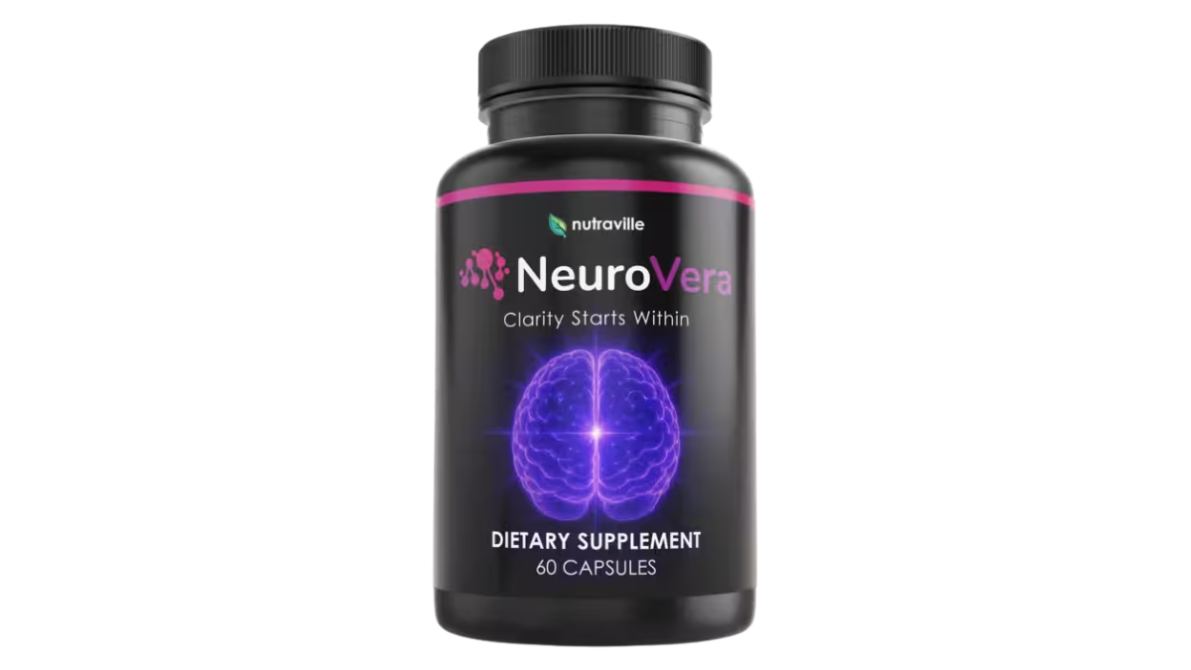
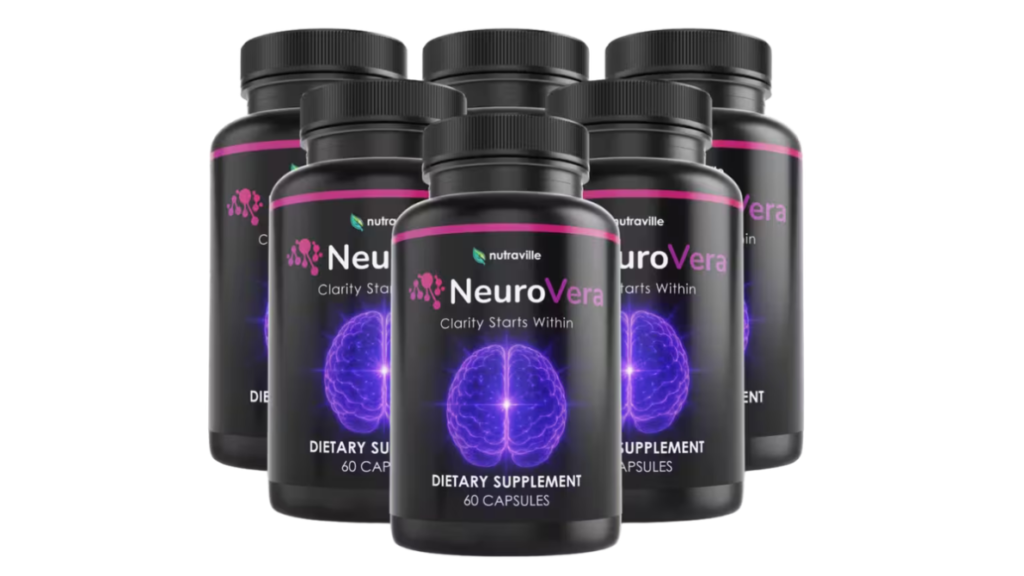
NeuroVera is a plant-based nootropic capsule from Nutraville, built on nine named ingredients including Bacopa monnieri, Lion’s Mane, Gotu Kola, Shilajit, Schisandra, and DHA. Several of those have real cognitive research behind them.
But dose is what separates a working nootropic from a hopeful one, and NeuroVera doesn’t disclose a single per-ingredient amount. That’s the difference between “these ingredients can work” and “this bottle delivers enough of them” – and only you, with the label in hand, can’t currently tell which.
One thing to settle first: if you’re worried about real memory loss – not occasional word-finding, but getting lost, missing appointments, or changes other people notice – that’s a doctor’s visit, not a supplement decision. Cognitive change can have treatable causes, and no capsule should stand between you and a diagnosis.
What NeuroVera Actually Is
NeuroVera is a once-or-twice-daily capsule marketed for memory, focus, and mental clarity in adults – the classic “brain fog” audience. Per the NeuroVera official website, it’s made by Nutraville, a US-based supplement company, in a GMP-certified facility, sold through ClickBank with a money-back guarantee that most pages list at 365 days – one of the longest in the category, which genuinely lowers the risk of trying it.
Credit where it’s due: unlike several products we’ve had to publish without a link, NeuroVera has an identifiable maker, a real refund mechanism enforced by ClickBank, and a formula that names its ingredients rather than hiding behind “proprietary complex” alone. Those are real points in its favor, and they’re why this review keeps an affiliate link where others didn’t.
A Word of Caution: Make Sure You’re on the Real Page
Here’s the thing you need to know before buying: “NeuroVera” is a crowded name. Search it and you’ll hit a spread of look-alike sites – some listing the Nutraville nine-ingredient formula, others describing a completely different blend built around Alpha-GPC, Ginkgo, and Phosphatidylserine, and at least one caffeine-containing version sold through a separate storefront.
They don’t all agree on what’s inside, the ingredient count, or the price. This isn’t proof of fraud, but it is a sign the name is being used by more than one seller, and it means the “official site” you land on may not be the Nutraville product this review covers. The practical takeaway: confirm you’re ordering the Nutraville formula with the ClickBank-backed guarantee, and save your order confirmation.
The Proprietary Blend: The One Thing That Holds This Formula Back
Set the name confusion aside and the core limitation is simple. NeuroVera lists its ingredients but pools them inside a proprietary blend, so no page discloses how many milligrams of Bacopa, Lion’s Mane, or DHA you’re actually getting. We anchor these judgments to transparency, not guesswork: the honest statement isn’t “the doses are too low” – we can’t know that – it’s “the doses aren’t disclosed,” which is a limitation you can verify yourself by reading the label and finding no numbers.
Why it matters so much here: for nearly every ingredient in this formula, the research is dose-specific. Bacopa’s memory benefit shows up at a defined standardized amount; DHA’s memory signal appears around 900 mg/day; Lion’s Mane trials used about 1,000 mg/day. A blend that names these ingredients but could contain a fraction of those amounts tells you the recipe, not the strength. Until Nutraville prints per-ingredient doses, that gap is the ceiling on how confident anyone can be about NeuroVera – including us.
Can an Oral Capsule Reach the Brain?
Before grading ingredients, we check whether the delivery route can physically reach the target – and here it’s plausible, with a real caveat. Several ingredients in NeuroVera (Bacopa’s bacosides, DHA, Lion’s Mane compounds) are absorbed orally and can cross or influence the blood-brain barrier, so an oral capsule aimed at cognition isn’t anatomically hopeless the way a swallowed pill aimed at tooth enamel would be. The route works in principle.
The caveat is that “can cross” isn’t “crosses at a useful concentration,” and that again comes back to dose. A compound with good brain evidence at 1,000 mg does little at 50 mg, no matter how well it’s absorbed. So the route clears the plausibility bar; the disclosure gap is what stops us from saying more.
Bacopa Monnieri: The Strongest Ingredient – If the Dose Is There
Bacopa is the ingredient carrying the most real evidence, so it earns the closest look. A frequently cited meta-analysis of nine randomized trials (n=518) concluded standardized Bacopa extract significantly improved memory, attention, and cognitive processing speed – with one crucial condition: the benefit required a minimum of about 12 weeks of consistent use, because Bacopa works gradually through synaptic changes, not a same-day boost.
That timeline explains the single most common NeuroVera complaint (people quitting at two to three weeks and reporting “nothing happened”): that’s a mismatch with how Bacopa works, not necessarily a failed formula. Evidence grade: moderate – but tied to a standardized extract at a studied dose, neither of which NeuroVera’s proprietary blend confirms.
Lion’s Mane and DHA: Real Signals, Different Strengths
Lion’s Mane is the ingredient the marketing leans on hardest, and its evidence is more preliminary than the branding suggests. The most cited human study – Mori et al., in older adults with mild cognitive impairment at about 1,000 mg/day – found improved cognitive scores, but later small trials have been mixed, with some showing faster processing speed and stress reduction rather than broad memory gains. Evidence grade: preliminary but promising, at a dose NeuroVera doesn’t state.
DHA, the omega-3 in the formula, has the sturdiest data of the group for age-related memory – a well-known trial found 900 mg/day of DHA improved episodic memory in older adults with mild decline. But that number is the whole point: 900 mg is a meaningful amount of oil, and a shared botanical blend is unlikely to carry it. Evidence grade: moderate for memory, entirely dependent on a dose the label doesn’t show.
Gotu Kola, Shilajit, and Schisandra: Traditional Support, Thinner Proof
The remaining botanicals are where tradition outruns clinical proof, and honesty means saying so. Gotu Kola has a long history as a “brain tonic” and some evidence for calm and circulation, but limited rigorous cognitive trials. Shilajit is a mineral-rich resin studied more for energy and fatigue than for memory specifically, with fulvic acid as its main point of interest.
Schisandra is an adaptogenic berry used for stress resilience, with mostly preliminary human data. None of these are filler exactly – they have plausible supporting roles – but they’re the preliminary end of the evidence spectrum, and they don’t turn NeuroVera into a proven memory treatment. Evidence grade: preliminary across the three.
What I Liked
- A real, identifiable maker (Nutraville) with a ClickBank-enforced refund – not an anonymous funnel.
- Ingredients are named, not hidden entirely, and several (Bacopa, DHA) have genuine research.
- Stimulant-free, so no jitters-and-crash cycle for people sensitive to caffeine.
- A long money-back guarantee that meaningfully lowers the cost of testing it for the 8-12 weeks Bacopa actually needs.
Things to Consider
- Proprietary blend – no per-ingredient doses, the central limitation of the whole formula.
- A crowded, confusing name shared by several sellers with different formulas.
- No third-party clinical trial on the finished product (true of most of the category, but worth stating).
- Benefits, if any, are gradual – this is not a same-week focus pill.
What Real Users Are Saying
Setting aside the sellers’ own uniformly five-star testimonial walls (which, given how many near-identical “Verified Purchase” quotes appear across the look-alike domains, can’t be treated as independent evidence), the traceable pattern is cautiously mixed.
Aggregating third-party reviews and nootropic-forum discussion, users who stick with it for a full 8-12 weeks more often report modest gains in focus and reduced brain fog, with the strongest signal in adults over 40; users who judge it at two to three weeks tend to report nothing – consistent with Bacopa’s slow onset.
A recurring, fair complaint is price relative to an undisclosed dose. Independent scam-check coverage generally lands on “legitimate but not a miracle,” which matches our read. Treat any dramatic on-site transformation story with the usual skepticism.
Medication Interactions & Safety
The individual ingredients are generally well tolerated in healthy adults, but a few cautions are real – and the proprietary blend makes them harder to assess, because you can’t tell a pharmacist your exact doses. Bacopa can cause digestive upset in some people and may add to the effect of thyroid or sedative medications.
Ginkgo (present in some non-Nutraville versions sold under this name) has a blood-thinning effect – another reason to confirm which formula you’re buying.
DHA at higher doses can mildly affect bleeding risk on blood thinners. If you’re pregnant, nursing, on blood thinners, thyroid medication, or any prescription, clear it with a clinician first. None of this makes the formula dangerous for a healthy adult; it makes the “check with your prescriber” step a genuine one.
Who Might Consider It – and Who Should Skip It
NeuroVera may be a reasonable try if you’re an adult dealing with occasional brain fog or mild forgetfulness, you want a stimulant-free option, and you’re genuinely willing to give it the 8-12 weeks its lead ingredient needs – the long guarantee makes that experiment low-risk. It’s the wrong pick if you expect a fast, dramatic change, if you specifically want to know your exact doses before committing (the blend won’t give you that), or – most importantly – if your memory concerns are new, worsening, or noticeable to others, in which case the right first step is a clinician, not a capsule.
Where to Buy NeuroVera
If, after weighing the trade-offs, you want to try it, buy it only from the official NeuroVera website through the ClickBank checkout, where the Nutraville formula and the money-back guarantee actually apply – not from a random look-alike domain selling a different blend under the same name. Save your order confirmation so the guarantee is easy to invoke, and give it the full trial window before judging results. If you’d rather see your exact doses before buying, a single-ingredient standardized Bacopa or DHA product with a full Supplement Facts panel is the more transparent alternative.
Final Verdict on NeuroVera
The honest core of this NeuroVera review is a product caught between two truths: the maker is real, the guarantee is real, and the ingredients are real – but the doses are hidden, so the formula’s strength can’t be verified before you buy. That puts NeuroVera a clear step above the anonymous, no-ingredient funnels we refuse to link, and a clear step below a fully transparent product that prints every milligram.
If you value a long, low-risk trial and understand that Bacopa needs patience, it’s a defensible choice worth testing. If you value knowing exactly what you’re taking, the proprietary blend will frustrate you. Either way, “may support” is the honest ceiling – and real memory concerns belong with a doctor first, not a bottle.
Frequently Asked Questions
Is NeuroVera a scam?
No – by the usual markers it’s a legitimate product. It’s made by Nutraville, sold through ClickBank with an enforced money-back guarantee, and it names its ingredients. The real limitation isn’t fraud; it’s that the formula is a proprietary blend with no disclosed per-ingredient doses, and the name is shared by several look-alike sellers, so you should confirm you’re on the Nutraville page.
How long does NeuroVera take to work?
If it works for you, expect it to be gradual. Its lead ingredient, Bacopa monnieri, shows benefits in trials only after roughly 8-12 weeks of consistent use. The most common complaint – “it did nothing” – usually comes from people who judged it at two to three weeks, which is too early for Bacopa’s mechanism.
What are the ingredients in NeuroVera?
The Nutraville formula names nine plant-based ingredients, including Bacopa monnieri, Lion’s Mane mushroom, Gotu Kola, Shilajit, Schisandra, and DHA. Be aware that other sellers use the “NeuroVera” name for different blends (some with Alpha-GPC, Ginkgo, or caffeine), so verify which version you’re buying. No version we found discloses per-ingredient doses.
Can NeuroVera treat memory loss or dementia?
No. No supplement treats or prevents dementia, and NeuroVera shouldn’t be used in place of medical care. Its ingredients may offer modest support for everyday focus and mild forgetfulness in some people, but new or worsening memory problems need a clinician’s evaluation, since some causes are treatable.

Raphael Albert is the founder and content creator of Nutra Pulse. Passionate about health, nutrition, fitness, and wellness, he spends his time researching scientific studies, health trends, and evidence-based lifestyle strategies to create informative and easy-to-understand content. While he is not a doctor or licensed healthcare professional, his goal is to help readers make more informed wellness decisions. All content is for educational purposes only and should not replace professional medical advice. Always consult a qualified healthcare provider regarding your health concerns.