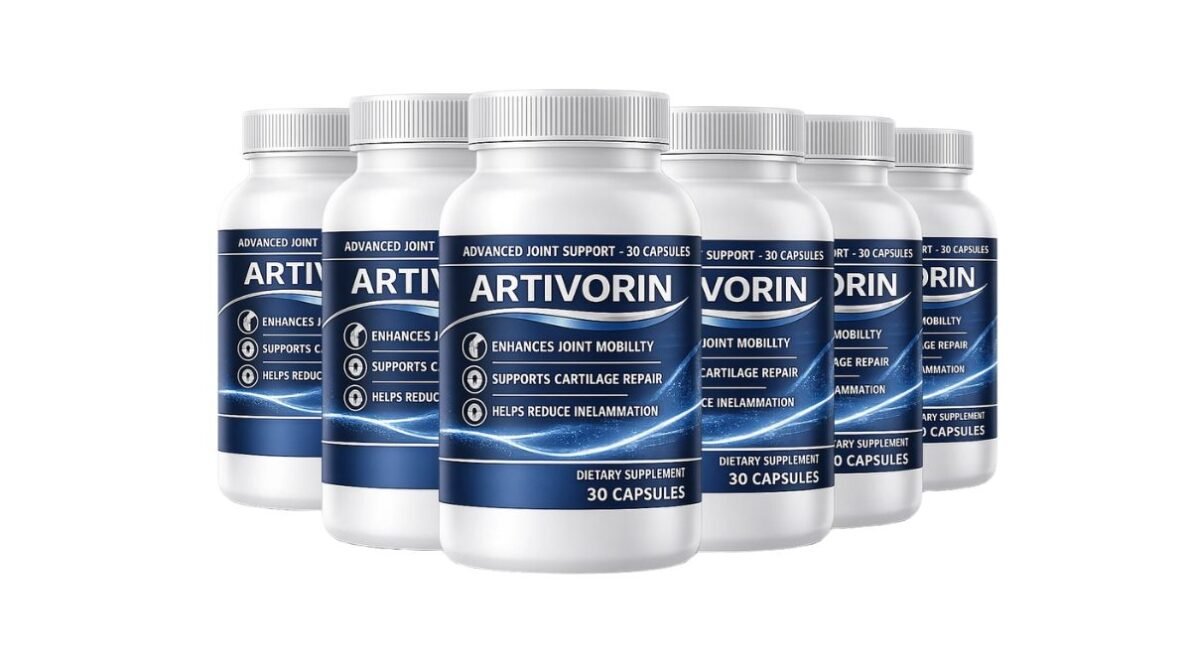
Upfront: this review contains an affiliate link, so we may earn a small commission if you buy through it, at no added cost to you. It doesn’t bend the verdict – and much of what follows is spent telling you exactly what to verify before you spend a cent, because this one has an identity problem.
These statements have not been evaluated by the Food and Drug Administration. This product is not intended to diagnose, treat, cure, or prevent any disease – including arthritis. It does not regenerate cartilage or replace anti-inflammatory medication. Joint pain can signal real medical conditions, so a supplement is not a treatment, and nothing here replaces care from your own clinician.
New to this category? Our guide to skin and joint supplements breaks down how these formulas actually differ, and which claims hold up under a label check. This Artivorin review is a live example of the first check you should ever run: confirming the product is even a single, consistent thing.
Artivorin Review: The Short Version
Here’s the honest bottom line of this Artivorin review: the lead ingredient has genuinely strong joint evidence, but you can’t be sure which Artivorin you’re actually buying – because its own “official” websites describe two completely different formulas under one name. One set of official sites sells a four-ingredient antioxidant-and-circulation blend: Turmeric standardized to 95% curcuminoids, CoQ10, Butcher’s Broom, and Alpha-Lipoic Acid.
A different set sells a classic joint stack entirely: Glucosamine, Chondroitin, Turmeric, and Boswellia. Those aren’t minor variations – they’re different products. Add a shifting distributor name, a “Artevorin” spelling twin, undisclosed doses, and no clinical trial on the finished product, and the first question isn’t “does it work?” It’s “which Artivorin is in the box?”
One thing to settle first: if you have persistent joint pain, swelling, or stiffness that’s getting worse, that’s a doctor’s visit, not a supplement decision. Artivorin is not a treatment for arthritis and does not rebuild cartilage, whatever the sales pages imply – and no capsule should stand between you and a diagnosis.
The Core Problem: Two Different Products Wear This Name
This is the finding that shapes everything, so it’s worth being specific. Search Artivorin’s official and affiliate pages and you’ll find two genuinely different formulas presented for the same brand:
- The “four-ingredient” version (tryartivorin.com, artivorinofficial.com, and the Artevorin-spelled domains): Turmeric 95% curcuminoids, CoQ10, Butcher’s Broom, Alpha-Lipoic Acid – an antioxidant-and-circulation stack that deliberately skips glucosamine.
- The “classic joint” version (other official-looking pages and reviews): Glucosamine, Chondroitin, Turmeric, Boswellia – and some list precise-sounding doses like Turmeric 500 mg, Boswellia 400 mg, Glucosamine 750 mg that the four-ingredient pages never mention.
They can’t both be inside one capsule. On top of the formula split, the responsible party keeps changing – some pages name the distributor as “SHIPOFFERS” in Aurora, Colorado, others as “Artivorin Labs,” others as “Artivorin LLC.” When the formula, the doses, and even the company shift depending on which “official” tab you open, it’s a textbook sign of a marketing network without central quality control – and it means the site that convinced you may not describe the bottle that ships. Before evaluating a single ingredient, that’s the problem to solve.
Artivorin vs “Artevorin”: Same Product, or a Clone?
You may have noticed the spelling wobble – Artivorin on some pages, Artevorin on others (artevorin.com, artevorin.us). Here’s what we found: the Artevorin-spelled sites host the same four-ingredient formula (Turmeric 95%, CoQ10, Butcher’s Broom, ALA) as the main Artivorin official pages, with the same pricing and the same 60-day guarantee. So this looks less like a separate counterfeit product and more like the same network spreading its funnel across near-identical spellings – a common tactic that also happens to make life easy for actual counterfeiters later. It’s not proof of a clone, but it is another reason to slow down: a brand confident in its identity doesn’t usually need three spellings and six domains. Buy from one consistent official source, and keep your order confirmation.
What Artivorin Actually Is
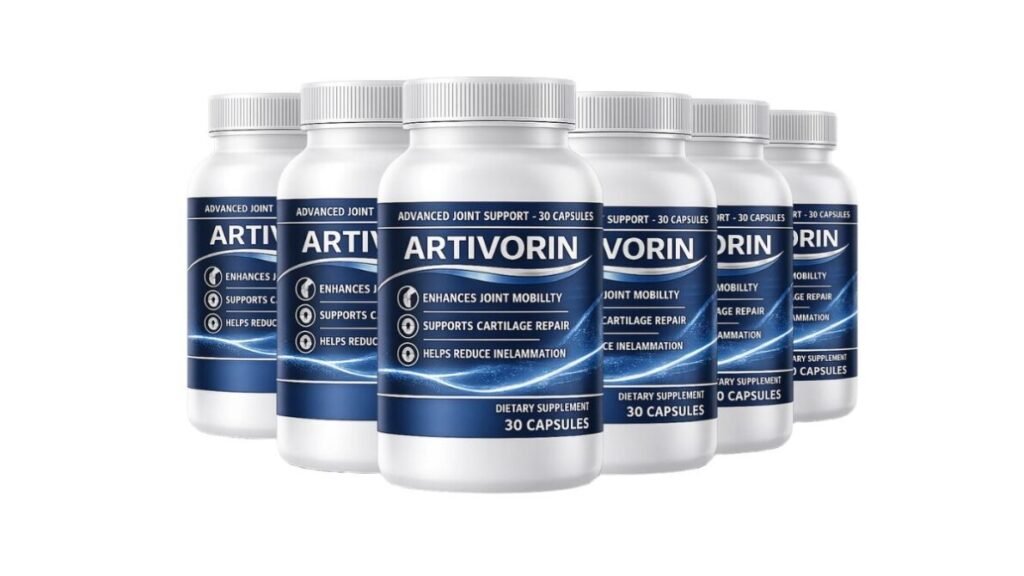
Taking the most consistent “official” description at face value, Artivorin is a once-daily capsule aimed at adults with age-related stiffness and reduced mobility. Per the Artivorin official website, it’s made in a US, FDA-registered, GMP-certified facility, marketed as non-GMO and vegetarian, priced from about $49 to $89 a bottle depending on the bundle, and backed by a 60-day money-back guarantee. On the credit side of the ledger, the four-ingredient version at least names its ingredients, and its lead compound – standardized turmeric – is one of the better-evidenced botanicals in the whole joint category.
The problems are the ones above and below: the formula isn’t consistent across the brand’s own pages, no page discloses per-ingredient milligram doses (it’s a proprietary blend), and there’s no clinical trial on the finished Artivorin product. What you’re really buying is a credible ingredient list whose exact contents and strength you can’t verify in advance.
Named Ingredients, Hidden Doses
We anchor these reviews to what you can verify, so here’s the verifiable statement: Artivorin names ingredients but doesn’t disclose how much of each you get. An independent advertorial reviewing the brand confirmed it plainly – the “individual ingredient dosages are not disclosed; proprietary blend structure applies.” That matters because, for the star ingredient, dose is the whole game.
Curcumin’s joint-comfort trials used roughly 500-1,000 mg of standardized extract daily; below that, results thin out fast. A label that names “Turmeric 95% curcuminoids” but hides the milligrams tells you the recipe, not the strength – and one page even admits you’ll only find the real amounts on the physical jar. Note the framing here: we’re not saying the dose is too low, because we can’t see it. We’re saying it isn’t disclosed, which you can confirm yourself by reading the label and finding a blend, not numbers.
Route Before Efficacy: The Curcumin Absorption Catch
Before grading the ingredients, we check whether the delivery route can physically reach the target – and for joints, an oral capsule is plausible, since curcumin’s anti-inflammatory action is systemic rather than requiring it to somehow “reach” cartilage directly. This isn’t an anatomically hopeless route like a nail or tooth product. But there’s a specific catch with turmeric: curcumin is notoriously poorly absorbed on its own.
The clinical trials that show benefit almost always use an absorption enhancer – black pepper extract (piperine), a phospholipid (phytosome), or a nano-formulation. None of Artivorin’s ingredient lists mention piperine or any bioavailability technology. Without one, even a decent curcumin dose may largely pass through unabsorbed. So “the route works” comes with an honest asterisk: for this ingredient, formulation is as important as dose, and Artivorin discloses neither.
Turmeric (95% Curcuminoids): The One Ingredient With Real Joint Evidence
Turmeric is the ingredient doing the real work in this formula, and it earns a genuinely positive grade – with caveats. Curcumin fights inflammation through well-mapped pathways (it inhibits NF-kB and the COX-2 and 5-LOX enzymes – the same enzyme NSAIDs target, by a different route). The human evidence is among the strongest for any joint botanical: a 2016 meta-analysis of eight randomized trials found curcumin significantly reduced osteoarthritis pain and improved physical function, with an effect size comparable to ibuprofen; one 4-week trial of 139 knee-OA patients found 500 mg of curcumin three times daily worked as well as the prescription NSAID diclofenac, with fewer stomach side effects. Evidence grade: strong for the ingredient – but tied to a standardized dose (1,000-1,500 mg/day) and good absorption, neither of which Artivorin’s proprietary blend confirms.
CoQ10, Butcher’s Broom and ALA: Reasonable Antioxidants, Thin Joint Data
The other three ingredients are where the marketing outruns the evidence, so here’s the honest read. CoQ10 is a legitimate mitochondrial antioxidant, and it’s an unusual inclusion in a joint formula – but its joint-specific human evidence is thin; most of its data is cardiovascular. Butcher’s Broom is a traditional venous-circulation herb (studied mainly for leg vein tone and swelling), with essentially no direct osteoarthritis trials; the “delivers nutrients to the joint” rationale is plausible mechanism, not proven outcome.
Alpha-Lipoic Acid is a genuine universal antioxidant with its best evidence in diabetic nerve health, not joints. None of these are filler exactly – they have coherent antioxidant rationales – but if you’re buying Artivorin expecting cartilage building blocks, note that the four-ingredient version contains no glucosamine, chondroitin, or collagen at all. Evidence grade: preliminary for joint-specific benefit across all three.
Red Flags We Found
We list product red flags plainly because it’s what protects readers. Artivorin carries a heavy set:
- Conflicting formulas: two entirely different ingredient lists (turmeric/CoQ10/Butcher’s Broom/ALA vs glucosamine/chondroitin/turmeric/boswellia) under one name.
- Shifting ownership: the distributor is variously named SHIPOFFERS, “Artivorin Labs,” and “Artivorin LLC” across pages.
- Spelling twins and multi-domain sprawl: Artivorin and Artevorin across half a dozen near-identical sites.
- Overreaching claims: pages promise “cartilage regeneration” and to fix “the three root causes of joint degeneration” – claims a dietary supplement can’t substantiate and shouldn’t make.
- Fabricated authority, per a scam alert: an independent investigation reported AI-generated “orthopedic specialist” endorsements and fabricated testimonials.
- Inflated, inconsistent social proof: “review counts” range from 2,140 to 5,820 to 14,503 across different official pages – numbers that can’t all be true.
What Real Users Are Saying
Setting aside the sellers’ own five-star walls – which quote wildly different review totals (2,140 on one official page, 5,820 on another, 14,503 on a third) that can’t be reconciled or trusted as independent – the traceable picture is mixed and thin. Some third-party reviewers who bought and tested it describe modest, gradual reductions in morning stiffness over about six weeks; at least one independent review site scored it as low as 1.3/5, with buyers reporting little benefit and occasional headaches or digestive upset.
The more measured writeups keep landing on the same caveat we did: the formula and manufacturer aren’t consistent. There isn’t a solid base of verifiable long-term feedback yet, which fits a newer, multi-domain funnel. Treat any dramatic transformation testimonial – especially video “specialist” endorsements – with real skepticism.
Medication Interactions & Safety
The named ingredients are generally well tolerated, but a few cautions are real – and the undisclosed, inconsistent formula makes them harder to manage, because you can’t tell a pharmacist exactly what you’re taking. Turmeric/curcumin has a mild blood-thinning effect and can add to the risk of warfarin, aspirin, or other blood thinners – the official pages themselves warn to consult a provider if you take blood thinners.
Curcumin can also aggravate gallstones and may cause GI upset. If the version you receive contains glucosamine, that’s relevant for people with shellfish allergy or diabetes. Butcher’s Broom may interact with blood-pressure medication. If you’re pregnant, nursing, on blood thinners or blood-pressure medication, have gallstones, or are scheduled for surgery, clear Artivorin with a clinician first. None of this makes it high-risk for a healthy adult; the disclosure gap is what makes it impossible to fully vet.
When to See a Doctor, Not a Supplement
This matters more than the purchase decision. Artivorin is marketed at people with ongoing joint pain, and phrases like “cartilage regeneration” can tempt someone to self-treat what needs real care. Supplements, at best, may offer modest comfort support – they don’t repair structural joint damage or treat arthritis. See a clinician promptly – not a capsule – if you have joint pain with swelling, redness, or warmth; a joint that’s locked, giving way, or can’t bear weight; pain following an injury; fever alongside joint pain; or stiffness and pain that are steadily worsening or waking you at night. Early diagnosis is what actually protects a joint; a supplement bought instead can let a treatable problem progress.
Where to Buy Artivorin
If, after weighing all of that, you still want to try it, buy only from the official Artivorin website, where the 60-day guarantee applies – not from a random Artevorin-spelled look-alike or a marketplace listing that may be a different formula. Then do one thing before your first capsule: read the actual Supplement Facts panel and confirm which formula you received, the turmeric dose, and whether it includes an absorption enhancer like piperine.
If the label won’t tell you, that’s your answer. Save your order confirmation so the refund is easy to invoke. If what you actually want is proven joint support, a standardized curcumin product that discloses its dose and its bioavailability system (piperine or phytosome) is the more transparent route.
Final Verdict on Artivorin
The honest core of this Artivorin review is a good ingredient trapped in a product you can’t pin down. Standardized turmeric genuinely has strong joint evidence – better than most of this category – and that lifts Artivorin above the outright fake formulas we refuse to link. But a product whose own official pages sell two different recipes, under two spellings and three company names, that hides every dose, skips the absorption enhancer curcumin needs, and leans on AI-style “specialist” endorsements, hasn’t earned confidence.
It sits well below a transparent, single-formula, dose-disclosed curcumin supplement. The fair verdict is cautious and conditional: verify the physical label first, keep expectations at “mild comfort support,” and clear it with a doctor if you take blood thinners. As always, “may support” is the honest ceiling – Artivorin doesn’t regenerate cartilage or replace anti-inflammatory medication, and worsening joint pain belongs with a clinician, not a bottle.
Frequently Asked Questions
Are Artivorin and Artevorin the same product?
They appear to be the same four-ingredient formula (Turmeric 95% curcuminoids, CoQ10, Butcher’s Broom, Alpha-Lipoic Acid) sold across near-identical domains with two spellings, the same pricing, and the same 60-day guarantee. It looks like one marketing network using spelling variants rather than a distinct product – but that sprawl is itself a reason for caution, and it makes verifying the real seller harder.
Is Artivorin a scam?
Its lead ingredient is real and well-studied, and there’s a working 60-day guarantee, so it’s not an outright empty product. But it shows serious caution signs: two conflicting formulas under one name, shifting manufacturer names, undisclosed doses, no product trial, and – per an independent investigation – AI-generated “specialist” endorsements and fabricated testimonials. Treat it as unverified rather than proven, and confirm the physical label before buying.
Does Artivorin regenerate cartilage or cure arthritis?
No. No supplement regenerates cartilage or cures arthritis, and pages claiming Artivorin fixes “the root causes of joint degeneration” are overreaching. Curcumin may modestly ease osteoarthritis discomfort for some people, but that’s symptom support, not repair or a cure. Structural joint damage and arthritis need a clinician’s evaluation and plan.
How long does Artivorin take to work?
If it works for you, expect it to be gradual. Curcumin-based joint supplements typically take 4-8 weeks of consistent daily use to produce a measurable effect, since they work through inflammatory signaling rather than fast pain relief. Judging it in the first week or two is too early, which is behind most “it did nothing” complaints – though absorption without a piperine or phytosome enhancer remains a real limitation.

Raphael Albert is the founder and content creator of Nutra Plus. Passionate about health, nutrition, fitness, and wellness, he spends his time researching scientific studies, health trends, and evidence-based lifestyle strategies to create informative and easy-to-understand content. While he is not a doctor or licensed healthcare professional, his goal is to help readers make more informed wellness decisions. All content is for educational purposes only and should not replace professional medical advice. Always consult a qualified healthcare provider regarding your health concerns.