On incentives: two links below go to the sellers and pay this site a commission. The check that separates these two products is one you can run yourself in thirty seconds, which is the point of this article.
These statements have not been evaluated by the Food and Drug Administration. These products are not intended to diagnose, treat, cure, or prevent any disease. Bone lost to gum disease doesn’t grow back, and a cavity that has broken through enamel needs a filling. Neither product changes that.
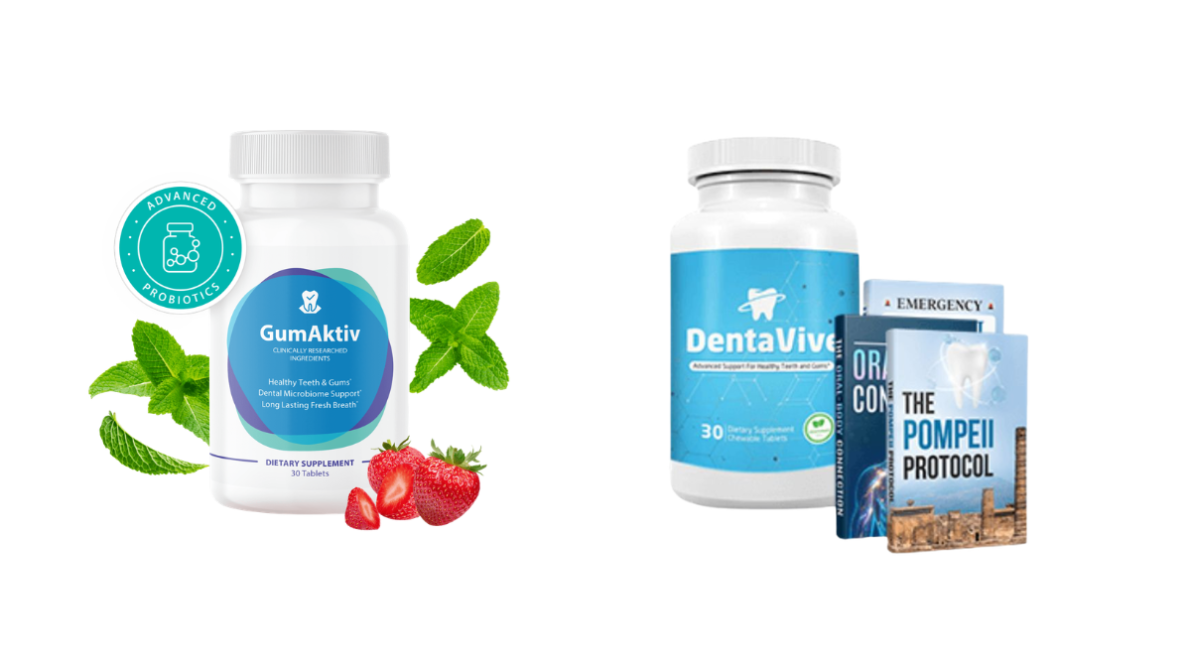
DentaVive vs GumAktiv starts from an unusual position: these two products are more alike than most competitors in any category.
Both are chewables. Both state 3.5 billion CFU per serving. Both name Lactobacillus paracasei and Lactobacillus reuteri among their organisms.
Same format, same count, two of three species shared.
And then one of them adds a piece of information the other doesn’t, which changes what you can verify about either. It’s a single alphanumeric code, and it’s the only thing in this comparison that lets you connect a product to published research.
Here’s what it is and why it decides the comparison.
What Each One Is
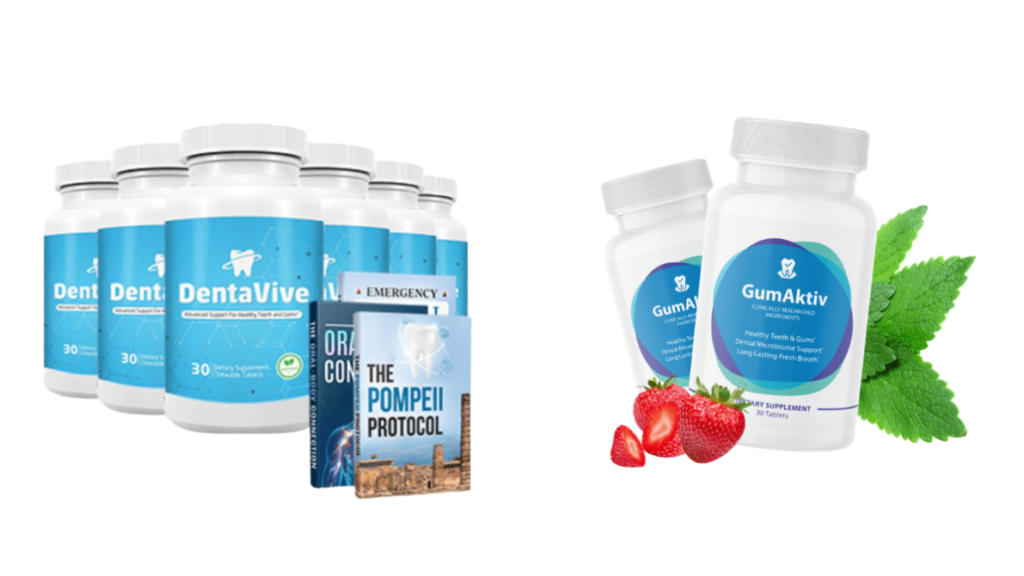
DentaVive is described as a chewable oral health supplement built on probiotics, minerals including calcium and zinc, and plant extracts. Its stated CFU count is 3.5 billion, with L. reuteri and L. paracasei named on some brand pages. It carries a 60-day money-back guarantee that explicitly accepts empty bottles.
GumAktiv is a chewable tablet taken once daily, with seven published ingredients: Lactobacillus paracasei, Bifidobacterium lactis BL-04®, Lactobacillus reuteri, tricalcium phosphate, malic acid, inulin and peppermint. Also 3.5 billion CFU, also a 60-day guarantee, and stated as a one-time purchase with no autoship.
Both Get the Route Right
Before anything else, credit where it’s shared.
A chewable is the correct format for oral health, and that matters more in this category than the ingredient list does.
Dental disease happens on surfaces. Plaque is a biofilm physically attached to teeth. Enamel demineralises and remineralises at the surface, in contact with saliva. Gum inflammation is driven by bacteria in the pocket between gum and tooth.
Something that dissolves in your mouth puts its contents where those problems are. That’s the opposite of the swallowed mineral tablets this category is full of — and both products get it right.
The 3.5 Billion Coincidence
Worth noting because it’s checkable and because it reframes the comparison.
Both products state exactly 3.5 billion CFU. Both name L. paracasei and L. reuteri.
I can’t tell you whether that reflects a shared contract manufacturer, a shared base formula, or coincidence — no page for either product identifies a manufacturer clearly enough to check.
What it means practically: the difference between these two isn’t the bacterial load. It’s what each one tells you about it.
Where DentaVive vs GumAktiv Actually Separates
Four dimensions, and one of them does most of the work.
Strain identification. GumAktiv names one organism to strain level. DentaVive names none.
Purchase-page disclosure. GumAktiv publishes seven ingredients on the page you buy from. DentaVive’s purchase page publishes none.
Mineral choice. GumAktiv includes tricalcium phosphate, delivered by the correct route for enamel.
Mechanism consistency. DentaVive’s own brand sites disagree on whether the product works locally or systemically.
The thing worth noticing about DentaVive vs GumAktiv before the table is that they don’t differ on ingredients so much as on how much you’re allowed to know about them:
| DentaVive | GumAktiv | |
|---|---|---|
| Format | Chewable | Chewable |
| CFU stated | 3.5 billion | 3.5 billion |
| Strain codes | ❌ None | ✅ One (BL-04®) |
| Ingredients on purchase page | ❌ None | ✅ Seven |
| CFU split by organism | ❌ No | ❌ No |
| Mineral for enamel | ⚠️ Calcium, unspecified | ✅ Tricalcium phosphate |
| Consistent mechanism | ❌ Local vs systemic conflict | ✅ Consistent |
| Guarantee | 60 days, empty bottles | 60 days |
The Strain Code Test
This is the check, and it applies to every probiotic you’ll ever buy.
Probiotic effects are strain-specific, not species-specific. That’s among the better-established principles in the field. Two strains of the same species can behave completely differently — one produces a measurable clinical effect, the other does nothing.
A critical evaluation of oral care probiotic strains describes how the ones with genuine evidence work — interfering with biofilm formation through competitive adhesion, occupying binding sites on tooth surfaces to block colonisation by cariogenic pathogens. The organisms with published support are named precisely: Streptococcus salivarius K12 and M18, specific ATCC-designated L. reuteri strains, Lacticaseibacillus paracasei SD1.
A strain is written with an alphanumeric code. Lactobacillus reuteri is a species. L. reuteri DSM 17938 is a strain. Only the second connects to research.
Why BL-04 Matters
GumAktiv names Bifidobacterium lactis BL-04® — with the code.
That’s a real, identified commercial strain with its own research programme. It means the published work on BL-04 is about the organism in the tablet, not about a species that happens to share its name.
One of three is partial credit, and it’s genuinely earned. GumAktiv’s other two organisms — L. paracasei and L. reuteri — are named at species level only, which is the same gap DentaVive has. Even the promotional coverage of GumAktiv acknowledges this, describing the missing sub-strain identifier as a transparency gap.
But one code is more than zero, and it’s the only place in this comparison where a published trial attaches to a product.
What DentaVive Doesn’t Publish
The gap is wider than the strain question.
Our DentaVive review documents what the actual purchase page contains: a video presentation, pricing tiers, a guarantee, bonus ebooks and a customer count.
No ingredients at all. Not a list, not a blend total, not a label image.
Other websites operating under the DentaVive name do describe a formula — that’s where the 3.5 billion figure and the two species names come from. But those aren’t the page you buy from, and they don’t agree with each other on the mechanism.
GumAktiv’s Seven Ingredients
By contrast, GumAktiv’s official page publishes a seven-item list. Each one can be looked up.
That’s the practical difference. You can compare the tricalcium phosphate to what’s known about mineral delivery. You can check inulin against prebiotic research. You can search BL-04 and find studies.
You still can’t compare doses — no amounts are published for anything, and the 3.5 billion isn’t broken down by organism. But you can start, which you can’t with DentaVive.
Tricalcium Phosphate: The Right Mineral, the Right Route
One GumAktiv ingredient deserves specific credit, because it solves a problem most of this category gets backwards.
Tooth enamel is acellular and avascular — no living cells, no blood supply. The cells that build it break down just before the tooth erupts, removing enamel’s ability to regenerate. After that, enamel takes up calcium, phosphate and fluoride from saliva, at the surface — or not at all.
A calcium-phosphate mineral delivered in something that dissolves in your mouth is anatomically correct. It puts the mineral in contact with the tooth, in saliva, at the only route enamel has.
Whether it works depends on concentration and contact time, neither of which is published. But the reasoning is sound — and after reviewing products that promised enamel support from swallowed capsules, that’s worth acknowledging.
DentaVive’s Local-vs-Systemic Contradiction
Which brings us to DentaVive’s central problem.
Its brand websites describe two incompatible mechanisms. Some present it as a chewable delivering probiotics directly into the mouth, competing with harmful bacteria on tooth and gum surfaces — a coherent mechanism.
Others describe it working systemically, delivering compounds through the digestive system into the bloodstream, providing what one page calls a nutritional boost topical products can’t match.
Those aren’t two descriptions of one thing. They’re opposite routes.
Why Enamel Decides That Question
The distinction isn’t academic, and enamel is where it becomes concrete.
Local means the product acts on the surfaces where dental disease actually happens. Systemic means it enters your blood and reaches tissue from within — which works for gums, because gum tissue is living and vascularised, and does nothing for enamel, because enamel is neither.
So a product claiming to strengthen enamel from inside the body is describing a route that doesn’t exist. Not a weak one. None.
A product that can’t tell you which mechanism it uses can’t tell you what it does. GumAktiv is consistent on this; DentaVive isn’t.
Neither Publishes a CFU Breakdown
Both fail the same check here, and it’s worth stating.
3.5 billion CFU is a total. Neither product says how it divides among its organisms.
That matters because the research is strain-specific. If BL-04 is 3.4 billion of GumAktiv’s total or 100 million of it, the published work on BL-04 applies very differently. Nobody outside the company can tell.
Advantage: neither.
The Domain Problem, Shared
Both products operate across several websites presenting themselves as official.
DentaVive: we found at least seven, with differing manufacturing claims — some describing FDA-registered US facilities, others Canadian manufacture.
GumAktiv: we found five or more, including at least one with a near-miss spelling of the brand name.
Neither has an advantage. In both cases, “I read it on the official site” doesn’t mean much when there are several.
GumAktiv’s Conflicting Formula
And GumAktiv has a version of the same problem DentaVive has, which is worth flagging rather than glossing.
Most of its domains describe the seven-ingredient probiotic formula. At least one describes a completely different product — built on hibiscus extract, clove oil and echinacea, with no probiotics mentioned.
Those aren’t the same formula. As with DentaVive’s mechanism conflict, the practical instruction is the same: read the label on the bottle that arrives, and screenshot the ingredient list on the page you buy from.
Guarantees and Terms
Both offer 60 days.
DentaVive’s explicitly accepts empty bottles, which is a genuinely consumer-friendly term and worth stating.
GumAktiv states plainly that there’s no autoship and every purchase is one-time, which is worth knowing given how common subscription defaults are in this market.
Current terms are on the DentaVive and GumAktiv sites.
Reviews Neither Can Show You
Both display large customer counts — DentaVive citing over 150,000 people helped, GumAktiv citing 12,913 reviews — with no link to any platform where those reviews can be read.
Both are sold direct only, so no verified-purchase pool exists for either. Treat any testimonial you encounter for either product as unverified.
What Both Get Right
Fairness matters, and there’s real credit due to both.
Both chose the correct format. A chewable acts where dental disease is, and that’s the fundamental thing most of this category gets wrong.
Both are built on a real research area. Oral probiotics aren’t invented — strains like S. salivarius K12 and M18 have genuine trial support, and the field is active.
Both offer 60-day guarantees, which is ordinary but adequate.
And at least one DentaVive brand page tells readers not to replace brushing, flossing and checkups — correct advice that deserves acknowledging even when other pages from the same brand overreach.
When to See a Dentist
Some signs mean the decision isn’t which product to buy.
See a dentist for: bleeding gums persisting beyond a couple of weeks of good hygiene · gums pulling away from teeth · a tooth that feels loose · sensitivity that doesn’t settle · a bad taste that won’t shift · any visible hole or dark spot.
Same-day care for: facial or jaw swelling, severe pain, or fever with dental pain — swelling around a tooth can indicate an abscess.
And the principle worth repeating: gingivitis is reversible with professional cleaning and proper hygiene. Periodontitis destroys bone, and that bone doesn’t come back. A cavity that has broken through enamel needs a filling. The gap between treating either this year and in three is the gap between simple and expensive.
Which Case Is Stronger, and For Whom
GumAktiv, and the reasons are specific rather than general.
It publishes seven ingredients on the page you buy from. It names one organism to strain level, which is the only place in this comparison where published research attaches to a product. Its tricalcium phosphate is anatomically correct for enamel. And it’s internally consistent about acting in the mouth.
DentaVive’s purchase page publishes nothing, and its brand sites contradict each other on the mechanism — which is the more fundamental problem, because it means the product hasn’t decided what it is.
That said, neither is a treatment, and the gaps they share matter as much as the difference. Neither breaks down its CFU count. Neither publishes amounts. Neither has a trial on its finished formula. Both operate across multiple domains with conflicting information.
Who GumAktiv might reasonably suit: someone who brushes, flosses and sees a dentist, wants a pleasant daily addition, and understands they’re buying an unquantified probiotic with one identifiable strain rather than a treatment. Buy the smallest package and judge inside 60 days.
Who should skip both: anyone with an existing cavity, anyone with persistent bleeding gums who hasn’t been assessed, and anyone hoping either replaces a dental appointment.
And what outperforms both: fluoride toothpaste used properly, daily interdental cleaning, fewer sugar exposures across the day, and the cleaning appointment. Decades of evidence, and none of it needs a bottle.
For the full analysis of each, see our DentaVive review and our GumAktiv review. Both sit inside our guide to oral health supplements, which explains why delivery route decides more than ingredients in this category.
Frequently Asked Questions
What’s the actual difference between DentaVive and GumAktiv?
Less than you’d expect on formula, more than you’d expect on disclosure. Both are chewables, both state 3.5 billion CFU, and both name L. paracasei and L. reuteri. The differences: GumAktiv publishes seven ingredients on its purchase page while DentaVive’s publishes none, GumAktiv names B. lactis BL-04® with a strain code, and GumAktiv is consistent about acting in the mouth while DentaVive’s own sites disagree on whether it works locally or systemically.
Why does a strain code matter?
Because probiotic effects are strain-specific, not species-specific. Two strains of the same species can behave completely differently, and the published research was done on particular lineages. L. reuteri is a species; L. reuteri DSM 17938 is a strain. Without the alphanumeric code, the trials being cited aren’t about the organism in your tablet. GumAktiv names one of three; DentaVive names none.
Can either one rebuild tooth enamel?
Early enamel demineralisation — a white-spot lesion with the surface intact — can remineralise, but only from saliva at the tooth surface, because enamel is acellular and avascular. A cavity that has broken through cannot, by any product. GumAktiv’s tricalcium phosphate in a chewable is at least the right mineral delivered by the right route. Any claim to strengthen enamel from inside the body describes a route that doesn’t exist.
Is 3.5 billion CFU enough?
It’s a moderate, reasonable potency — higher isn’t automatically better, since survival to the site of action matters more than the raw count. The bigger limitation is shared: neither product breaks the total down by organism. If a strain with published research is present at a small fraction of that count, the research doesn’t transfer, and there’s no way to tell from either label.

Raphael Albert is the founder and content creator of Nutra Pulse. Passionate about health, nutrition, fitness, and wellness, he spends his time researching scientific studies, health trends, and evidence-based lifestyle strategies to create informative and easy-to-understand content. While he is not a doctor or licensed healthcare professional, his goal is to help readers make more informed wellness decisions. All content is for educational purposes only and should not replace professional medical advice. Always consult a qualified healthcare provider regarding your health concerns.