On incentives: two links below go to the seller and pay this site a commission. The section explaining why most of this formula can’t work the way it’s applied is the one that decides the review, and it doesn’t help the sale.
These statements have not been evaluated by the Food and Drug Administration. This product is not intended to diagnose, treat, cure, or prevent any disease. Gum tissue lost to periodontitis does not grow back on its own, and bone lost with it doesn’t either. Both are far more manageable caught early — bleeding gums, receding gums, or a loose tooth are reasons to book a dental appointment.
Most oral health supplements I review make the same mistake: they ask you to swallow something for a problem that lives on the surface of your teeth. Plaque is a film stuck to enamel. Enamel has no blood supply. A capsule that dissolves in your stomach never gets near either.
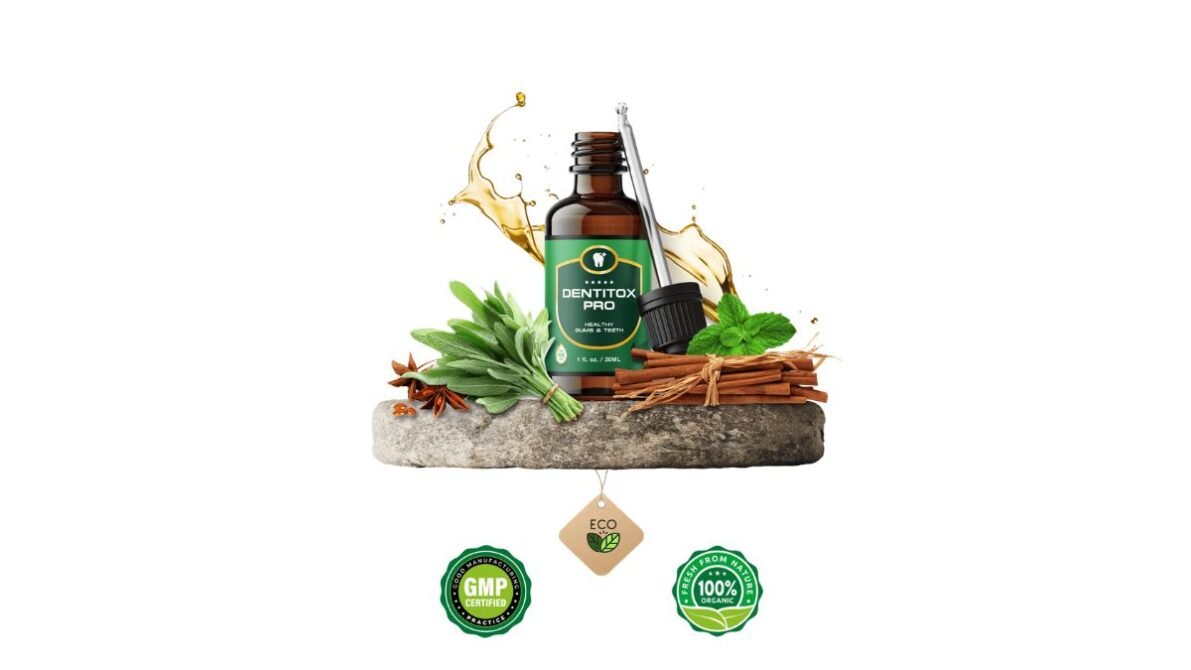
Dentitox Pro doesn’t make that mistake. It’s a liquid you apply directly to your teeth and gums with a dropper — the correct route, and genuinely to its credit.
Then you read the ingredient list, and something odd emerges.
Vitamins A, C, D3 and K2. Phosphorus, potassium, zinc, calcium, collagen, MSM.
That’s a bone and connective tissue nutrition formula. It’s the sort of thing you’d expect in a capsule for skeletal health. And most of those nutrients only do their jobs after travelling through your gut, your liver and your kidneys — organs that a drop of liquid on a gum never reaches.
So this Dentitox Pro review lands somewhere new. Not “wrong route for the ingredients,” which is the usual failure in this category. The opposite: right route, carrying ingredients that need a different one.
What Dentitox Pro Is — and the Route Is Actually Right
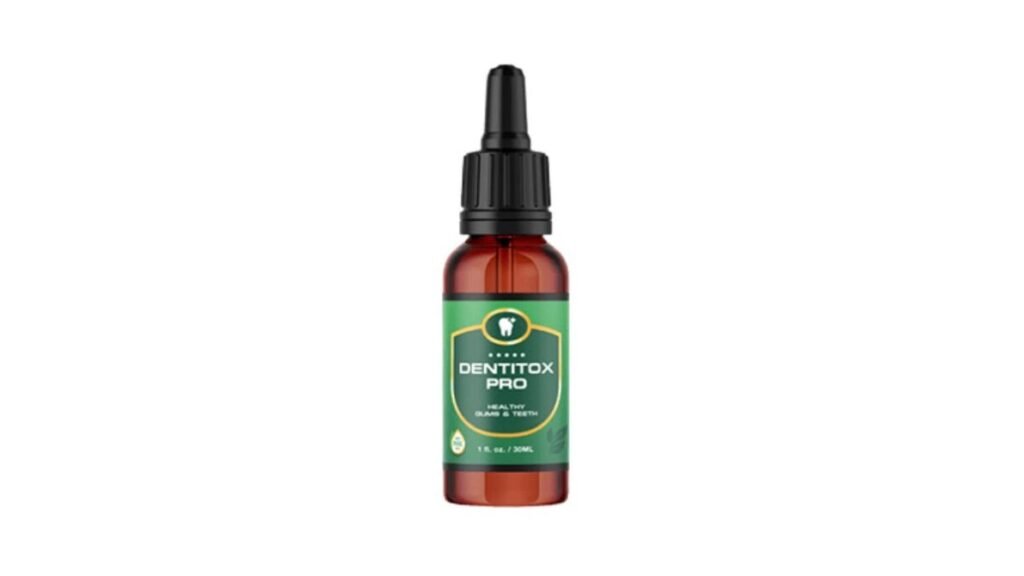
A liquid in a 30 ml dropper bottle, sold through the official site with BuyGoods as the retailer of record, presented by a man named Marc Hall who describes himself as a 54-year-old plant enthusiast living near Charlotte, North Carolina.
The application instruction is the important bit: you put drops directly onto your teeth and gums, spread them around, or add them to toothpaste before brushing.
I want to give that proper credit, because it’s the thing this category most often gets wrong. Dental disease is a surface problem. Plaque is a biofilm physically attached to teeth. Enamel exchanges minerals with saliva at its surface — enamel is acellular and avascular, so remineralisation happens from saliva, topically, or not at all. Gum inflammation is driven by bacteria in the pocket between gum and tooth.
Putting something in direct contact with those surfaces is the right idea. Whoever designed the delivery understood the problem.
The named ingredients on the page you’d buy from: vitamins A, C, D3 and K2, phosphorus, potassium, zinc, micro-encapsulated calcium, xylitol, collagen, MSM, and spearmint/peppermint.
No amount is published for any of them.
The Ingredient List Is a Bone Supplement
Look at that list again, grouped by what it actually is.
Vitamin D3, vitamin K2, calcium, phosphorus and potassium are the standard bone-mineralisation stack. Walk into any pharmacy and you’ll find them combined in capsules for skeletal health. Collagen and MSM are joint and connective tissue supplements. Vitamin C matters for collagen synthesis and, in deficiency, for gum bleeding — that’s scurvy, and it’s a systemic nutritional state.
Every one of those is a nutrient whose evidence base comes from swallowing it.
That’s not a criticism of the ingredients. Vitamin D deficiency is genuinely common and genuinely relevant to bone, including the alveolar bone that holds your teeth. Vitamin C deficiency genuinely causes bleeding gums. Calcium and phosphorus genuinely build mineralised tissue.
The question is whether painting them on a tooth engages any of that. For most of them, it can’t — and the reason is worth understanding.
Why That Matters: D3 Needs Your Liver and Your Kidneys
Vitamin D3 is the clearest case, so let’s use it.
Vitamin D3 as you swallow it is biologically inactive. It does nothing until it’s chemically converted, and that conversion is a multi-organ process. Cholecalciferol is hydroxylated first in the liver, producing 25-hydroxyvitamin D, and then again in the kidneys by 1-alpha-hydroxylase, producing calcitriol — the active hormone. Only then does it bind the vitamin D receptor and switch on gene expression.
And what calcitriol does is regulate calcium absorption in your small intestine and calcium reabsorption in your kidneys.
A drop of D3 sitting on a gum engages none of that. There’s no liver step, no kidney step, no intestinal absorption to regulate. The molecule is present at a surface, in an inactive form, with no pathway to become active.
Vitamin K2 has the same problem for the same reason. K2 functions as a cofactor for gamma-glutamyl carboxylase, the enzyme that carboxylates osteocalcin and matrix Gla protein so they can bind calcium — osteocalcin being produced by osteoblasts, the bone-forming cells. That reaction happens inside bone cells, not on a tooth surface.
Calcium and phosphorus are a partial exception worth being fair about: calcium and phosphate ions are taken up from saliva onto the enamel surface, which is how remineralisation actually works. So topically applied calcium isn’t pointless — that’s the mechanism hydroxyapatite toothpastes use. But “micro-encapsulated calcium” at an undisclosed amount, in a drop you spread with your tongue, is a long way from a fluoride or hydroxyapatite paste held against teeth for two minutes.
Collagen is the other clear miss. Collagen molecules are large — far too large to cross intact tissue. Oral collagen peptides have some evidence because they’re digested into amino acids and absorbed. Applied to a gum, collagen sits there.
Xylitol and Zinc Are the Two That Fit
Two ingredients are genuinely right for topical delivery, and they deserve saying.
Xylitol is the strongest. It’s a sugar alcohol that Streptococcus mutans can take up but can’t ferment into acid, which suppresses the organism over time. This is well-established topical science and it’s why xylitol appears in dental gums worldwide.
The catch, as always, is quantity. Clinical trials delivering xylitol have used amounts in the range of 11.7 to 15.6 grams per day, split into multiple exposures — and the consistent finding is that both total daily amount and frequency of exposure matter. Six drops once a day is a very different exposure profile.
Zinc has a real topical rationale in oral care — it’s used in toothpastes and mouthwashes for plaque control and for reducing the volatile sulphur compounds behind bad breath. Reasonable inclusion, undisclosed amount.
Peppermint and spearmint provide flavour and mild antimicrobial activity. Nothing wrong with them; nothing remarkable either.
So of roughly a dozen ingredients, two or three are doing work appropriate to how the product is applied.
Four Official Sites, Four Different Doses
Here’s a practical problem, and it takes a few minutes to verify yourself.
Multiple websites present themselves as the official home of Dentitox Pro. They don’t agree on how to use it.
One says six drops daily. Another says ten drops. Another says three drops, twice a day. One suggests holding drops under the tongue for sublingual absorption; another says apply and brush immediately.
Those aren’t stylistic variations. Six drops versus ten is a two-thirds difference in dose. And “apply and leave for a minute” versus “add to toothpaste and brush” produces completely different contact times — which, for a topical, is the mechanism.
The page my affiliate link led to doesn’t state a dosage at all.
The ingredient lists diverge too. The page I reviewed names twelve components. Other sites describe “over 20 ingredients including clove oil, tea tree oil, oregano oil and wintergreen leaf extract” — none of which appear on the first. Others add elderberry, neem and sage. One describes the product as an “Advanced Oral Probiotic,” though nothing in any published list is a probiotic.
If you buy, note which site you bought from and follow that site’s instructions, because there isn’t a single authoritative version.
Marc Hall, or Dr. George White?
A smaller thing, but it follows the same pattern.
The page my link reached is narrated by Marc Hall, 54, a plant enthusiast living near Charlotte, North Carolina, who describes perfecting the formula himself.
Another site presenting as official states the product was developed by Dr. George White.
A third describes the formula as based on an African tribal ritual.
Those are three different origin stories for one product. None is dangerous. All three suggest the backstory is a marketing asset that varies by funnel rather than a fact about who made what you’d be swallowing — or, in this case, applying.
To the company’s credit, the footer on the page I reviewed carries a correctly worded disclaimer noting the content reflects the author’s opinion and encouraging readers to consult a physician.
“FDA Approved Facility” Is Not a Thing
The page states the product is made in an “FDA approved and GMP certified facility.”
The FDA does not approve facilities, and it does not approve dietary supplements for safety or effectiveness. Supplements are regulated as food rather than drugs. The agency registers facilities — meaning it knows they exist and may inspect them — and acts after the fact through warnings and recalls.
“FDA registered” would be accurate. “FDA approved” is not, and it appears across this entire industry. If you see it on any supplement page, that alone tells you the copy wasn’t reviewed by someone who knows the rules.
GMP certification is a separate and real thing, awarded by third-party auditors, and stating it is fair.
What I Liked
The delivery route is correct. This is the fundamental thing to get right in oral health, and most competitors don’t. Drops applied to teeth and gums reach where dental disease actually is.
Xylitol is a genuinely good inclusion with real anti-caries evidence, and it belongs in a topical product.
Zinc has a legitimate topical rationale for plaque and breath.
BuyGoods is the retailer of record, giving refunds an independent route rather than depending on the seller’s own returns desk.
A references page exists, and the footer disclaimers are correctly worded — including advice to consult a physician if pregnant, nursing, taking medication or managing a condition.
No stimulants, and stated plainly. The page explicitly says the product contains no stimulants and isn’t habit-forming, which is a reasonable reassurance for something used daily.
The formula is broadly low-risk. Vitamins and minerals applied topically in small amounts are unlikely to harm anyone — which, as the safety section notes, is a different question from whether they help.
Things to Consider
Most of the formula consists of nutrients that work systemically — through gut, liver and kidney — applied topically instead.
Vitamin D3 is inactive until double hydroxylation in liver and kidney. Neither happens on a gum.
Vitamin K2 works inside bone cells, carboxylating osteocalcin.
Collagen molecules are too large to penetrate intact tissue.
No amounts published for anything.
Four different dosing instructions across sites claiming to be official.
Ingredient lists differ substantially between those sites.
Two different named creators, plus a third origin story.
“FDA approved facility” is not a thing that exists.
Prices don’t render as text on the page I examined — the totals appear as blank fields filled by script, though image filenames indicate $69, $59 and $49 per bottle.
“Rebuilds Gums” and “Teeth Rejuvenation”
Two claims circulating across the product’s sites deserve direct correction, because they concern things people care about deeply.
“Rebuilds gums.” Gum recession and gum tissue lost to periodontitis do not regrow on their own. The bone that supports teeth, once destroyed by periodontal disease, does not regenerate spontaneously either. There are surgical procedures — grafts, guided tissue regeneration — that can restore some of it, performed by periodontists. Nothing applied from a dropper does this.
What can improve, genuinely and often quickly, is inflammation. Gums that bleed because of gingivitis can stop bleeding within days of proper cleaning, and they’ll look and feel better. That’s real, it’s worth having, and it’s also what a product like this would most plausibly influence — via zinc, mint oils, and the simple act of massaging something into the gum line. But reduced inflammation is not rebuilt tissue, and the difference matters when someone is deciding whether they still need treatment.
“Triggers teeth rejuvenation.” Enamel doesn’t regenerate. The cells that build it die before the tooth erupts. Early demineralisation can be reversed at the surface with minerals from saliva — that’s remineralisation, and it’s real. A cavity that has broken through cannot be.
Who Should Be Careful
Anyone with untreated dental disease. If a dentist has recommended treatment for a cavity, a deep pocket, or a loose tooth, this doesn’t substitute for it — and the window in which those things stay simple is finite.
Anyone taking a vitamin D or vitamin K supplement already. Amounts here are undisclosed, and while topical absorption is likely minimal, if you’re on warfarin, vitamin K intake is something your anticoagulation clinic tracks. Mention it.
Anyone with kidney disease. Calcium, phosphorus and potassium are all nutrients that matter in renal impairment, and phosphorus and potassium restriction is standard in advanced kidney disease. Systemic absorption from drops is likely small — but “likely small” from an undisclosed amount is worth raising with your renal team rather than assuming.
Anyone with a known allergy to ingredients you can’t quantify, particularly given that ingredient lists differ between the product’s own websites.
Anyone pregnant or breastfeeding, since vitamin A in particular has upper limits in pregnancy and no amount is published.
Children — check with a dentist first, and store it out of reach.
And the urgent signs: facial swelling, a tooth that throbs then goes numb, fever with dental pain, difficulty swallowing or opening your mouth, or swelling under the jaw. Those need same-day dental or emergency care.
Price, Guarantee, and the Verdict
Pricing runs roughly $69 for one bottle, $59 each on the mid tier and $49 each on the largest, with free US shipping. On the page I examined the totals appeared as blank fields populated by script, so confirm the actual figures at checkout. BuyGoods handles the transaction, and a 60-day money-back guarantee is described across the product’s sites.
Each bottle is 30 ml, described as a 30-day supply.
The verdict. Dentitox Pro gets the hard part right and the easy part wrong.
The hard part — in this category, the part almost everyone fails — is delivery. Dental disease lives on surfaces, and drops applied to teeth and gums reach those surfaces. That’s a genuinely better design than the swallowed mineral tablets sold for the same purpose.
The easy part is matching the ingredients to that delivery. And most of this formula is a bone and connective tissue supplement: vitamin D3 that stays inactive without liver and kidney conversion, vitamin K2 that works inside osteoblasts, collagen too large to penetrate, MSM whose evidence is oral. Two ingredients — xylitol and zinc — genuinely belong in a topical product, at amounts nobody publishes, from a bottle whose own official websites disagree about how many drops to use.
Who this might reasonably suit: someone who brushes, flosses and sees a dentist, whose gums are mildly inflamed rather than diseased, who likes the ritual of applying something to the gum line and finds it encourages more attention to that area. Massaging anything into your gums daily isn’t useless — it’s just not the vitamins doing it. Buy one bottle, judge inside the guarantee window.
Who should skip it: anyone with recommended dental treatment they’re considering postponing, anyone expecting gum tissue or enamel to regrow, and anyone buying it for the vitamin content.
If nutrition is what you’re after, take those nutrients the way their evidence says to: swallowed, at stated doses, ideally after a blood test showing you’re actually low. Vitamin D deficiency is common and worth correcting — through your bloodstream, where it works.
And the part with decades of evidence behind it: fluoride toothpaste used properly, cleaning between your teeth daily, fewer sugar exposures spread across the day, and professional cleanings. Xylitol gum after meals is a cheap, evidence-backed addition that delivers the one ingredient here that fits the route, at an amount closer to what trials used.
For contrast within this category, our DentiCore vs ProvaDent comparison sets a swallowed mineral tablet against a chewable that acts in the mouth — the same delivery question from the other direction. And our ProDentim review covers a chewable whose route is right and whose probiotic strains are never named, which is this product’s problem in a different form: the delivery works, and you still can’t tell what you’re getting.
requently Asked Questions
Can vitamin D work if you apply it to your gums?
Not in the way it works when swallowed. Vitamin D3 is biologically inactive until it’s hydroxylated twice — first in the liver, then in the kidneys — to become calcitriol, the active hormone. That hormone then regulates calcium absorption in the intestine. Applied to a gum, D3 has no route to either conversion step. Correcting a genuine vitamin D deficiency requires taking it internally.
How many drops of Dentitox Pro should I use?
Sites presenting themselves as official give different answers — six drops daily, ten drops daily, and three drops twice a day all appear. The page I reviewed didn’t state a dosage at all. Follow the instructions on the bottle you receive and from the site you purchased through, and ask support if the two disagree.
Does it rebuild gums or enamel?
No. Gum tissue and bone lost to periodontitis don’t regenerate spontaneously — that requires surgical procedures performed by a periodontist. Enamel doesn’t regenerate either, because the cells that make it die before the tooth erupts. What can genuinely improve is inflammation: gums that bleed from gingivitis can settle quickly with proper cleaning. That’s worth having, and it isn’t the same as rebuilt tissue.
Is it safe?
Vitamins and minerals applied topically in small amounts are unlikely to harm most people, and the product states it contains no stimulants. The honest caveat is that no amounts are published and ingredient lists differ across the brand’s own sites, so if you’re pregnant, take warfarin, have kidney disease, or already supplement vitamin D or K, mention it to your doctor rather than assuming the exposure is negligible.

Raphael Albert is the founder and content creator of Nutra Pulse. Passionate about health, nutrition, fitness, and wellness, he spends his time researching scientific studies, health trends, and evidence-based lifestyle strategies to create informative and easy-to-understand content. While he is not a doctor or licensed healthcare professional, his goal is to help readers make more informed wellness decisions. All content is for educational purposes only and should not replace professional medical advice. Always consult a qualified healthcare provider regarding your health concerns.