
Heads up: some of the links below are affiliate links, and we may earn a small commission if you buy through them — it costs you nothing extra. Everything in this piece is for general information only, not medical advice, and it’s not a substitute for a conversation with your dentist or doctor before you start any new supplement.
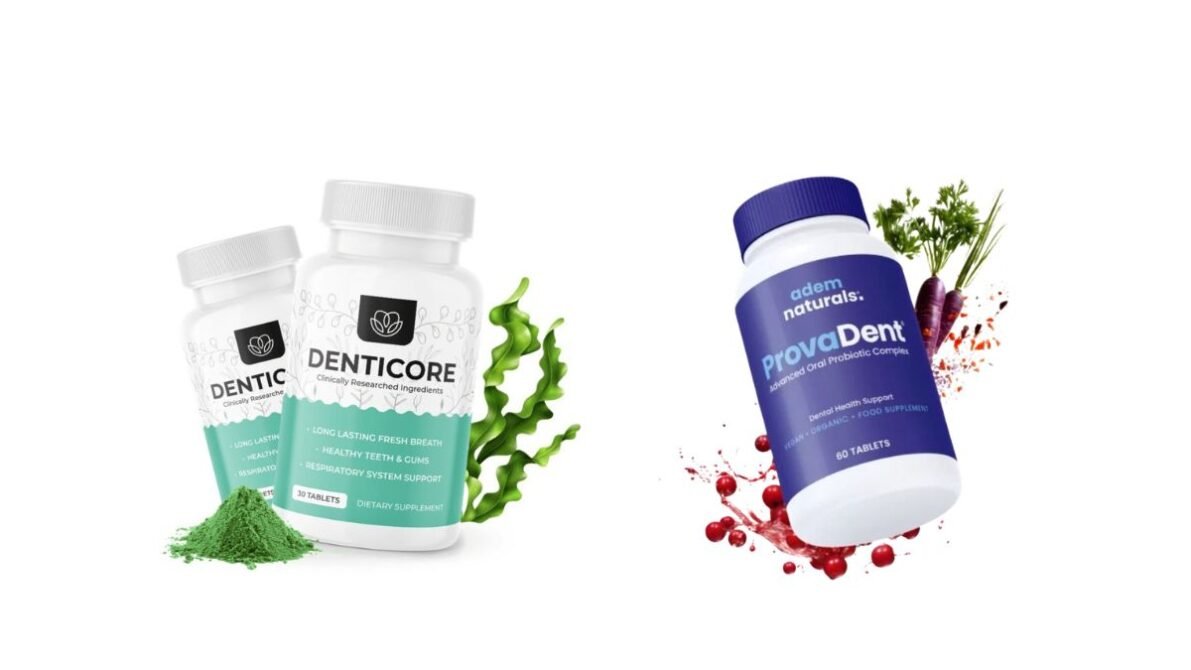
Oral wellness supplements come in two very different flavors these days, and DentiCore and ProvaDent sit on opposite ends of that split. One leans on minerals and a well-known adaptogen. The other bets everything on live bacteria. Picking between them isn’t really about which one “wins” — it’s about which mechanism actually matches what’s going on in your mouth.
That’s the honest starting point for this comparison, and it’s worth sitting with for a second before you scroll to the ingredient lists.
Quick Answer: Which One Fits You?
If your main complaint is persistent bad breath, bleeding gums, or plaque that won’t quit, ProvaDent’s probiotic strains have the stronger direct research behind them. If you’re 40+ and looking for a broader mineral-and-vitality foundation — with oral support as one piece of a bigger picture — DentiCore’s blend, especially its Shilajit content, has something to offer there too. Neither replaces brushing, flossing, or your dentist.
What Is DentiCore?
DentiCore is a once-daily soft chewable built around eight ingredients in a proprietary blend: Calcium, Iodine, Copper, Chromium, Chlorella Vulgaris, Chlorophyllin, a Boron Citrate Complex, and Shilajit Extract. The marketing leans hard on phrases like “3-second tooth support” and gum oxygenation, plus a secondary pitch around general vitality.
It’s sold through Digistore24, backed by a 60-day refund window, and comes with two bonus eBooks on the higher-quantity bundles. Here’s the catch worth flagging early: the proprietary blend doesn’t break out individual ingredient doses, so there’s no way to check what you’re actually getting against the doses used in the clinical research below.
What Is ProvaDent?
ProvaDent takes a completely different route. It’s a daily oral probiotic — five strains selected to recolonize the mouth’s bacterial ecosystem rather than deliver minerals to the teeth themselves. Oral probiotics are their own category, distinct from gut probiotics; they’re aimed at the tongue, gums, and throat.
The headline strain is Streptococcus salivarius K12, the most studied oral probiotic for bad breath and throat comfort, paired with Lactobacillus reuteri, which has a decent body of research behind gum health and plaque reduction. Three additional strains round out the formula. It’s sold direct through the official site, also with a 60-day guarantee.
Side-by-Side Snapshot
| Attribute | DentiCore | ProvaDent |
|---|---|---|
| Formula type | Mineral + botanical chewable | Oral probiotic lozenge |
| Ingredient count | 8 (proprietary blend) | 5 clinically studied strains |
| Daily dose | 1 chewable | 1–2 lozenges |
| Core mechanism | Minerals + antimicrobial botanicals + vitality | Live bacterial recolonization |
| Main focus | Teeth, gums, general vitality | Gums, breath, microbiome balance |
| Strongest evidence | Shilajit (vitality) | K12, L. reuteri (oral outcomes) |
| Guarantee | 60 days | 60 days |
| Sold via | Digistore24 | Official website |
How DentiCore Works
DentiCore leans on four separate pathways rather than one focused mechanism:
- Calcium and Boron as building blocks for dental structure
- Iodine, with some preliminary antimicrobial activity in the mouth
- Chlorella Vulgaris and Chlorophyllin for oxidative and microbial defense
- Shilajit for general vitality and stress resilience
It’s a “cover more ground” approach — which sounds appealing, but it also means each individual pathway gets a thinner slice of evidence and a smaller dose (undisclosed, in this case) than a formula built around one mechanism.
How ProvaDent Works
ProvaDent does one thing and does it with more research depth: it delivers live, oral-specific bacteria that compete for space with the pathogenic bacteria responsible for bad breath, plaque, and gum inflammation. Instead of “supporting” oral structures indirectly, it’s trying to shift the actual bacterial balance in your mouth.
The tradeoff is that this only works if the bacteria survive storage and delivery long enough to colonize — which is a real variable with any probiotic product, oral or otherwise.
DentiCore Ingredients and the Evidence Behind Them
Calcium — well-established as a structural component of teeth and bone. Evidence: strong, but general rather than product-specific.
Shilajit Extract — a 2016 randomized controlled trial in Andrologia found that 250 mg twice daily for 90 days raised total testosterone and free testosterone significantly versus placebo (p<0.05 for both), along with DHEAS. Evidence: moderate-to-strong for vitality, though this trial didn’t test oral outcomes.
Chlorella Vulgaris — in vitro research has linked Chlorella extracts to inhibited biofilm formation from S. mutans, S. sanguis, and P. gingivalis [PMID a confirmar — ver checklist]. Evidence: preliminary — promising in a lab dish, but no published human trials yet for oral use.
Chromium — a 2020 meta-analysis in Pharmacological Research pooling 28 RCTs found a significant reduction in fasting plasma glucose (−19.00 mg/dL, p = 0.030) and HbA1c (−0.71%, p = 0.004). Evidence: moderate, and again, this is a metabolic finding, not an oral-health one.
Chlorophyllin — a 2015 RCT in the Journal of Breath Research found a modest reduction in halitosis. Evidence: moderate.
Boron Citrate, Copper, Iodine — each plays a supporting metabolic or antioxidant role, but the direct oral-health evidence for these specific ingredients is thin. Evidence: preliminary.
ProvaDent Strains and the Evidence Behind Them
Streptococcus salivarius K12 — the most clinically studied strain in this category, with multiple RCTs tied to reduced volatile sulfur compounds (the actual chemical cause of bad breath) and throat comfort. Evidence: strong.
Lactobacillus reuteri — several human trials link it to reduced gum inflammation and plaque scores. Evidence: strong.
The remaining three strains — included for broader microbiome support, with less strain-specific published data available. Evidence: preliminary to moderate, depending on the strain.
Bad Breath: Which Formula Performs Better
This is where the research gap is clearest. K12’s track record on volatile sulfur compounds is well documented across independent trials. Chlorophyllin’s 2015 result is real, but it’s a single modest finding rather than a body of research. If breath is your main concern, the evidence points toward the probiotic route.
Gum Health and Plaque
Same story here. L. reuteri has trial data specifically on gum inflammation and plaque reduction. DentiCore’s calcium and boron support dental structure in a general sense, but neither ingredient has been studied directly against plaque or gingival inflammation the way L. reuteri has.
Vitality and Metabolic Markers
This is DentiCore’s strongest ground. Shilajit’s testosterone data and Chromium’s glucose data are both real, peer-reviewed findings — they just aren’t oral-health findings. If you’re shopping specifically for a mouth-focused product, treat this as a bonus, not the main event.
What I Liked About DentiCore
- Multi-angle formula that goes beyond just the mouth
- Shilajit’s vitality evidence is genuinely solid
- The Chlorella in vitro data is an interesting early signal
- Soft chewable format, easy to take
- 60-day money-back window takes some of the risk off the table
Things to Consider With DentiCore
- No public dosage breakdown for the individual ingredients
- The manufacturer behind the brand isn’t clearly identified anywhere on the site
- The 12,642 “verified reviews” cited on the sales page aren’t traceable to any public platform
- The BBB shows three logged complaints against the company
- Direct evidence for the specific “tooth support” and “gum oxygenation” claims is thin
What I Liked About ProvaDent
- Built around the two most-studied strains in oral probiotics
- Stronger, more direct clinical evidence for breath, gums, and plaque
- Targets the underlying cause (bacterial imbalance) rather than just a symptom
- Non-habit-forming, fits easily alongside an existing routine
- Same 60-day guarantee
Things to Consider With ProvaDent
- Live bacteria are sensitive to storage conditions — viability isn’t guaranteed if handled poorly in transit
- Results depend on consistent daily use; skipping days may blunt the effect
- Not every strain in the blend has strong independent research — two of the five carry most of the evidence weight
- Won’t do anything for vitality or metabolic goals, since that’s not what it targets
Red Flags Worth Knowing Before You Buy
Both products deserve a clear-eyed look, not just a pros-and-cons list.
For DentiCore, the undisclosed manufacturer and untraceable review count are the two things worth pausing on. Proprietary blends aren’t automatically a scam, but they do mean you’re trusting the label without being able to verify individual ingredient amounts.
For ProvaDent, the bigger risk sits outside the official product itself. A search for ProvaDent reviews turns up a wave of affiliate content — some of it citing suspiciously round numbers like “92,000+ users” or “103,000+ verified customers” with no traceable source, and headlines styled like independent investigations (“DENTIST INVESTIGATED”) that are, on closer look, marketing copy. That’s worth knowing before you take any third-party review site’s numbers at face value, for either product.
Safety, Interactions and Who Should Be Cautious
Neither formula has been tested in a finished-product clinical trial — the research cited above is on individual ingredients or strains, not on DentiCore or ProvaDent as assembled products. Keep that distinction in mind.
People on blood thinners or with diagnosed thyroid conditions should check with their doctor before starting DentiCore, given the iodine and mineral content. Anyone who is immunocompromised, pregnant, or nursing should talk to a healthcare provider before starting an oral probiotic like ProvaDent, as is generally recommended with any live-culture supplement. Neither product should be treated as a stand-in for professional dental care — anyone with active symptoms like persistent pain, swelling, or bleeding gums should see a dentist rather than waiting on a supplement to resolve it.
What Real Users Are Saying
This is a category where it pays to be skeptical of what shows up on page one of Google. On Trustpilot, the official ProvaDent domain currently has no verified reviews on record, and a separate ProvaDent-branded domain has drawn at least one complaint describing aggressive sales calls and a shorter refund window than advertised. Meanwhile, several of the top-ranking “review” articles for both products are themselves affiliate sites reusing similar claims and unverifiable user counts — a pattern worth recognizing rather than trusting at face value.
Where independent, non-affiliate feedback does exist for oral probiotics as a category, the recurring theme is patience: most people who report results describe them showing up gradually over four to eight weeks, not overnight. That lines up with how these formulas are designed to work — through consistent use, not a single dose.
The practical takeaway: treat sales-page review counts on either product with caution, and don’t expect a dramatic before-and-after in the first week regardless of which one you choose.
Price, Guarantees and Where to Buy
Both products offer a 60-day money-back guarantee, which meaningfully lowers the risk of trying either one. DentiCore is sold in single, three-bottle, and six-bottle bundles through Digistore24, with the six-bottle option including two bonus eBooks. ProvaDent is sold directly through its official site. For current pricing on either, check the official product pages directly — pricing on these types of offers tends to shift with promotions.
Buying from anywhere other than the official site for either product isn’t recommended; third-party marketplace listings carry a real risk of counterfeit or improperly stored product, which matters even more for a live-bacteria formula like ProvaDent.
Who Should Choose DentiCore?
DentiCore makes more sense if you want a mineral-and-botanical foundation rather than a probiotic, you’re 40+ and interested in the secondary vitality angle Shilajit offers, you prefer a chewable format, and you’re going in with realistic expectations of gradual improvement over 60–90 days rather than a quick fix.
Who Should Choose ProvaDent?
ProvaDent is the better fit if bad breath hasn’t budged with brushing and tongue scraping, you deal with recurring gum inflammation or plaque buildup, you’ve been through multiple rounds of antibiotics that may have disrupted your oral microbiome, or you’d simply rather address the bacterial root cause than layer on general mineral support.
Final Verdict: Which One Matches Your Concern
Both formulas are legitimate attempts at oral wellness support, and both come with a guarantee that takes some of the financial risk off the table. But they’re solving different problems. DentiCore spreads its bets across four mechanisms and adds a genuine vitality angle through Shilajit — at the cost of dosage transparency. ProvaDent narrows in on one mechanism, backed by the two most-researched strains in its category, and has the more direct evidence for the symptoms most people are actually shopping for.
If this comparison leaves you leaning toward the mineral-and-vitality route, our full DentiCore review breaks down the formula in more depth. If the probiotic angle sounds like the better match, our ProvaDent review digs further into the strain-level research.
Frequently Asked Questions
Which formula is better for bad breath?
ProvaDent has the stronger case here. Its lead strain, S. salivarius K12, has repeated RCT support for reducing the volatile sulfur compounds that cause bad breath. DentiCore’s Chlorophyllin has some supporting research too, but it’s a single modest trial rather than a consistent body of evidence.
Can I take both at the same time?
There’s no published evidence of harm in combining a mineral-and-botanical formula with an oral probiotic — they work through different mechanisms. That said, taking both hasn’t been studied together, and it does mean paying for two products. If you’re choosing one, base it on your primary concern.
Do oral probiotics actually work?
The research says yes, for the right strains. K12 has trial support for breath and throat comfort, and L. reuteri has trial support for gum inflammation and plaque. The catch is that not all oral probiotics use clinically studied strains at effective doses, so the specific formula matters as much as the category.
How long before I notice a difference?
For ProvaDent, most people report early changes in breath and gum comfort within 2–4 weeks, with more noticeable shifts in plaque and gum health after 8–12 weeks of consistent use. For DentiCore, general wellness changes tend to show up in a similar 2–4 week window, with vitality and metabolic benefits (tied to Shilajit and Chromium) taking closer to 60–90 days. Neither replaces daily brushing, flossing, and regular dental checkups.
These statements have not been evaluated by the FDA. These products are not intended to diagnose, treat, cure, or prevent any disease.

Raphael Albert is the founder and content creator of Nutra Pulse. Passionate about health, nutrition, fitness, and wellness, he spends his time researching scientific studies, health trends, and evidence-based lifestyle strategies to create informative and easy-to-understand content. While he is not a doctor or licensed healthcare professional, his goal is to help readers make more informed wellness decisions. All content is for educational purposes only and should not replace professional medical advice. Always consult a qualified healthcare provider regarding your health concerns.
2 thoughts on “DentiCore vs ProvaDent: An Honest Head-to-Head for Your Oral Wellness Routine (2026)”