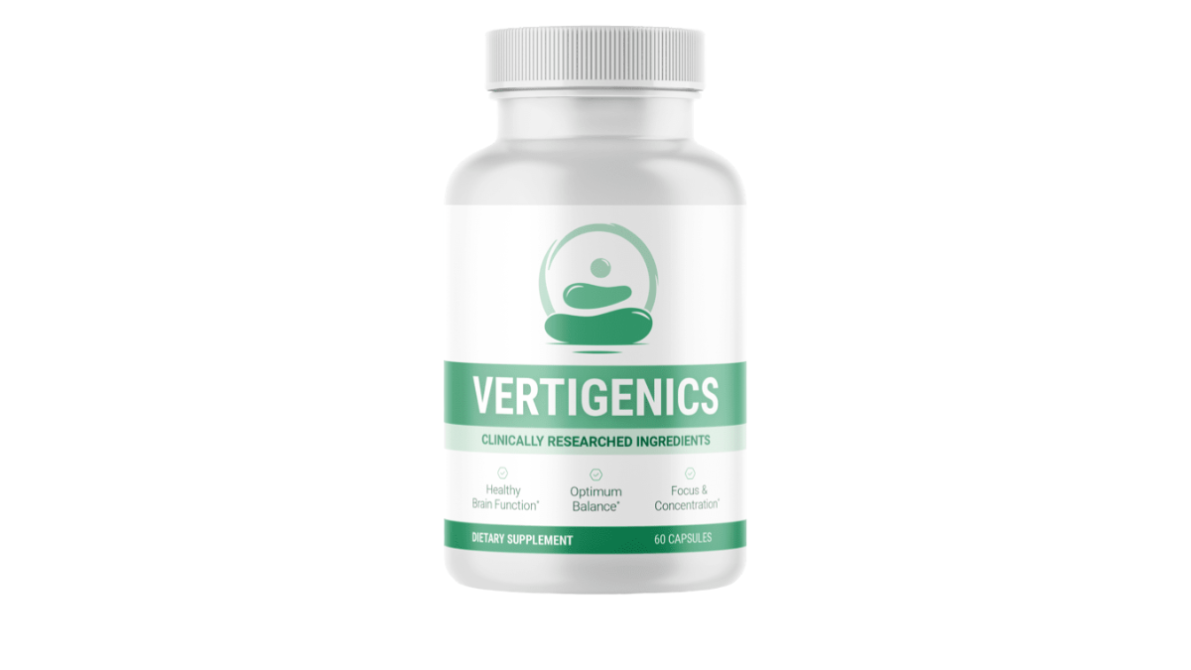
Quick note on how this page works: there is no affiliate link in this review, and the “Where to Buy” section explains exactly why we decided not to add one. When we do link a product, we may earn a commission at no cost to you. Here we didn’t, and that was a deliberate call based on what we found.
These statements have not been evaluated by the Food and Drug Administration. This product is not intended to diagnose, treat, cure, or prevent any disease. Vertigo and dizziness can be symptoms of serious medical conditions – a supplement is not a treatment for any of them, and nothing here replaces an evaluation by your own clinician.
New to this category? Our guide to hearing and vision supplements breaks down how these balance and inner-ear products actually differ, and which claims hold up under a label check. This Vertigenics review is a hard case study in why that check matters.
Vertigenics Review: The One-Sentence Answer
Here’s the honest bottom line of this Vertigenics review: we can’t tell you what’s in the bottle, because Vertigenics doesn’t have one formula – it has at least six “official” websites listing substantially different ingredient lists under the same name.
One page sells a ginkgo-and-B12 circulation blend; another sells a berberine-chromium blood-sugar formula; a third even carries leftover copy calling it a joint-health product. When the ingredient list changes depending on which “official” tab you open, there’s no single accountable product to review, recommend, or link. That absence isn’t a detail – it’s the finding.
Read this part first, because in this category it matters more than any ingredient: sudden hearing loss in one ear, sudden vision loss or a “curtain” across your sight, or vertigo paired with slurred speech, facial droop, weakness, or a severe headache is a medical emergency. Get help now – do not reach for a capsule. Balance problems can be the body’s warning signal, and a supplement bought instead of a workup can cost you the window when treatment actually works.
The Real Problem This Vertigenics Review Found: One Name, Six Formulas
Most supplement reviews start with the formula. This one can’t, because there isn’t a stable one. Searching the “official” Vertigenics pages returns a cluster of look-alike sites that disagree with each other on the most basic fact – what’s actually inside:
- One “official” site lists Ginkgo Biloba, Korean Ginseng, Green Tea, Zinc, Magnesium, Chromium, Resveratrol, Alpha Lipoic Acid, Berberine HCL and Milk Thistle.
- Another names ten ingredients including cayenne fruit and banana leaf.
- A third describes a short list of L-arginine, Ginkgo, Vitamin E and B-vitamins.
- Third-party coverage adds still more: some name Vinpocetine and GABA, others Lemon Balm and a B-vitamin complex, others Ginger Root – ingredients that don’t appear on the pages above at all.
- At least one page carries template contamination – leftover sales copy describing the product as “designed to support joint health,” which has nothing to do with balance or the inner ear.
That’s not a formula with minor version differences. That’s several unrelated products wearing one name. When five or more “official” domains present conflicting ingredient claims, it’s a textbook signal of a marketing network with no central quality control – and it makes every downstream question (“does the dose work?”, “is it safe with my meds?”) impossible to answer honestly, because you don’t know which bottle you’ll receive.
Why We Couldn’t Confirm Which Version You’d Actually Get
The natural next step would be to follow the specific purchase link to its destination and pin down that one formula. We tried – and that’s where the second red flag sits. The purchase links for this offer route through a third-party affiliate tracker (a clickrtrckr redirect) rather than landing directly on a single, named manufacturer page.
That’s the same style of routing we’ve flagged before on unrelated offers in the same operator family. The practical result for a buyer: the formula you receive is decided by wherever that redirect points on the day you click – which may not match whichever “official” page convinced you to buy.
You can’t verify, before paying, that the bottle shipped is the bottle described. For a product sold against a neurological symptom, “you can’t verify it before you buy it” is the whole story.
When Dizziness Is an Emergency, Not a Supplement Aisle Problem
This belongs high up, not buried at the end. Vertigenics is marketed straight at people with vertigo and chronic dizziness – the exact audience most at risk if a supplement pitch delays real care. Most dizziness is benign, but some of it is the first sign of something that needs treatment within hours. Seek emergency care – not a capsule – if dizziness or vertigo comes with any of these:
- Sudden weakness or numbness on one side of the face, arm, or leg
- Slurred speech, confusion, or trouble understanding others
- Sudden severe headache unlike any before, or sudden trouble walking
- Sudden hearing loss in one ear, or new ringing with hearing change
- Sudden vision loss, double vision, or a “curtain” over part of your sight
Those are warning signs of stroke and inner-ear emergencies, and with stroke the treatment window is short. Even when vertigo is recurrent rather than sudden, the right first move is a diagnosis – conditions like BPPV, vestibular migraine, Meniere’s disease, and blood-pressure or blood-sugar swings all cause dizziness and all need different management. A capsule bought instead of that workup can mask the real cause while it stays untreated. The takeaway of this Vertigenics review is simple: when a product can’t be identified, it can’t be recommended.
Can an Oral Capsule Reach the Inner Ear?
Before grading any ingredient, we ask whether the delivery route can physically reach the target. Here the answer is more favorable than in some products we’ve reviewed: unlike a tooth or a nail, the inner ear does have a blood supply, and several of the recurring ingredients (ginkgo, resveratrol) are pitched precisely on improving microcirculation to those tiny vessels. So an oral capsule reaching the cochlea and vestibular system through the bloodstream is at least physiologically plausible – this isn’t an anatomically hopeless route.
“Plausible,” though, is not “proven,” and it’s not “at the dose in this bottle.” A compound that helps circulation in a trial only helps if it’s present at a comparable amount – and since none of the Vertigenics pages disclose per-ingredient milligrams (several describe a proprietary blend), you can’t check that. The route is fine. The verification isn’t there.
Ginkgo Biloba: The Best-Studied Ingredient, and the Evidence Is Genuinely Split
Ginkgo is the one ingredient that appears on almost every version of the formula, so it deserves an honest grade. The rationale is real – ginkgo’s flavonoids and terpenes are thought to improve microcirculation and reduce oxidative stress in the inner ear. And there is supportive data: a 2026 systematic review and meta-analysis of nine randomized trials found ginkgo significantly reduced dizziness and vertigo severity in central neurological conditions.
But the picture is contradictory, and honesty requires saying so. A Cochrane review on ginkgo for tinnitus found no strong evidence of benefit when tinnitus is the main complaint, and an earlier 2021 literature review of 17 RCTs concluded the evidence is “limited and contradictory.”
Crucially, nearly all of that research uses a standardized extract called EGb 761 (about 24% flavone glycosides, 6% terpene lactones) at defined doses – a random ginkgo of unstated standardization may not behave the same way, and Vertigenics doesn’t state its standardization anywhere. Evidence grade: moderate but mixed – and only for the standardized form at the studied dose, neither of which this label confirms.
Alpha Lipoic Acid and the Blood-Sugar Ingredients: Real, but for a Different Target
Alpha lipoic acid (ALA) shows up on most versions too, and it has legitimate science – as an antioxidant it’s well supported, with the strongest human evidence in diabetic nerve health, not vertigo specifically. There’s a plausible bridge: a small body of ENT research has tested antioxidants alongside vitamin D for recurrent BPPV, including a 2022 trial on vitamin D plus antioxidant supplementation. But that’s preliminary and specific to one vertigo subtype.
The berberine-and-chromium “blood sugar” angle on some versions is the oddest fit: it’s real metabolic science borrowed from the diabetes aisle, plausibly relevant only if your dizziness is driven by blood-sugar swings – which is a diagnosis, not an assumption. Evidence grade: preliminary for balance; the ingredients are real, the vertigo connection is thin.
What Real Users Are Saying
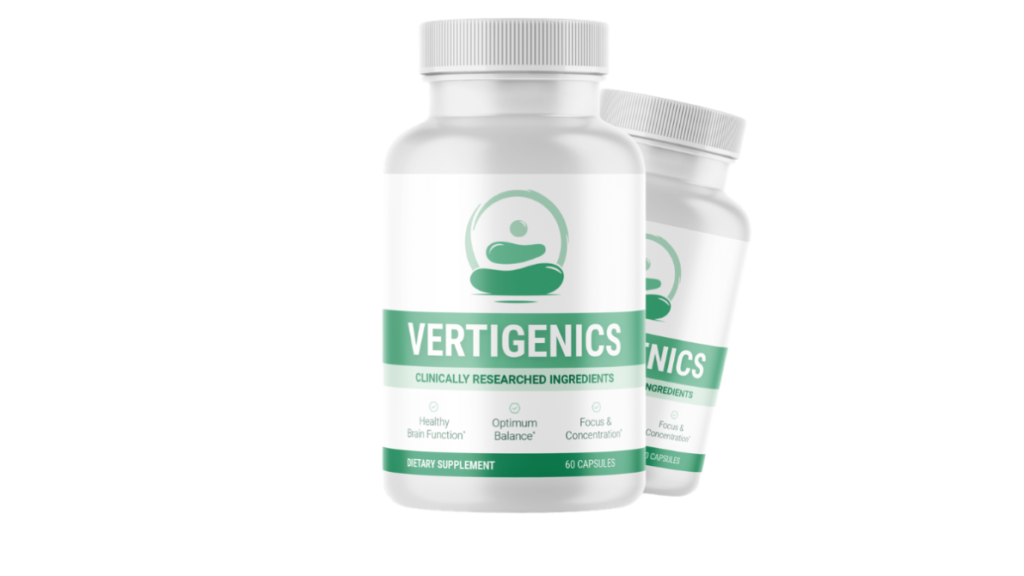
Setting aside the sellers’ own five-star walls – which, given the “12,000+ reviews / 4.9 stars” boilerplate copied across several of the conflicting domains, can’t be treated as independent evidence – the traceable feedback is genuinely mixed. Aggregating third-party reviews and forum threads, some users with mild, occasional unsteadiness report feeling a bit steadier after several weeks; a comparable share report no change.
Two themes recur in the more skeptical coverage: the “dioxins in your brain” origin story used in the sales videos has no scientific basis, and buyers are frequently confused about which site is the real one – the same identity problem, seen from the customer’s side. Treat any glowing on-site testimonial here with extra suspicion.
Red Flags We Found
We list product red flags plainly because it’s what protects readers and holds up legally. Vertigenics carries an unusually heavy set:
- Extreme multi-domain conflict: six-plus “official” sites with substantially different ingredient lists under one name – the most divergent case we’ve documented.
- Template contamination: at least one page still reads “designed to support joint health,” a leftover from a recycled sales funnel built for a different product.
- Tracker-routed checkout: purchase links run through a third-party redirect rather than one named manufacturer page, so the shipped formula can’t be confirmed before buying.
- Pseudo-scientific origin story: the “toxic dioxins in the brain cause vertigo” theory used to sell the product is not supported by medical evidence.
- Copied social proof: identical review counts and star ratings appear across the conflicting domains, a sign the “proof” is boilerplate, not real buyer data.
- No identifiable formulator: no consistent “About Us,” named formulator, or single corporate identity across the network.
Medication Interactions & Safety
Even setting the identity problem aside, the ingredients that recur across versions carry real interaction cautions – and because the doses aren’t disclosed and the formula shifts by domain, you can’t actually tell a pharmacist what you’re taking, which is its own safety problem. Ginkgo has a blood-thinning effect and can raise bleeding risk with warfarin, aspirin, or before surgery.
Berberine and chromium can lower blood sugar and may compound diabetes medication or insulin. Some versions list ingredients (like vinpocetine) not recommended in pregnancy. If you’re pregnant, nursing, on blood thinners or diabetes medication, or scheduled for surgery, clear any of these with a clinician first. None of this makes the herbs inherently dangerous; the disclosure gap makes them impossible to fully vet.
Who Should Skip This One
Skip Vertigenics, or talk to a doctor before considering anything like it, if you’re pregnant or nursing, on warfarin or a diabetes medication, facing surgery, or – most importantly – if your dizziness is new, severe, one-sided, or paired with any of the emergency signs above.
And if verifiability matters to you at all – being able to photograph a single, stable Supplement Facts panel and hand it to a pharmacist – this product can’t currently give you that, which makes it the wrong pick regardless of price.
Where to Buy – and Why We’re Not Linking It
To sum up this Vertigenics review, we normally point readers to a single verified official source. We’re not doing that here, and the reason is the review itself, not a preference. Vertigenics fails the most basic bar we’d need to send anyone to checkout: there is no single “official” product to link. The ingredient list changes across at least six “official” domains, one page still describes a joint-health product, the checkout routes through a third-party redirect that decides which version ships, and no consistent manufacturer stands behind any of it.
Any two of those would give us pause; together they’re disqualifying. So there’s no buy button on this page, and this product won’t appear in our store either. If the brand ever consolidates to one identifiable maker with one disclosed formula and a direct checkout, we’ll gladly take another look. Until then, the most useful thing we can offer isn’t a link – it’s the warning.
Frequently Asked Questions
Is Vertigenics a scam?
Some of the individual ingredients (ginkgo, alpha lipoic acid) are real and have legitimate research. But the marketing shows several deception signals – at least six “official” sites with conflicting formulas, leftover “joint health” copy on one page, copied review counts, and a purchase path that routes through a redirect so you can’t confirm which version ships. Even if a bottle contains useful ingredients, you can’t verify what you’re buying, which is why we won’t recommend it.
What are the actual ingredients in Vertigenics?
That’s the core problem – it depends on which “official” site you land on. One lists ginkgo, ginseng, green tea, zinc, magnesium, chromium, resveratrol, ALA, berberine and milk thistle; others swap in cayenne, banana leaf, L-arginine, vinpocetine, GABA or ginger. Because the lists don’t agree and no page discloses per-ingredient doses, there’s no single verifiable formula.
Does ginkgo biloba actually help vertigo?
The evidence is genuinely mixed. A 2026 meta-analysis found standardized ginkgo (EGb 761) reduced dizziness in central neurological conditions, while Cochrane found no strong benefit for tinnitus as a primary complaint. Any benefit is tied to the standardized extract at a studied dose – neither of which Vertigenics confirms on its label
Can Vertigenics treat or cure vertigo?
No. No supplement treats or cures vertigo, and the “toxic dioxins” theory used to sell this one has no scientific basis. Vertigo can signal conditions ranging from benign positional vertigo to stroke, so the right first step is a diagnosis – not a capsule bought from a page you can’t verify.

Raphael Albert is the founder and content creator of Nutra Pulse. Passionate about health, nutrition, fitness, and wellness, he spends his time researching scientific studies, health trends, and evidence-based lifestyle strategies to create informative and easy-to-understand content. While he is not a doctor or licensed healthcare professional, his goal is to help readers make more informed wellness decisions. All content is for educational purposes only and should not replace professional medical advice. Always consult a qualified healthcare provider regarding your health concerns.