
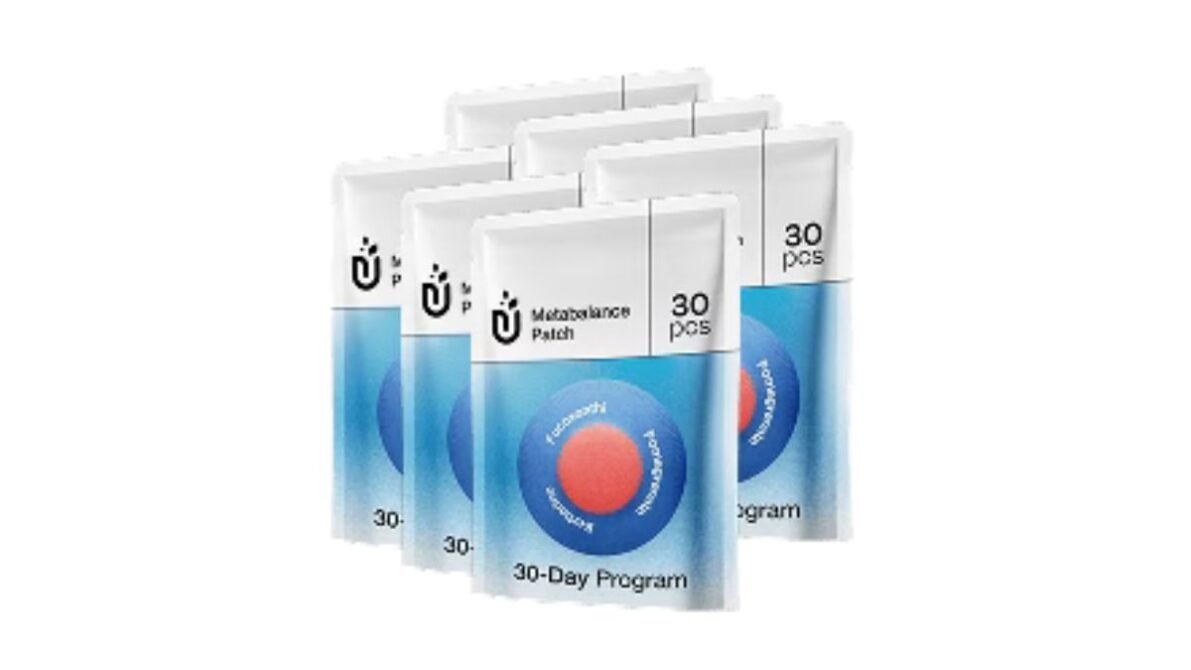
Housekeeping: two links below go to the seller and pay this site a commission. The section on subscription billing is the one I’d most want you to read before clicking either, which should tell you how much the commission shaped this.
These statements have not been evaluated by the Food and Drug Administration. This product is not intended to diagnose, treat, cure, or prevent any disease. Berberine affects blood glucose and interacts with a number of prescription drugs — if you take medication for diabetes, or a statin, immunosuppressant, or blood thinner, speak to a pharmacist before using any berberine product, patch included.
Almost every review of this product asks the same question: does berberine work?
It’s the wrong question, and asking it is how a reader ends up buying something that can’t do what it says. Berberine does work, orally, for certain things, modestly. That’s well established and I’ll go through it below.
But Purisaki isn’t a capsule. It’s an adhesive patch you stick on your arm for eight hours. So the question that decides everything is a different one — can berberine get through skin? — and the answer isn’t a matter of opinion or trial quality. It’s determined by a fixed property of the molecule, one you can look up in any pharmacology reference.
Berberine carries a permanent positive electrical charge. Skin is built to block exactly that.
That’s the finding this Purisaki Berberine review turns on, and everything else — the dose, the claims, the billing — follows from it.
What Purisaki Actually Is
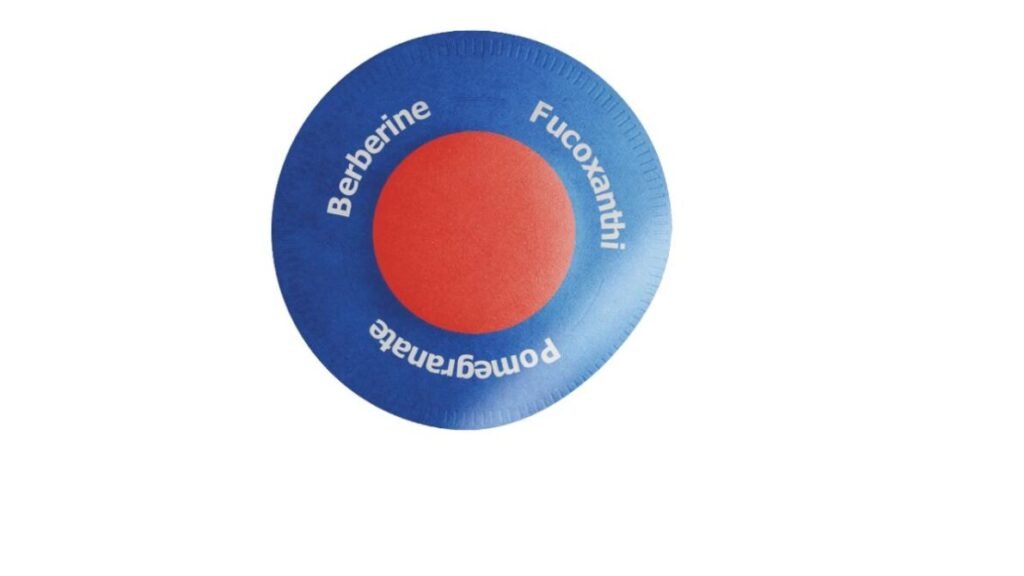
A transdermal patch, applied to clean, dry, hair-free skin and worn for eight hours, sold through the official Purisaki site with ClickBank as the retailer of record.
Four ingredients are named: berberine extract, fucoxanthin from seaweed, pomegranate oil supplying punicic acid, and green tea extract. The page then adds “+9 more natural ingredients” including African mango, vitamin C, B1 and B3 — which are named in passing rather than listed properly.
No amount is published for anything. Not a milligram figure, not a percentage, not a total. For a patch this matters more than for a capsule, because transdermal delivery is entirely dose- and concentration-dependent: how much crosses depends on how much is pressed against the skin and for how long.
The marketing frame is worth noting too. The headline promises “Lose 12+ lbs per Month Easily” — an explicit, quantified weight-loss claim — and the page is aimed squarely at women, with a section headed “15,000+ Women Felt a Change In 1 Week.”
The Charge Problem
Here’s the chemistry, explained plainly, because it’s genuinely useful knowledge for every patch product you’ll ever see advertised.
Your skin’s outer layer, the stratum corneum, is a lipid barrier — essentially a wall of fats. Its job is keeping things out. Substances that cross it passively share a specific profile: small, fat-soluble, and potent at tiny doses. That’s why the drugs that work as patches are what they are — nicotine, nitroglycerin, fentanyl, oestradiol, scopolamine. Small, greasy, and effective in milligrams or micrograms.
Berberine is the opposite of greasy. It’s a quaternary ammonium salt, and its poor solubility together with an oral bioavailability under 1% has been the central obstacle to developing it as a drug. The permanent positive charge means it’s hydrophilic — it doesn’t partition into fats. A lipid barrier repels it.
It’s worth being precise rather than sweeping. At 336 daltons, berberine is technically under the 500-dalton threshold often cited as a rough ceiling for passive skin penetration. So size isn’t the barrier. Charge is. Molecular weight is one factor among several, and berberine fails on the ones that matter more — solubility and partition coefficient.
This is also why oral berberine is such a pharmacological headache. Human studies report that 5% or less of an oral dose reaches systemic circulation, with animal work putting absolute bioavailability between 0.36% and 0.68%. An entire research field exists around fixing this — liposomes, phytosomes, P-glycoprotein inhibitors, lipid carriers — because the compound’s low oral bioavailability limits its clinical use.
If getting berberine across the gut wall is hard enough to sustain a research programme, getting it across skin without pharmaceutical penetration enhancers is a considerably taller order.
And on that specific question: there are no published, peer-reviewed randomised trials demonstrating that berberine patches achieve meaningful systemic absorption in humans. None on Purisaki, none on the format.
What Oral Berberine Does, and at What Dose
I want to give berberine its due, because it isn’t a junk ingredient. Taken by mouth, at proper doses, it has real evidence.
A meta-analysis of randomised placebo-controlled trials found berberine significantly reduced triglycerides, fasting plasma glucose and waist circumference, along with LDL and total cholesterol. That’s a genuine result across genuine endpoints, and it’s why berberine has the reputation it has.
Two things temper it. First, the weight effect specifically is weaker than the metabolic one — a meta-analysis of nine trials in 547 patients with type 2 diabetes found berberine-family preparations lowered fasting glucose and HbA1c but produced no significant change in weight or BMI. Berberine is a glucose-and-lipid compound with modest anthropometric effects, not a fat burner.
Second, and decisively for this product: the doses. Berberine trials overwhelmingly use 500 mg two or three times daily — 900 to 1,500 mg per day, taken orally, for months.
Consumer berberine patches typically carry something in the order of 8 to 9 milligrams per patch. Purisaki doesn’t publish its figure, so I can’t tell you its number specifically. But the gap between what patches in this category hold and what the trials used is roughly a hundredfold — before you account for the fact that only a fraction of what’s in a patch crosses the skin at all.
“12+ lbs a Month” Against the Arithmetic
Put the two halves together and the headline claim becomes hard to sustain.
Oral berberine — at a hundred times the dose a patch can hold, entering the bloodstream through a route that demonstrably works — produces modest weight effects, with pooled analyses showing no significant change in body weight or BMI in one substantial review.
The patch promises more than twelve pounds a month.
For context, twelve pounds a month sustained is a rate that exceeds what most supervised medical weight-management programmes target, and approaches what prescription treatment achieves. A patch delivering an unstated fraction of a compound that struggles to cross skin is not producing that.
What can happen — and this is the honest, non-cynical part — is that someone starts using a patch, feels they’ve taken action, becomes more conscious of what they eat, and loses weight. That’s real, it’s common, and it’s worth something. It just isn’t the patch doing the pharmacology.
The Closest Study to Supporting This Undercuts It
There is one line of research often cited in support of transdermal berberine, and it’s worth understanding properly because it points the other way.
In 2018, researchers tested transdermal formulations of berberine and of dihydroberberine — a chemically modified precursor — in a pharmaceutical-grade compounding cream designed for transdermal delivery, in rats. The dihydroberberine formulation produced meaningfully higher circulating berberine than the transdermal berberine formulation.
Read what that means. Even with a purpose-built pharmaceutical base and penetration enhancers, in rat skin, plain berberine performed worse than its modified precursor — which the researchers interpreted as berberine’s own chemical properties limiting direct transdermal absorption.
So the study people reach for as evidence that berberine can go through skin is, in substance, evidence that berberine specifically struggles to. And it used a compounding cream, not an adhesive patch, in an animal model.
Eight Hours or Twenty-Four? The Page Says Both
A smaller thing, but it’s checkable in thirty seconds and it tells you something about the care behind the copy.
The FAQ states the patches deliver ingredients through your skin over a 24-hour period. The application instructions on the same page say to remove the patch after 8 hours. The feature list says “gentle, steady 8-hour release.”
Those can’t all describe the same product. It’s not a safety issue, and it may well be leftover copy from a different version. But when a page can’t keep its own wear time consistent, it’s a reasonable prompt to check everything else it says.
What I Liked
ClickBank is the retailer of record. This matters practically. A refund administered by an established payment platform rather than by the vendor’s own returns desk is materially easier to enforce, and the footer states plainly that ClickBank’s role isn’t an endorsement of the claims.
There is a real third-party review presence. Unlike most products in this series, Purisaki has an actual Trustpilot page with thousands of reviews and a rating in the low fours. You can read what real buyers say, including the critical ones. That’s genuinely useful and rare here.
Real company infrastructure. Named corporate entity, customer service phone numbers for the US, UK and Germany, a support portal, published returns and privacy policies. That’s more accountability than most of this category offers.
The format solves a real problem for some people. Oral berberine commonly causes GI upset — cramping, diarrhoea, nausea. Someone who tried capsules and couldn’t tolerate them has a legitimate reason to be curious about a patch. The curiosity is reasonable even if the pharmacology doesn’t cooperate.
Non-stimulant. No caffeine or synephrine stacked on top, which is a restraint several competitors don’t show.
The FDA disclaimer is present and correctly worded, along with advice to consult a doctor if pregnant, nursing, or on medication.
Things to Consider
Berberine’s permanent positive charge is the property skin is built to exclude.
No published human trial on berberine patches, from any brand.
No dose disclosed for any ingredient — and for a patch, concentration is the mechanism.
Oral trials use 900–1,500 mg daily; patches in this category hold single-digit milligrams.
“Lose 12+ lbs per Month” is a quantified claim that oral berberine at full dose doesn’t produce.
Nine of the thirteen ingredients are named only in passing.
Wear time is given as both 8 and 24 hours on the same page.
The default purchase is a subscription — see the next section.
“8,658+ Reviews” on the page doesn’t match the count on the third-party platform it appears to reference.
The Subscription Is the Real Complaint
If you take one practical thing from this article, take this one — it’s the issue most likely to actually cost you money.
The pricing blocks are headed “Subscribe & Save” and describe patches being “auto-delivered to your doorstep.” This is a recurring billing arrangement by default, not a one-time purchase.
And the most consistent theme in third-party feedback about this brand isn’t the product — it’s the billing. Reports on review platforms describe customers finding themselves enrolled in a subscription they didn’t realise they’d chosen, difficulty cancelling, slow refund processing, and unclear billing terms. Independent coverage of the brand identifies customer service and post-purchase experience as the area where it falls furthest short.
There’s a second detail worth knowing: returns require advance authorisation — an RMA number — before you ship anything back. Send a package without it and you may have no claim. Return shipping is your cost, and original shipping isn’t refunded.
So if you order:
Read the checkout page line by line and confirm whether you’re buying once or subscribing.
Screenshot the checkout, including price and terms, on the day you pay.
Request the RMA first if you want to return, and get it in writing.
Diarise a reminder well before the refund window closes, not on the last day.
Who Should Be Careful
Anyone taking diabetes medication. Berberine lowers blood glucose. Even if patch absorption is minimal, that’s a conversation with your prescriber rather than an assumption — and if it does absorb, it stacks with metformin, a sulfonylurea, or insulin.
Anyone pregnant or breastfeeding. Berberine is contraindicated: it crosses the placenta and can displace bilirubin, carrying a kernicterus risk in newborns. This is a firm no regardless of route.
Anyone taking statins, immunosuppressants, digoxin, or anticoagulants. Berberine inhibits CYP3A4 and P-glycoprotein, the enzyme and transporter handling a large share of prescription drugs.
Anyone with sensitive skin or adhesive allergies. Skin irritation at the application site is the most commonly reported physical complaint with patches of this kind. Patch-test a small area for 24 hours first, and rotate application sites daily.
Anyone with liver disease — the green tea extract content warrants a mention, though transdermal exposure is likely far lower than oral.
And the general one: unexplained weight change, persistent fatigue, or new symptoms alongside difficulty losing weight deserve a proper look. Thyroid dysfunction, medication effects and sleep apnoea all present that way and are all treatable.
Price, Refunds, and Reviews That Actually Exist
Pricing runs on a tiered subscription model — roughly $35 per pack on the two-month option down to about $16 per pack on the six-month bundle, with totals struck through against reference prices. Current terms are on the Purisaki site.
The refund window is 60 days, with the RMA requirement and shipping conditions described above.
On reviews, this product is a genuine exception in this category and I’ll give it the credit it’s due: a real Trustpilot presence exists, with thousands of ratings averaging in the low fours. Read it — and read the one- and two-star reviews specifically, because that’s where the billing complaints live and that’s the risk this article is flagging.
One discrepancy worth noting: the review count displayed on the sales page is substantially higher than what the third-party platform shows. Aggregating across sources is a legitimate practice, but the number on the page isn’t the number on the platform.
Final Verdict
Purisaki is a real product from a real company with a real refund path, built around an ingredient that has genuine evidence — delivered by a route that ingredient is chemically poorly suited to.
That’s the whole review. Berberine works orally, at 900 to 1,500 mg daily, for glucose and lipids, with modest effects on weight. Purisaki delivers an undisclosed and almost certainly single-digit-milligram amount through skin, across a lipid barrier that repels positively charged molecules, with no human trial demonstrating it gets through. The headline promises twelve pounds a month.
Who might reasonably try it: someone who wanted oral berberine specifically for its metabolic effects, couldn’t tolerate the capsules, isn’t on interacting medication, isn’t pregnant, and wants to test a patch understanding that the evidence for absorption doesn’t currently exist. If that’s you, buy the smallest option, confirm it isn’t a subscription, and judge inside the refund window.
Who should skip it: anyone buying on the twelve-pounds-a-month promise, anyone taking diabetes or heart medication without checking first, and anyone who’d struggle to spot and cancel a recurring charge.
If berberine is what you actually want: buy it orally, from a brand that prints the milligrams, at 500 mg two or three times daily with meals, having cleared it with a pharmacist. It costs less than the patches, it’s the form every trial used, and you’ll know what you’re taking. Be aware that GI upset is common — which is, ironically, the honest reason the patch category exists.
And the part that outperforms both: for metabolic health, a sustainable calorie deficit, protein and fibre high enough to manage hunger, resistance training to preserve muscle, and adequate sleep have effect sizes nothing in this aisle approaches.
If you’re comparing products in this space, our GlucoBerry review covers another metabolic supplement where the same lesson applies from a different angle — there, the research described the right compound acting on the wrong organ; here, it’s the right compound taking the wrong route.
Frequently Asked Questions
Do berberine patches actually work?
There are no published, peer-reviewed human trials showing that berberine patches achieve meaningful absorption into the bloodstream. Berberine is a quaternary ammonium compound with a permanent positive charge, which makes it hydrophilic and poorly suited to crossing the skin’s lipid barrier. Oral berberine has dozens of trials behind it; the patch format has none.
How much berberine do the patches contain?
Purisaki doesn’t publish a figure for any ingredient. Consumer berberine patches generally contain single-digit milligrams, against the 900 to 1,500 mg daily used in oral trials — and that’s before accounting for how little of a patch’s contents crosses the skin.
Can I lose 12 pounds a month with these?
The evidence doesn’t support it. Oral berberine, at roughly a hundred times the dose a patch holds and by a route that demonstrably works, produces modest metabolic effects — and one meta-analysis found no significant change in body weight or BMI. Weight loss that does occur alongside a new routine usually reflects the dietary and activity changes people make when they start something new.
Is Purisaki a subscription?
The pricing options are presented as “Subscribe & Save” with auto-delivery, so read the checkout carefully before confirming. Mistaken subscription enrolment and difficulty cancelling are the most consistent complaints in third-party reviews of this brand. Screenshot your checkout page,and request a return authorisation number before shipping anything back.

Raphael Albert is the founder and content creator of Nutra Pulse. Passionate about health, nutrition, fitness, and wellness, he spends his time researching scientific studies, health trends, and evidence-based lifestyle strategies to create informative and easy-to-understand content. While he is not a doctor or licensed healthcare professional, his goal is to help readers make more informed wellness decisions. All content is for educational purposes only and should not replace professional medical advice. Always consult a qualified healthcare provider regarding your health concerns.

3 thoughts on “Purisaki Berberine Review: The Patch Problem Nobody Explains”