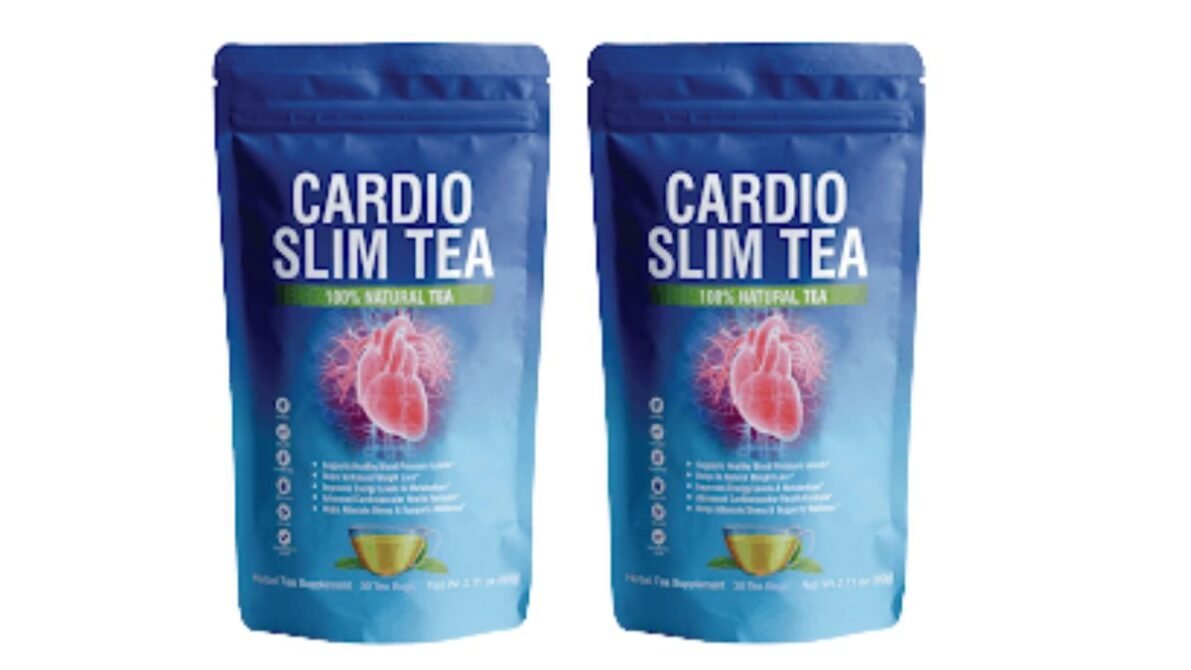
Disclosure: two links below go to the seller and pay this site a commission. This review recommends against buying, so you can judge for yourself what the commission bought.
These statements have not been evaluated by the Food and Drug Administration. This product is not intended to diagnose, treat, cure, or prevent any disease. Never reduce, delay, or stop blood pressure or diabetes medication because of a tea or supplement. High blood pressure usually has no symptoms and is the leading modifiable cause of stroke. If you want to change how yours is managed, that is a decision for you and your doctor, made with readings and bloodwork.
Most refund promises are dull boilerplate. This one isn’t, and it’s where this review has to start.
The Cardio Slim Tea guarantee tells you that if you aren’t astonished by how fast “your blood pressure normalizes at 120/80” — and by your fat melting away — you can have your money back within 60 days.
Sit with that. A refund promise is a commercial document, but this one contains a specific numerical medical claim: that a herbal tea will bring your blood pressure to a normal reading. That’s not a wellness statement about supporting healthy circulation. It’s a claim about treating hypertension, stated as a number.
High blood pressure is the leading modifiable cause of stroke worldwide. It usually has no symptoms. It is managed with medication that works, is inexpensive, and is monitored with a cuff. A person reading that guarantee, believing it, and easing off their tablets is the specific harm that makes this Cardio Slim Tea review the most cautious one I’ve written.
What follows is what’s actually in the box, what the research on its central mechanism actually found, and two safety issues nobody promoting this mentions.
Which Site Are You Actually On?
Before anything else, a practical problem that affects your money.
There are at least nine live web addresses presenting themselves as the home of this product. The affiliate link I followed landed on trycardioslimtea.com. That page’s own footer sends you to a different domain — trycardioslim.com — for the privacy policy, terms, refund policy and shipping policy. Product support goes to one address; order support goes to ClickBank.
Others in circulation include variants with and without hyphens, with regional prefixes, and at least one differing from another by a single letter.
Why this matters: the pages don’t say the same things. Discount figures differ between them, and the mechanism emphasised on one isn’t emphasised on another. Even within the single page I reviewed, the browser tab reads 66% off, the social preview reads 50% off, and the pricing block reads 70% off.
If you buy anything in this category, the practical protection is simple. Screenshot the page you actually purchased from, including the price and the guarantee wording, on the day you pay. If a dispute follows, the terms on some other domain aren’t the ones you agreed to.
What Cardio Slim Tea Is
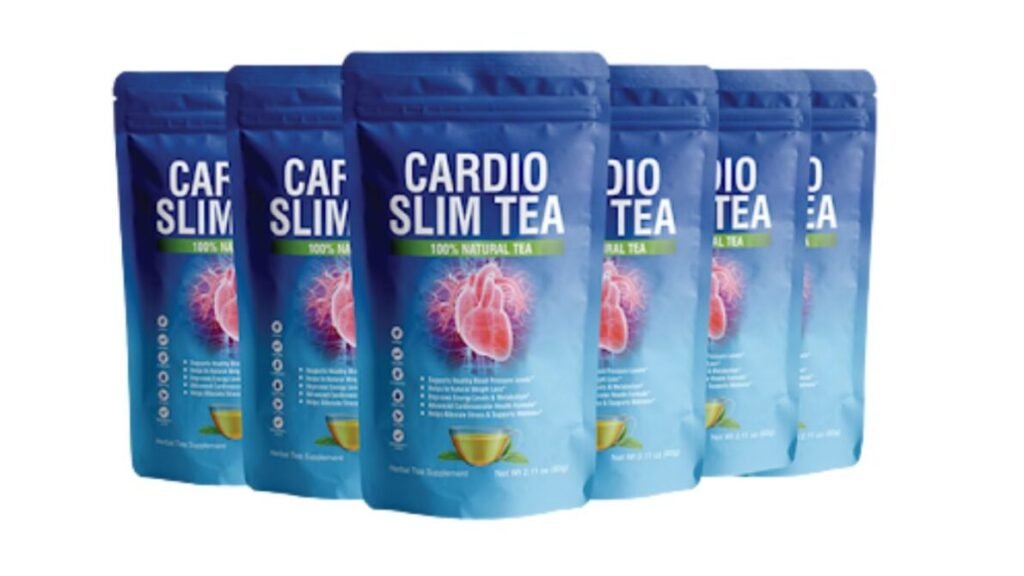
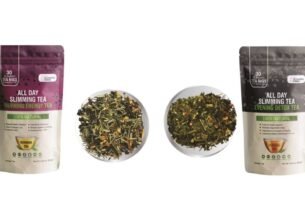
A tea, three to four cups daily, sold in two-, three-, and six-month supplies through the Cardio Slim Tea official website with ClickBank processing payment.
The pitch is cardiovascular support plus weight loss, and the stated mechanism is homocysteine: the page says the tea supports normal homocysteine levels in your blood, and that optimising homocysteine improves mood and energy as the pounds come off.
No amounts are published for any ingredient. That’s expected for a tea and less damning than for a capsule — you can’t meaningfully dose a tea bag to milligram precision, and nobody claims otherwise. But it does mean nothing in the formula can be compared against anything in the literature.
Two Ingredient Lists That Don’t Match
Here’s the strangest thing on the page, and it takes a minute to see.
The page presents its ingredients twice, in two separate sections, and the lists substantially disagree.
The first is headed as fifteen heart-supporting ingredients and names beetroot, decaffeinated green tea, hibiscus, ginger, oolong, chamomile, dandelion, hawthorn, lemongrass, TMG, grapeseed extract, ginseng, curcumin, cinnamon and monk fruit.
The second is headed as blood-pressure-stabilising ingredients and names gymnema sylvestre, triphala, bitter melon, white mulberry, cinnamon, turmeric, fenugreek, banaba, juniper, green tea, oolong, orange peel, lemongrass, ginger, dandelion, ginseng, garcinia cambogia, peppermint and monk fruit.
Nine items appear on both. Eighteen appear on only one. Beetroot, hibiscus, hawthorn, TMG and grapeseed — the ingredients a cardiologist would recognise as cardiovascular — are absent from the second list entirely. Gymnema, bitter melon, fenugreek, banaba, white mulberry and garcinia are absent from the first.
And now read what the second list actually says. Under a heading about blood pressure, every single description is about blood sugar: gymnema regenerating pancreatic beta cells, bitter melon acting as natural insulin, fenugreek reducing sugar absorption, banaba transporting sugar into cells, cinnamon significantly reducing blood sugar.
The most straightforward reading is that the second list was written for a different product — a blood sugar tea — and pasted in under a blood pressure heading. Whatever the explanation, you cannot tell from this page which ingredients are in the tea you’d receive.
The claims in that second list also go well beyond what’s established. Gymnema “regenerating insulin-producing beta cells” describes reversing the core pathology of type 2 diabetes; that hasn’t been demonstrated in humans.
The Homocysteine Argument Was Tested in 37,485 People
This is the intellectual centre of the product, and it deserves a proper answer rather than a dismissal.
Homocysteine is real. It’s an amino acid, and elevated levels have been repeatedly associated with cardiovascular disease in observational studies. TMG — trimethylglycine, on the first ingredient list — genuinely does lower homocysteine, as do folate and B12. That part isn’t invented.
The question is whether lowering it helps, and that question has been answered about as thoroughly as medicine ever answers anything.
A meta-analysis pooling individual participant data from eight large randomised placebo-controlled trials, covering 37,485 people at increased cardiovascular risk, found that treatment reduced homocysteine by about 25% — and produced no significant effect on major vascular events, major coronary events, or stroke over a median five years. The rate ratio for major vascular events was 1.01. No benefit in any subgroup, and none on vascular mortality.
The individual landmark trials tell the same story. HOPE-2 randomised 5,522 high-risk patients and found homocysteine lowering did not reduce death from cardiovascular causes, heart attack, or stroke. NORVIT, in patients after a heart attack, found no cardiovascular benefit — and its authors noted a signal suggesting possible harm.
To be fair and complete: this isn’t a total null across all of medicine. Some analyses in stroke populations suggest modest benefit, and separate research found B vitamins slowed brain atrophy in people with mild cognitive impairment and elevated homocysteine. Homocysteine isn’t a meaningless number.
But the specific proposition this product is built on — lower homocysteine, improve your cardiovascular health — was tested directly, at scale, with proper randomisation, and the homocysteine came down while the heart attacks and strokes did not.
That’s the answer. It’s not a matter of opinion or of the tea being too weak. The hypothesis itself didn’t hold.
What the Reference List Actually Establishes
Twenty-six references sit at the foot of the page, and they’re worth reading because of what they are.
They point to the American Heart Association on how high blood pressure leads to heart attack and to heart failure. To the CDC’s hypertension facts. To the World Health Organization’s hypertension fact sheet. To the NHS on high blood pressure. To Johns Hopkins on prevention and treatment. To Harvard Health on food and blood pressure. To MedlinePlus. Several links are repeated — one ScienceDaily release from the year 2000 appears four separate times.
Read the list and you’ll learn, from excellent sources, that hypertension is dangerous and deserves attention. You will not find a single study on Cardio Slim Tea, on this blend, or on most of the ingredients in either list.
The references establish the problem. They don’t touch the remedy. And the presence of AHA, CDC, WHO and NHS links beneath a product page creates an impression of institutional endorsement that none of those organisations has given.
One reference is genuinely odd in context: a ProPublica investigation into doctors prescribing more of a drug when they receive money from its manufacturer. In a page selling an alternative to medication, that citation isn’t evidence about the tea. It’s an argument about trusting your doctor less.
Garcinia Cambogia in a Six-Month Supply
The second ingredient list includes garcinia cambogia, and this is the safety finding I’d most want a reader to see before ordering.
Garcinia has a substantial liver injury literature. A 2025 review identified more than 200 adverse events of liver injury associated with garcinia consumption, and analysed 34 published case reports that included one death and nine liver transplants — with seventeen cases scoring from possible to highly probable on formal causality assessment, and one confirmed by rechallenge. The US Pharmacopeia revised its garcinia monographs to add a cautionary statement about potential liver damage.
The NIH’s LiverTox database maintains an entry documenting garcinia-associated liver injury, noting cases both in multi-ingredient products and in products labelled as garcinia alone. In 2009 the FDA recalled Hydroxycut products after 23 reports of liver damage including one death and one transplant; garcinia was among the ingredients.
Now the proportion, because this needs to be fair. These events are uncommon — LiverTox estimates fewer than one in ten thousand users. A tea bag contains far less than a concentrated extract capsule. Most people who consume garcinia have no liver problem at all.
But two details make me uncomfortable here. In the reviewed case series, the most common duration of use before patients presented was two to seven months — and this product is sold in two-, three-, and six-month supplies, with six pushed hardest. And it appears on a list whose own heading doesn’t match its contents, in a product filed under liver and weight support, with no amount stated.
If you have any liver condition, or take anything else hepatically active, this is a conversation with a pharmacist rather than a purchase.
If You Take Blood Pressure or Diabetes Medication
This is the practical safety core, and it follows directly from the ingredient lists.
Several ingredients lower blood pressure. Beetroot supplies dietary nitrates with a documented blood-pressure-lowering effect. Hibiscus has the same. Hawthorn has genuine cardiovascular pharmacology and documented interactions with digoxin, beta-blockers and nitrates. If you already take an antihypertensive, that’s additive — and blood pressure that drops too far causes dizziness, falls and fainting.
Several ingredients lower blood glucose. The second list contains gymnema, bitter melon, fenugreek, banaba, white mulberry and cinnamon. That’s six glucose-lowering botanicals in one product, marketed alongside claims about insulin. Stacked on metformin, a sulfonylurea, or insulin, the result is additive, and additive glucose lowering means hypoglycemia — shakiness, sweating, confusion, and in severe cases loss of consciousness.
Ginseng interacts with warfarin. Dandelion and juniper have diuretic effects that matter if you already take a diuretic.
Here’s what makes this different from most products I review. The people most likely to buy a tea that promises to normalise blood pressure are, by definition, people who have been told their blood pressure is high — which means many of them are already on medication. The product’s target buyer is precisely the person for whom these additive effects are most consequential.
And the line that matters most: do not reduce or stop antihypertensive medication because your readings improve while drinking a tea. If your numbers change, that’s a reason to show your doctor the log, not a reason to self-adjust. Hypertension has no symptoms until something happens.
What I Liked
It’s a tea, and tea is pleasant. Genuinely — a warm, caffeine-light drink taken three times a day is a decent habit, and hibiscus, ginger, chamomile and peppermint are lovely things to drink.
Some ingredients are legitimately cardiovascular. Beetroot and hibiscus have real blood-pressure literature behind them. Hawthorn has genuine pharmacology. Whoever assembled the first list knew what they were doing.
Decaffeinated green tea is a thoughtful choice in a product aimed at people with cardiovascular concerns, where a caffeine load would be the wrong move.
Refunds run through ClickBank. A guarantee administered by the payment processor is materially easier to enforce than one handled by a vendor’s own returns desk.
The footer carries the correct disclaimers, including advice to consult a doctor before starting or stopping any medication — which directly contradicts the sales copy above it, but it’s there.
Things to Consider
The guarantee makes a numerical blood pressure claim.
Two ingredient lists on one page, sharing nine items and differing on eighteen.
The second list’s descriptions are about blood sugar under a blood pressure heading.
“Regenerates insulin-producing beta cells” describes something not demonstrated in humans.
The homocysteine mechanism failed in 37,485 randomised participants.
Twenty-six references, none about the product — several repeated, one about physician prescribing behaviour.
Garcinia cambogia appears in a product sold in supplies matching the typical exposure window in reported liver injury cases.
“96,479+ reviews” with no source and no destination.
Three different discount figures on a single page’s own metadata.
At least nine domains presenting as official.
Where the Testimonial Photo Comes From
Four testimonials appear, each marked “Verified Purchase,” attributed to first names and US cities, and referencing blood pressure readings and doctors’ approval.
All four use the same avatar image file. Not four photographs of four people — one image URL, repeated. You can confirm it by right-clicking any two of the photographs and comparing the image addresses.
That same image file also appears on the sales page for an unrelated sleep supplement sold by what appears to be the same operation, where it likewise serves as the avatar for every testimonial.
The content is worth reading with that in mind, particularly the references to normalised blood pressure and physician approval. Those are health outcome claims attached to unverifiable identities.
Price, Guarantee, and What Independent Reviews Show
Two months runs $79 per box ($158), three months $69 each ($207), and six months $49 each ($294), with free shipping on the larger supplies and a 60-day guarantee. Current pricing is on the Cardio Slim Tea site.
The savings figures — up to $600 off, 70% off — are calculated against a reference price nobody appears to pay.
On independent feedback: none is available. Sold direct through ClickBank, no verified-purchase pool, and the search results are affiliate content spread across the same tangle of near-identical domains. Given what the on-page testimonials turn out to be, treat every account you encounter as unverified.
Final Verdict
I can’t construct a buyer for this one, and that’s a conclusion I’ve reached only twice in fifteen reviews.
The problem isn’t that the tea is unpleasant or that every ingredient is worthless. Hibiscus and beetroot have real blood pressure research. Tea is a fine habit. The problem is the gap between what’s in the box and what the page promises, and the specific direction that gap points.
The central mechanism — lower homocysteine, protect your heart — was tested in 37,485 randomised participants who achieved a 25% reduction in homocysteine and no reduction in heart attacks or strokes. The reference list establishes that hypertension is dangerous and says nothing about this product. Two ingredient lists contradict each other on eighteen items. And the guarantee promises a blood pressure number to people who, in many cases, are managing hypertension with medication that actually works.
Who should not buy this: anyone taking blood pressure medication, anyone taking diabetes medication, anyone with liver disease, anyone pregnant or breastfeeding, and anyone who would read that guarantee and think their prescription had become optional.
If you like the idea of a cardiovascular tea: hibiscus tea is sold in every supermarket, has its own blood pressure literature, costs a few dollars a box, and makes no promises. Drink it happily. It just won’t replace anything.
And what actually lowers blood pressure, with evidence no supplement approaches: reducing sodium, the DASH dietary pattern, regular aerobic activity, weight loss where relevant, limiting alcohol, and — when a doctor prescribes it — medication, taken consistently. Home monitoring with a validated cuff turns all of that from guesswork into something you can see working.
If you’re comparing products in this category, our CitrusBurn review covers another weight formula, and two questions from this article travel: do the cited references concern the product or merely the condition, and does the page contradict itself anywhere you can check?
Frequently Asked Questions
Does lowering homocysteine protect your heart?
On the best available evidence, no. A meta-analysis of eight randomised trials covering 37,485 people found that treatment lowered homocysteine by roughly 25% with no significant reduction in major vascular events, coronary events, or stroke over about five years. HOPE-2 and NORVIT reached the same conclusion independently. Homocysteine is associated with cardiovascular risk, but lowering it hasn’t translated into fewer events.
Can this tea replace my blood pressure medication?
No, and this is the most important sentence in the article. Never reduce, delay, or stop antihypertensive medication because of a tea or supplement. High blood pressure is usually symptomless and is the leading modifiable cause of stroke. If your readings improve, take the log to your doctor and let them decide whether anything changes.
Is it safe with diabetes medication?
Ask your prescriber before starting. One of the product’s two ingredient lists contains six botanicals with glucose-lowering effects — gymnema, bitter melon, fenugreek, banaba, white mulberry and cinnamon. Combined with metformin, a sulfonylurea, or insulin, that’s additive and raises hypoglycemia risk.
Which website is the real one?
The affiliate link I followed landed on one domain whose footer points to a second for its policies, and at least seven more present themselves as official. Whichever you use, screenshot the price and guarantee wording on the day you order, and get refund terms confirmed in writing before you send anything back.

Raphael Albert is the founder and content creator of Nutra Plus. Passionate about health, nutrition, fitness, and wellness, he spends his time researching scientific studies, health trends, and evidence-based lifestyle strategies to create informative and easy-to-understand content. While he is not a doctor or licensed healthcare professional, his goal is to help readers make more informed wellness decisions. All content is for educational purposes only and should not replace professional medical advice. Always consult a qualified healthcare provider regarding your health concerns.