Disclosure: This All Day Slimming Tea review contains two links to the seller, and this site may receive a commission if you purchase through them. This review recommends against the six-month package on safety grounds, which should tell you what the commission bought.
These statements have not been evaluated by the Food and Drug Administration. This product is not intended to diagnose, treat, cure, or prevent any disease. The evening blend contains a stimulant laxative that regulators consider appropriate for short-term use only. Laxatives are not a weight-management tool, and using them that way can cause real harm. If you’re struggling with weight or with your relationship to food, a doctor or dietitian is the right place to start.
In this All Day Slimming Tea review, the first thing worth checking is something you can see in one second, before reading a word of the sales copy.
Look at your browser tab. The page title reads: “All Slimming Herbs Homepage CLICKBANK $400 – 2 x $79 allslimtea.”
That’s not a product name. It’s an internal campaign label — a page identifier with a revenue target and a price point baked into it, left visible in the title tag. Somebody built a funnel, named the file after its commercial parameters, and never changed it.
It’s a small thing and it isn’t evidence of anything harmful. But it sets the frame accurately: what you’re looking at is a direct-response funnel first and a tea second. And that matters, because this All Day Slimming Tea review turns up something in the evening blend that deserves considerably more attention than the page gives it.
What All Day Slimming Tea Is
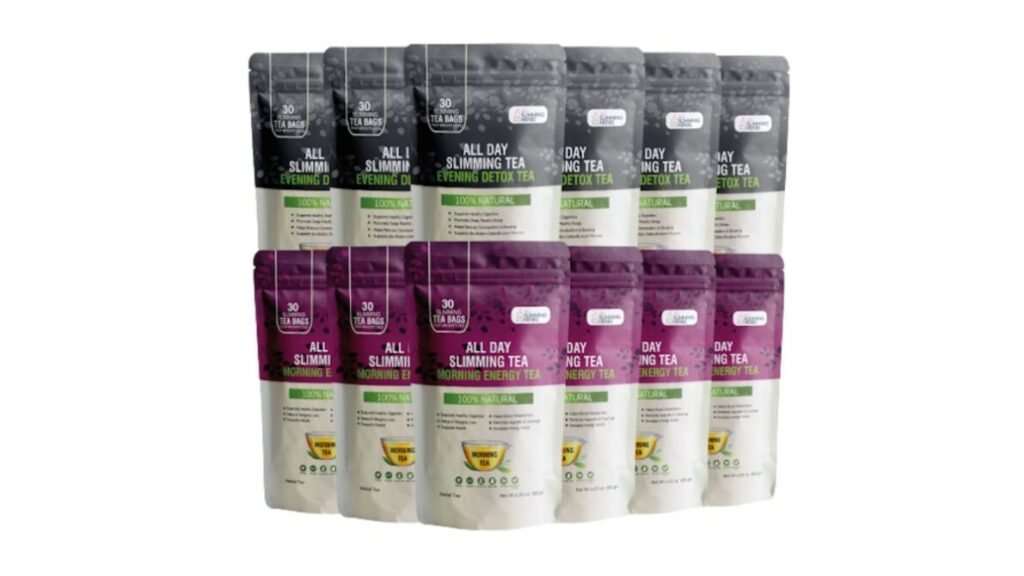
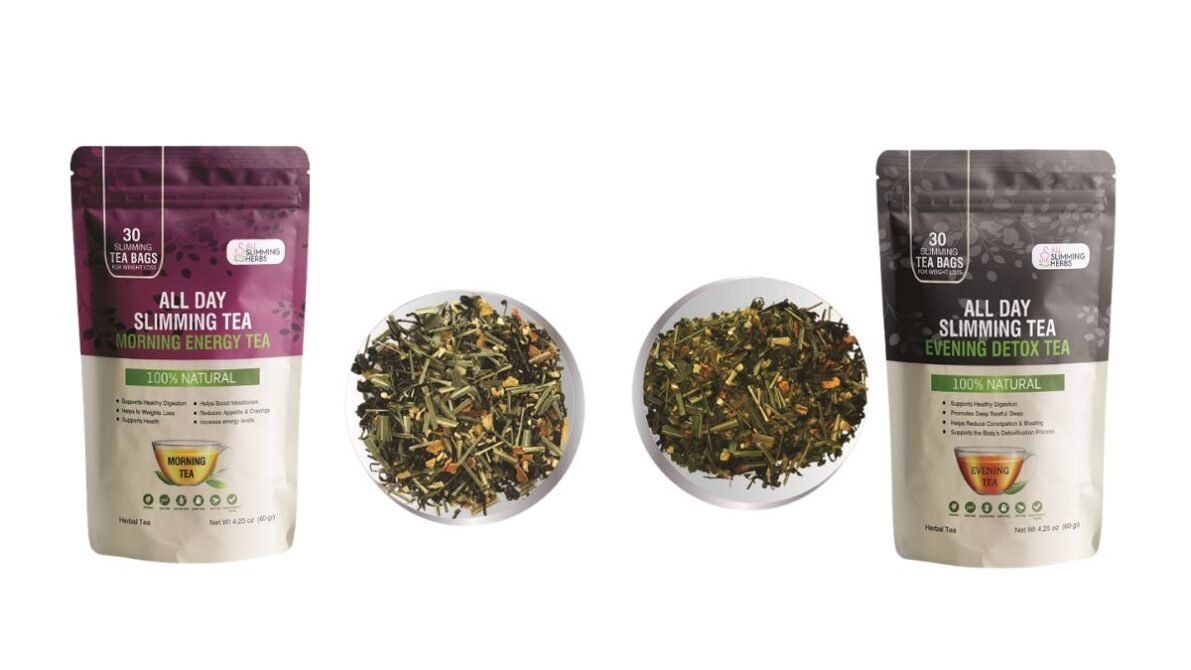
Two teas, sold together, through the All Day Slimming Tea official website with ClickBank processing payment, in two-, three-, and six-month supplies.
The framing is Costa Rica: the page attributes the recipe to the Nicoya peninsula, a genuinely documented longevity region, and says people there live to nearly 90.
The Morning Tea contains green tea, oolong, orange peel, lemongrass, ginger, dandelion leaf, ginseng root, garcinia cambogia, monk fruit, and natural mint and lemon flavour.
The Evening Tea contains senna leaves, licorice root, peppermint, fennel, orange peel, cinnamon bark, dandelion, lemongrass, ginger, monk fruit, and natural honey and lemon flavour.
No amounts are published. For a tea that’s less damning than for a capsule — you can’t dose a tea bag to the milligram. But three ingredients in that list have specific duration limits attached to them in the regulatory literature, and the product is sold in six-month quantities.
Let’s take them in order.
The Evening Tea Is a Stimulant Laxative
Senna is the first ingredient listed in the evening blend, and this is the section I’d want read before any purchase.
Senna isn’t a gentle herbal digestive. It’s an FDA-approved over-the-counter stimulant laxative — the active ingredient in Senokot and Ex-Lax. Its sennosides are converted by gut bacteria into compounds that irritate the bowel lining and force contraction. It works, reliably, in six to twelve hours.
The duration guidance is unambiguous and comes from multiple directions. Senna is considered likely safe for adults for up to one week, and possibly unsafe when used longer than one week or above 34.4 mg of sennosides twice daily — with long-term use associated with bowels ceasing to function normally, laxative dependence, and liver damage. The American Herbal Products Association specifically singles out senna leaf (senna fruit is considered gentler) and recommends that leaf products carry the label warning: not for long-term use.
Clinical summaries put it more starkly. Chronic use is strongly discouraged because of laxative dependence — sometimes called cathartic colon — significant electrolyte disturbances including hypokalemia, and, in rare instances, hepatotoxicity.
Now read the product’s own instruction. The FAQ says you’ll get results “by drinking the All Day Slimming Tea daily, ideally for 3 to 6 months,” and the six-month supply is the package pushed hardest on every pricing block.
Six months of daily senna leaf against a one-week ceiling is roughly twenty-four times the duration regulators consider appropriate. That isn’t a nuance or a matter of interpretation. It’s the central fact about this product.
And there’s a specific consumer harm worth naming plainly: laxative dependence means your bowel becomes less able to work without the stimulant. People who use laxatives daily for months often find that stopping is unpleasant and that normal function takes time to return. That’s a worse position than the one most buyers started in.
Licorice Is the Second Half of That Problem
The second ingredient in the evening blend compounds the first.
Licorice root contains glycyrrhizin, which blocks an enzyme that normally deactivates cortisol in the kidney. The result can be raised blood pressure and lowered potassium — a picture clinicians call pseudohyperaldosteronism. Published case reports include hospitalisations for severe hypokalemia.
Here’s why the combination matters. Stimulant laxatives deplete potassium. Licorice depletes potassium. Putting both in one nightly tea, taken for months, stacks two mechanisms that push the same electrolyte the same direction. Low potassium causes muscle weakness, cramping, and — at the more serious end — disturbances of heart rhythm.
If you take a diuretic, blood pressure medication, or digoxin, this pairing is a conversation with a pharmacist before you start, not after. Anyone with high blood pressure, heart failure, kidney disease, or a history of low potassium should treat this blend as one to avoid.
I’ll note the structural point too, because it’s a pattern rather than a coincidence: this is the second product in this category I’ve reviewed that pairs a stimulant laxative with whole licorice in a daily formula. It’s a combination that produces a fast, visible result on the scale and a slow, invisible cost in electrolytes.
Garcinia Cambogia in the Morning Tea
The morning blend contains garcinia cambogia, which carries its own literature.
A 2025 review identified more than 200 adverse events of liver injury associated with garcinia consumption and analysed 34 published case reports that included one death and nine liver transplants, seventeen of them scoring from possible to highly probable on formal causality assessment. The US Pharmacopeia revised its garcinia monographs to add a cautionary statement about potential liver damage. The NIH’s LiverTox database maintains an entry documenting the association.
Proportion matters, so let me be fair. These events are uncommon — LiverTox estimates fewer than one in ten thousand users — and a tea bag contains far less garcinia than a concentrated extract capsule. Most people who consume it have no liver problem whatsoever.
But one detail is hard to set aside. In the reviewed case series, the most common duration of use before patients presented was two to seven months. This product is sold in two-, three-, and six-month supplies, with six pushed hardest, and instructs daily use across that whole span.
If you have any liver condition, or take anything else that’s hard on the liver, this is a pharmacist conversation rather than a purchase.
Where the Weight Actually Goes
This is the part that explains why the testimonials can be sincere and the product still not do what people think.
A stimulant laxative empties your bowel. A diuretic herb — dandelion is one, and it’s in both blends — increases urine output. Together they reduce the contents of your digestive tract and your body’s water. The scale moves, sometimes quickly, sometimes within a day or two.
None of that is fat loss.
Fat loss requires an energy deficit sustained over time. Bowel content and water are recovered as soon as you eat and drink normally, which is why the effect plateaus and reverses. The page says one customer was amazed by how much she lost “in the first 2 days” — and two days is far too fast for meaningful fat loss by any mechanism, while being exactly the timeline on which a laxative and a diuretic operate.
There’s a real caution attached to this beyond disappointment. Using laxatives to influence weight is a recognised pattern in disordered eating, and products that frame a laxative effect as slimming can normalise it. If you find yourself reaching for something like this to compensate for eating, that’s worth talking to a doctor or dietitian about — not because there’s anything shameful in it, but because it’s a route that tends to get worse rather than better on its own.
The parts of the morning blend with genuine, modest evidence — green tea catechins, oolong — produce effects measured in around a kilogram over months in the published literature. That’s the honest ceiling.
The Reference List Belongs to a Different Product
Thirty-five references sit at the foot of the page. I went through all of them, and the result is remarkable.
The studies cited concern AMPK activation, berberine, chromium picolinate, gynostemma pentaphyllum, hesperidin, African mango, mulberry, and rutin.
Not one of those is in either tea.
The tea contains green tea, oolong, orange peel, lemongrass, ginger, dandelion, ginseng, garcinia, monk fruit, senna, licorice, peppermint, fennel and cinnamon. The reference list is for a metabolic capsule built around AMPK and berberine — a completely different product. Two of the citations are real, properly formatted trials (one on gynostemma extract, one on citrus hesperidin), and neither ingredient appears in what you’d be drinking.
The sources are worth noting too. Alongside a handful of PubMed links sit Healthline, Dr. Axe, VerywellFit, Precision Nutrition, The Trend Spotter, Medical News Today, Forbes, Times of India, a diet-company blog, and a body-fat-calculator site. One reference is duplicated as “30” twice. One URL is malformed, missing the “h” in https.
There is no citation anywhere for senna, licorice, or the safety of drinking either daily for six months.
The University of Utah Study I Couldn’t Find
Two of the references — numbers 29 and 30 — point to pages on logicalscience.com and beforeitsnews.com describing research from the University of Utah in which a Costa Rican tea was tested on 132 overweight people who lost an average of 31 pounds in three months without dieting or exercising, with the tea said to raise metabolism and energy by up to 53%.
I looked for that study. I could not find it in any journal, database, or University of Utah publication. The claim traces only to those content-farm pages and to promotional material for this product. The genuine University of Utah research I did find on mitochondria and weight concerns entirely different subjects and doesn’t involve any tea.
I’m not in a position to say the study doesn’t exist anywhere — only that I searched and couldn’t locate it, and that the two sources cited for it are not research publications.
Reference 32 is worth a separate mention. It points to a page hosted at learnmed.stanford.edu/eportfolios/ titled to suggest Stanford scientists found a way to use garcinia cambogia and ginseng root to stop fat storage. An eportfolio is a user-created page hosted on a university platform — the same category of thing as a personal blog on a university’s publishing system. It carries a Stanford web address; it isn’t Stanford research.
Between them, those three citations do most of the page’s institutional credibility work, and none of them is what it appears to be.
What I Liked
It’s tea, and tea is a decent habit. Ginger, peppermint, fennel, cinnamon and lemongrass are pleasant, well-tolerated things to drink. Replacing soft drinks with tea — which one testimonial describes — is a genuine improvement regardless of the rest.
The morning blend is reasonable on its own. Green tea and oolong have modest but real evidence, and the morning tea contains no laxative. If the product were only the morning blend, this review would be much shorter and far less critical.
Splitting morning and evening is a sensible format idea. A caffeinated blend early and a caffeine-free one at night is thoughtful design, whatever’s in them.
One-time payment, clearly stated. No auto-rebill, said plainly in the FAQ.
Refunds run through ClickBank. A guarantee administered by the payment processor is materially easier to enforce than one handled by a vendor’s own returns desk.
The footer carries the correct disclaimers, including advice to consult a doctor before starting or stopping anything — which contradicts the copy above it, but it’s there.
Things to Consider
Senna leaf, daily, in a product recommending three to six months of use against a one-week regulatory ceiling.
Senna plus licorice stacks two potassium-depleting mechanisms.
Garcinia in supplies matching the typical exposure window in reported liver injury cases.
Thirty-five references, none about any ingredient in the tea.
A University of Utah study I could not locate, sourced to two content-farm pages.
A Stanford web address that leads to a user-created eportfolio.
“18,761+ reviews” is the same figure as the claimed customer count, with no destination.
Testimonial weight-loss claims of 23 pounds in five weeks and 39 pounds in nine weeks.
The page title contains an internal campaign label with a revenue figure in it.
Bonus material shared with an unrelated product sold through what appears to be the same operation.
What the Testimonials Claim
I’m not going to reproduce them, but the numbers matter.
The page attributes to named customers losses of 23 pounds in five weeks, 39 pounds in nine weeks with five dress sizes, 19 pounds, 14 pounds in one month, and 13 pounds in three weeks. The headline states some people have lost over 100 pounds. One testimonial describes noticeable loss within two days. Another mentions blood sugar that was “dangerously high” alongside improvement.
For context: a sustainable rate of fat loss is generally considered to be around half a kilogram to a kilogram per week, and that’s with deliberate dietary change. Thirty-nine pounds in nine weeks is roughly double that upper bound, attributed to adding tea.
Specific, quantified weight-loss claims attributed to named customers are precisely the category the FTC has historically pursued in this market. And there is no verification mechanism disclosed for any of them — no verified-purchase system, no independent review platform, no link.
Price, Guarantee, and Which Site You’re On
Two months runs $79 per box ($159), three months $69 each ($207), and six months $49 each ($294), each struck through from a $99 reference price. Sixty-day guarantee, minus shipping. Current pricing is on the All Day Slimming Tea site.
Two practical points.
The guarantee closes before the recommended course. Sixty days is your refund window; the FAQ recommends three to six months for results. By the seller’s own timeline, you decide about a refund one to four months before the results are supposed to arrive.
Several domains present as official. The affiliate link I followed landed on one address; product support points to another path on that same domain; and other addresses using variations of the product name are in circulation. Whichever page you use, screenshot the price and guarantee wording on the day you order, and get refund terms confirmed in writing before sending anything back.
On independent feedback: none is available in a form I’d trust. Sold direct through ClickBank, no verified-purchase pool, and search results dominated by affiliate content.
Final Verdict
This is the second product in sixteen reviews where I can’t construct a buyer, and the reason is narrower and clearer than usual.
The morning tea is fine. Green tea, oolong, ginger, lemongrass — pleasant, mildly evidenced, harmless. If that were the product, I’d say it’s overpriced and leave it there.
The evening tea is the problem. It’s a stimulant laxative paired with whole licorice, sold with an instruction to drink it nightly for three to six months, against regulatory guidance that senna leaf shouldn’t be used beyond one week. The predictable results are bowel dependence and potassium depletion, and the weight that comes off fastest is bowel content and water, not fat. The reference list, meanwhile, is for a different product entirely, and the institutional credibility rests on a study I couldn’t find and an eportfolio on a university web address.
Who should not buy this: anyone taking a diuretic, blood pressure medication, or digoxin; anyone with heart, kidney or liver disease; anyone with inflammatory bowel disease, IBS, or undiagnosed abdominal pain; anyone pregnant or breastfeeding; and anyone who has ever used laxatives to manage weight.
If you like the idea: buy loose-leaf green tea and peppermint. They cost a few dollars, taste good, contain no laxative, and make no promises. Ginger and fennel tea after dinner is genuinely pleasant and genuinely harmless.
And if occasional constipation is the real issue: that’s a fibre, fluid and movement question first, and a pharmacist conversation second. Senna has a legitimate short-term role — bought as a labelled product, used for a few days, with the dose on the box. That’s a different thing from drinking it nightly for half a year because a website said it would make you slim.
If you’re comparing products in this category, our Cardio Slim Tea review covers another tea sold through what appears to be the same operation, and two questions from this article carry over: do the cited references concern the ingredients in the product, and does any ingredient have a duration limit the sales page doesn’t mention?
Frequently Asked Questions
Is it safe to drink senna tea every day?
No — not for months at a time. Senna is an FDA-approved over-the-counter stimulant laxative considered likely safe for adults for up to about one week. Beyond that, guidance describes risks including laxative dependence, electrolyte disturbance, and liver damage, and the American Herbal Products Association recommends senna leaf products be labelled as not for long-term use. This product recommends daily use for three to six months.
Will this tea actually burn fat?
The fast weight change most people notice from a product like this is bowel content and water, not fat — that’s what a stimulant laxative and a diuretic herb do. Fat loss requires a sustained energy deficit. The morning blend’s green tea and oolong have modest published evidence, on the order of about a kilogram over months.
Can I drink it with my blood pressure medication?
Ask a pharmacist first, and I’d lean toward not. The evening blend contains both senna and licorice, which deplete potassium through different mechanisms, and licorice can raise blood pressure independently. If you take a diuretic, an antihypertensive, or digoxin, that combination warrants professional input.
Does the 60-day guarantee cover the six-month package?
The window is 60 days from purchase, minus shipping, while the FAQ recommends three to six months of use for results. So the larger packages commit you well past the point where a refund is available. If you try it, the smallest package and a decision inside the window is the lower-risk route.

Raphael Albert is the founder and content creator of Nutra Plus. Passionate about health, nutrition, fitness, and wellness, he spends his time researching scientific studies, health trends, and evidence-based lifestyle strategies to create informative and easy-to-understand content. While he is not a doctor or licensed healthcare professional, his goal is to help readers make more informed wellness decisions. All content is for educational purposes only and should not replace professional medical advice. Always consult a qualified healthcare provider regarding your health concerns.