Transparency note: this site normally earns a commission when readers buy through our links. There are no purchase links in this article, and we earn nothing whatever you decide. The third section explains why — if you’re reading this with symptoms, the right next step is a phone call, and we don’t want a financial interest in you doing anything else.
These statements have not been evaluated by the Food and Drug Administration. This product is not intended to diagnose, treat, cure, or prevent any disease. A urinary tract infection is a bacterial infection. It is treated with antibiotics, and left untreated it can travel to the kidneys and, in serious cases, into the bloodstream. No supplement substitutes for that. If you have burning, urgency, fever, or back pain now, please read the third section of this article before you read anything else.
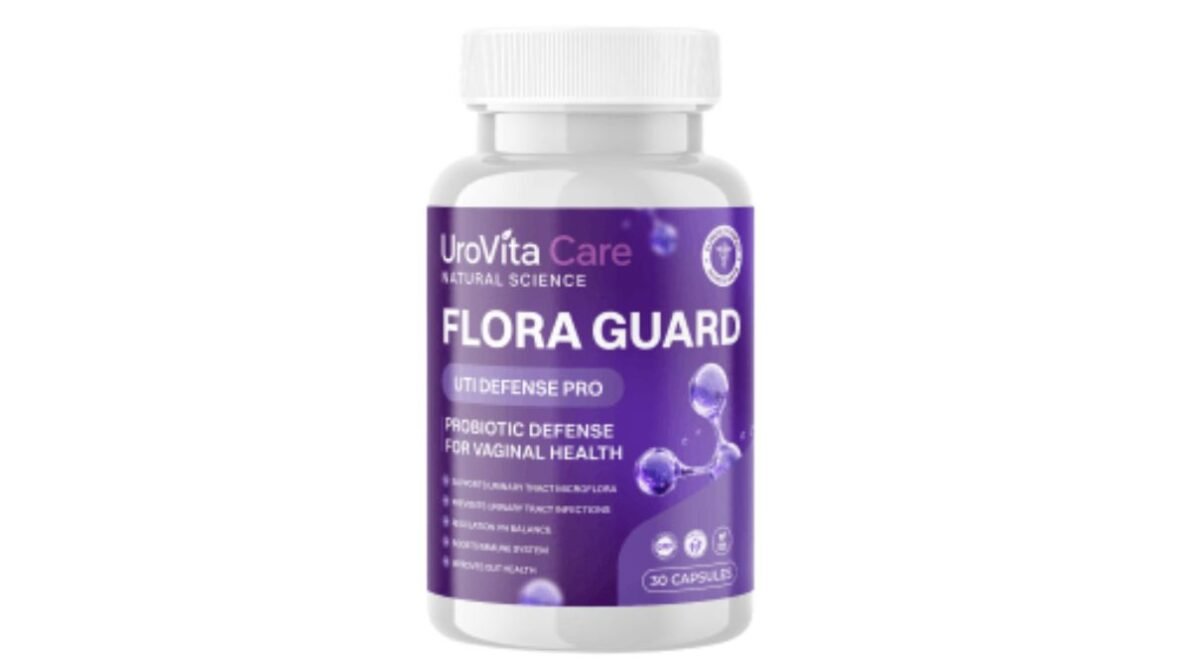
In June 2026, a paid advertorial about UroVita Care Flora Guard appeared on a newswire service. It opens by disclosing that it’s paid, that a commission may be earned, and that every claim in it comes from the brand rather than from independent testing. Fair enough — that’s more honest than most.
Then it gets to the ingredients, and states that the Supplement Facts panel isn’t published on the brand’s accessible pages, that it won’t list or infer ingredients because no confirmed source was available, and that buyers should phone the company for the panel before ordering.
Read that again. A writer paid to promote this product could not find out what’s in it, said so in print, and told readers to call the manufacturer and ask.
I couldn’t find it either. That’s the starting point of this UroVita Care Flora Guard review, and everything else follows from it — including a section on why, for this particular category, an unverifiable capsule carries a risk that goes well beyond wasted money.
What You Can Actually See
The advertising for this product sends you straight to a checkout. No product page before it, no advertorial, no formula description. You land on package selection and a card form.
What the page tells you: the product is called Flora Guard Capsules, it’s sold in bottles, shipping is free, there’s a 30-day money-back guarantee, and the offer is for US residents only.
What it doesn’t tell you: what’s in the capsules. Not a probiotic strain, not a CFU count, not a botanical, not a milligram. There is no Supplement Facts panel — which, for a dietary supplement sold in the United States, is the standardised box that normally lists serving size, each ingredient, and its amount.
The brand name signals urinary health and the product name signals flora. Beyond that, the formula is whatever you decide to imagine.
Regional store pages for the same brand do describe a probiotic formula with cranberry, mentioning strains associated with urogenital health. But those descriptions aren’t on the page you’d be buying from, they don’t carry amounts or CFU counts either, and — as the next sections show — the brand’s own pages don’t agree with each other about who the product is even for.
If You Have Symptoms Right Now, Read This First
This is the section that matters more than everything else in this article, and it’s why the review is written this way.
Burning when you urinate, urgency, needing to go constantly, cloudy or bloody urine, pressure low in the abdomen — those are the symptoms of a urinary tract infection. A UTI is a bacterial infection. It is treated with antibiotics, and treatment is usually quick and highly effective.
Left untreated, bacteria can travel up from the bladder to the kidneys. That’s pyelonephritis, and it classically presents with fever, flank pain, and nausea or vomiting. From there it can enter the bloodstream. The most common cause of urosepsis — sepsis originating in the urinary tract — is an untreated or undertreated UTI.
This isn’t a rare theoretical chain. Kidney infections account for roughly 200,000 hospital visits a year in the US, women are about six times more likely than men to get one, and around one in 600 women is affected annually.
Go to an emergency department, or call emergency services, if you have:
- Fever with chills alongside urinary symptoms
- Severe pain in your back or side
- Nausea or vomiting, or inability to keep fluids down
- Confusion, rapid breathing, or a racing heart
- Inability to pass urine
Contact a doctor the same day for: any new burning, urgency, or blood in your urine; symptoms that aren’t improving; or any urinary symptom at all if you’re pregnant, diabetic, immunocompromised, or over 65.
Here’s the specific concern with a product like this one. A woman with early UTI symptoms, at eleven at night, searching for something she can do without an appointment, is exactly the person an ad for urinary support capsules reaches. Ordering a bottle takes two minutes and feels like action. It also takes two to five days to arrive — and that’s a window in which an infection can climb.
Nothing on the seller’s page tells you any of this. Please treat symptoms as a reason to call a doctor, not a reason to shop.
The Same Brand Is Also Sold to Men
This one takes a couple of minutes to verify and it reframes everything.
The Australian store page for UroVita Care presents Flora Guard Capsules as a women’s product: probiotic strains for urinary and vaginal flora, cranberry proanthocyanidins, vaginal pH balance.
Two other sites operating under the same brand present UroVita Care as something else entirely — a men’s supplement for prostate health, urinary flow, hormone activity and “male vitality”, complete with a testimonial from a man describing fewer nighttime bathroom trips.
Same brand name. Same product name in the checkout. Opposite target demographic, opposite anatomy, opposite proposed mechanism.
I can’t tell you which is the real product, or whether there are two different formulas sharing a brand, because no page publishes ingredients. What I can tell you is that a brand marketing the same named capsule to women for vaginal flora and to men for prostate function is not describing a formula — it’s describing whichever customer is in front of it.
If you’re considering this, that’s the fact I’d weigh most heavily after the safety section above.
What Cranberry and Probiotics Actually Do — and Don’t
Let’s assume the women’s description is accurate and the capsules contain cranberry and urogenital probiotic strains. Even then, two distinctions matter enormously, and no sales page in this category makes them.
Cranberry is for prevention, not treatment. A Cochrane review of 50 trials covering 8,857 people found moderate-certainty evidence that cranberry products reduce symptomatic, culture-verified UTIs in women with recurrent infections. That’s a real, decent finding — and it’s about reducing how often infections happen in women who get them repeatedly. It is not evidence that cranberry clears an infection you have right now. If you have an active UTI, cranberry is not the answer; an antibiotic is.
Worth adding: the effect appears tied to proanthocyanidin content, with around 36 mg often cited as a working threshold. UroVita Care publishes no amount, so there’s no way to know whether it reaches it.
Oral probiotics reaching the vagina is a harder problem than it sounds. The strongest research on Lactobacillus crispatus for vaginal flora used LACTIN-V, a live biotherapeutic applied directly into the vagina after a course of antibiotics — and even under those controlled conditions, only about 30% of recipients achieved crispatus-dominant colonisation.
A swallowed capsule has to survive stomach acid, transit the gut, and establish in the urogenital tract in meaningful numbers. That’s a substantially harder proposition, and it isn’t one this product has published evidence of solving — or, for that matter, published strains for.
So the honest position: even in the most generous reading of what’s inside, you’d be buying a recurrence-prevention product of unknown strength, not a treatment.
Buying More Bottles Is Labelled “Max Efficiency”
The pricing block carries three labels, and they’re worth a second of your attention.
Buy 3 and get 2 free is marked “Max Efficiency.” Buy 2 and get 1 free is “Mid Efficiency.” Buying 2 bottles is “Lesser Effect.”
There’s one capsule. Those labels don’t describe formula strength — they describe how many bottles you order, framed as though the product works better when you buy more of it.
A capsule’s effect depends on what’s in it and how you take it, not on how many unopened bottles are in your cupboard. Telling a woman that the cheaper option is the “lesser effect” one isn’t a statement about the product.
The Timer, the Stock Warning, and the Disclaimer
Three mechanics, all checkable in seconds.
A banner warns of limited supply due to high media demand. A timer says your free bottles are reserved for a set number of minutes — reload the page and it starts over. And “Current Availability: Low. Sell Out Risk: High” appears with no source.
Then the small print, which is the most informative text on the page. It states that testimonial names and photographs have been changed, and that individuals are remunerated.
I want to give credit where it’s due: publishing that is the legally correct thing to do, and many sellers don’t. It’s also the reason I can tell you what those endorsements are worth. They’re paid, presented under names and faces that aren’t real, and there is nothing in them you can verify or follow up on. Read them as advertising, because the disclaimer says that’s what they are.
Pregnancy Changes the Calculation
This deserves its own section because the stakes are different.
Urinary tract infections in pregnancy are treated promptly and taken seriously, because untreated infection carries risks including preterm delivery and low birth weight. Asymptomatic bacteriuria — bacteria present without symptoms — is screened for and treated in pregnancy specifically for that reason, which isn’t the case outside pregnancy.
If you’re pregnant and have any urinary symptom, that’s a same-day call to your midwife or doctor. Not a supplement, and not a wait-and-see.
And because no ingredients are published here, there’s a second problem: you cannot check this product against pregnancy safety at all. Not the strains, not the botanicals, not the excipients. Neither can your pharmacist. “I don’t know what’s in it” is not a position anyone should be in while pregnant.
The same reasoning applies if you’re breastfeeding, immunocompromised, on immunosuppressants, or managing diabetes or kidney disease.
What I Liked
The disclaimer is honest about the testimonials. Stating plainly that names and photographs were changed and that individuals are remunerated is correct disclosure, and it’s what made the analysis above possible.
The FDA disclaimer is present and correctly worded, including that the product isn’t intended to diagnose, cure or prevent disease.
The checkout is encrypted, free shipping is a real deduction rather than folded into the price, and support is advertised as available around the clock.
A 30-day guarantee exists, which is more than nothing.
Cranberry and urogenital probiotics are a reasonable category to build in. For a woman with genuinely recurrent UTIs, under a doctor’s supervision, prevention-focused supplementation is a legitimate conversation to have. The category isn’t nonsense — the execution here is the problem.
Things to Consider
No ingredients published anywhere on the page you buy from.
A paid advertorial couldn’t find them either, and told readers to phone the company.
The same brand is marketed to women for vaginal flora and to men for prostate function.
Package quantities labelled as efficacy levels.
A countdown that restarts on reload, and an unsourced stock warning.
Testimonials that are paid and pseudonymous, by the seller’s own disclosure.
No third-party payment platform administering the guarantee.
A 30-day window, the shortest in this category.
Prices generated on page load rather than published.
Nothing on the page distinguishes prevention from treatment, in a category where that distinction is the difference between sensible and dangerous.
There’s No Payment Platform in the Middle
This is the practical point most likely to cost you money.
Most direct-to-consumer supplements sold this way route through a payment platform that acts as retailer of record and administers refunds independently. If the seller stops replying, you still have somewhere to go.
This one doesn’t. The link routes through a tracking domain and the checkout takes your card details directly on the seller’s own page. There’s no third party in the middle, which means the 30-day guarantee is enforceable only through the seller — the same seller whose page won’t tell you what you’re swallowing.
Your card details are handled over standard SSL, so that’s not the concern. The concern is that the refund promise has no independent backstop, and thirty days is the shortest window I’ve come across in this category, where 60 to 180 days is more typical.
Price, Guarantee, and What to Screenshot
Prices appear on the seller’s page rather than in this article, deliberately: the figures are generated when the page loads rather than published as fixed prices, so what you’re quoted may differ from what someone else is quoted. The struck-through “retail” figure beside them is a reference price, not evidence of what anyone has paid.
There’s also no link to buy in this article, and that’s a choice worth explaining. This site usually earns a commission when readers purchase through our links. Here, the person most likely to click is a woman with urinary symptoms — and urinary symptoms mean a bacterial infection that antibiotics treat quickly and that can climb to the kidneys if it’s left. Earning money from that click, at that moment, isn’t a position we’re willing to be in. Nor can we tell you this product is safe, because nobody outside the company knows what’s in it.
If you order regardless, four protections:
Screenshot the page you buy from — price, package, and guarantee wording — on the day you pay.
Buy the smallest package. Thirty days and no independent refund administrator means a large first order is the wrong risk.
Diarise day 20, not day 30.
Call and ask for the Supplement Facts panel before you order, not after. If the company won’t send you a full ingredient list with amounts, that answer is itself the information you needed.
Final Verdict
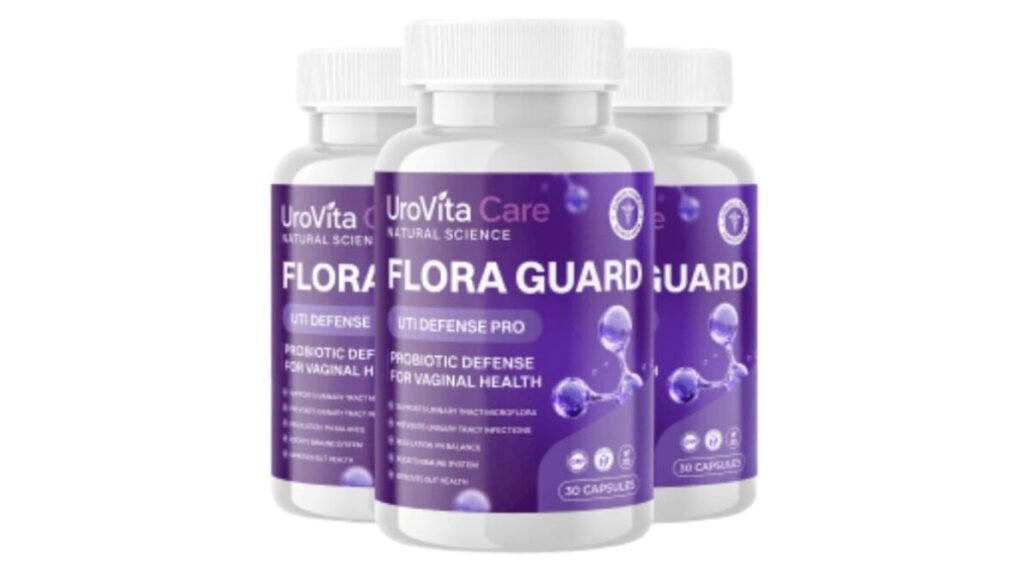
I can’t recommend a product whose ingredients nobody will disclose, and in this category that conclusion carries more weight than usual.
For a joint cream, an unknown formula is mostly a wasted purchase and an allergy risk. Here, the person likely to buy is a woman with urinary symptoms — and urinary symptoms mean a bacterial infection that antibiotics treat quickly and that can become serious if it’s left. The cost of buying a bottle instead of making a call isn’t only the money.
Add the rest: a paid promoter who couldn’t identify the ingredients, a brand selling the same named capsule to women for vaginal flora and to men for prostate function, testimonials the seller states are paid and pseudonymous, package tiers describing buying more as working better, and a thirty-day guarantee with no independent administrator.
What I’d do instead. If you have symptoms now, contact a doctor or a pharmacist today — in many places a pharmacist can assess an uncomplicated UTI directly. If you get UTIs repeatedly, that’s a conversation worth having properly with a GP or urologist: there are established preventive approaches, and cranberry with a stated proanthocyanidin content is one of the things they may discuss with you, alongside options with stronger evidence. Either way you’ll know what you’re taking and why.
And the free part: adequate fluid intake, not delaying urination, and urinating after sex are the unglamorous measures that come up consistently in recurrent-UTI advice. They cost nothing and no bottle outperforms them.
If you’re comparing products in women’s urinary health, our FemiCore review covers another formula in this space — one that at least names its ingredients — and the questions from this article carry over: does the page publish a Supplement Facts panel, and does it distinguish preventing infections from treating one?
Frequently Asked Questions
What’s in UroVita Care Flora Guard?
The checkout page doesn’t say, and neither does any brand page I could find. A paid advertorial about the product reported the same thing and advised readers to phone the company for the Supplement Facts panel. Regional store pages describe a probiotic-and-cranberry formula, but without strains, CFU counts, or amounts.
Can a supplement clear a urinary tract infection?
No. A UTI is a bacterial infection treated with antibiotics. Cranberry has Cochrane-level evidence for reducing how often infections recur in women who get them repeatedly — that’s prevention, not treatment. If you have symptoms now, see a doctor or pharmacist rather than ordering capsules.
Is it safe to take while pregnant?
Nobody can tell you, because the ingredients aren’t published — and that’s reason enough to avoid it. Separately, urinary symptoms in pregnancy warrant a same-day call to your midwife or doctor, because untreated infection carries risks including preterm delivery.
Do oral probiotics actually reach the vagina?
That’s the open question. The strongest research on the relevant Lactobacillus strain used a product applied directly into the vagina, not swallowed, and even then colonisation succeeded in a minority of participants. Oral delivery reaching the urogenital tract in meaningful numbers hasn’t been demonstrated for this product, which doesn’t publish its strains.

Raphael Albert is the founder and content creator of Nutra Pulse. Passionate about health, nutrition, fitness, and wellness, he spends his time researching scientific studies, health trends, and evidence-based lifestyle strategies to create informative and easy-to-understand content. While he is not a doctor or licensed healthcare professional, his goal is to help readers make more informed wellness decisions. All content is for educational purposes only and should not replace professional medical advice. Always consult a qualified healthcare provider regarding your health concerns.