Transparency note: this site normally earns a commission when readers buy through our links. There are no purchase links in this article. Two of the four reviews it points to are also published with no affiliate link at all, for reasons this guide explains.
These statements have not been evaluated by the Food and Drug Administration. These products are not intended to diagnose, treat, cure, or prevent any disease. A urinary tract infection is a bacterial infection that needs antibiotics, and bleeding after menopause needs prompt assessment. Neither is a supplement decision, and the section near the end of this article explains why.
This shelf holds two completely different problems.
Women’s health supplements aimed at bladder and urinary comfort are addressing infection risk, pelvic floor function and bladder control. The ones aimed at menopause are addressing a hormonal transition — hot flashes, sleep disruption, mood, bone density. Different biology, different evidence base, different specialists.
What links them isn’t mechanism. It’s a rhetorical move that runs through both halves of the category, and once you see it you can’t unsee it.
These products consistently sell prevention as though it answered treatment.
Cranberry has real evidence for preventing recurrent urinary tract infections. It has no evidence for treating one you already have. Those are different sentences, and the second one matters when you’re the person with symptoms.
The same shape appears on the menopause side. Supplements may support general wellbeing during the transition. That is not the same as treating vasomotor symptoms — and the professional body that reviewed this exact question reached a clear conclusion, which we’ll get to.
Here’s how the category divides, what the evidence actually supports, and the four checks that sort most of it in about ten minutes.
The Distinction That Runs Through Everything Here
Prevention and treatment answer different questions, and conflating them is the most consistent problem in this category.
Prevention asks: can I reduce how often this happens? It applies when you’re well, and the timeline is months.
Treatment asks: how do I resolve what’s happening now? It applies when you have symptoms, and for some of these conditions the timeline matters a great deal.
The reason this distinction is more than semantic: a urinary tract infection left untreated doesn’t stay in your bladder. It ascends to the kidneys, and from there it can enter the bloodstream. That progression is why UTI symptoms are a same-week medical question, not a shopping question.
A supplement marketed at a woman with burning and urgency is being marketed at someone in the treatment situation, using evidence that only exists for the prevention one.
When you’re evaluating anything in this category, ask which question the product is actually answering — and which one you’re asking.
How to Evaluate Any Product Here: Four Checks
The same four questions we apply across every category, and they eliminate most of this market.
1. Are the ingredients named? Not “proprietary blend of botanicals.” Actual names.
2. Are the doses published? An ingredient list without amounts can’t be compared against any research, because studies are studies of doses.
3. Do the cited references concern the ingredients? This is the check almost nobody runs, and it’s revealing. Some products publish long reference lists in which the citations are about the condition, the state of women’s health research, or something else entirely — but not about what’s in the bottle.
4. Can you find a real customer? Meaning a verified purchase on a platform with fraud controls, not a testimonial on the seller’s own page.
And a fifth, specific to this category: does the product position itself against medical care? Phrases like “without the need for hormone therapy” or framing that treats a doctor’s visit as the thing you’re avoiding. In a category where the alternatives include treatments that protect bone and antibiotics that prevent kidney infection, that framing is the most consequential thing on a page.
Bladder and Urinary: What the Evidence Supports
Start with what genuinely works, because it’s more than nothing and it’s specific.
Cranberry has real evidence — for prevention. A Cochrane review of 50 studies involving 8,857 participants found that cranberry products reduce the risk of repeat symptomatic urinary tract infections in women with recurrent UTIs, in children, and in people at risk following an intervention. That’s a substantial evidence base and it deserves to be taken seriously.
What that review addresses is prevention of recurrence. It does not establish cranberry as a treatment for an active infection.
Pelvic floor muscle training is first-line for incontinence. Not a supplement — an exercise programme, usually taught by a physiotherapist, with strong evidence behind it. For stress incontinence in particular it’s the recommended starting point before anything else is considered.
Vaginal oestrogen is worth knowing about for genitourinary symptoms after menopause, including recurrent UTIs. Systemic exposure is minimal, and it’s often the intervention that changes things when nothing else has.
And a route point that matters. Several bladder and vaginal health products cite research on Lactobacillus crispatus. The trial that established that organism’s benefit — LACTIN-V — delivered it intravaginally, as a suppository. Swallowing a capsule is a different delivery route, and the intravaginal evidence doesn’t transfer to it automatically.
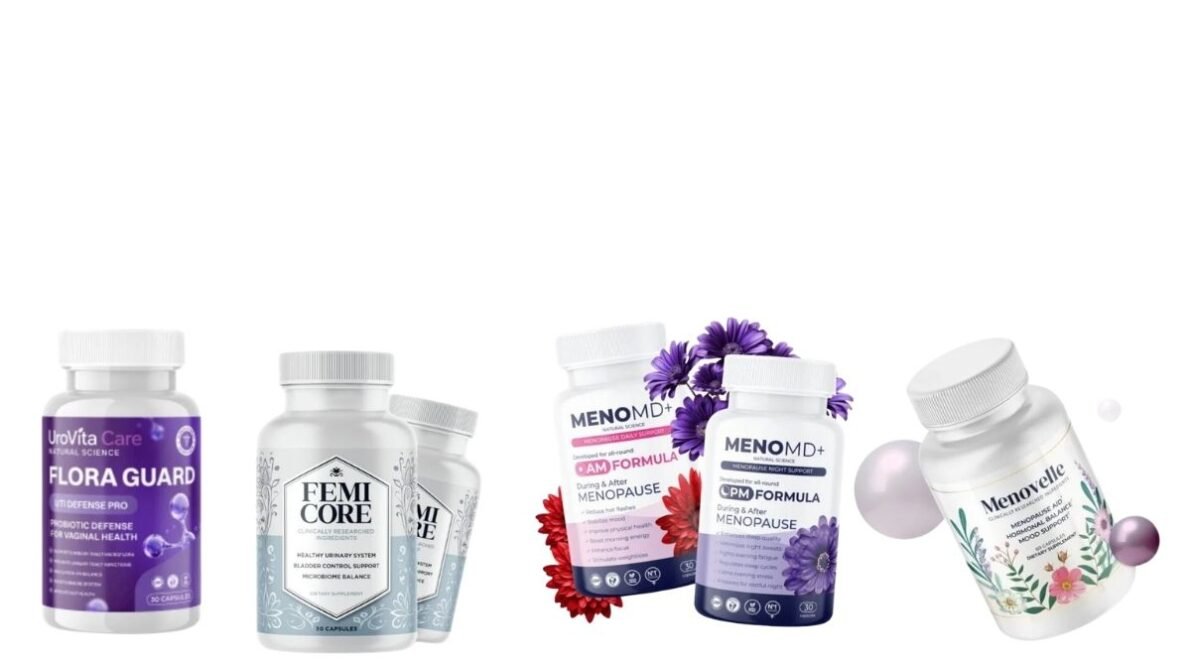
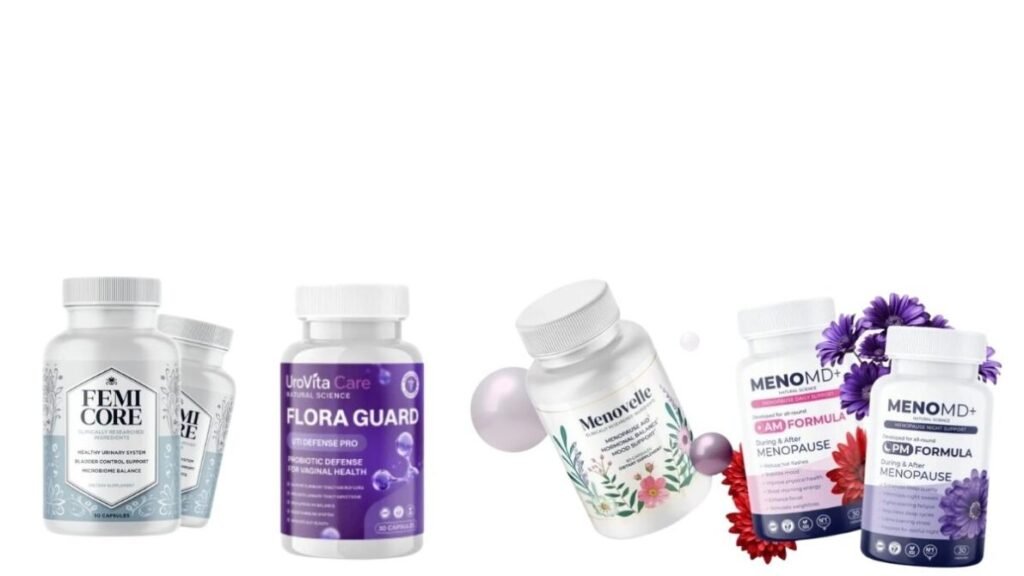
Our FemiCore review works through that route question in detail, along with a dosing issue worth knowing: the formula contains bearberry (uva ursi), an ingredient European regulators advise using for no more than one week, sold in packages designed for months of daily use.
Our UroVita Care review covers a product at the other end of the transparency scale — its page publishes no ingredients at all. We published that review with no affiliate link, because the likely reader is a woman with active urinary symptoms, and we couldn’t tell her the product was safe when nobody will say what’s in it.
Menopause and Hormones: What the Professional Body Concluded
Here there’s a shortcut, and it’s authoritative enough to save you a great deal of comparison shopping.
The Menopause Society — the leading professional organisation in this field — published a position statement specifically on non-hormonal treatments for menopausal symptoms. A panel graded the evidence and sorted every option into recommended and not recommended.
Recommended, at the strongest evidence level: cognitive behavioural therapy, clinical hypnosis, certain antidepressants, gabapentin, and fezolinetant. Also recommended: oxybutynin, weight loss, stellate ganglion block.
That’s the entire category, reviewed by the clinicians who treat this, and declined for vasomotor symptoms.
It doesn’t mean nothing in a menopause supplement helps anyone with anything. It does mean that when a page says “science-backed,” the body that reviewed that science reached the opposite conclusion.
And the comparison that matters most. The Menopause Society’s 2022 position statement states that hormone therapy remains the most effective treatment for vasomotor symptoms and for genitourinary syndrome of menopause, and that it has been shown to prevent bone loss and fracture. For women under 60, or within ten years of menopause onset, without contraindications, the benefit-risk balance is described as favourable.
It isn’t free of risk, and an honest account includes that: risks vary by type, dose, duration, route and timing, and combined therapy carries a rare increased risk of stroke, venous thromboembolism and breast cancer. Starting more than ten years after menopause shifts the balance less favourably. Some women can’t take it at all.
The point isn’t that every woman should. It’s that this is an individualised medical decision — and a product implying you won’t need the conversation is making that decision for you, without your history.
Our MenoMD+ review covers a formula positioned exactly that way. That review is also published with no affiliate link, and the reasoning is in the article: a product that steers women away from a treatment which prevents fracture is not one we’re willing to earn a commission on.
Our Menovelle review covers a different problem — a mechanism that runs backwards. Its marketing describes fat cells trapping oestrogen. After menopause, adipose tissue is the chief source of oestrogen in the body, because the enzyme aromatase in fat converts adrenal androgens into oestrone. Fat cells aren’t a prison holding your hormones. They’re the factory.
Two Ingredients That Need a Specific Warning
Most of this category is low-risk. Two things aren’t, and both are easy to miss on a label.
Black cohosh and liver injury. The NIH’s LiverTox database states that products labelled as black cohosh have been implicated in many instances of clinically apparent acute liver injury, some severe enough to lead to emergency liver transplantation or death. Over fifty case reports exist, with onset typically between two and twelve weeks. The US Pharmacopeia has recommended that these products carry a hepatotoxicity warning.
Proportion matters: these events are uncommon relative to how widely black cohosh is used, and causality has been debated. But the efficacy side doesn’t offset it well — the Menopause Society doesn’t recommend it, citing low-quality evidence.
And black cohosh may reduce the effectiveness of tamoxifen. Read that in context: tamoxifen is prescribed after certain breast cancers, and one of its most common side effects is severe hot flashes. Women on tamoxifen are therefore among the most motivated buyers of non-hormonal menopause supplements — and they are exactly the group for whom this interaction matters. If you take tamoxifen or an aromatase inhibitor, do not start a menopause supplement without your oncology team’s sign-off.
Berberine in pregnancy. It appears in several women’s health formulas and is contraindicated in pregnancy and breastfeeding — it crosses the placenta and can displace bilirubin, carrying a kernicterus risk in newborns. It also inhibits CYP3A4 and P-glycoprotein, affecting a wide range of prescription medications.
And one myth worth retiring. Wild yam contains diosgenin, which chemists can convert into progesterone in a laboratory. There is no biochemical pathway for that conversion in the human body. Your body isn’t a chemistry lab. Wild yam is well tolerated; it simply doesn’t do the thing most people buy it for.
When to See a Doctor, Not Buy a Product
This is the most important section on this page.
Urinary symptoms
Burning, urgency, frequency, or cloudy or bloody urine mean a possible bacterial infection. A UTI is diagnosed with a urine test and treated with antibiotics, usually resolving within days. Left untreated, it can ascend to the kidneys.
Seek same-day care for: fever, chills, pain in your back or side, nausea or vomiting alongside urinary symptoms. Those suggest the infection has reached the kidneys, which is a more serious situation.
And contact a doctor the same day if you are pregnant and have any urinary symptoms — untreated UTI in pregnancy is associated with preterm delivery risk, and it’s treated differently.
Also worth assessment rather than self-treatment: recurrent UTIs (three or more in a year), incontinence affecting your daily life, or pelvic pain that persists.
After menopause
Any vaginal bleeding after twelve months without a period needs prompt assessment. Postmenopausal bleeding has several possible causes, most benign — but one of them is endometrial cancer, and it’s highly treatable when caught early. This is the single most important thing on this list.
Also see a doctor for: a new breast lump or change in breast skin or nipple, hot flashes severe enough to disrupt your sleep or daily function, and pain during intercourse — the last is common, rarely raised, and often very treatable.
The thing worth knowing before you buy anything
Menopause care has changed considerably in the last decade, and a doctor who is current can talk you through hormone therapy honestly — including whether you’re a candidate and what the risks look like for you specifically. That conversation is free, and no website has your history.
What Actually Works
The honest hierarchy, and much of it costs nothing.
For recurrent UTI prevention: cranberry products have Cochrane-level support. Adequate hydration. Vaginal oestrogen after menopause, which addresses a genuine underlying cause. And for women with frequent recurrences, preventive antibiotic strategies exist — that’s a conversation with a doctor.
For incontinence: pelvic floor muscle training first, taught properly. It’s the recommended starting point, and it works for a large proportion of women who do it consistently.
For vasomotor symptoms: hormone therapy is the most effective option and also protects bone. If you can’t take it or don’t want it, the Menopause Society recommends cognitive behavioural therapy, clinical hypnosis, certain antidepressants, gabapentin, and fezolinetant — a newer non-hormonal medication developed specifically for hot flashes.
For bone health at menopause: weight-bearing exercise, adequate calcium and vitamin D, not smoking, and a bone density conversation with your doctor about when to screen.
And a note on what supplements can reasonably do. Correcting an actual deficiency helps. Vitamin D matters. General wellbeing support during a difficult transition isn’t nothing. What the evidence doesn’t support is treating those as substitutes for the interventions above.
How to Choose Women’s Health Supplements
Five checks, in the order that eliminates most products fastest.
1. Which question is it answering — prevention or treatment? And which one are you asking? If you have symptoms now, that’s a treatment question, and most of this category has prevention evidence at best.
2. Are the ingredients and amounts published? If a bladder or hormonal product won’t tell you what’s in it, you can’t check it against your medications, your allergies, or a pregnancy.
3. Do the citations name the ingredients? Not the condition. The ingredients.
4. Check the route for probiotic claims. If a product cites L. crispatus research, that evidence comes from intravaginal delivery. An oral capsule is a different proposition.
5. Does it position itself against medical care? “Without the need for HRT,” or framing that treats an appointment as the obstacle. In this category that’s the strongest signal on the page.
And two specific label checks worth doing every time: black cohosh if you take tamoxifen or have any liver condition, and berberine if you’re pregnant, trying to conceive, or taking prescription medication.
The Full Library, by Objective
Bladder, urinary and pelvic health
- FemiCore review — the intravaginal-versus-oral route question, and an ingredient regulators limit to one week
- UroVita Care review — no ingredients published, and why we ran it without an affiliate link
Menopause and hormonal
- MenoMD+ review — brand pages that contradict each other on soy, and a product positioned against the treatment that protects bone
- Menovelle review — a mechanism that runs backwards, and why fat cells make oestrogen rather than trap it
Frequently Asked Questions
Does cranberry treat a urinary tract infection?
No — it has evidence for preventing recurrent UTIs, which is a different thing. A Cochrane review of 50 studies in 8,857 participants supports cranberry products for reducing repeat infections in women with recurrent UTIs.
An active infection is bacterial and treated with antibiotics. If you have burning, urgency or frequency now, that’s a doctor’s appointment, not a supplement.
When is a UTI an emergency?
Get same-day care if you have fever, chills, back or side pain, or nausea and vomiting alongside urinary symptoms — those suggest the infection has reached your kidneys. Contact a doctor the same day for any urinary symptoms in pregnancy. Otherwise, ordinary UTI symptoms still warrant a prompt appointment, because untreated infections ascend.
Do menopause supplements work for hot flashes?
The Menopause Society’s position statement on non-hormonal treatments places supplements and herbal remedies in the not recommended column for vasomotor symptoms, naming soy extracts specifically. What it does recommend, at the strongest evidence level, includes cognitive behavioural therapy, clinical hypnosis, certain antidepressants, gabapentin and fezolinetant.
Is hormone therapy safe?
It’s an individual decision, and the honest answer includes both sides. The Menopause Society describes hormone therapy as the most effective treatment for vasomotor symptoms and genitourinary symptoms, and notes it prevents bone loss and fracture — with a favourable benefit-risk balance for women under 60 or within ten years of menopause onset, without contraindications.
Risks vary by type, dose, timing and route, and combined therapy carries rare increased risks of stroke, clots and breast cancer. That’s a conversation with a doctor who knows your history.
Can black cohosh damage your liver?
It has been implicated in cases of clinically apparent acute liver injury, some severe enough to require transplantation, with over fifty published case reports. These events are uncommon relative to how widely it’s used, and causality has been debated — but the US Pharmacopeia has recommended a hepatotoxicity warning on labels, and the efficacy evidence is graded as low quality. If you have any liver condition, discuss it with a pharmacist first.
Can I take menopause supplements with tamoxifen?
Ask your oncology team before you take anything. Black cohosh may reduce tamoxifen’s effectiveness. This matters especially because tamoxifen itself causes severe hot flashes, making women who take it a common buyer for these products — which is precisely why the conversation is necessary rather than optional.
Does wild yam provide progesterone?
No. Diosgenin, the compound in wild yam, can be converted to progesterone in a laboratory, but there is no biochemical pathway for that conversion in the human body. It’s one of the most persistent misunderstandings in this market. Wild yam is generally well tolerated — it just doesn’t do that.
Do oral probiotics help vaginal or urinary health?
The route matters. The research most often cited comes from LACTIN-V, which delivered Lactobacillus crispatus intravaginally. That evidence doesn’t automatically transfer to a capsule you swallow. If a product cites that research for an oral formula, it’s worth knowing the studies weren’t done that way.
What should I do about bleeding after menopause?
See a doctor promptly. Any vaginal bleeding after twelve months without a period needs assessment. Most causes are benign, but one is endometrial cancer, which is highly treatable when found early. This is not a wait-and-see situation and not a supplement question.
What’s first-line for incontinence?
Pelvic floor muscle training, taught properly — usually by a physiotherapist. It’s the recommended starting point before medication or surgery is considered, and it helps a large proportion of women who do it consistently. No supplement has comparable evidence.

Raphael Albert is the founder and content creator of Nutra Pulse. Passionate about health, nutrition, fitness, and wellness, he spends his time researching scientific studies, health trends, and evidence-based lifestyle strategies to create informative and easy-to-understand content. While he is not a doctor or licensed healthcare professional, his goal is to help readers make more informed wellness decisions. All content is for educational purposes only and should not replace professional medical advice. Always consult a qualified healthcare provider regarding your health concerns.