Transparency note: this site normally earns a commission when readers buy through our links. There are no purchase links in this article — the individual reviews it points to carry their own disclosures.
These statements have not been evaluated by the Food and Drug Administration. These products are not intended to diagnose, treat, cure, or prevent any disease. If you take warfarin, are immunocompromised, or have persistent digestive symptoms, there are specific things to check before adding a greens or probiotic product — the safety sections below cover each.
Here’s what makes this category different from every other supplement shelf.
Superfood and greens supplements don’t target a diagnosis. There’s no test result to watch, no symptom that resolves, no number that moves. They promise energy, immunity, gut health, “wellness” — states that are real but that you cannot measure at home.
Compare that with the rest of the market. A sleep aid either helps you sleep or it doesn’t, and you know within a week. A blood sugar supplement can be checked against a glucose meter. A joint cream either reduces the ache or it doesn’t.
A greens powder gives you nothing to check. You take it for two months, you feel roughly the same as always, and you can’t tell whether it did nothing or whether it did something small you’d never notice.
That’s not a reason to avoid the category. It’s a reason the evaluation has to happen before you buy, not after — because there’s no after-the-fact test that will tell you.
Which means the label is the only real check you have. Here are the four questions that make it work.
Why the Label Is the Only Check
In categories with a measurable endpoint, a vague label is annoying but survivable — you can run your own experiment. Here you can’t.
So the questions shift entirely to what’s verifiable on paper:
1. Are the ingredients named? Not “proprietary superfood blend.” Actual names, in a list you can read.
2. Are the amounts published? For each ingredient, not just a blend total. This is where the category splits most sharply.
3. Do the cited references concern the ingredients? Some products publish research about the category — the benefits of antioxidants in general, or of probiotics as a class — rather than about what’s in the tin.
4. Can you find a real customer? A verified purchase on a platform with fraud controls, not a testimonial on the seller’s own page. This one turns out to matter more here than almost anywhere else, precisely because you can’t measure the result yourself.
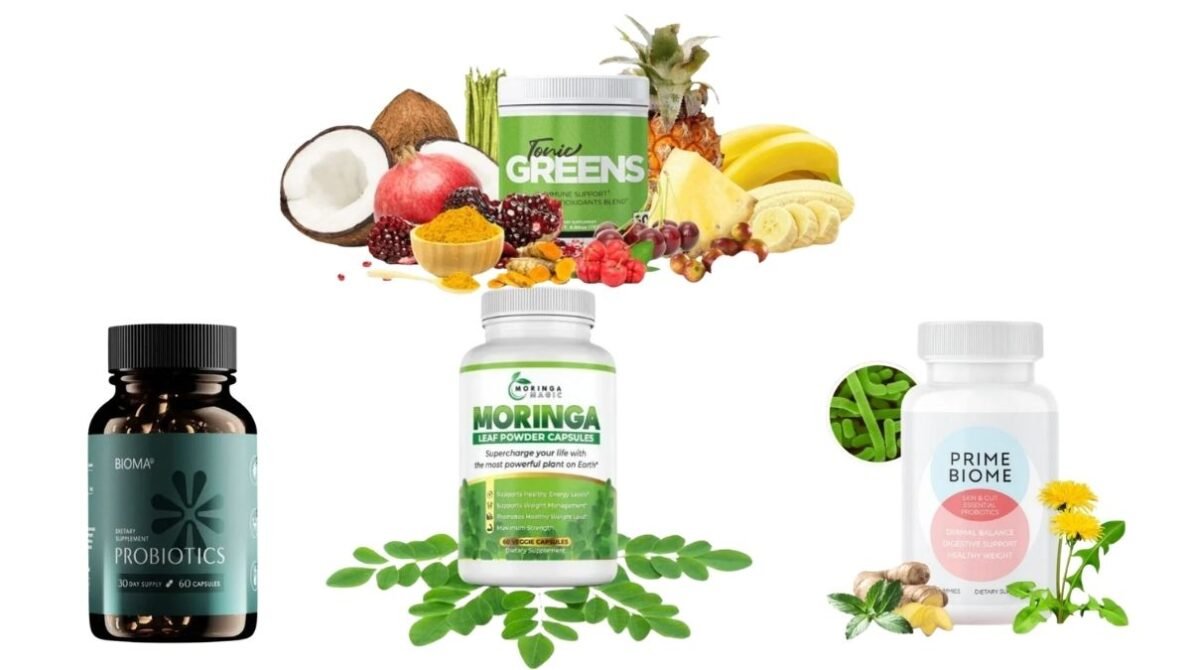
Across four detailed reviews, these four questions produced a clean ladder — from a product that answers all four to one that answers none.
Top of the Ladder: When Everything Is Published
Our Bioma Probiotics review covers the best-documented product we’ve examined in any category, and it deserves that credit stated plainly.
The label is published with milligram amounts. The bacterial species are named. The CFU count is given. The two branded ingredients — a xylooligosaccharide preparation and a tributyrin complex — come from named suppliers with their own published research. The capsules are delayed-release, which is the right choice for organisms stomach acid would otherwise destroy.
And it’s sold on Amazon, which means a verified-purchase review pool exists. That’s rare in this market and genuinely useful: you can read what actual buyers said, filtered by a platform with fraud controls.
All four checks pass. Which means the interesting part becomes possible — you can compare the amounts against the research.
The Dose Test, Applied
When a product publishes its numbers, you can do arithmetic. Here’s what that looks like.
Xylooligosaccharides (XOS) are a prebiotic fibre that Bifidobacteria ferment preferentially. The best-known human trial was a double-blind, randomised, placebo-controlled study in 32 healthy adults over eight weeks, in which participants received 1.4 g or 2.8 g of XOS daily and Bifidobacterium counts increased in both groups compared with placebo, with the higher dose showing significantly greater increases.
So 1.4 grams is the lowest daily amount with a clearly demonstrated bifidogenic effect in people. Study doses more commonly run 4 to 8 grams.
Bioma contains 100 mg — roughly one fourteenth of that lowest figure.
The same shape appears with the tributyrin component: 90 mg against studies using 200 to 400 mg.
That’s not a criticism of the product so much as a demonstration of why publishing matters. A company that hides its amounts avoids this comparison entirely. A company that publishes them invites it — and you get to make an informed decision either way.
The general lesson for this category: prebiotic fibres work at gram doses. Any product delivering them in milligrams is delivering a fraction of what was studied, whether or not it tells you.
Strain Versus Species: The Check Almost Nobody Runs
For anything containing bacteria, one more question matters, and it applies to two of the four products here.
Probiotic effects are strain-specific, not species-specific. That’s among the better-established principles in the field. Two strains of the same species can behave completely differently — one produces a measurable effect, the other does nothing.
A strain is written with an alphanumeric code. Bifidobacterium lactis is a species. Bifidobacterium lactis HN019 or BB-12 is a strain. Only the second connects to published research, because the research was done on particular lineages.
Bioma names its three organisms at species level. The research on specific strains of those species therefore doesn’t transfer to what’s in the capsule — and the CFU count isn’t broken down between them either.
When comparing any probiotic, look for the letters and numbers. If they’re absent, the trial evidence being cited isn’t about the product in your hand.
The Gummy Question
Our PrimeBiome review covers a ten-ingredient probiotic gummy targeting what it calls the skin-gut axis, and it raises a route question worth understanding.
First, a genuine credit. Choosing Bacillus coagulans for a gummy is a smart formulation decision. Gummies are a hostile format for live bacteria — manufacturing heat and moisture kill most strains. B. coagulans is spore-forming, resistant to both heat and gastric acid. Somebody understood the constraint.
The route problem is a different ingredient. The formula’s skin claims rest on Babchi, a source of bakuchiol — and bakuchiol’s evidence is genuinely good. Reviews describe it as a retinol alternative with comparable effects on skin elasticity, firmness and wrinkles, with less irritation.
Those studies applied bakuchiol to the face, as a cream. PrimeBiome is a gummy you swallow.
For oral bakuchiol to affect skin, it would need to survive digestion, be absorbed, and reach the dermis in meaningful concentration. There’s no published evidence that it does. The gut-skin axis is a real research area and improving the microbiome may influence skin indirectly — but that’s a different mechanism from the one the bakuchiol research established.
The general check: when a product cites research for an ingredient, confirm the studies used the same route. Topical evidence doesn’t transfer to a capsule, and oral evidence doesn’t transfer to a cream.
Single-Ingredient Superfoods
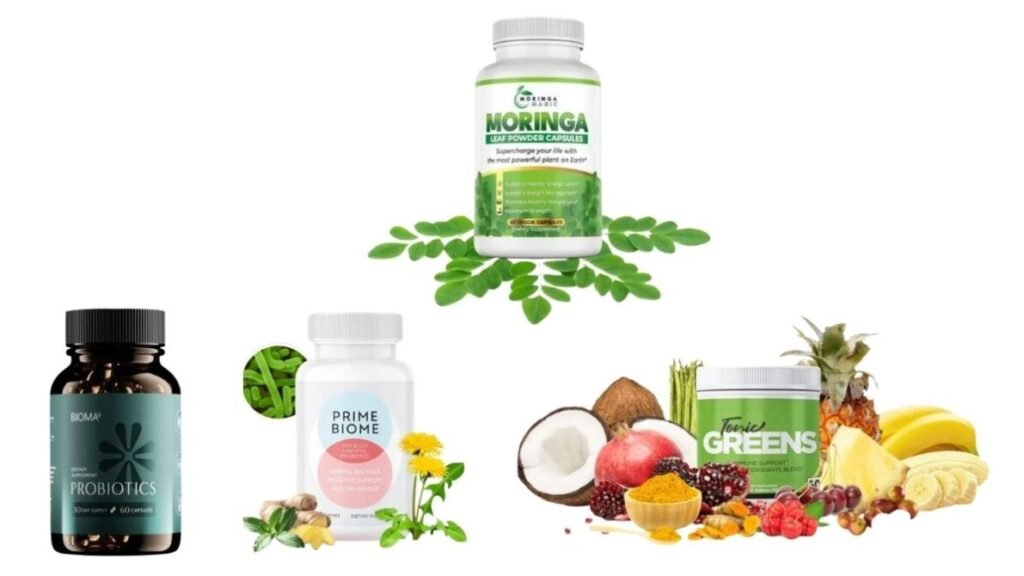
Our Moringa Magic review covers a product built on one plant, which simplifies the dose question considerably.
Moringa is a genuinely nutritious leaf with a real research literature. The arithmetic issue is straightforward: the product’s recommended serving is two capsules daily, while the trial its own marketing cites used six capsules — around 2,400 mg. That’s a threefold gap, and it’s checkable because both numbers are stated.
That review also documents something worth knowing before you buy any supplement bundled with bonus material: the accompanying ebooks are attributed to an author who was the subject of a permanent prohibition order issued by an Australian state health complaints commission in 2019, barring her from providing health services. That’s a matter of public record, and it’s the kind of thing a buyer would reasonably want to know.
Bottom of the Ladder: When Nothing Is Published
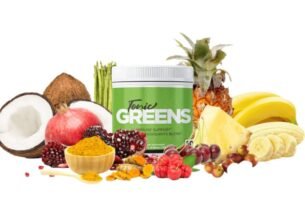
Our Tonic Greens review covers a product where none of the four checks can be run.
The official site doesn’t publish a complete ingredient list. Not a partial one with amounts missing — the list itself isn’t there. The manufacturer isn’t identified. The testimonials are brief and unverifiable.
That combination means there is nothing to evaluate. We can tell you what greens blends in this category typically contain, and what the research on those ingredients says. We cannot tell you whether any of it is in this tin, or in what quantity.
The product is also marketed with disease-claim language about a viral condition that exceeds anything a supplement can legally or scientifically support — which is a separate issue, and a significant one.
When a product publishes nothing, the honest position is that the absence is the finding. Ask the company for a full Supplement Facts panel before ordering. Not receiving one is itself an answer.
What Greens Powders Actually Replace
This is worth being direct about, because it’s the comparison that decides whether the category is worth your money at all.
Dietary fibre has a far larger evidence base than any prebiotic supplement — across bowel regularity, microbiome composition, cardiometabolic markers and mortality. Most adults eat substantially less than the recommended amount. That gap is real and worth closing.
A greens powder closes it barely. A typical serving provides a fraction of a gram to a couple of grams of fibre. A cup of beans provides around 15 grams. A serving of oats, 4. A pear, 6.
On the vitamin side, greens powders do provide concentrated micronutrients, and for someone who genuinely eats almost no vegetables that’s not nothing. But the compounds in whole vegetables come packaged with fibre, water and a food matrix that processing removes.
Where these products have a real advantage is adherence. A scoop in water every morning is easier to sustain than cooking vegetables you don’t like. If a greens powder is the difference between some vegetables and none, that’s a legitimate reason to use one — just buy it understanding that’s the trade you’re making.
And for the gut specifically, fermented foods — kefir, live yoghurt, sauerkraut, kimchi — deliver live organisms at food prices with a growing evidence base, and they don’t require you to trust a label.
Who Should Be Careful
This is the lowest-risk category on this site, and it’s fair to say so plainly. Most of these ingredients are foods. But there are specific cautions that get missed.
If you take warfarin, check the vitamin K content. This is the most overlooked interaction in the category. Green leafy ingredients — kale, spinach, parsley, wheatgrass, alfalfa — are concentrated sources of vitamin K, which directly opposes how warfarin works. You don’t necessarily have to avoid them, but you do need consistency, and any change should be discussed with whoever monitors your INR before you start.
If you’re immunocompromised — on chemotherapy, post-transplant, or with a central line — live bacterial products warrant medical input. There are case reports of bacteraemia in vulnerable patients.
If you have IBS or FODMAP sensitivity, inulin and chicory root fibre are common in these blends and are recognised triggers for bloating and gas. Start low if you start at all.
If you’re pregnant, moringa deserves specific mention: while the leaf is eaten as food, the root and bark have traditional use as abortifacients, and preparations vary. Check with your doctor.
If you have kidney disease, greens concentrates can be high in potassium and oxalate. This warrants a conversation.
And a quality point that applies to the whole category: plant-based powders concentrate whatever the plant absorbed, including heavy metals. Look for third-party testing and a published certificate of analysis. Products that publish one are telling you something about how they operate.
Finally, expect an adjustment period. Gas and bloating in the first week or two of a prebiotic or probiotic is common and usually settles. If it persists beyond a couple of weeks, stop.
When to See a Doctor, Not Buy a Product
The symptoms these products are marketed against overlap with things that deserve investigation.
Persistent fatigue is the most common reason people buy greens powders, and it’s also a symptom with a long list of treatable causes: iron deficiency, B12 deficiency, thyroid dysfunction, sleep apnoea, depression, and medication effects. A blood test identifies most of them. Months spent on a supplement are months not spent finding out.
Digestive symptoms that warrant assessment rather than self-treatment: blood in the stool, unexplained weight loss, persistent abdominal pain, a change in bowel habit lasting more than a few weeks, difficulty swallowing, or fever alongside digestive symptoms. Those can indicate conditions that are far more treatable caught early.
Frequent infections — the “immunity” that much of this category is sold on — can indicate an underlying issue worth investigating rather than supplementing.
And skin changes: a new or changing mole, a sore that doesn’t heal, or a rash that persists needs a look from a doctor, not a gut-skin supplement.
How to Choose Superfood and Greens Supplements
Five checks, in the order that eliminates the most products fastest.
1. Is there a complete ingredient list? If not, stop. Nothing else can be evaluated.
2. Are amounts published per ingredient? “Proprietary blend, 2,400 mg” tells you the total, not the distribution.
3. Do the amounts match the research? Prebiotic fibres work in grams. If a product delivers milligrams, it’s delivering a fraction — search the ingredient plus “randomized trial” and compare.
4. For bacteria, is there a strain code? Letters and numbers, not just a species name.
5. Is there third-party testing, and can you read a real review? A certificate of analysis and a verified-purchase pool are the two things that let you check a company’s claims against something outside its own marketing.
And the honest question underneath all of them: what would this replace? If the answer is “nothing, I’d eat the same either way,” the value is real but small. If it’s “the vegetables I never eat,” it’s larger. If it’s “a medical appointment I’ve been putting off,” it’s negative.
The Full Library, by What You Can Verify
Everything published
- Bioma Probiotics review — label, amounts, CFU and branded ingredients all disclosed, and what the arithmetic shows when you can actually run it
Partially published
- PrimeBiome review — ten ingredients named, no amounts, and why bakuchiol’s skin evidence doesn’t transfer to a gummy
- Moringa Magic review — a threefold dose gap you can check, and what to know about the bundled bonus material
Nothing published
- Tonic Greens review — no ingredient list, no manufacturer, and a disease claim no supplement can support
Frequently Asked Questions
Do greens powders actually work?
It depends what you’re asking them to do. They deliver concentrated micronutrients, which helps if your diet is genuinely low in vegetables. What they don’t deliver is meaningful fibre — a typical serving provides a fraction of what a cup of beans does — and fibre is where most of the evidence for vegetable intake actually sits.
As a supplement to a reasonable diet, the effect is small. As a replacement for eating no vegetables at all, it’s better than nothing.
How much prebiotic fibre do I actually need?
More than most supplements contain. Human trials showing measurable increases in beneficial bacteria used 1.4 to 2.8 grams of XOS daily, with study doses more commonly running 4 to 8 grams. Products delivering 100 or 200 mg are providing a small fraction of that. Food sources deliver grams effortlessly.
What’s the difference between a probiotic strain and a species?
A species is the broad category; a strain is the specific lineage, written with letters and numbers. Bifidobacterium lactis is a species. B. lactis BB-12 is a strain. Probiotic effects are strain-specific, so a label naming only the species doesn’t connect to any published study — the research was conducted on particular lineages, not on the species as a whole.
Can a supplement improve my skin through my gut?
The gut-skin axis is a genuine research area, and improving the microbiome may influence skin indirectly. What doesn’t follow is transferring evidence between routes. Bakuchiol, for instance, has good research for skin — from studies applying it as a cream. That evidence doesn’t establish what happens when you swallow it in a gummy.
Are greens powders safe with warfarin?
This needs a conversation before you start. Green leafy ingredients are concentrated sources of vitamin K, which directly opposes warfarin’s mechanism. The issue is less about avoiding them entirely and more about consistency — sudden changes in vitamin K intake affect your INR. Tell whoever monitors your anticoagulation before adding one.
Should I worry about heavy metals in greens powders?
It’s a legitimate concern, because plant-based powders concentrate whatever the plant absorbed from soil. The practical answer is to look for third-party testing and a published certificate of analysis. A company that publishes one has invested in verification; one that doesn’t hasn’t, and you have no way to check.
Why do I get bloated when I start a greens powder?
Usually the prebiotic fibre — inulin and chicory root are common, and they’re fermentable, which produces gas. It’s typically an adjustment that settles within one to two weeks. If you have IBS or FODMAP sensitivity, the effect can be more pronounced and worth starting low. If bloating persists beyond a couple of weeks, stop.
Is a probiotic better than fermented food?
They’re different, and both have merit. A supplement gives you named organisms in a countable quantity, which matters if you’re targeting something specific. Fermented foods — kefir, live yoghurt, sauerkraut, kimchi — deliver live organisms at food prices, with a growing evidence base and no label to trust. If cost or convenience is the deciding factor, food usually wins.
Can these products replace vegetables?
No, and the honest reason is fibre. Whole vegetables come with fibre, water and a food matrix that processing strips out, and fibre carries most of the evidence for why vegetable intake matters. A greens powder is a supplement to a diet, not a substitute for one. That said, if it’s the difference between some vegetables and none, it’s a reasonable thing to use.
When should I see a doctor instead of buying a supplement?
Persistent fatigue deserves a blood test — iron and B12 deficiency, thyroid dysfunction and sleep apnoea all present that way and are all treatable. Blood in the stool, unexplained weight loss, persistent abdominal pain or a change in bowel habit lasting weeks all need assessment. So does a new or changing mole. None of those is a supplement question, and all are more manageable caught early.

Raphael Albert is the founder and content creator of Nutra Pulse. Passionate about health, nutrition, fitness, and wellness, he spends his time researching scientific studies, health trends, and evidence-based lifestyle strategies to create informative and easy-to-understand content. While he is not a doctor or licensed healthcare professional, his goal is to help readers make more informed wellness decisions. All content is for educational purposes only and should not replace professional medical advice. Always consult a qualified healthcare provider regarding your health concerns.