This article contains affiliate links. The author may earn a commission at no extra cost to you. This content is for informational purposes only and does not constitute medical advice. Always consult a qualified healthcare professional before starting any new supplement or health product.
Important note before reading: Kerassentials is positioned as a “revolutionary” topical oil for nail fungus that combines tea tree oil, undecylenic acid, lavender oil, and other essential oils. The lead ingredient — tea tree oil — has legitimate clinical evidence for onychomycosis (a 1994 RCT in 117 patients showed 18% mycological cure with 100% tea tree oil vs 11% with 1% clotrimazole). However, several red flags deserve attention: the manufacturer recommends 90 days of use while offering only a 60-day refund window, individual ingredient doses are NOT disclosed (so efficacy cannot be evaluated), and the BBB has logged 34 complaints against Kerassentials Company, including reports of worsening fungal infections. This review separates what the science actually sustains from what is good marketing.
In 2026, Kerassentials has become one of the most searched topical nail fungus formulas for adults who want to address yellow, brittle, or thickened toenails and fingernails without prescription antifungals. This Kerassentials review will explore how this once-daily essential oil blend positions itself as a “complete formula” that maintains nail and skin health. But does it actually work, or is it just another essential oil blend with overblown claims? This in-depth review will break down Kerassentials, its key ingredients, what real users report, and what you can realistically expect when adding it to your daily routine.
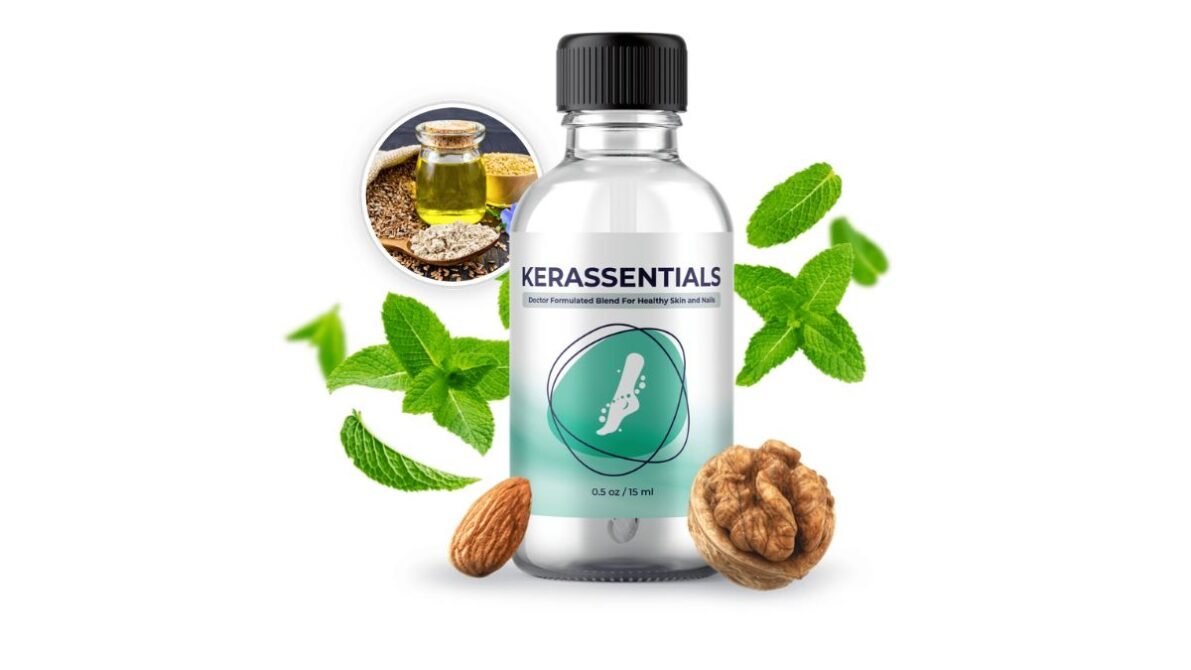
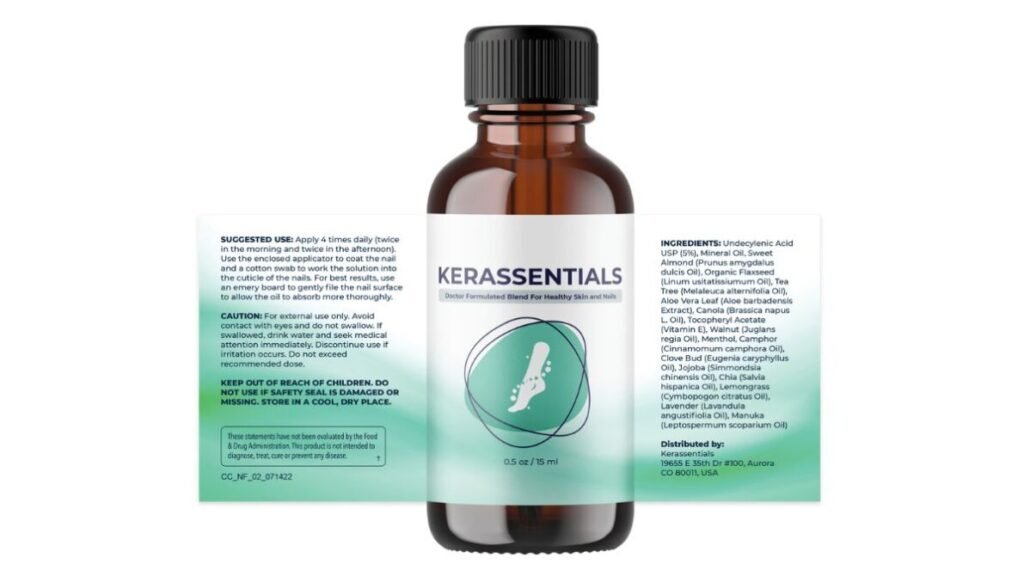
Kerassentials is a natural topical oil applied with a dropper to clean, dry nails and surrounding skin after bathing. The proprietary blend combines 8 named ingredients: Tea Tree Oil (the lead active), Lavender Oil, Organic Flaxseed Oil, Sweet Almond Oil, Lemongrass Oil, Aloe Vera, Vitamin E (Tocopherol Acetate), and Undecylenic Acid. The formula is positioned as a “complete nail and skin support system” that fights fungus at the nail bed while moisturizing the surrounding skin.
What is Kerassentials?
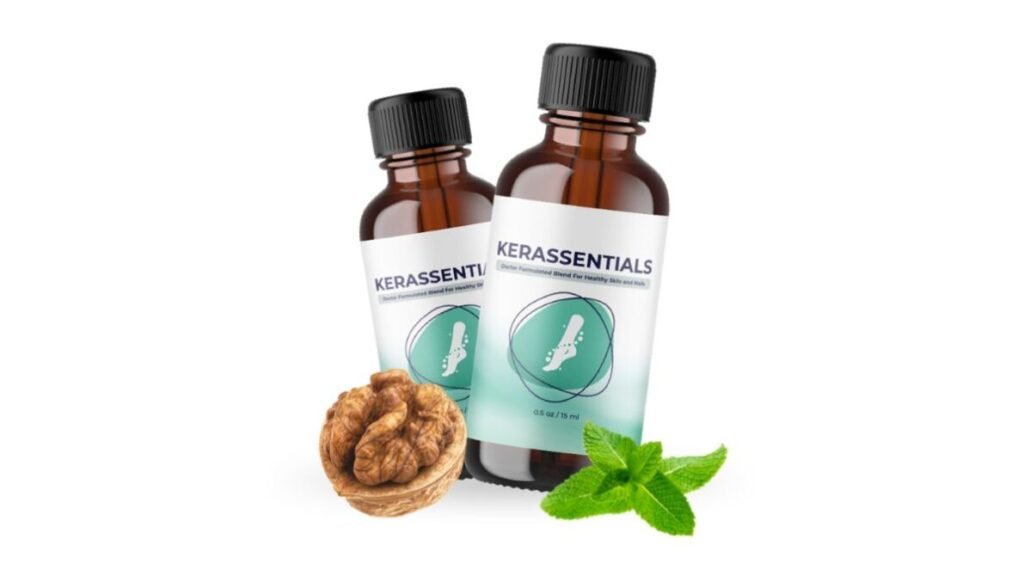
Kerassentials is a natural topical nail fungus oil manufactured in the United States in an FDA-registered, GMP-certified facility by Kerassentials Company (registered in Aurora, Colorado). The recommended usage is to apply the oil with the included dropper applicator to clean, dry nails and surrounding skin once or twice daily, preferably after bathing. The formula is non-GMO, free from chemicals and stimulants, and is positioned as a natural alternative to prescription topical antifungals like ciclopirox (Penlac), efinaconazole (Jublia), and tavaborole (Kyrle). The 6-bottle package includes 4 free bonuses: “Skin SOS,” “Barefoot Ready,” “The Fungal Full Detox Plan,” and an additional surprise gift.
Why Kerassentials Caught My Attention
What stood out most when reviewing the available research on this product was the inclusion of Tea Tree Oil as the lead ingredient — the only essential oil with a published human RCT for onychomycosis. The landmark 1994 study by Buck et al. (PMID 8195735) randomized 117 patients to 100% tea tree oil vs 1% clotrimazole for 6 months and found 18% mycological cure with tea tree vs 11% with clotrimazole, though clotrimazole had slightly better clinical cure rates. A 2019 open-label 12-month study (PMC6995982) combining tea tree oil with vitamin E and other essential oils reported 78.5% complete cure, though this study had no control group. The addition of Undecylenic Acid has moderate evidence from a 2007 Cochrane review showing a 71% relative reduction in treatment failure vs placebo. At the same time, an honest reading of the literature shows that Lavender Oil and Lemongrass Oil have only in vitro antifungal evidence, with no published human RCTs for nail fungus. Individual ingredient doses are NOT disclosed in the proprietary blend, which means the formulation cannot be compared to published clinical trial concentrations. The manufacturer recommends 90 days of use but only offers a 60-day refund window — a structural mismatch that disadvantages consumers. After reading through real user reviews across multiple platforms including the Better Business Bureau (34 complaints on file), a common theme emerged: some users with mild to moderate onychomycosis report improvement, while others report no change or worsening of the fungal infection. That combination of research depth and honest limitation was enough to make this review worth writing.
How Kerassentials Works (Simplified)
The formula is designed to support nail and skin health through four interconnected mechanisms. First, direct antifungal action: Tea Tree Oil (the lead active) contains terpinen-4-ol, which disrupts fungal cell membranes. The 1994 Buck et al. RCT (PMID 8195735) showed modest efficacy vs clotrimazole. Second, fatty acid-based fungistasis: Undecylenic Acid is a C11 fatty acid that inhibits dermatophyte growth. The 2007 Cochrane review (PMC7073424) noted that undecanoates were more effective than placebo in two studies, with a 71% relative reduction in treatment failure. Third, complementary antifungal action from other essential oils: Lavender Oil (linalool and linalyl acetate) and Lemongrass Oil (citral) have in vitro antifungal activity against Trichophyton rubrum and Candida albicans, though human clinical evidence for nail fungus is essentially absent. Fourth, skin and nail bed support: Aloe Vera, Sweet Almond Oil, and Vitamin E provide moisturization and antioxidant support to the surrounding skin, which may help the cuticle and nail bed resist fungal invasion.
Ingredient Analysis: What the Research Shows
Kerassentials features an 8-ingredient essential oil blend. Importantly, the official label does not disclose individual ingredient amounts, which is the main limitation when comparing to published clinical research doses.
Tea Tree Oil (Melaleuca alternifolia)
The most clinically studied ingredient in the formula. The landmark 1994 study by Buck et al. published in the Journal of Family Practice and indexed in PubMed as PMID 8195735 randomized 117 patients with onychomycosis to either 100% tea tree oil or 1% clotrimazole (a standard topical antifungal) twice daily for 6 months. Results showed mycological cure in 18% of the tea tree group vs 11% of the clotrimazole group, though clinical cure (visual improvement) was slightly better in the clotrimazole group. A 2024 in vitro study (PMID 39452627) showed that tea tree oil has potent activity against Trichophyton rubrum (MIC 0.4% v/v), the most common cause of onychomycosis. A 2019 12-month open-label study (PMC6995982) of a combination formula containing tea tree oil, vitamin E, and other essential oils reported 78.5% complete cure, though this study had no control group. The evidence here is moderate — the most robust human clinical data of any essential oil for nail fungus — but inferior in potency to FDA-approved topical antifungals (efinaconazole, tavaborole, ciclopirox).
Undecylenic Acid
A C11 unsaturated fatty acid with documented antifungal activity, listed in the FDA’s over-the-counter monograph for topical antifungal products. A 2007 Cochrane review (PMC7073424) noted that undecanoates were more effective than placebo in two studies with a 71% relative reduction in treatment failure. A 2008 pilot study of 154 patients found 100% negative cultures in mild cases, 65% in moderate cases, and 35% in severe cases. However, a 2024 study (PMC11393267) showed that 25% OTC undecylenic acid has significantly lower nail plate penetration than FDA-approved antifungals like efinaconazole. The evidence here is moderate but limited by the formulation’s lower nail penetration.
Lavender Oil (Lavandula angustifolia)
Contains linalool and linalyl acetate, two compounds with documented in vitro antifungal activity. A 2005 in vitro study (PMID 16178366) showed that L. angustifolia oil inhibited Candida albicans (MIC 0.69–1.04%), and a 2015 study (PMID 26550521) found antifungal activity comparable to clotrimazole at 48 hours in vitro. A 2011 study found that L. viridis had potent antifungal effects against dermatophytes. The evidence here is weak to moderate — promising in vitro data, but no published human RCTs for onychomycosis.
Lemongrass Oil (Cymbopogon citratus)
Rich in citral, a compound with documented in vitro antifungal activity. A 2008 study (PMID 18553017) showed potent activity against Candida species, and a 2021 study (PMC8533043) found that 5% lemongrass oil eliminated approximately 95% of C. albicans biofilm. A 2025 study (PMC12193099) showed MIC of 0.125% v/v against Malassezia furfur. The evidence here is weak — promising in vitro data, but no published human clinical trials for nail fungus.
Organic Flaxseed Oil
Rich in alpha-linolenic acid (ALA), an omega-3 fatty acid. A 2024 systematic review found that flaxseed oil has modest anti-inflammatory effects but no direct evidence for nail fungus treatment. The evidence here is weak for antifungal action; the contribution to Kerassentials is primarily as an emollient carrier oil.
Sweet Almond Oil
A carrier oil rich in vitamin E and monounsaturated fatty acids. Used primarily as a moisturizing base; no direct antifungal evidence. The contribution is as a vehicle for the active essential oils.
Aloe Vera (Aloe barbadensis)
The gel has documented wound-healing and anti-inflammatory properties. A 2024 systematic review found modest evidence for skin moisturization but no direct antifungal action. The contribution is supportive (skin barrier support) rather than primary.
Vitamin E (Tocopherol Acetate)
A fat-soluble antioxidant that protects cell membranes from oxidative damage. A 2019 open-label study (PMC6995982) included vitamin E in a combination formula that reported 78.5% cure, but vitamin E alone has no established antifungal activity. The contribution is antioxidant protection of the surrounding skin and nail bed.
What Real Users Are Saying
Across reviews analyzed on Amazon, Trustpilot, and the Better Business Bureau, the most common positive theme is gradual improvement in nail color and thickness when the oil is applied consistently for 60 to 90 days. A recurring complaint, however, is that users expect dramatic results within a few weeks and stop applying the product before the nail has time to grow out — toenails can take 12 to 18 months to fully regrow. The BBB has logged 34 complaints against Kerassentials Company, including reports of worsening fungal infections, billing disputes, and difficulty with the refund process. Some users note that the oil has a strong medicinal scent (typical of tea tree and lavender), and a small number report mild skin irritation in the cuticle area.
Key Benefits Based on Evidence and User Feedback
When combined with proper nail hygiene, keeping feet dry, breathable footwear, and avoiding walking barefoot in public areas, users of Kerassentials may realistically expect the following:
- Modest Improvement in Mild Nail Fungus: Clinical evidence for Tea Tree Oil (18% mycological cure at 6 months in 1994 RCT) and Undecylenic Acid (71% relative reduction in treatment failure in 2007 Cochrane) supports meaningful improvement over 3 to 6 months in mild cases.
- Skin and Cuticle Support: Aloe Vera, Sweet Almond Oil, and Vitamin E provide moisturization and antioxidant protection.
- Complementary Antifungal Action: Lavender Oil and Lemongrass Oil add in vitro-documented antifungal activity.
- Low Systemic Risk: Topical application of essential oils has a favorable safety profile compared to oral antifungals like terbinafine (which carries hepatotoxicity risk).
What I Liked
- Tea Tree Oil is the most clinically studied essential oil for nail fungus, with a 1994 RCT in 117 patients showing mycological cure comparable to clotrimazole.
- Undecylenic Acid has moderate Cochrane-level evidence and is listed in the FDA OTC monograph for topical antifungals.
- All-natural, non-GMO, no chemical preservatives or stimulants.
- Topical application avoids the systemic side effects of oral antifungals (liver toxicity, drug interactions).
- Easy dropper application as part of daily hygiene routine.
- Manufactured in an FDA-registered, GMP-certified facility in the United States.
- The 6-bottle package includes 4 free bonus eBooks (Skin SOS, Barefoot Ready, Fungal Full Detox Plan).
Things to Consider
- The proprietary blend does not disclose individual ingredient amounts, which limits comparison with published clinical research doses (the 1994 RCT used 100% tea tree oil, far more concentrated than what a blend of 8 oils could provide).
- The manufacturer recommends 90 days of use but only offers a 60-day refund window — a structural mismatch.
- Lavender Oil and Lemongrass Oil have only in vitro antifungal evidence, with no human RCTs for onychomycosis.
- No clinical trial has been conducted on the finished Kerassentials formula specifically.
- Topical tea tree oil is significantly less effective than FDA-approved topical antifungals (efinaconazole 14–18% complete cure, tavaborole 6.5–9.1% complete cure at 48 weeks in clinical trials).
- The 34 BBB complaints against the company include reports of worsening fungal infections and refund difficulties.
- Not a substitute for oral antifungal medication (terbinafine, itraconazole) for moderate to severe onychomycosis.
- Results require consistent use over 3 to 6 months before noticeable improvement appears, and full nail regrowth takes 12 to 18 months.
- Only available through the official website, not in physical retail stores.
Safety, Side Effects, and Trust Factors
Kerassentials is generally well tolerated when applied topically as directed. However, individual responses can vary. Tea Tree Oil can cause contact dermatitis, allergic reactions, and skin irritation in sensitive individuals — never ingest it (oral ingestion can cause CNS depression, ataxia, and confusion). Lavender Oil may cause skin irritation in some users. The product is for external use only and should be kept away from eyes, mouth, and mucous membranes. Pregnant or nursing women should consult a doctor before using essential oil products topically. People with known allergies to tea tree, lavender, or other plant-derived ingredients should perform a patch test before full application. The 60-day money-back guarantee offered through the Kerassentials official website allows for a trial period, though the manufacturer recommends 90 days of use for optimal results. Readers interested in the latest details can visit the Kerassentials official website for updated pricing and current bonuses.
Who Kerassentials May Be Suitable For
Kerassentials may be a good fit for adults who have mild nail fungus (early-stage yellowing or thickening) and want to try a natural topical approach before prescription antifungals; who prefer essential oil-based products over synthetic antifungals; who are willing to commit to consistent daily application for 3 to 6 months; who understand that full nail regrowth takes 12 to 18 months; and who have realistic expectations of modest improvement rather than dramatic overnight results.
For adults who want a nano-encapsulation technology approach to nail fungus with a 180-day money-back guarantee (rather than the essential oil approach), our detailed NanoDefense Pro review covers a complementary 6-ingredient formula with quercetin as the most promising active ingredient.
Who Should Be More Cautious with Kerassentials
While Kerassentials is designed as a topical wellness product, certain individuals should consult a healthcare professional before use. People with moderate to severe onychomycosis (thickened, crumbling, or painful nails) should not rely on essential oils alone — prescription oral antifungals (terbinafine, itraconazole) or FDA-approved topicals (efinaconazole, tavaborole, ciclopirox) have substantially higher cure rates. People with diabetes, peripheral vascular disease, or compromised immune systems should consult a doctor before treating nail fungus, as they are at higher risk for complications including cellulitis. People with known allergies to tea tree oil, lavender, or other essential oils should perform a patch test before full application. The American Academy of Dermatology Association offers helpful resources on nail fungus diagnosis and treatment. When in doubt, consult a dermatologist or podiatrist for proper diagnosis and treatment planning.
Where to Buy and Important Warning
Kerassentials is sold primarily through its official website. Prices may change over time, so it is always recommended to check the Kerassentials official website for the most up-to-date pricing and current bonuses before purchasing.
| Package | Total Price | Cost per Bottle | Supply | Best For |
|---|---|---|---|---|
| 2 Bottles | $138 | $69 per bottle | 60 days | First-time users who want to try the formula |
| 3 Bottles | $177 | $59 per bottle | 90 days | The manufacturer’s recommended trial period |
| 6 Bottles | $294 | $49 per bottle | 180 days | Best value per bottle with 4 free bonus eBooks |
All packages come with a 60-day money-back guarantee. The 6-bottle package includes 4 bonus eBooks (Skin SOS, Barefoot Ready, Fungal Full Detox Plan, and a surprise gift).
Buying directly through the Kerassentials official website is the only way to ensure you receive the authentic product and qualify for the 60-day refund policy. Third-party sellers on Amazon, eBay, or other marketplaces are not authorized and may sell expired, diluted, or counterfeit versions that will not produce the same results.
Final Verdict
Kerassentials stands out in the topical nail fungus space because of its inclusion of Tea Tree Oil — the most clinically studied essential oil for onychomycosis, with a 1994 RCT in 117 patients showing mycological cure comparable to 1% clotrimazole. The addition of Undecylenic Acid (FDA OTC monograph ingredient with 2007 Cochrane-level evidence) and complementary essential oils adds modest antifungal coverage. At the same time, it is important to calibrate expectations honestly: the proprietary blend does not disclose individual doses (the 1994 RCT used 100% tea tree oil, far more concentrated than an 8-ingredient blend could provide), topical essential oils are substantially less effective than FDA-approved topical antifungals (efinaconazole, tavaborole) and oral antifungals (terbinafine, itraconazole), and the 34 BBB complaints against the company include reports of worsening fungal infections and refund difficulties. The manufacturer’s recommendation of 90 days of use alongside a 60-day refund window is a structural mismatch. The expected benefit is modest improvement in mild onychomycosis over 3 to 6 months, and full nail regrowth takes 12 to 18 months. It is not a magic cure and is not designed to replace prescription treatment for moderate to severe nail fungus, but for adults with mild onychomycosis who prefer a natural topical approach and have realistic expectations, it may be a worthwhile option to consider. Readers interested in learning more can check the Kerassentials official website for updated details, current pricing, and available bonuses.
Frequently Asked Questions
Does Kerassentials really work for nail fungus?
The strongest evidence supporting Kerassentials comes from its lead ingredient Tea Tree Oil, which has a 1994 RCT in 117 patients (PMID 8195735) showing 18% mycological cure vs 11% with 1% clotrimazole at 6 months. Undecylenic Acid has a 2007 Cochrane review (PMC7073424) showing 71% relative reduction in treatment failure vs placebo. However, the proprietary 8-ingredient blend does not match the 100% tea tree oil concentration used in the 1994 RCT, and topical essential oils are less effective than FDA-approved topical antifungals. No clinical trial has been conducted on the finished Kerassentials formula specifically. User reviews are mixed — some report improvement in mild cases, while others (including 34 BBB complaints) report no change or worsening.
Are there any side effects associated with Kerassentials?
Kerassentials is formulated with natural essential oils and is generally well tolerated topically. The most commonly reported side effects are mild skin irritation and contact dermatitis, particularly from Tea Tree Oil in sensitive individuals. Lavender Oil may also cause skin reactions in rare cases. The product is for external use only — oral ingestion of tea tree oil can cause CNS depression, ataxia, and confusion. People with known allergies to essential oils should perform a patch test before full application. Pregnant or nursing women should consult a doctor before using essential oil products.
How should I use Kerassentials and when can I expect results?
The recommended usage is to apply the oil with the included dropper to clean, dry nails and surrounding skin once or twice daily, preferably after bathing. Most users begin to notice improvement in nail color and thickness within 2 to 3 months, but full visible nail regrowth takes 12 to 18 months for toenails and 6 to 9 months for fingernails. Combining Kerassentials with proper nail hygiene (keeping feet dry, breathable footwear, avoiding walking barefoot in public areas) will substantially improve results.
What is the money-back guarantee for Kerassentials?
Every order of Kerassentials is backed by a 60-day money-back guarantee. The manufacturer recommends 90 days of use for optimal results, which is 30 days longer than the refund window — this is a structural mismatch that consumers should be aware of before purchasing. To request a refund, contact customer support by email within 60 days of purchase.
Where should I buy Kerassentials to make sure I get the real product?
Kerassentials should only be purchased through the Kerassentials official website to ensure authenticity and qualify for the 60-day refund policy. Third-party sellers on Amazon, eBay, or other marketplaces are not authorized and may sell expired, diluted, or counterfeit versions. The Better Business Bureau has logged 34 complaints against Kerassentials Company, including reports of unauthorized charges and refund difficulties — purchasing directly from the official site provides the strongest consumer protection.
Can Kerassentials cure severe nail fungus or replace prescription treatment?
No, Kerassentials is a topical essential oil blend designed to support nail and skin health. It is not a substitute for prescription treatment of moderate to severe onychomycosis. FDA-approved topical antifungals (efinaconazole 14–18% complete cure at 48 weeks, tavaborole 6.5–9.1%, ciclopirox 5.5–8.5%) and oral antifungals (terbinafine 38–70% mycological cure) have substantially higher efficacy. Anyone with moderate to severe nail fungus should consult a dermatologist or podiatrist for proper diagnosis and treatment planning. Kerassentials may be used as a complementary topical product alongside medical treatment, but should not replace prescription therapy.
These statements have not been evaluated by the FDA. This product is not intended to diagnose, treat, cure, or prevent any disease.

Raphael Albert is the founder and content creator of Nutra Pulse. Passionate about health, nutrition, fitness, and wellness, he spends his time researching scientific studies, health trends, and evidence-based lifestyle strategies to create informative and easy-to-understand content. While he is not a doctor or licensed healthcare professional, his goal is to help readers make more informed wellness decisions. All content is for educational purposes only and should not replace professional medical advice. Always consult a qualified healthcare provider regarding your health concerns.

1 thought on “Kerassentials Review: A Topical Oil Against a Fungus Under the Nail Plate”