In 2026, more adults over 40 are paying closer attention to long-term eye health as natural aging, prolonged screen exposure, and accumulated oxidative stress begin to affect macular function, night vision, and overall visual comfort. Difficulty focusing after long hours on digital devices, increased sensitivity to glare, gradual decline in night vision, and concerns about age-related macular degeneration are common frustrations that affect daily quality of life and long-term independence.
This VisiFlora review will explore how this 22-in-1 vision and gut-health supplement positions itself as a comprehensive solution for supporting macular wellness, blue light filtering, and the emerging gut-eye connection. It checks the page’s claims against the ingredient list it publishes. The sales page lists beta-carotene in the macular blend, even though the AREDS2 trial that tested these nutrients dropped beta-carotene because of a lung cancer concern in former smokers. It then looks at which ingredients have real eye research, and what is not disclosed.
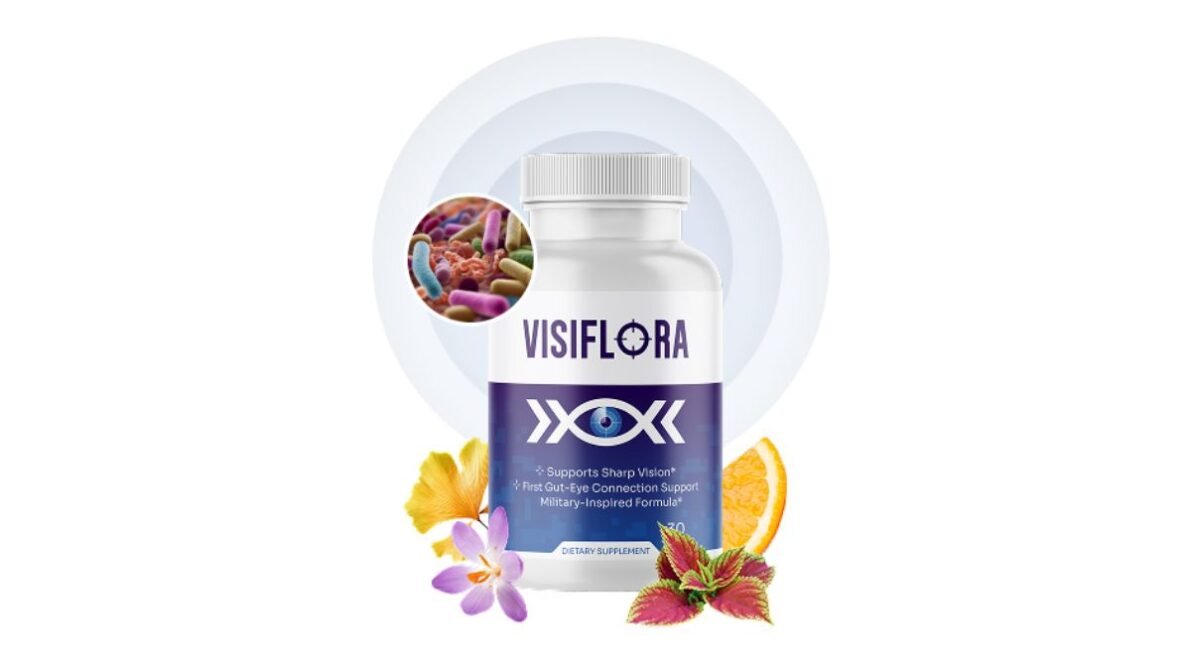
VisiFlora is a natural dietary supplement formulated around the emerging concept of the gut-eye axis, combining 22 ingredients organized into four targeted blends: a Vision Defense Matrix (astaxanthin, vitamin C, vitamin E, copper, selenium, chromium), a Gut-Eye Barrier Complex (grape seed extract, rutin, quercetin, taurine, alpha lipoic acid), a Vision Performance Boosters blend (ginkgo biloba, coleus forskohlii, eyebright, zinc), and a Macular and Lens Protection Blend (vitamin A as beta carotene, lutein, zeaxanthin, bilberry extract, lycopene, saffron extract). Rather than relying on a single mechanism, the formula is designed to address multiple contributors to age-related visual decline, including oxidative stress in the retina, blue light exposure, gut barrier integrity, and reduced ocular blood flow.
What is VisiFlora?
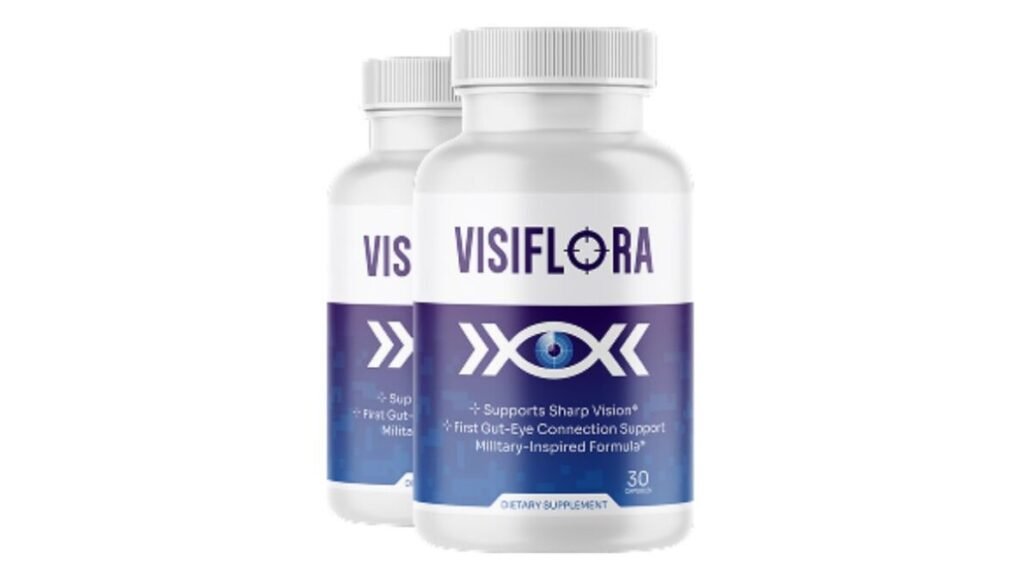
VisiFlora is a once-daily capsule that combines 22 ingredients across four functional blends. The page describes it as non-GMO, vegan and stimulant-free. It is designed for adults over 40 who want to proactively support macular wellness, blue light filtering, night vision, and the gut-eye connection as part of a long-term eye health routine.
Why VisiFlora Caught My Attention
The formula pairs lutein, zeaxanthin, zinc, vitamin C and vitamin E with newer additions such as saffron, astaxanthin and bilberry, each of which has its own published eye research. The gut-eye axis framing is emerging science, with research groups exploring how gut barrier integrity relates to retinal inflammation, but no clinical trial has tested the finished VisiFlora formula.
How VisiFlora Works (Simplified)
The formula is designed to support eye health and the gut-eye connection through four main mechanisms. First, macular pigment support: lutein and zeaxanthin from marigold concentrate in the macula and filter harmful blue light before it damages retinal cells.
The landmark Age-Related Eye Disease Study 2 (AREDS2), conducted by the National Eye Institute, tested 10 mg of lutein plus 2 mg of zeaxanthin daily, including as a replacement for beta-carotene in the original AREDS formula, in about 4,200 people with intermediate or advanced age-related macular degeneration, with about five years of follow-up. Those who took lutein and zeaxanthin in place of beta-carotene had a modest additional benefit compared with the original formula.
The people studied already had AMD, and the National Eye Institute says the AREDS and AREDS2 supplements do not prevent AMD from starting. Second, retinal antioxidant protection: astaxanthin, vitamin C, vitamin E, selenium, copper, and alpha lipoic acid work together to neutralize oxidative stress in the retina, which accumulates with age and screen exposure.
A 2022 randomized placebo-controlled trial in healthy adults found that 9 mg/day of astaxanthin over 6 weeks significantly protected visual acuity decline after visual display terminal work in participants aged 40 and older.
Third, ocular blood flow: ginkgo biloba extract has been studied for its role in increasing end-diastolic velocity in the ophthalmic artery, with a randomized crossover trial finding a 23% increase in blood flow after 2 days of 120 mg/day.The VisiFlora page does not say how much ginkgo is in the capsule, so that dose cannot be matched to the trial.
Fourth, gut barrier integrity: grape seed extract, rutin, quercetin, and taurine support the gut barrier, which research suggests may reduce the systemic inflammatory load (LPS toxins) that can affect retinal tissue over time, though this remains an emerging area of investigation.
A randomized placebo-controlled crossover trial of saffron (Crocus sativus) published in Graefe’s Archive for Clinical and Experimental Ophthalmology followed 100 adults with mild to moderate age-related macular degeneration and found that 20 mg/day of saffron for 3 months modestly improved best-corrected visual acuity and multifocal electroretinogram response compared to placebo. Additional research has shown that saffron supplementation at 20 to 50 mg/day for 3 to 12 months improves visual function in patients with mild to moderate AMD, with benefits maintained throughout follow-up periods.
Why Beta-Carotene in an Eye Formula Matters
The sales page lists “Vitamin A (Beta Carotene)” in the Macular and Lens Protection Blend and gives no amount. That matters because the original AREDS formula contained beta-carotene, and in AREDS2 it was removed. The National Eye Institute reports that AREDS2 participants who were former smokers and took a formulation with beta-carotene had a higher incidence of lung cancer, and it advises current and former smokers to avoid the AREDS formula with beta-carotene. See the National Eye Institute’s AREDS and AREDS2 page.
If you smoke or used to smoke, talk to your doctor before taking any formula that contains beta-carotene. The page does not say whether the beta-carotene here is the full amount used in the original AREDS formula or a smaller amount.
We could not see a Supplement Facts image for this product.
Results, Observations, and Expectations
If the formula helps at all, and you combine it with regular eye exams, less screen time, blue light habits and a balanced diet, the realistic things to watch are: reduceddigital eye strain and end-of-day visual fatigue over several weeks of consistent use; improved contrast sensitivity and sharper focus during night driving as macular pigment density gradually builds; better protection against blue light exposure in high-screen environments; improved long-term retinal and macular resilience; and modest improvements in low-light and night vision over 8 to 12 weeks of consistent use.
The sales page shows three testimonials with first names and states (Corinne F., James V., Rachel S.), and its footer says names and personal identifying information have been changed. We could not verify any of them. Macular pigment builds slowly, so the 8 to 12 weeks the page implies is a marketing window, not a trial result.
What I Liked
- Includes lutein and zeaxanthin from marigold, the nutrients tested in AREDS2 (amounts not disclosed).
- Includes saffron extract with multiple randomized controlled trials supporting modest improvements in visual acuity and retinal function in mild-to-moderate AMD.
- Includes astaxanthin, which has 2022 randomized placebo-controlled trial data supporting reduced visual stress in adults aged 40 and older during screen work.
- Discloses zinc at 11 mg, a modest dose, far below the 80 mg used in the AREDS formulas.
- Includes taurine, which is the most abundant amino acid in the retina and has been studied for neuroprotective effects on retinal ganglion cells.
- Described by the page as non-GMO, vegan and stimulant-free.
- Backed by a 60-day money-back guarantee.
Things to Consider
- The formula uses a proprietary blend structure that does not disclose individual ingredient amounts for most of the 22 ingredients, which limits ability to compare doses against published clinical research.
- No clinical trial has been conducted on the finished VisiFlora formula; all evidence is based on individual ingredients at research doses that may differ from what’s in this product.
- The “gut-eye axis” concept, while supported by emerging research, has not yet been validated in human clinical trials specifically testing vision outcomes from gut-targeted supplementation.
- Some ingredients (eyebright, coleus forskohlii, lycopene for vision specifically) have weak or limited direct evidence for eye health benefits in humans.
- Requires consistent daily use over 8 to 12 weeks before noticeable improvements appear.
- Not a substitute for prescription treatment of diagnosed eye disease, including advanced AMD, glaucoma, or diabetic retinopathy.
- Only available through the VisiFlora official website, not in physical retail stores.
- The macular blend lists beta-carotene with no amount, and beta-carotene was dropped from AREDS2 over a lung cancer concern in former smokers.
- At 11 mg, the zinc is not an AREDS-style dose, so the formula is not a copy of the AREDS or AREDS2 formulas.
- The page’s savings figures do not add up: with a crossed-out $99 per bottle, 3 bottles save $120 and 6 bottles save $300, but the page says $302 and $434.
Safety, Side Effects, and Trust Factors
VisiFlora is generally well tolerated by most adult users, and the page describes it as non-GMO, vegan and stimulant-free. However, as with any supplement, individual responses can vary. Some users may experience mild digestive adjustment during the first week, particularly if sensitive to polyphenols like grape seed extract or quercetin.
Ginkgo biloba may have mild blood-thinning effects, so anyone taking anticoagulant medications (such as warfarin or aspirin) should consult a healthcare professional before use. Astaxanthin can occasionally cause a slight orange tint to the skin at high doses, which is harmless and reversible.
The 60-day money-back guarantee offered through the VisiFlora official website reduces the financial risk of trying the product. Readers interested in the latest details can visit the VisiFlora official website for updated pricing and current bonuses.
Who VisiFlora May Be Suitable For
VisiFlora may be a good fit for adults who are over 40 and want to proactively support macular health as part of healthy aging; who spend long hours in front of digital screens and want to support visual comfort and reduced digital eye strain; who have a family history of age-related macular degeneration and want to discuss nutrition for macular health with an eye doctor; who experience early night vision concerns or increased sensitivity to glare; who prefer a comprehensive 22-in-1 formula rather than managing multiple separate supplements; and who are willing to commit to daily use for at least 8 to 12 weeks to allow macular pigment density and retinal resilience to build.
Who Should Be More Cautious with VisiFlora
While VisiFlora is designed as a daily wellness supplement, certain individuals should consult a healthcare professional before starting. People with diagnosed eye disease, including AMD, glaucoma, diabetic retinopathy, or cataracts requiring surgical evaluation, should not replace prescribed treatment with any supplement.
Anyone taking prescription blood thinners (warfarin, aspirin, clopidogrel) should consult a doctor before use, since ginkgo biloba may have mild antiplatelet effects. Pregnant or nursing women should exercise caution with any new supplement as a general rule.
People with known allergies to saffron, ginkgo, or any botanical ingredient should review the formula carefully. People scheduled for surgery should discontinue ginkgo-containing supplements at least 2 weeks before the procedure. The National Eye Institute offers helpful resources on age-related eye disease prevention and the AREDS2 study for anyone wanting to learn more. When in doubt, speak with your eye doctor or primary care physician before adding any new supplement to your routine.
For adults whose primary concern is brain + metabolic support through Saffron and Berberine (with the cognitive + blood sugar angle), our detailed Phytomem One review covers a complementary 10-ingredient formula sharing the same Saffron active ingredient. For adults whose primary concern is skin-gut axis support through a probiotic + prebiotic gummy format (rather than eye and macular health), our PrimeBiome review covers a complementary 10-ingredient formula with B. Coagulans and Babchi (bakuchiol) as the standout ingredients.
For adults whose primary concern is hearing comfort and auditory wellness through a liquid herbal-amino acid formula (rather than cognitive function), our detailed Audifort review covers a complementary 22-ingredient liquid dropper with GABA, Grape Seed Extract, and Green Tea Extract at the core of the formula.
Where to Buy and Important Warning
VisiFlora is sold primarily through its official website. Prices may change over time, so it is always recommended to check the VisiFlora official website for the most up-to-date pricing and current bonuses before purchasing.
| Package | Total Price | Cost per Bottle | Supply | Best For |
|---|---|---|---|---|
| 2 Bottles (Starter) | $158 | $79 per bottle | 60 days | First-time users who want to try the formula |
| 3 Bottles (Advanced) | $177 | $59 per bottle | 90 days | Middle tier, free U.S. shipping |
| 6 Bottles (Ultimate) | $294 | $49 per bottle | 180 days | Best value per Lowest price per bottle, free U.S. shipping |
All packages come with a 60-day money-back guarantee, and the page says to return the bottles for a refund. The refund policy sits in the footer, so read it before buying. The 3- and 6-bottle packages show free U.S. shipping, and the 2-bottle package shows a small shipping fee. Three free digital bonuses are also included with multi-bottle orders (Military Vision Protection Manual, The Gut-Eye Healing Protocol, and The 48-Hour Vision Jump-Start).
The page says VisiFlora is sold only on its own site. At checkout, the 6-bottle package showed $294.00, free shipping and $0.00 tax, with an optional $3.99 shipping insurance add-on. The checkout states a ClickBank guarantee of “return or replacement of any product within 60 days from the date of purchase,” and the charge appears as CLKBANK*VISIFLORA. The page’s own FAQ says the charge will appear as “BuyGoods,” which does not match the checkout.
Final Verdict
VisiFlora includes several nutrients with real eye research (lutein and zeaxanthin, saffron, astaxanthin and bilberry), but it is not an AREDS2 formula: its zinc is 11 mg, and it lists beta-carotene, which AREDS2 removed.
The framing around the gut-eye axis is genuinely interesting emerging science, but readers should calibrate expectations accordingly: no clinical trial to date has tested the finished VisiFlora formula, and most ingredient amounts are not publicly disclosed.
It is not a magic cure and is not designed to replace prescription treatment for diagnosed eye disease, but for adults who want to support macular wellness, screen-related visual comfort, and the gut-eye connection as part of a long-term eye health routine, it may be a worthwhile option to consider. The 60-day refund window also reduces the financial risk of committing to a full macular support cycle. Readers interested in learning more can check the VisiFlora official website for updated details, current pricing, and available bonuses.
If you’re weighing options in eye health, our iGenics review covers another formula in this space.
Frequently Asked Questions
Does VisiFlora really work for vision and macular health?
The strongest evidence supporting VisiFlora comes from its individual ingredients with the most robust research base. Lutein and zeaxanthin are backed by the AREDS2 randomized clinical trial (about 4,200 participants, about five years of follow-up), which confirmed safety and incremental benefit when replacing beta-carotene. Saffron has multiple RCTs (including a 100-participant crossover trial published in Graefe’s Archive for Clinical and Experimental Ophthalmology) showing modest visual acuity improvements in mild-to-moderate AMD. Astaxanthin has 2022 RCT data supporting reduced visual stress in adults over 40 during screen work. However, no clinical trial has tested the finished VisiFlora formula specifically, andmost ingredient amounts are not publicly disclosed.
Are there any side effects associated with VisiFlora?
VisiFlora is formulated with natural ingredients and is generally well tolerated. Some users may experience mild digestive adjustment during the first week, particularly if sensitive to polyphenols like grape seed extract or quercetin. Ginkgo biloba may have mild blood-thinning effects, so anyone taking anticoagulant medications (such as warfarin or aspirin) should consult a healthcare professional before use. Astaxanthin can occasionally cause a slight orange tint to the skin at high doses, which is harmless and reversible. People with allergies to any botanical ingredient should review the formula carefully.
How should I take VisiFlora and when can I expect results?
The recommended dosage is one capsule daily with food, ideally with a meal that contains some healthy fat (avocado, eggs, olive oil, or nuts) to improve absorption of the fat-soluble carotenoids like lutein, zeaxanthin, and astaxanthin. The page says many users report improvements “in just a few weeks,” but it offers no data. Macular pigment density builds gradually with daily nutritional support.
What is the money-back guarantee for VisiFlora?
The checkout states that ClickBank will allow return or replacement of any product within 60 days from the date of purchase. Read ClickBank’s return policy before ordering.
Where should I buy VisiFlora to make sure I get the real product?
The page says VisiFlora is sold only on its own site. Check the processor name at checkout before you pay.
Can VisiFlora reverse macular degeneration or restore lost vision?
No, VisiFlora is a dietary supplement designed to support macular wellness and visual comfort. It is not intended to diagnose, treat, cure, or prevent any disease, and it cannot reverse existing macular damage or restore vision that has already been lost. Anyone with diagnosed age-related macular degeneration, glaucoma, diabetic retinopathy, or other serious eye conditions should follow the guidance of a qualified ophthalmologist for proper evaluation and treatment.
Does VisiFlora contain beta-carotene?
The sales page lists “Vitamin A (Beta Carotene)” in the Macular and Lens Protection Blend without an amount. The AREDS2 trial removed beta-carotene because of a higher lung cancer rate in former smokers, so people who smoke or used to smoke should talk to a doctor first.
These statements have not been evaluated by the FDA. This product is not intended to diagnose, treat, cure, or prevent any disease.
This article contains affiliate links. The author may earn a commission at no extra cost to you. This content is for informational purposes only and does not constitute medical advice. Always consult a qualified healthcare professional before starting any new supplement or health product.

Raphael Albert is the founder and content creator of Nutra Pulse. Passionate about health, nutrition, fitness, and wellness, he spends his time researching scientific studies, health trends, and evidence-based lifestyle strategies to create informative and easy-to-understand content. While he is not a doctor or licensed healthcare professional, his goal is to help readers make more informed wellness decisions. All content is for educational purposes only and should not replace professional medical advice. Always consult a qualified healthcare provider regarding your health concerns.
6 thoughts on “VisiFlora Review: AREDS2 Dropped Beta-Carotene, but This Formula Lists It”