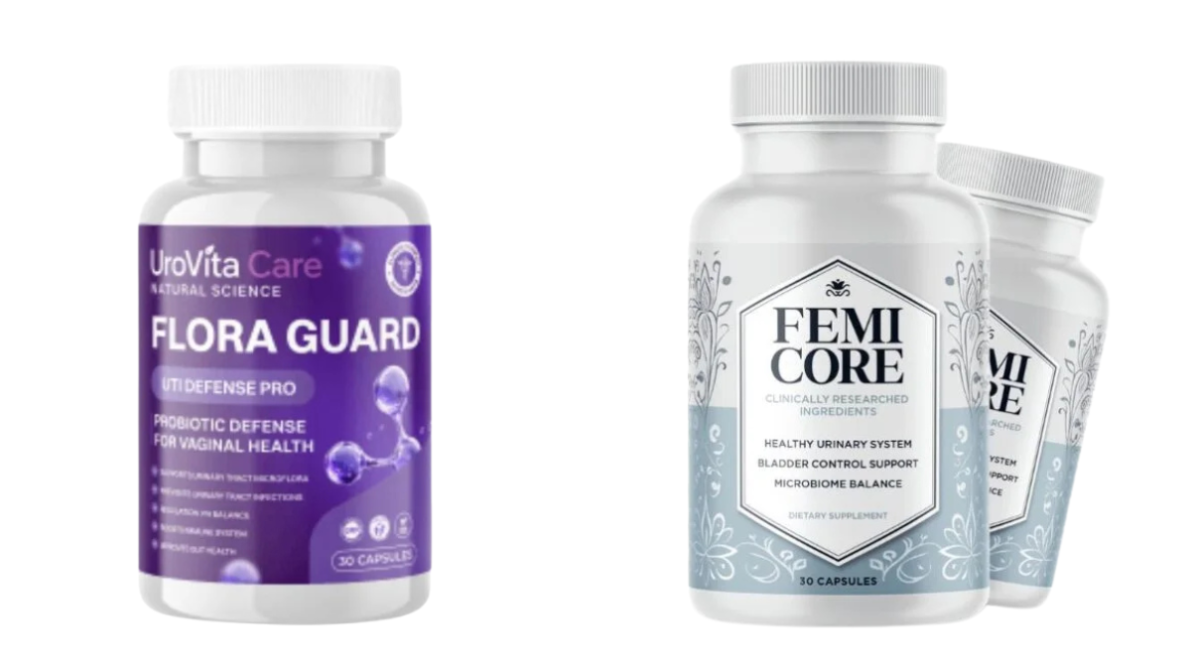
On incentives: this article contains one affiliate link, to FemiCore. There is no link to UroVita Care, and the reason is the subject of this comparison — we don’t point readers toward a product whose ingredients nobody will disclose.
These statements have not been evaluated by the Food and Drug Administration. These products are not intended to diagnose, treat, cure, or prevent any disease. A urinary tract infection is a bacterial infection that needs antibiotics. If you have burning, urgency or frequency now, that’s a doctor’s appointment — neither product on this page treats an active infection.
Most product comparisons weigh two ingredient lists against each other. FemiCore vs UroVita Care can’t be done that way, because only one of them has an ingredient list.
That sounds like an insurmountable gap, and in one sense it is. But it also makes this a more useful comparison than most — because it shows exactly what you can still evaluate when a company won’t tell you what’s in the bottle, and what you simply can’t.
Both are sold to the same woman: someone dealing with urinary discomfort, bladder urgency, or recurrent infections, looking for something to take daily. Both are marketed on the same premise. Only one of them lets you check it.
What Each One Is
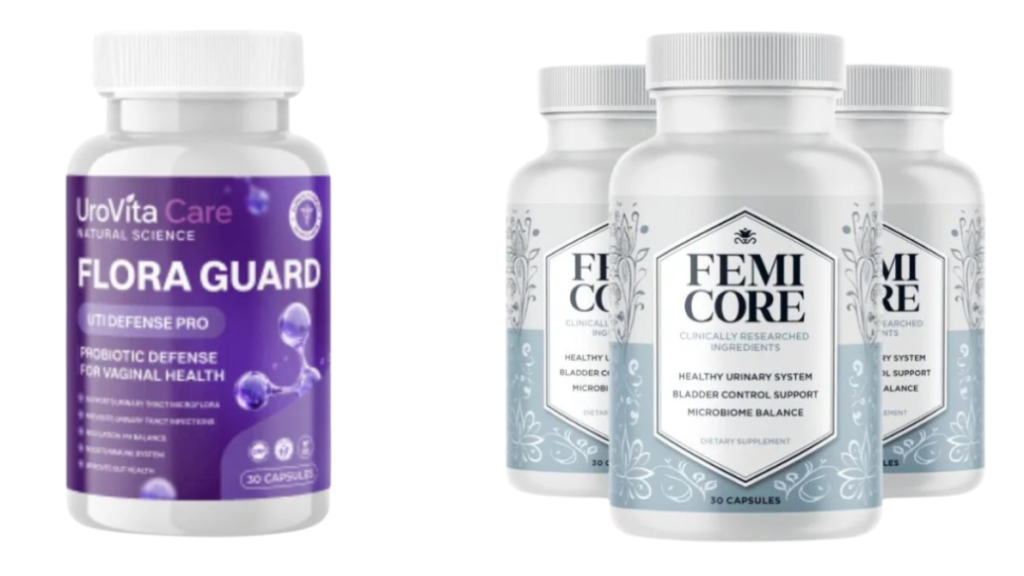
FemiCore is a capsule for women’s urinary and vaginal health, combining probiotic organisms with botanical ingredients including bearberry (uva ursi), berberine and cranberry. It publishes a named ingredient list, is sold through an established retailer of record, and carries a 60-day money-back guarantee.
UroVita Care, sometimes sold as Flora Guard, is a capsule marketed for the same purpose. It publishes no ingredient list at all. The purchase page is a checkout — package selection and a card form — with a 30-day guarantee and direct card entry rather than a payment platform.
FemiCore’s Ingredient List
This is where the comparison can actually function.
FemiCore names its components, which means each one can be looked up and compared against published research. Our FemiCore review works through all of them.
The headline finding from that analysis: the ingredients are real and researched, but two of them raise specific questions — one about duration of use, one about pregnancy. Both are covered below, and both are only knowable because the label exists.
UroVita Care’s Missing List
Not a partial list. Not a proprietary blend with the total stated and the breakdown withheld. No ingredients at all.
Our UroVita Care review documents what the purchase page actually contains: package tiers, a price, a guarantee, and a card form. The word “ingredients” doesn’t lead anywhere.
That has a consequence beyond frustration. You cannot check it against your medications. You cannot check it against an allergy. You cannot check it against a pregnancy. And neither can a pharmacist you might ask.
The Advertorial That Couldn’t Find the Label
One detail deserves its own section, because it’s unusual.
A paid promotional article about UroVita Care, distributed through a newswire service, acknowledges that its author could not locate the Supplement Facts panel — and advises readers to telephone the company to ask what’s in the product.
That’s material written to sell it. When promotional content can’t establish the formula, an independent reader has no better path.
Same Brand, Two Different Customers
Search the UroVita Care name and you’ll find it marketed in two incompatible ways: as a women’s urinary and vaginal probiotic on some domains, and as a men’s prostate supplement on others.
Those target different anatomy and different conditions. A formula appropriate for one is not automatically appropriate for the other, and a brand presenting the same product to both audiences is telling you something about how the formula was arrived at.
FemiCore is marketed consistently to one audience.
What FemiCore vs UroVita Care Comes Down To
Strip away what can’t be assessed, and four things remain comparable.
Retailer of record. FemiCore’s transaction runs through an established payment platform, which means the refund is administered by a third party rather than the seller’s own returns desk. UroVita Care takes card details directly.
Guarantee length. 60 days versus 30.
Brand consistency. One audience versus two.
Whether anyone independent has verified anything. Neither has a verified-purchase review pool, since both sell direct. But one publishes a label a pharmacist could read.
Here’s how that lays out — and note that half the rows can only be filled for one side, which is itself the finding of this FemiCore vs UroVita Care comparison:
| FemiCore | UroVita Care | |
|---|---|---|
| Ingredients named | ✅ Yes | ❌ None published |
| Amounts published | ⚠️ Partial | ❌ Not applicable |
| Retailer of record | ✅ Established platform | ❌ Direct card entry |
| Guarantee | 60 days | 30 days |
| Consistent audience | ✅ Women only | ❌ Also sold for prostate |
| Checkable by a pharmacist | ✅ Yes | ❌ No |
Retailer of Record and Refund Route
Worth understanding why this matters more than it sounds.
When a payment platform is the retailer of record, your refund claim goes to a company with its own dispute process, independent of the seller’s willingness to cooperate. When you enter card details directly on a vendor page, your refund depends on that vendor — and your fallback is a chargeback through your bank.
Advantage: FemiCore, clearly.
Guarantee: 60 Days Versus 30
Thirty days is the shortest window we’ve encountered across the products reviewed on this site. Sixty is ordinary rather than generous.
For a category where probiotic and botanical effects are described in terms of weeks to months, a thirty-day window closes before most products would be expected to show anything.
Advantage: FemiCore.
The Uva Ursi Problem
Now FemiCore’s own issue, and it’s a real one that only surfaces because the label exists.
Bearberry (uva ursi) is a traditional urinary antiseptic with genuine history. European regulatory guidance advises using it for no more than one week at a time, and no more than a few times per year, because of concerns about hydroquinone exposure with prolonged use.
FemiCore is sold in multi-month packages designed for daily use.
That’s a genuine mismatch between the ingredient’s guidance and the product’s format — and it’s exactly the kind of thing you can only find when a company names its ingredients. UroVita Care may contain uva ursi, more of it, or none. There’s no way to know.
Berberine and Pregnancy
The second FemiCore-specific finding, and it’s a firm one.
Berberine is contraindicated in pregnancy and breastfeeding. It crosses the placenta and can displace bilirubin, carrying a kernicterus risk in newborns. It also inhibits CYP3A4 and P-glycoprotein, the enzyme and transporter that handle a large share of prescription medications.
Urinary symptoms are common in pregnancy. This is precisely the population that needs to know, and again — knowable only because it’s on the label.
The Route Question: Oral Versus Intravaginal
Both products belong to a category built substantially on Lactobacillus crispatus research, and there’s a delivery detail that applies to the whole category.
The trial that established that organism’s benefit — LACTIN-V — delivered it intravaginally, as a suppository. Swallowing a capsule is a different route, and the intravaginal evidence doesn’t transfer automatically.
That’s a limitation FemiCore shares with most oral products making this claim. It’s not a differentiator between the two, but it’s worth knowing before either purchase.
Cranberry: Prevention, Not Treatment
The single most important distinction in this category, and it applies to both products equally.
A Cochrane review of 50 studies involving 8,857 participants found that cranberry products reduce the risk of repeat symptomatic urinary tract infections in women with recurrent UTIs. That’s a substantial evidence base, and it’s about prevention of recurrence.
It is not evidence for treating an infection you already have.
If you have burning, urgency, frequency or cloudy urine now, you’re in the treatment situation — and neither of these products addresses it.
What Both Products Share
Three things apply to both, and they matter more than the differences.
Neither treats an active infection. Both are prevention-and-comfort products at best.
Neither has a verified-purchase review pool, because both sell direct only.
Neither has a clinical trial on the finished formula.
The Reference List Pattern
One observation worth carrying into any purchase in women’s health.
FemiCore’s reference list includes material about contamination in menstrual products — heavy metals, endocrine disruptors, regulatory investigations. That content is real journalism about a real topic. It has nothing to do with any ingredient in the capsule.
We’ve documented the same pattern in a menopause product, whose citation list included seven similar entries. It’s a fear narrative filed under scientific references, and once you recognise it, you’ll spot it repeatedly.
The check: do the citations name the ingredients in the bottle? If they’re about the condition, the industry, or contamination in an unrelated product, the list is decoration.
Safety: Who Should Be Careful With Each
With FemiCore, specifically: anyone pregnant or trying to conceive, because of the berberine. Anyone taking prescription medication, because berberine affects CYP3A4 and P-glycoprotein. Anyone planning to take it continuously for months, because of the uva ursi guidance. Anyone taking diabetes medication, since berberine lowers blood glucose.
With UroVita Care, the honest answer is that no specific caution can be given — which is itself the caution. Without an ingredient list, nobody can tell you whether it interacts with your medication, whether it’s safe in pregnancy, or whether it contains something you’re allergic to.
With both: anyone significantly immunocompromised should discuss live bacterial products with a clinician.
When Neither Is the Answer
The section that matters most.
Burning, urgency, frequency, or cloudy or bloody urine mean a possible bacterial infection, diagnosed with a urine test and treated with antibiotics — usually resolving within days.
Seek same-day care for fever, chills, back or side pain, or nausea and vomiting alongside urinary symptoms. Those suggest the infection has reached your kidneys.
Contact a doctor the same day if you are pregnant and have any urinary symptoms. Untreated UTI in pregnancy is associated with preterm delivery risk.
And for recurrent infections — three or more in a year — there are preventive strategies with real evidence, including vaginal oestrogen after menopause, which addresses an underlying cause rather than a symptom. That’s a conversation worth having.
Price and Practical Terms
FemiCore’s current pricing and terms are on the seller’s site, with the transaction handled by an established payment platform and a 60-day guarantee.
You’ll notice there’s no link to UroVita Care anywhere in this article, and that’s deliberate rather than an oversight.
This site earns a commission when readers buy through our links. We publish without one when a seller won’t disclose what’s in a product — and the likely reader here is a woman with active urinary symptoms, for whom a delayed antibiotic has real consequences. Recommending a purchase we couldn’t verify, to that reader, isn’t a position we’re willing to take.
If you decide to buy it anyway, that’s entirely your call. We simply aren’t taking a cut of it.
Which Case Is Stronger, and For Whom
On everything that can be compared, FemiCore is ahead — named ingredients, longer guarantee, independent refund route, consistent audience, and a label a pharmacist can read.
That isn’t the same as saying it works. FemiCore has its own genuine problems: an ingredient regulators limit to one week sold in multi-month packages, a pregnancy contraindication, and probiotic research drawn from a different delivery route.
Who FemiCore might reasonably suit: a woman with a history of recurrent UTIs, not pregnant, taking no interacting medication, who understands she’s buying prevention support rather than treatment, and who plans to use it in cycles rather than continuously. Even then, standalone cranberry with the dose printed on the label is worth comparing on price.
Who should skip both: anyone with symptoms right now, anyone pregnant without medical advice, and anyone who’d delay an appointment because of either.
Where That Leaves You
The most useful thing in this comparison isn’t which product wins. It’s that one of them made a comparison possible at all.
A published ingredient list is what let us find the uva ursi issue and the pregnancy contraindication — findings that don’t flatter FemiCore. A company that publishes invites that scrutiny. A company that doesn’t avoids it entirely, and the absence reads as safety when it’s the opposite.
Whichever you’re considering in this category, that’s the check to run first: can a pharmacist read the label? If not, nothing else can be evaluated.
For the full analysis of each, see our FemiCore review and our UroVita Care review. Both sit inside our guide to women’s health supplements, which sets out the four checks that sort this category — and why prevention and treatment are different questions.
Frequently Asked Questions
What’s the main difference between FemiCore and UroVita Care?
One publishes a named ingredient list and the other publishes nothing. That single difference determines everything else: with FemiCore you can check the formula against your medications, your allergies and a pregnancy, and a pharmacist can review it.
With UroVita Care, nobody outside the company can do any of that — including the paid promotional material written to sell it, which acknowledges it couldn’t locate the Supplement Facts panel.
Do either of these treat a urinary tract infection?
No. A UTI is a bacterial infection diagnosed with a urine test and treated with antibiotics. Cranberry has good evidence for preventing recurrent infections — a Cochrane review of 50 studies in 8,857 participants supports that — but prevention and treatment are different questions. If you have symptoms now, see a doctor, and seek same-day care if you have fever, chills or back pain.
Is FemiCore safe to take long term?
That’s the question its own label raises. It contains bearberry (uva ursi), which European regulatory guidance advises using for no more than one week at a time because of hydroquinone exposure with prolonged use — while the product is sold in multi-month packages for daily use.
It also contains berberine, which is contraindicated in pregnancy and interacts with a wide range of prescription medications. Worth a pharmacist’s input before committing to continuous use.
Why doesn’t this article link to UroVita Care?
Because we can’t tell you what’s in it. This site earns commissions on purchase links, and we publish without them when a seller won’t disclose the formula — particularly here, where the likely reader has active urinary symptoms and a delayed antibiotic has real consequences. If you buy it after reading, that’s your decision; we’re simply not earning from it.

Raphael Albert is the founder and content creator of Nutra Plus. Passionate about health, nutrition, fitness, and wellness, he spends his time researching scientific studies, health trends, and evidence-based lifestyle strategies to create informative and easy-to-understand content. While he is not a doctor or licensed healthcare professional, his goal is to help readers make more informed wellness decisions. All content is for educational purposes only and should not replace professional medical advice. Always consult a qualified healthcare provider regarding your health concerns.