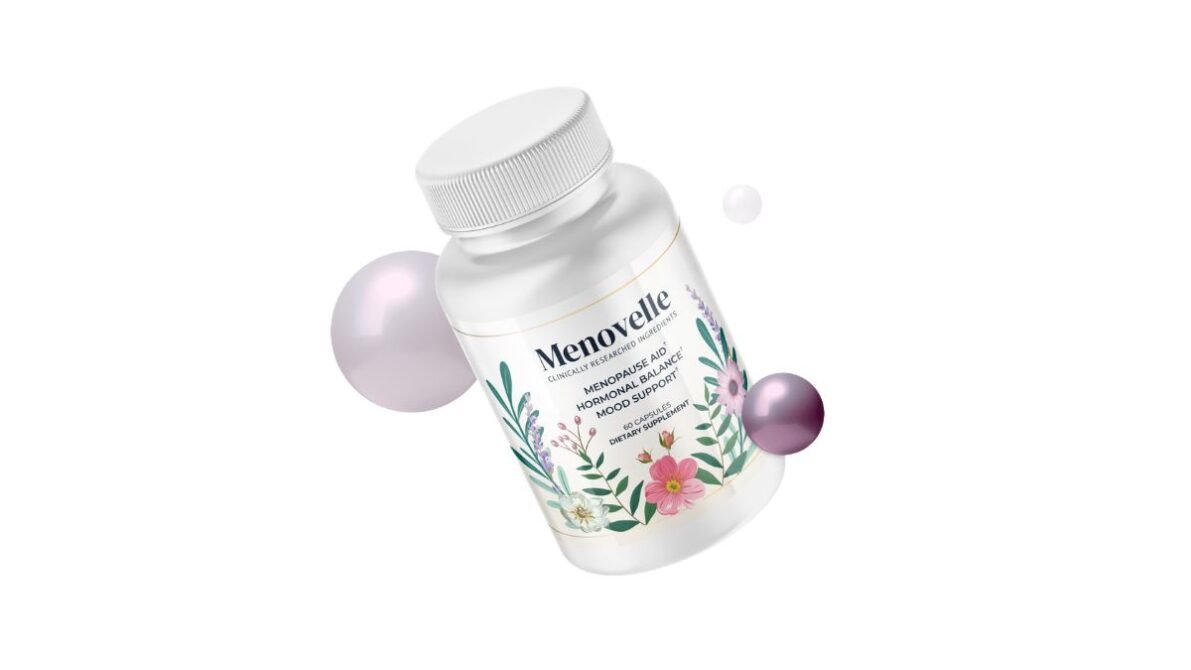
Disclosure: two links below go to the seller and pay this site a commission. What follows explains why the product’s central mechanism runs backwards, so you can judge what the commission bought.
These statements have not been evaluated by the Food and Drug Administration. This product is not intended to diagnose, treat, cure, or prevent any disease. If you take an aromatase inhibitor, or have a history of oestrogen-sensitive cancer, please read the safety section before considering any mushroom supplement. Menopause care is individual, and the right approach depends on a history no website has.
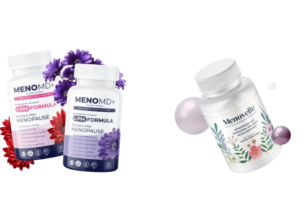
This Menovelle review examines the central claim on the product’s sales page, and everything else rests on it. Menopausal symptoms, it says, could be caused by “estrogen-eating fat cells” that entrap the hormone — and the formula supports something it calls the “estro-gene,” described as the gene responsible for regulating oestrogen.
It’s a vivid image: your fat is stealing your hormones, and a capsule sets them free.
Now click through to the product’s own references page and scroll to the fourteenth entry. It’s a 2021 paper in the Journal of Steroid Biochemistry and Molecular Biology on adipose tissue oestrogen production and metabolism — a study about fat tissue making oestrogen, measured with mass spectrometry.
That’s not a technicality. It’s the opposite direction. And it’s on the seller’s own list.
This Menovelle review is largely about that gap, because once you understand which way the biology actually runs, the rest of the page reads very differently — including one ingredient whose documented hormonal activity points the wrong way entirely.
What Menovelle Is
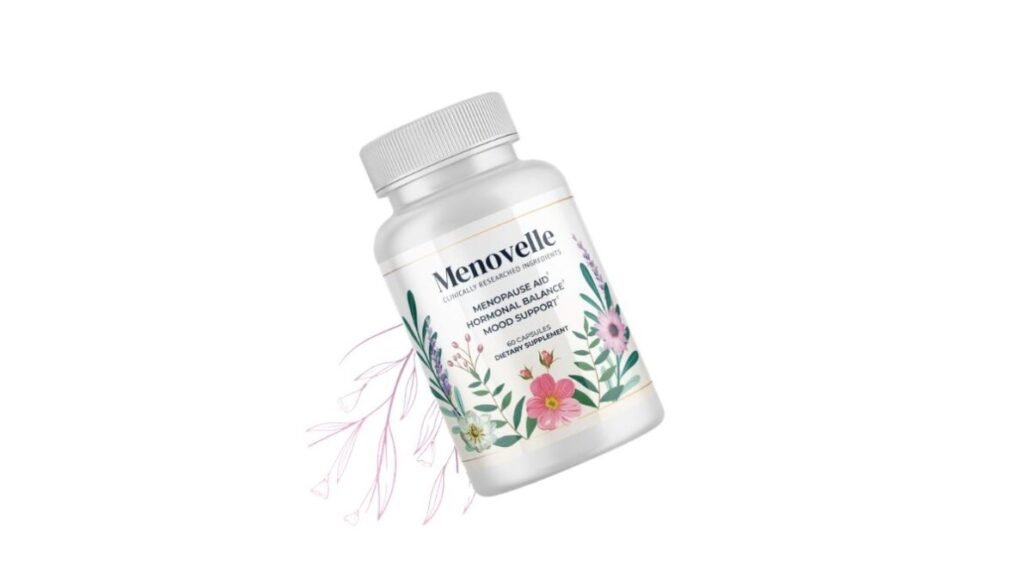
A capsule, sold through the official Menovelle site, with BuyGoods as retailer of record and a 60-day money-back guarantee.
The formula is described as an “optimally dosed proprietary blend” — a phrase that means the opposite of what it sounds like, since a proprietary blend is precisely one where individual amounts aren’t disclosed. Ten mushrooms are named: cordyceps sinensis, reishi, shiitake, lion’s mane, maitake, turkey tail, chaga, royal sun agaricus, white button, and black fungus.
Credit where it’s due, and it matters after the products I’ve looked at recently: a label image is published on the references page. There’s a supplement facts panel to look at, which is more than several competitors offer. What the marketing copy never states is how much of each mushroom you’re getting — ten organisms sharing an undisclosed total.
The page also carries the reassurances you’d expect: natural formula, no stimulants, non-GMO, easy to use.
Fat Cells Don’t Trap Estrogen — After Menopause They Make It
This is the part worth understanding properly, because it’s genuinely useful knowledge regardless of what you buy.
Before menopause, your ovaries make most of your oestrogen. After menopause, they largely stop — and the body doesn’t simply run empty. It shifts production to peripheral tissues, using an enzyme called aromatase, which converts androgens from the adrenal glands into oestrone, a weaker oestrogen.
Where is most of that aromatase activity? In fat.
A review in Physiology puts it plainly: adipose tissue is abundant enough that even its low aromatase levels make it the chief source of oestrogen in the postmenopausal woman, which is why postmenopausal oestrogen levels often correlate with body fat or BMI. Other reviews describe adipose tissue as capable of contributing up to the entirety of circulating oestrogen after menopause.
So the accurate picture is close to the reverse of the sales page. Fat cells aren’t a prison holding your oestrogen hostage. After menopause they’re the factory.
This also explains something the marketing gets backwards in a second way. Women with more body fat tend to have higher postmenopausal oestrogen levels, not lower — which is why heavier women often report fewer hot flashes, and why oestrogen-sensitive cancer risk rises with body fat after menopause. The relationship between fat and oestrogen in midlife is real and important. It just doesn’t work the way you’re being told.
To be fair to the underlying topic: menopausal weight change is real, distressing, and under-researched, and the shift in where fat is stored — toward the abdomen — is genuinely oestrogen-related. Women asking why their body changed are asking a legitimate question. The answer simply isn’t that their fat is eating their hormones.
There Is No Gene Called the “Estro-Gene”
The second half of the mechanism is the “estro-gene,” presented as the gene responsible for regulating oestrogen and other essential hormones.
No such gene exists in human gene nomenclature. There’s no entry for it, no chromosome location, no research literature.
The real genes in this space are well characterised and easy to look up. ESR1 and ESR2 code for the two oestrogen receptors. CYP19A1 codes for aromatase, the enzyme discussed above. Any of those would have been a defensible thing to name. “Estro-gene” is a portmanteau that sounds like a gene, and it appears on the page as though it were established biology.
If you’ve followed this site’s reviews, you’ll recognise the pattern: an invented physiological entity, given a name, positioned as the hidden cause, with a proprietary fix. It’s the same structure as products built around a “thermogenic resistance” nobody can be tested for.
One Mushroom Here Has Real Hormonal Activity — Pointing the Other Way
Here’s where it becomes genuinely interesting, and it’s the finding I’d most want a reader to have.
Of the ten mushrooms, one has well-documented activity on oestrogen — and it’s the humblest of them. White button mushroom, Agaricus bisporus, the ordinary supermarket mushroom.
Research published in Cancer Research describes white button mushrooms as a potential breast cancer chemopreventive agent because they suppress aromatase activity and oestrogen biosynthesis. Earlier work in the Journal of Nutrition screened multiple vegetables and found Agaricus bisporus the most potent aromatase inhibitor among them, suppressing the enzyme dose-dependently.
Read that against everything above. Aromatase is the enzyme that makes your oestrogen after menopause. White button mushroom inhibits it. A product sold to menopausal women on the promise of freeing up their oestrogen contains a mushroom studied specifically because it reduces oestrogen synthesis.
Now the honest counterweight, because proportion matters and I don’t want to alarm anyone. The clinical work on white button mushroom used substantial quantities — a dose-finding trial in postmenopausal breast cancer survivors gave 5 to 13 grams of extract daily. A single capsule shared among ten mushrooms cannot deliver anything close to that. So the realistic reading is not that Menovelle will lower your oestrogen. It’s that the amount is almost certainly too small to do anything in either direction — which leaves the formula inert rather than harmful.
That’s the summary of the product in one line: a mechanism that runs backwards, containing an ingredient whose real pharmacology also runs backwards, at a dose too low for either to matter.
Seven of the Ten Mushrooms Have No Citation
The references page lists 31 entries. I read all of them, and the distribution is revealing.
Cordyceps gets four. They’re the closest thing to ingredient evidence here, and they’re rodent studies: cordycepin and gut microbiota in high-fat-diet obese rats; anti-obesity pathways in ovariectomised rats; a phytoestrogen effect on oestrogen-deficiency osteoporosis, also in ovariectomised rats; and autoimmune thyroiditis in mice. Ovariectomised rats are a legitimate menopause model, so this isn’t nothing — but rodent data is where the evidence stops.
Maitake gets one, and it’s a commercial newsletter from a supplement ingredient supplier rather than a journal. Chaga gets one, a university library copy of a “Lifestyle & Culture” article.
Reishi, shiitake, lion’s mane, turkey tail, royal sun agaricus, white button, and black fungus get nothing at all. Seven of the ten named ingredients have no supporting citation in the company’s own evidence file.
That’s worth holding next to the professional consensus. The Menopause Society’s 2023 position statement on non-hormonal treatments places supplements and herbal remedies in the not-recommended column for vasomotor symptoms, while listing what is recommended: cognitive behavioural therapy, clinical hypnosis, certain antidepressants, gabapentin, and fezolinetant.
Tampons, NASA, and a Tracking Parameter
The rest of the reference list is where it gets strange.
Seven of the 31 entries are about tampons and menstrual products — heavy metals in tampons, endocrine disruptors in menstrual products, an FDA investigation, a blog post arguing you should abandon conventional tampons. None of this concerns any ingredient in the capsule. It’s a fear narrative filed under “Scientific References,” and it’s the second time I’ve encountered a women’s supplement using tampon-contamination content this way.
Six more are about women’s health research being underfunded — pieces from the Guardian, Nature, Forbes, Gavi, and a medical colleges association. All legitimate journalism about a real problem. None of it evidence for a mushroom capsule. It’s the grievance that sets up the pitch.
Two are about NASA studying fungi. One is a NASA technical report on metal-fungi hybrid materials; the other is a NASA Science article on why the agency studies fungi. Neither has any connection to menopause, oestrogen, or human health. They appear to be there so the word “NASA” can sit in a reference list.
And a small detail worth mentioning. Several of the URLs in the list still carry a utm_source=chatgpt.com tracking parameter — the marker appended when a link is copied from an AI chatbot’s output. It doesn’t tell you the underlying sources are wrong. It does suggest how the bibliography was assembled, and that nobody tidied it afterwards.
What I Liked
BuyGoods is the retailer of record. This matters more than it sounds. A refund administered by an established payment platform rather than by the vendor’s own returns desk is materially easier to enforce, and the footer states plainly that BuyGoods’ role doesn’t constitute endorsement of the claims.
A label image is published. After reviewing products that name no ingredients at all, having a supplement facts panel you can look at is a real difference.
Sixty days, not thirty. Double the window of several competitors in this space.
The disclaimers are thorough and correctly worded, including advice to consult a physician if pregnant, nursing, taking medication, or managing a condition — and an explicit note that testimonials may not reflect typical results.
Mushrooms are broadly safe. Culinary mushrooms are food. Whatever else is true, a blend of shiitake, maitake and white button is unlikely to hurt a healthy person.
Some cordyceps research is genuinely on-point in design. Using ovariectomised rats is the right model for menopause questions. That’s a real research choice, even if rodent data can’t carry a product.
Things to Consider
The central mechanism runs backwards — fat cells produce oestrogen after menopause rather than trapping it.
“Estro-gene” is not a real gene.
The paper closest to the mechanism, on the company’s own list, describes the opposite process.
White button mushroom is a documented aromatase inhibitor, which is the wrong direction for the stated goal.
Seven of ten mushrooms have no citation.
Ingredient evidence tops out at rodent studies.
Seven references are about tampons; two are about NASA and fungi.
No individual doses, in a ten-ingredient blend.
“11,369 reviews” appears with no link to where those reviews live.
“96% of customers order 6 bottles” appears with no source, directly above the six-bottle option.
Who Should Be Careful
Mushroom blends are among the gentler supplement categories, but there are real conversations to have.
If you take an aromatase inhibitor — anastrozole, letrozole, exemestane — or have a history of oestrogen-sensitive breast or endometrial cancer, mention any mushroom supplement to your oncology team. The dose here is almost certainly too low to matter, but “almost certainly” is a judgment your specialist should make, not a website.
If you take an anticoagulant or antiplatelet. Reishi in particular has been associated with effects on platelet function.
If you’re on immunosuppressants or have an autoimmune condition. Several of these mushrooms are marketed as immune-modulating, which is exactly the property you’d want reviewed.
If you take medication for diabetes. Some mushroom constituents affect blood glucose.
If you have a mould or mushroom allergy, or asthma triggered by fungal spores.
If you’re pregnant or breastfeeding.
And a general one: unexplained bleeding after menopause, a new breast lump, or any bleeding that returns after twelve months without a period needs a doctor promptly. Those are not supplement questions.
The Bonuses Tell You Who This Is For
Order six bottles and you receive three ebooks. Look at what they are.
The first promises a flat belly and toned body in 21 days using techniques from celebrity nutritionists. The second is about removing dark circles and eye bags. The third is about fading dark spots for even skin.
Not one is about menopause. Not hot flashes, not sleep, not mood, not bone health, not the genitourinary symptoms that affect a large share of postmenopausal women and go undiscussed.
All three are about appearance.
That’s worth noticing, because it tells you what the product is actually selling. A woman arriving with night sweats and brain fog is being offered a flat stomach, brighter eyes, and clearer skin. The framing quietly relocates menopause from a health transition to an appearance problem — and appearance is a more reliable thing to sell.
Price, Guarantee, and BuyGoods
Pricing runs $79 per bottle for two, $69 each for the three-bottle option, and $49 each on the six-bottle package, with free shipping on six and $9.99 otherwise. Struck-through savings of up to $780 are calculated against a reference price nobody appears to have paid. Current terms are on the seller’s site.
The 60-day guarantee is the genuinely useful part of the offer, and BuyGoods handling order support gives it a backstop that several competitors lack. If you buy, keep your order confirmation and start any refund conversation well inside the window rather than at the end of it.
On independent reviews: none is available in a form I’d trust. The product is sold direct, so there’s no verified-purchase pool, and the “11,369 reviews” figure on the page has no destination. Treat any testimonial you encounter as unverified — as the seller’s own footer effectively does, noting testimonials may not reflect typical experience.
Final Verdict
Menovelle is a mushroom blend sold on a mechanism that runs in reverse.
Fat cells don’t imprison your oestrogen; after menopause they’re where most of it is made. There’s no gene called the estro-gene. The reference list contains a paper describing the actual process, seven items about tampons, two about NASA studying fungi, and no citation at all for seven of the ten mushrooms in the bottle. And the one ingredient with documented hormonal pharmacology — the ordinary white button mushroom — inhibits the enzyme that makes your oestrogen, which is the opposite of what you’re being promised, at a dose far too small to do it.
That last point is also the reassurance. This is very unlikely to harm you. It’s just unlikely to do anything.
Who might reasonably buy it: someone who wants a general mushroom supplement, isn’t on the medications listed above, and understands they’re buying a food-category blend rather than anything hormonal. If that’s you, mushroom blends are widely sold with per-mushroom amounts printed on the label, usually for less.
Who should look elsewhere: anyone buying this specifically to address hot flashes, night sweats, mood, or menopausal weight change. The mechanism doesn’t support it and the professional consensus doesn’t recommend this category for those symptoms.
What I’d suggest instead. Book a proper menopause consultation. Hormone therapy remains the most effective treatment for vasomotor symptoms and protects bone, and whether you’re a candidate depends on your history — that’s a conversation, not a purchase. If you can’t take it or don’t want it, the non-hormonal options the Menopause Society does recommend are real and available on prescription or referral.
And one thing from the product’s own reference list that’s worth keeping. It cites a UCSF finding that weight loss reduced hot flashes in overweight and obese women. That’s a genuine result, it’s free, and it’s the only intervention on that entire page with human evidence behind it.
If you’re comparing products in women’s midlife health, our FemiCore review covers another formula in this space — and it’s worth reading alongside this one, because its reference list uses the same tampon-contamination material to set up an unrelated pitch.
Frequently Asked Questions
Do fat cells really trap oestrogen?
No — the opposite is closer to the truth. After menopause, when the ovaries largely stop producing oestrogen, the enzyme aromatase in fat tissue converts adrenal androgens into oestrone, making adipose tissue the chief source of oestrogen in postmenopausal women. That’s why postmenopausal oestrogen levels tend to correlate with body fat.
Is the “estro-gene” a real gene?
Not under that name. Human gene nomenclature includes ESR1 and ESR2 for the oestrogen receptors and CYP19A1 for aromatase. No gene called the estro-gene appears in the genetic literature.
Do mushroom supplements help menopause symptoms?
There’s no good human evidence that they do. Seven of the ten mushrooms in this product have no citation on its own reference page, and the ingredient research that exists is in rodents. The Menopause Society’s 2023 position statement places supplements and herbal remedies in the not-recommended column for vasomotor symptoms.
Can I take this with an aromatase inhibitor?
Ask your oncology team first. White button mushroom is a documented aromatase inhibitor in laboratory work, though the studied doses were measured in grams and this capsule shares an undisclosed total among ten mushrooms. The amount is probably immaterial — but that’s a call for your specialist, not for a sales page or for me.

Raphael Albert is the founder and content creator of Nutra Plus. Passionate about health, nutrition, fitness, and wellness, he spends his time researching scientific studies, health trends, and evidence-based lifestyle strategies to create informative and easy-to-understand content. While he is not a doctor or licensed healthcare professional, his goal is to help readers make more informed wellness decisions. All content is for educational purposes only and should not replace professional medical advice. Always consult a qualified healthcare provider regarding your health concerns.