On the money: two links below go to the seller and pay this site a commission. The section on what actually drives prostate enlargement is where this review stops being favourable, and it’s the part I’d read first.
These statements have not been evaluated by the Food and Drug Administration. This product is not intended to diagnose, treat, cure, or prevent any disease. Urinary symptoms in men over 50 usually mean an enlarged prostate — but not always, and no supplement can tell the difference. If yours are new, changing, or bothering you, that’s an appointment before it’s a purchase.
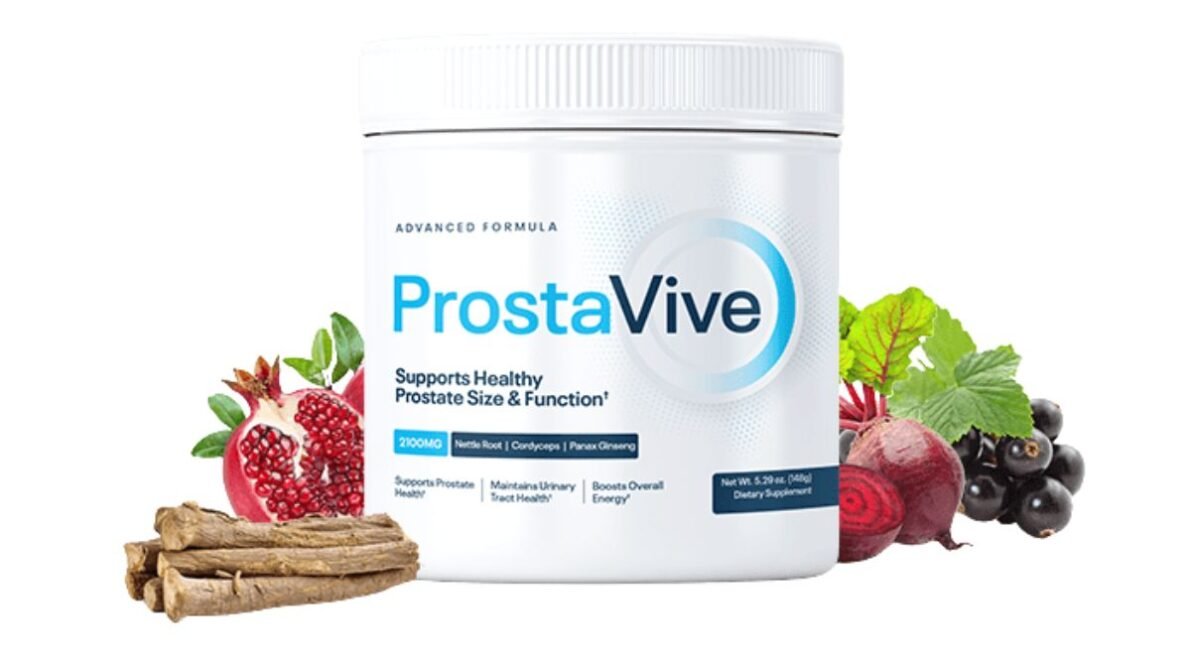
Read the ingredient list on ProstaVive without looking at the bottle, and you would not guess what it’s for.
Tongkat ali. Ashwagandha. Fenugreek. Panax ginseng. Maca root. Zinc.
That’s a testosterone and libido stack. It’s the standard composition of a male vitality supplement — the kind sold on energy, drive and performance. Every one of those ingredients earns its place in that category, and the sales copy reflects it: the page talks about sex drive, sperm volume, motility, arousal and confidence at least as much as it talks about urination.
What’s missing is the other thing. There is no saw palmetto, no beta-sitosterol, no pygeum — the three botanicals that actually appear in the prostate literature. Of the eleven ingredients listed, exactly one has randomised trial evidence in benign prostatic hyperplasia.
And here’s the part that makes this ProstaVive review more interesting than a simple “wrong ingredients” verdict: that one fitting ingredient works by a mechanism that runs directly against what the rest of the formula is sold on.
What ProstaVive Is
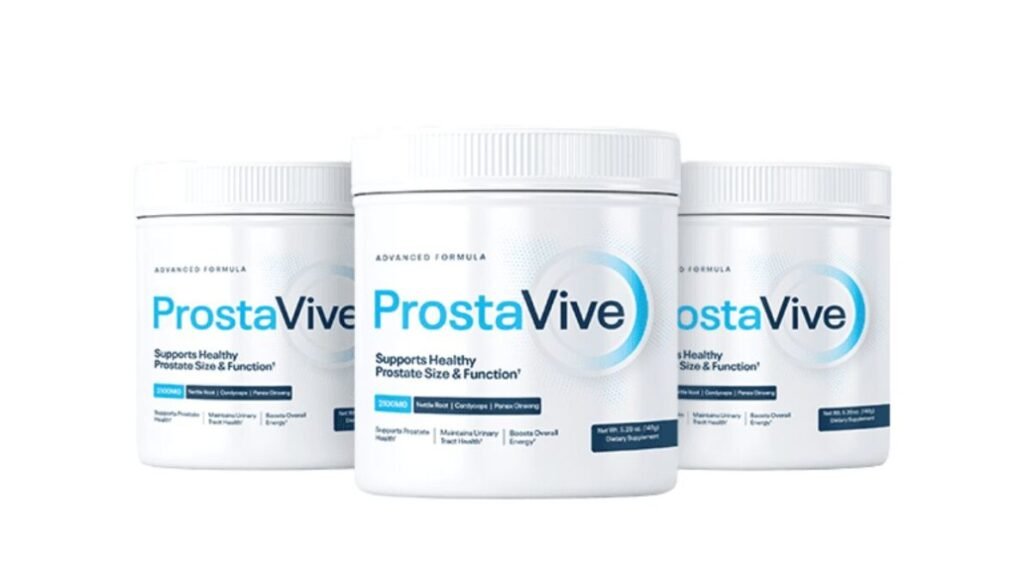
A powder, not a capsule — one scoop mixed into water or another drink daily, ideally with a meal. Sold through the official ProstaVive site with ClickBank as the retailer of record and a 180-day money-back guarantee.
Eleven ingredients are named: boron, tongkat ali, ashwagandha, fenugreek, panax ginseng, maca root, artichoke extract, nettle root, plus zinc, magnesium and vitamin D.
Credit where it’s due, and it’s more than most products in this category earn. The ingredients are all named, a supplement facts panel is published, a references page exists with numbered citations in the body text, and the company publishes a phone number and email for product support with ClickBank handling orders separately. That’s real accountability infrastructure.
The panel is published as an image file rather than as text, so you can’t copy a figure or search it — a small friction worth noting, and one that’s becoming common. But it exists, and you can look at it.
The stated mechanism is blood flow: the page argues that supporting circulation around the prostate helps “metabolize” the stromal cells whose proliferation causes enlargement, and it attributes this to a 2023 study from Fukushima Medical University in Japan. More on that below.
What Actually Drives an Enlarged Prostate
To judge whether the formula makes sense, you need the mechanism it’s competing with — and this one is unusually well established.
Benign prostatic hyperplasia is androgen-driven. Specifically, it depends on dihydrotestosterone, or DHT, which the enzyme 5-alpha-reductase makes from testosterone inside the prostate. Development of BPH depends on a functional androgen-signalling axis, and DHT — while beneficial in the developing prostate — is detrimental in the adult prostate, where it causes pathologic prostate growth.
That understanding produced the only drug class that actually shrinks a prostate. Finasteride, a 5-alpha-reductase inhibitor, reduces serum DHT by roughly 70% and prostate DHT by 85 to 90%, and that reduction translates into prostate volume falling by approximately 25%.
So the established route to a smaller prostate is less androgen activity inside it, not more.
There’s a detail from the research literature that makes this concrete in a way the pharmacology alone doesn’t. When scientists need an enlarged prostate to test treatments against, they create one — and the way they create one is by administering testosterone. Published work describes rats with testosterone-induced benign prostatic hyperplasia, a protocol that produces altered prostate morphology alongside raised dihydrotestosterone and increased androgen receptor expression.
Testosterone is, in other words, the standard laboratory method for producing the condition this product is sold to address.
I want to be careful with that, because it’s a rhetorical gift and it would be easy to overstate. Injecting rats with pharmacological doses of testosterone is not the same as a man taking a scoop of herbs that may nudge his serum levels slightly. Nobody has shown that these botanicals enlarge a human prostate. But it does establish the direction of the biology beyond argument, and it’s the reason the formula’s logic doesn’t hold together.
Now set that against a product whose ingredient list is built from herbs marketed to raise male hormones, and whose copy promises more sexual activity, more sperm volume, more drive.
I want to be careful and fair here, because overstating this would be its own error. This does not mean ProstaVive will enlarge your prostate. Two reasons. First, the evidence that tongkat ali, fenugreek and ashwagandha meaningfully raise testosterone in ordinary men is weak and inconsistent — most of the trials are small, short, and industry-funded. Second, the clinical picture with actual testosterone therapy in men with BPH is more nuanced than a simple “more testosterone, bigger prostate,” and modern data doesn’t show dramatic worsening in most men.
The honest conclusion is narrower and more useful: the formula is pointed at a different outcome than the one on the label. If it does what its ingredients are known for, you get libido and energy effects. Prostate size and urine flow are governed by a hormonal pathway the formula isn’t designed to touch — and if anything, its stated goal points the wrong way along it.
The One Ingredient That Fits — and Why It Argues With the Rest
Nettle root is the exception, and it’s a good one.
A randomised, double-blind trial in 100 patients with BPH found nettle effective in reducing clinical symptoms, and the authors note earlier work in 287 patients showing significant reductions in IPSS symptom score, serum PSA and prostate size. Reviews of the preclinical and clinical literature support nettle root extract for improving IPSS scores in BPH.
That’s genuine evidence, and including nettle root shows someone knew something about this condition.
Now the mechanism. Nettle root’s activity is attributed partly to binding sex hormone-binding globulin, and partly to inhibiting 5-alpha-reductase and aromatase. In other words: the one ingredient in ProstaVive with real prostate evidence works, in part, by doing a weaker version of what finasteride does — lowering DHT.
So the formula contains a mild anti-androgen alongside a stack of herbs sold for boosting androgens, in a product whose copy promises both a healthier prostate and a more active sex life.
That’s not a scandal. It’s a formula assembled from two different product concepts, and it means the two halves are pulling against each other on the axis that matters.
Worth adding: nettle root’s studied dose is generally cited around 300 to 600 mg daily, and it needs to be the root, not the leaf — different plant part, different use. The panel would tell you which and how much. That’s the number to check before ordering.
What’s Missing: The Ingredients With Real BPH Evidence
If you were building a prostate supplement from the literature, three names would come up before any of the ones in this bottle.
Beta-sitosterol has the strongest data of the herbal options, and it outperforms saw palmetto in the trial evidence. It’s inexpensive and widely available on its own.
Pygeum — Prunus africana bark extract — has a Cochrane review pooling 18 randomised trials in 1,562 men, in which men taking it were roughly twice as likely to report symptom improvement, with about a 19% reduction in nocturia and a 23% improvement in peak urine flow. The dose is specific: around 100 mg daily of a lipophilic bark extract standardised to about 14% triterpenes.
Saw palmetto is the famous one, and it’s the cautionary tale — it failed the two largest trials ever run on it, including one that escalated to triple the standard dose. Its absence from this formula is arguably a point in ProstaVive’s favour, and I’ll count it as one.
But absence of a failed ingredient isn’t the same as presence of a working one. ProstaVive omits saw palmetto and also omits the two botanicals that actually have supportive data.
The Testosterone Herbs, Assessed Honestly
These aren’t junk ingredients. They’re just ingredients for something else.
Tongkat ali has some evidence for libido, mood and stress markers, and modest testosterone data in men with low baseline levels. Studied doses run 200 to 400 mg daily of a standardised extract. It has no prostate trial evidence.
Ashwagandha has reasonable data for stress, sleep and, in some trials, sperm parameters — genuinely one of the better-supported adaptogens. It also has a documented, if uncommon, association with liver injury, which matters when it’s taken daily for six months. Typically avoided in thyroid disease without medical input.
Fenugreek has small trials on libido and some on testosterone, with mixed results. It can lower blood glucose, which matters if you take diabetes medication.
Panax ginseng has fatigue and erectile function data of moderate quality. It interacts with warfarin and affects blood glucose.
Maca has decent evidence for subjective libido — and notably, it appears to do this without changing testosterone levels, which is worth knowing given how it’s marketed.
Boron is the interesting outlier. It has some epidemiological association with lower prostate cancer risk and some small-study data on hormone metabolism. It’s the one non-nettle ingredient with any prostate literature at all, though it’s thin.
Artichoke extract is described on the page as “nature’s very own aphrodisiac” that releases oxytocin. I could find no research supporting that. Artichoke has genuine liver and cholesterol data, and none for prostate or libido.
Zinc, magnesium and vitamin D are sensible inclusions. They matter if you’re deficient, and vitamin D deficiency is genuinely common. Most men eating an ordinary diet aren’t short of zinc or magnesium.
The Study I Couldn’t Find
The page’s central mechanism rests on a specific citation: a 2023 study from Fukushima Medical University in Japan, said to show that stromal cell proliferation around the prostate can be addressed by supporting healthy blood flow.
I searched for it and could not locate it — not in the literature databases, not through the university, not through the reference page’s numbering.
I’m not in a position to say it doesn’t exist. Institutional attributions sometimes describe conference abstracts or papers indexed under titles that don’t match how a marketer described them. What I can tell you is that I looked and didn’t find it, and that a named-institution, named-year claim carrying the whole mechanism should be locatable.
There’s a second issue with the mechanism itself. BPH is a proliferation of stromal and epithelial tissue — an increase in the number of cells. Improved blood flow doesn’t remove cells. It’s not obvious what “metabolising” them would mean physiologically, and the page doesn’t explain.
What I Liked
Every ingredient is named, and a supplement facts panel is published. After the products in this series that name nothing at all, that’s a genuine difference and it’s what made this article possible.
A 180-day guarantee — six months, the longest in this category and among the longest anywhere. That materially reduces the risk of trying it.
ClickBank is the retailer of record, with independent order support and a refund path that doesn’t depend on the seller answering emails.
Published contact details — a toll-free number and email for product support, separate from order support. That’s accountability most competitors skip.
No saw palmetto. Given that it failed both of its largest trials, leaving it out is defensible and I’d rather credit it than let it pass unremarked.
Nettle root is a real choice, with randomised evidence behind it and a mechanism that makes sense for the condition.
The footer disclaimers are correct and complete, including advice to consult a physician before starting or stopping anything, and explicit language that the site doesn’t replace medical advice.
Things to Consider
The formula is a libido stack, not a prostate formula.
Ten of eleven ingredients have no BPH trial evidence.
The three botanicals with the best prostate data are all absent.
The stated goal points against the pharmacology — BPH is DHT-driven, and the proven route is lowering DHT.
Nettle root’s mechanism contradicts the rest of the formula.
The Fukushima study wasn’t locatable.
“Nature’s very own aphrodisiac” for artichoke has no supporting research I could find.
The supplement panel is an image, so amounts can’t be copied or searched.
Bonus 2 promises “strategies you never hear from your doctor” — a framing that positions medical advice as something being withheld.
The anchor prices don’t add up — see the pricing section.
Who Should Be Careful
Anyone who hasn’t had their symptoms assessed. This is the big one and it’s why the disclaimer at the top says what it does. Urinary symptoms in men over 50 usually mean BPH — but they can also mean prostate or bladder cancer, a urethral stricture, a neurological condition, or diabetes, and they feel the same from the inside. That’s what a PSA test, an examination and a conversation are for.
Anyone taking warfarin or another anticoagulant — panax ginseng interacts.
Anyone on diabetes medication — fenugreek and ginseng both affect blood glucose, and that stacks.
Anyone with thyroid disease — ashwagandha is generally avoided without medical input.
Anyone with liver disease, or taking other liver-affecting supplements — ashwagandha has an uncommon but documented association with liver injury, and this is a six-month product.
Anyone with a hormone-sensitive condition or a history of prostate cancer — a formula built around raising male hormones warrants a specialist’s view, not a website’s.
Anyone taking finasteride or dutasteride. If you’re on a 5-alpha-reductase inhibitor, adding a formula sold on boosting androgens is a conversation with your prescriber. And note that those drugs roughly halve PSA readings, which your doctor corrects for — anything that muddies that picture is worth disclosing.
And treat as urgent, not as a supplement question: blood in the urine, inability to pass urine, fever with urinary symptoms, or new bone pain. Those need same-day medical attention.
What Actually Helps a Prostate
The honest hierarchy.
Get assessed first. A PSA, a digital examination and a symptom score take one appointment and tell you which problem you actually have. Everything else depends on that.
Prescription options work and are inexpensive. Alpha-blockers relax the smooth muscle in the prostate and bladder neck for relatively quick symptom relief. 5-alpha-reductase inhibitors shrink the gland over months by lowering DHT. Your doctor chooses based on prostate size and symptoms, and generics are cheap.
If you want a supplement, the checklist is short: a published panel with per-ingredient amounts; beta-sitosterol, or pygeum standardised to around 14% triterpenes at roughly 100 mg daily, or nettle root at 300 to 600 mg; a stated reason for every ingredient; and third-party testing. Those products exist and cost less than $39 a bottle.
And the free part: cutting fluids in the two or three hours before bed, easing off evening alcohol and caffeine, double voiding, and checking whether anything you already take — antihistamines and decongestants are the usual culprits — is making things worse.
Price, Guarantee, and an Anchor That Doesn’t Add Up
Pricing runs $79 for one bottle, $59 each for three ($177), and $39 each for six ($234). Current terms are on the ProstaVive site, with ClickBank handling checkout and refunds.
The 180-day guarantee is genuinely the strongest part of the offer. Six months is more than enough to judge, and ClickBank administering it makes it enforceable. Keep your order receipt.
The struck-through “original” prices are worth thirty seconds of your attention. The mobile pricing blocks show the six-bottle package reduced from $1,782, and the three-bottle package reduced from $1,891.
Three bottles at a higher original price than six. Whatever those figures represent, they aren’t a consistent price list — and neither is a number anyone has paid for six bottles of a powdered supplement.
On independent reviews: none exists in verifiable form. The product is sold direct only, so there’s no verified-purchase pool, and search results are dominated by affiliate content.
Final Verdict
ProstaVive is a well-run operation selling a formula built for a different problem.
The infrastructure is genuinely good — named ingredients, a published panel, a real phone number, ClickBank behind the refund, and a 180-day window that’s the most generous in this category. I’d rather deal with this company than most in this series.
But an enlarged prostate is driven by DHT, the proven route to shrinking one is lowering DHT, and this formula is assembled from herbs sold for raising male hormones. Ten of its eleven ingredients have no BPH trial evidence. The three botanicals that do have supportive data are all absent. And the single ingredient that fits — nettle root — works partly by inhibiting the enzyme that makes DHT, which puts it at odds with everything around it.
Who might reasonably buy it: a man who wants a libido and energy formula, has already had his urinary symptoms properly assessed, isn’t on the medications listed above, and understands he’s buying a male vitality supplement rather than prostate treatment. On those terms it’s a defensible purchase, and the guarantee makes trying it low-risk.
Who should look elsewhere: anyone buying it to shrink a prostate or fix urine flow, and anyone who hasn’t had the symptoms looked at.
If prostate support is what you want: nettle root at 300 to 600 mg, or pygeum standardised to 14% triterpenes at around 100 mg, or beta-sitosterol — each sold individually with the milligrams printed, for a fraction of the price. You’d know what you’re taking and could check it against the trials.
And the appointment. Gingivitis heals, cavities don’t, and the same logic applies here: BPH is manageable, prostate cancer caught early is highly treatable, and the two can feel identical. One test tells you which.
If you’re comparing products in this space, our Prosta Peak review covers another prostate supplement — and reading the two together is instructive, because they fail in opposite directions: one is built on an ingredient that was tested thoroughly and didn’t work, the other on ingredients that were never tested for this at all.
Frequently Asked Questions
Does boosting testosterone help or hurt an enlarged prostate?
Prostate enlargement is driven by DHT, which the body makes from testosterone inside the prostate, and the only drug class that shrinks a prostate works by blocking that conversion — reducing prostate DHT by 85 to 90% and prostate volume by around 25%. So the proven direction is less androgen activity in the prostate, not more. That said, the herbs marketed as testosterone boosters have weak and inconsistent evidence for actually raising it, so the practical concern is less that they’ll worsen anything and more that they’re aimed at a different outcome entirely.
Which ingredient in ProstaVive actually has prostate evidence?
That’s arguably to its credit. Saw palmetto failed both of its largest trials, including one testing up to triple the standard dose over 72 weeks, where it performed no better than placebo. The issue is that the formula also leaves out beta-sitosterol and pygeum, which do have supportive evidence.
Why doesn’t it contain saw palmetto?
Most users begin to notice reduced nighttime bathroom trips and improved urinary comfort within the first few weeks of consistent daily use. More meaningful improvements in urinary flow and prostate comfort typically develop after 8 to 12 weeks of consistent use.
Can this replace prescription treatment for BPH?
No. Alpha-blockers relieve symptoms relatively quickly by relaxing smooth muscle, and 5-alpha-reductase inhibitors shrink the gland over months. Both are inexpensive as generics and chosen based on your prostate size and symptoms. More importantly, urinary symptoms need assessing before anything is treated, because BPH and more serious causes can feel identical.

Raphael Albert is the founder and content creator of Nutra Plus. Passionate about health, nutrition, fitness, and wellness, he spends his time researching scientific studies, health trends, and evidence-based lifestyle strategies to create informative and easy-to-understand content. While he is not a doctor or licensed healthcare professional, his goal is to help readers make more informed wellness decisions. All content is for educational purposes only and should not replace professional medical advice. Always consult a qualified healthcare provider regarding your health concerns.