A quick word on how this page is monetized: it contains an affiliate link, and if you buy through it we may earn a small commission at no added cost to you. It doesn’t tilt the verdict – you’ll see below exactly where the evidence is strong and where the marketing outruns it.
These statements have not been evaluated by the Food and Drug Administration. This product is not intended to diagnose, treat, cure, or prevent any disease. Stubborn weight gain can occasionally signal a medical issue (thyroid, medication effects, insulin resistance) – a supplement is not a treatment, and nothing here replaces advice from your own clinician.
New to this category? Our guide to the best liver and weight-loss supplements breaks down how these formulas actually differ, and which claims hold up under a label check. This LeanBiome review is a good example of why the label – not the sales page – is where the truth lives.
LeanBiome Review: The Short Version
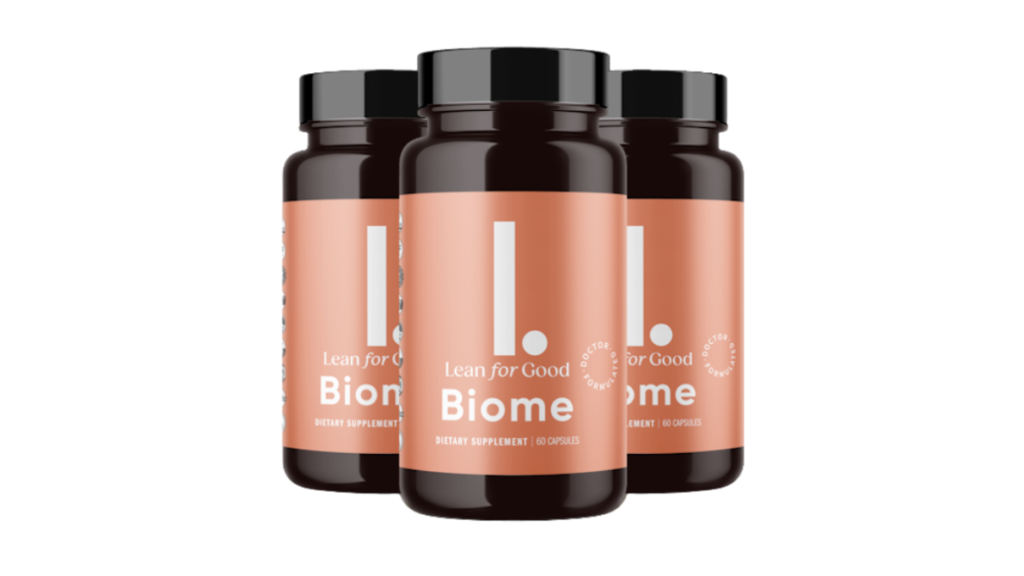
Here’s the honest bottom line of this LeanBiome review: it’s one of the more transparent, better-evidenced products in a category full of fog – and it still oversells what a capsule alone can do. LeanBiome, made by Lean for Good, pairs nine probiotic “lean bacteria” strains (led by Lactobacillus gasseri and rhamnosus) with 300 mg of Greenselect Phytosome, a caffeine-free green tea extract.
What sets it apart from most weight-loss supplements is that it actually discloses its doses and CFU counts, and each lead ingredient has real randomized-trial data. The catch is in the fine print of those trials: the belly-fat study used fermented milk rather than a capsule, and the green tea study only produced its headline result alongside a calorie-restricted diet. So the science is genuinely there – it just doesn’t say “take this pill and the fat melts off on its own.”
One thing to settle first: if weight has climbed suddenly or resists real effort, that’s worth a doctor’s visit – thyroid issues, medications, and insulin resistance all move the scale, and none of them are fixed by a probiotic.
What LeanBiome Actually Is
LeanBiome is a twice-daily capsule marketed for gut-driven weight support – the “I eat clean and the belly fat won’t budge” audience. Per the LeanBiome official website, it’s made by Lean for Good, manufactured in a US GMP facility, sold through ClickBank, and backed by a 180-day empty-bottle money-back guarantee – one of the longest in the category, which genuinely lowers the risk of a fair 90-day trial.
Credit where it’s due: LeanBiome does several things the market usually skips. It names a real maker, prints its ingredients and doses on the label, uses delayed-release (DRcaps) shells so the probiotics can survive stomach acid, and stays stimulant-free. Those are real strengths, and they’re why this review keeps its affiliate link where others we’ve published carried none.
First, Make Sure You Have the Right “LeanBiome”
Here’s a wrinkle worth knowing before you buy: “LeanBiome” is actually two unrelated products. One is the Lean for Good probiotic capsule this review covers. The other is a completely different UK product from OptiBiotix – a prebiotic-fibre and chromium blend sold for sports nutrition, in sachets and shakes, with no probiotic strains at all.
Same name, different formula, different company, different purpose. On top of that, the Lean for Good version is sold through a scatter of look-alike checkout domains, some with subtly misspelled URLs. None of this makes the capsule a scam, but it means the “official site” you land on may not be the real one – so confirm you’re buying the Lean for Good probiotic with the ClickBank-backed 180-day guarantee, and save your order confirmation.
What LeanBiome Gets Right: It Shows Its Doses
We anchor these reviews to transparency, and on that measure LeanBiome scores well. Unlike a proprietary blend that names ingredients but hides amounts, LeanBiome’s label discloses real numbers: Lactobacillus gasseri at around 10 billion CFU, L. rhamnosus at about 5 billion CFU, additional strains, 200 mg of inulin (a prebiotic fibre to feed the bacteria), and 300 mg of Greenselect Phytosome.
That’s the verifiable statement – doses disclosed, not hidden – and it matters, because for probiotics and green tea alike, the amount is what separates a working formula from a hopeful one. On the single check that most of this market fails, LeanBiome passes.
The Strain-Code Test: Does It Name the Studied Strains?
Here’s the subtler question, and it decides how much of the research actually transfers. With probiotics, the species name isn’t the ingredient – the strain is. “Lactobacillus gasseri” is a broad family; the belly-fat data belongs almost entirely to one coded strain, SBT2055, and the women’s weight-loss data to L. rhamnosus CGMCC1.3724. Only those codes connect a capsule to the published trials.
Some LeanBiome materials do cite the coded strains, which is a genuine plus; if the panel you receive lists only “L. gasseri” without the code, you can’t fully link it to the SBT2055 research, no matter how good the CFU count looks. So check the actual label: a named code is the difference between “the strain in the study” and “a strain from the same family.”
The Fermented-Milk Problem: Route and Delivery
For a probiotic, the delivery question is friendlier than for most products – the target is the gut itself, which a swallowed capsule obviously reaches, so this isn’t an anatomically hopeless route. The DRcaps delayed-release shell is a real plus here, since ordinary capsules kill off much of their bacteria in stomach acid before they arrive. So far, so good.
But there’s a catch the marketing skips. The landmark L. gasseri trials didn’t use capsules at all – they used about 200 g of fermented milk per day. A detailed review of the SBT2055 evidence makes the point plainly: whether capsule-delivered SBT2055 reaches the gut in the same viable, effective quantities as a buffered milk matrix has not actually been tested in a body-composition trial. It’s plausible the DRcaps shell bridges that gap – but “plausible” isn’t “proven,” and that’s an honest gap between the study and the bottle.
Lactobacillus Gasseri: The Best Belly-Fat Evidence in the Formula
L. gasseri is the ingredient carrying the real weight here, so it earns the closest look – honestly, up and down. The landmark study (Kadooka et al., British Journal of Nutrition) randomized 210 adults with abdominal obesity to L. gasseri SBT2055 or placebo for 12 weeks and measured fat by CT scan – a far more rigorous endpoint than the bathroom scale.
The active group saw roughly a 4-5% reduction in visceral fat. That’s a genuine, cleanly measured result, and it’s unusual in this category. Evidence grade: moderate and real – for the coded strain, at the studied dose.
The honesty requires the other half too. A separate 12-week trial of a different L. gasseri strain (BNR17) found reductions in weight and waist circumference but no statistically significant difference versus placebo – a reminder that not every L. gasseri strain performs, and effects tend to be modest. And across probiotics generally, a 2023 randomized trial in Scientific Reports found no significant weight difference versus placebo at three months. The signal is real but narrow: right strain, right dose, modest effect, and it fades if you stop.
Greenselect Phytosome: Real Data, With a Diet Attached
The green tea extract is the second pillar, and its evidence is legitimate – as long as you read the conditions. Greenselect Phytosome uses phospholipid “phytosome” technology to fix green tea’s biggest weakness: catechins like EGCG are normally absorbed poorly, and binding them to phospholipids raises blood levels meaningfully.
The headline trial (Di Pierro et al., 2009) put 100 obese adults on a low-calorie diet, half with Greenselect: the extract group lost about 14 kg versus 5 kg in the diet-only group over 90 days. Impressive – but notice the setup. Every participant was dieting; the extract amplified a calorie deficit, it didn’t replace one.
A later randomized trial on weight maintenance found more modest effects at 150 mg twice daily. Evidence grade: moderate – but the dramatic number is a diet-plus-extract result, not a pill-alone result.
What I Liked
- Doses and CFU counts are actually disclosed – rare in this category, and the single biggest point in its favor.
- A real, identifiable maker (Lean for Good) with a ClickBank-enforced 180-day empty-bottle guarantee.
- Lead ingredients have genuine randomized-trial data, not just mechanism speculation.
- Delayed-release DRcaps address the “dead probiotics” problem most capsules ignore, and it’s stimulant-free.
Things to Consider
- The belly-fat trials used fermented milk, not capsules – the capsule’s equivalence isn’t proven.
- The dramatic green tea result required a calorie-restricted diet; the pill isn’t a substitute for one.
- No RCT has tested the complete nine-strain LeanBiome formula itself.
- A confusing name shared with an unrelated fibre product, plus look-alike checkout domains.
- Benefits are gradual (8-12 weeks minimum) and may fade after you stop.
What Real Users Are Saying
Setting aside the sellers’ own uniformly five-star walls – which, given how many identical “Verified Purchase” quotes appear across the look-alike domains, can’t be treated as independent evidence – the traceable pattern is cautiously positive but realistic.
Aggregating third-party reviews and forum discussion, users most often report reduced bloating within the first one to two weeks and gradual body-fat change over 8-12 weeks, with the effect strongest in people who also cleaned up their diet. The most common complaint is the opposite mistake: quitting at two to three weeks and reporting “nothing happened,” which is too early for a microbiome shift.
A fair recurring criticism, echoed by a registered-nutritionist review, is cost relative to eating fermented foods and fibre directly. Treat any dramatic on-site transformation story with the usual skepticism.
Medication Interactions & Safety
The ingredients are generally well tolerated in healthy adults, with a mild adjustment period the main thing to expect – some people get temporary gas or bloating in the first week as the gut adapts. A few real cautions: probiotics aren’t recommended casually for people who are immunocompromised, seriously ill, or have a central venous catheter without medical advice.
Green tea extract, even caffeine-free, has been associated in rare cases with liver enzyme changes at high intake, so anyone with liver concerns or on hepatotoxic medication should ask a clinician first. If you’re pregnant, nursing, immunocompromised, or on prescription medication, clear it with your doctor before starting. None of this makes LeanBiome high-risk for a healthy adult; it makes the “check first” step a genuine one rather than boilerplate.
Who Might Consider It – and Who Should Skip It
LeanBiome may be a reasonable try if you’re an adult carrying stubborn abdominal fat, you’re willing to pair it with a genuine calorie-aware diet (the trials did), and you’ll give it the full 90 days its mechanism needs – the long guarantee makes that low-risk.
It’s the wrong pick if you expect a stimulant-style fast result, if you want a pill that works without any diet change (the evidence simply doesn’t support that), or if you’d rather get the same strains and fibre more cheaply from fermented foods. And if your weight gain is sudden or resistant to real effort, see a clinician before reaching for any supplement.
Where to Buy LeanBiome
If, after weighing the trade-offs, you want to try it, buy it only from the official LeanBiome website through the ClickBank checkout, where the Lean for Good formula and the 180-day empty-bottle guarantee actually apply – not from a misspelled look-alike domain or the unrelated OptiBiotix fibre product that shares the name.
Save your order confirmation so the guarantee is easy to invoke, and commit to the full 90-day window (plus a real diet) before judging results. If you’d rather target the studied ingredients directly, a standalone coded L. gasseri SBT2055 product or a 300 mg Greenselect Phytosome extract are transparent alternatives worth comparing.
Final Verdict on LeanBiome
The honest core of this LeanBiome review is a product that mostly deserves its reputation – and slightly outruns it. On the things we can verify, it’s a standout for the category: a real maker, disclosed doses, coded strains (check your label), smart delivery, and a genuinely long guarantee.
The clinical data behind its lead ingredients is real, not invented. What the marketing quietly omits is that those results came from fermented milk and a calorie-restricted diet, not a capsule taken alone – so the fair expectation is “a modest, evidence-informed assist to a diet you’re already running,” not “melt fat without changing anything.”
Set that expectation, give it 90 days, and it’s a defensible, low-risk choice. Just don’t buy it to avoid the diet the studies required. As always, “may support” is the honest ceiling – and sudden or stubborn weight change belongs with a doctor first.
Frequently Asked Questions
Is LeanBiome a scam?
No – by the usual markers it’s a legitimate product. It’s made by Lean for Good, sold through ClickBank with an enforced 180-day guarantee, discloses its doses, and its lead ingredients have real randomized-trial data.
The honest limitations aren’t fraud: the belly-fat trials used fermented milk rather than capsules, the dramatic green tea result required a diet, and the full formula has never been trial-tested as a whole. Also confirm you’re buying the Lean for Good probiotic, not the unrelated OptiBiotix fibre product with the same name.
How long does LeanBiome take to work?
If it works for you, expect it to be gradual. Microbiome shifts typically take four to six weeks to stabilize, with body-composition changes appearing over 8-12 weeks. Many people report less bloating within the first week or two, but judging fat loss before 90 days is too early – and the long guarantee is designed around that timeline.
Does LeanBiome work without dieting?
The evidence doesn’t support that. The strongest study behind its green tea extract only produced its headline result in people on a calorie-restricted diet, and the probiotic effects are modest on their own. Think of LeanBiome as an assist to a genuine diet, not a replacement for one – no supplement overrides caloric balance.
What are the ingredients in LeanBiome?
The Lean for Good formula combines nine probiotic strains (led by Lactobacillus gasseri at ~10 billion CFU and L. rhamnosus at ~5 billion CFU), 200 mg of inulin prebiotic fibre, and 300 mg of Greenselect Phytosome caffeine-free green tea extract, in delayed-release capsules. Check your label for the coded strains (SBT2055, CGMCC1.3724), since those are what connect the product to the published research.

Raphael Albert is the founder and content creator of Nutra Pulse. Passionate about health, nutrition, fitness, and wellness, he spends his time researching scientific studies, health trends, and evidence-based lifestyle strategies to create informative and easy-to-understand content. While he is not a doctor or licensed healthcare professional, his goal is to help readers make more informed wellness decisions. All content is for educational purposes only and should not replace professional medical advice. Always consult a qualified healthcare provider regarding your health concerns.