
Affiliate disclosure: This article contains affiliate links. We may earn a commission if you purchase through them, at no extra cost to you. This does not affect the analysis below.
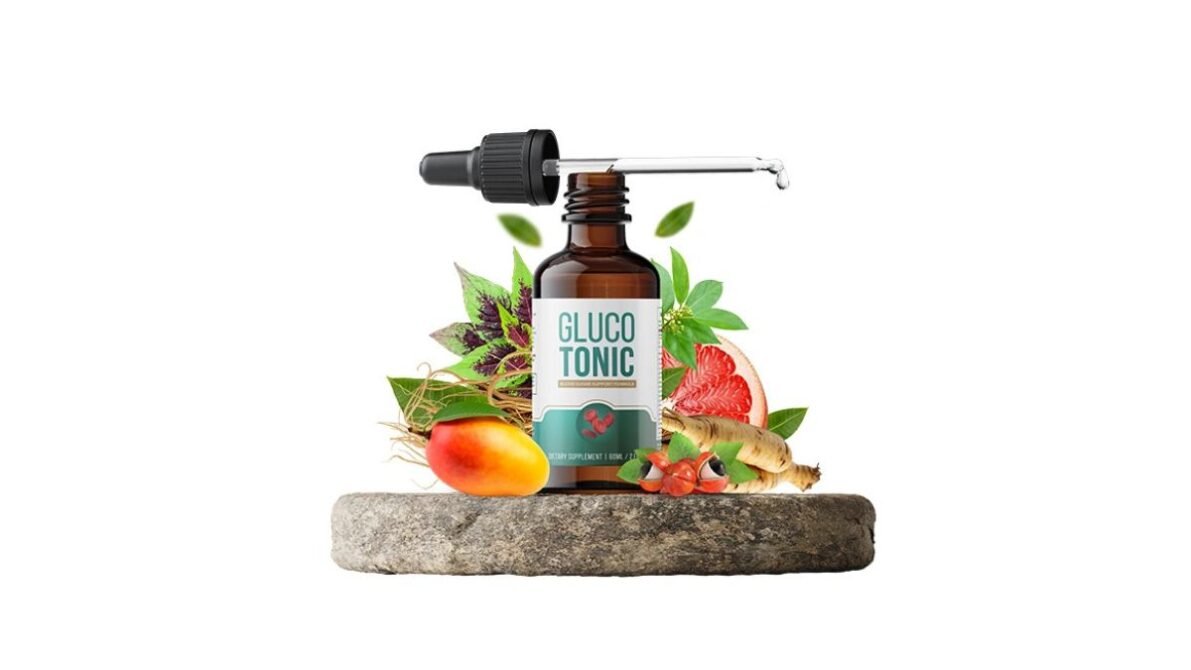
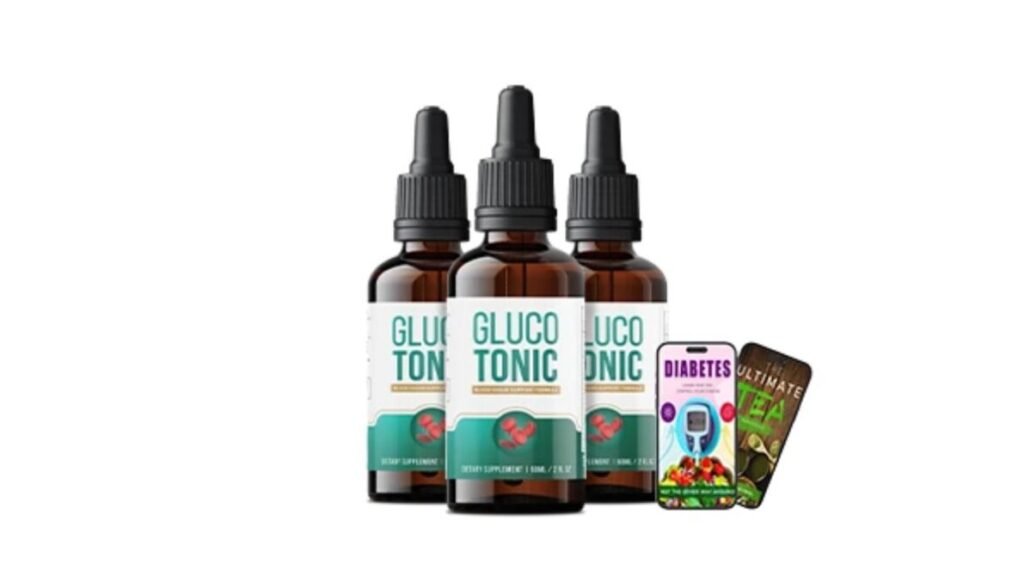
Most reviews of Glucotonic, including earlier coverage of this product, describe it as a six-ingredient formula. A photo of the actual Supplement Facts panel tells a different story.
The label lists Chromium (as Chromium Picolinate) at 0.7mcg — 2% of the Daily Value — as its one individually disclosed ingredient.
Behind that sits a “Proprietary Herbal Blend” of 200mg containing 22 separate ingredients with no individual amounts given: Maca Root, Grape Seed Extract, Guarana Seed Extract, African Mango Fruit Extract, Eleutherococcus Senticosus Root Extract, Astragalus Root Extract, Green Tea Leaf Extract, Gymnema Sylvestre Leaf Extract, Coleus Forskohlii Root Extract, Capsicum Annuum (cayenne) Fruit Extract, Grapefruit Seed Extract, Panax Ginseng Root Extract, Raspberry Ketones, L-Glutamine, L-Tyrosine, L-Arginine, Beta-Alanine, Monoammonium Glycyrrhizinate (a licorice derivative), GABA, L-Ornithine HCl, L-Tryptophan, and L-Carnitine.
That’s 23 total active ingredients, not six — and the one dose the label does disclose undercuts its own disclosure. Chromium’s studied doses in the meta-analyses below run in the hundreds of micrograms to low milligrams; 0.7mcg is a small fraction of even the lowest amount ever shown to do anything. Declaring a dose that far below the studied range isn’t meaningfully more transparent than not declaring one at all.
The label also corrects the serving instructions: it’s 1mL per day as directed, not the “two droppers before breakfast” description that’s circulated in earlier coverage of this product, and the label doesn’t specify a time of day at all.
None of that tells you whether the ingredients inside the bottle work at the amounts actually present. That question has its own answer, and it’s more mixed than the marketing suggests.
The Math Behind the 200mg Blend
Twenty-two ingredients sharing a 200mg blend average out to roughly 9mg each, if evenly distributed (blends are rarely even — some ingredients likely make up more of the 200mg than others, with no way to know which). For scale: Gymnema Sylvestre’s studied dose in the human trials behind its evidence is 400–600mg on its own.
African Mango’s studied doses run from several hundred milligrams to over a gram per day. Even if one of these ingredients made up the entire 200mg blend by itself — leaving literally nothing for the other 21 — it would still fall short of the doses used in the research cited below.
The Headline Ingredient’s Evidence Doesn’t Hold Up Well
African Mango (Irvingia gabonensis) features prominently in the product’s own marketing. A 2020 meta-analysis in the Journal of the American College of Nutrition pooled 5 randomized controlled trials of African Mango for weight and metabolic outcomes. Four of those five trials were rated high risk of bias — meaning methodological problems (unclear randomization, selective reporting, industry funding without independent verification) that make their positive results unreliable.
The single trial rated low risk of bias found no statistically significant effect. In plain terms: strip out the shakier studies, and the best-quality evidence for this ingredient shows nothing — before even accounting for how little of the 200mg blend it could realistically make up.
Where the Real Evidence Actually Is
Buried in the middle of a 22-ingredient list is the formula’s strongest performer. A 2021 meta-analysis in the Journal of Ethnopharmacology pooled 10 randomized controlled trials of Gymnema Sylvestre (419 participants total) and found statistically significant reductions in fasting blood glucose, post-meal glucose, and HbA1c. This is real, reasonably robust evidence — for Gymnema at 400–600mg, not for whatever fraction of a 200mg, 22-ingredient blend it actually occupies here.
Several of the remaining ingredients have their own separate research bases, though none changes the core math problem. Coleus Forskohlii has split results: a 2005 Obesity Research trial found a positive metabolic effect in 30 obese men, while a separate 2005 study in the Journal of the International Society of Sports Nutrition found no significant effect in 23 overweight women.
Maca Root has a large 2024 Nutrients review covering 57 preclinical (animal/cell) studies plus one 2022 human RCT, mostly focused on energy and hormonal outcomes rather than blood sugar. Panax Ginseng and Astragalus both have broader adaptogenic and immune-related research, largely unrelated to blood glucose specifically. Raspberry Ketones’ human evidence is essentially limited to in-vitro and animal work.
Guarana and the amino acids (L-Tyrosine, L-Arginine, Beta-Alanine, L-Glutamine, L-Ornithine, L-Tryptophan, L-Carnitine) function mainly as energy, stimulant, or general-metabolic supporting cast rather than direct blood-sugar mechanisms.
About “Tom Green,” the Formula’s Named Creator
Separately from the label itself, Glucotonic’s official order page introduces the formula with a name and a face: “Tom Green, Creator, GlucoTonic.” No credentials, no clinic, no prior product — just a name attached to a photo and a story about why he supposedly made this.
We went looking for Tom Green outside of Glucotonic’s own marketing and found nothing: no professional history, no other public appearance, nothing that independently confirms this is a real person rather than a persona built for the sales page.
A separate investigation into this product’s marketing reached the same conclusion and flagged a second invented spokesperson used in Glucotonic’s promotional material, a “Mike Trout” presented as the host of a wellness show that doesn’t appear to exist either.
It also isn’t the only thing that’s shifted since Glucotonic first came to our attention: the page currently prices its 2-bottle package at $79/bottle ($158 total), up from the $69/bottle ($138 total) it was previously listed at for the same package.
What the Company’s Own Language Claims vs. What’s Proven
Glucotonic markets itself around a specific narrative involving a “root cause” of blood sugar problems. No component of that story has been tested as a complete mechanism in a clinical trial of this product. What exists is separate research on individual ingredients, at their own doses, mostly for different outcomes than “blood sugar control” as a whole.
Treat the ingredient-level evidence above as what it is — evidence about compounds, not proof that this specific tincture, at whatever fraction of a 200mg blend each one occupies, produces the described effect.
Safety Notes
Guarana contains caffeine; combined with other stimulants (coffee, pre-workouts, other supplements) it can push daily caffeine intake higher than intended, and the amount here isn’t disclosed. African Mango and Gymnema Sylvestre can both affect blood glucose — anyone on insulin or glucose-lowering medication should talk to a doctor before adding this, since the combined, unquantified effect of multiple glucose-active ingredients taken together hasn’t been studied.
Eleutherococcus Senticosus has documented interactions with some blood thinners and sedatives. Monoammonium Glycyrrhizinate (a licorice-root derivative) carries the same pseudoaldosteronism risk as licorice root itself — elevated blood pressure and low potassium with chronic high-dose use — though the amount here is a fraction of a 200mg blend shared with 21 other ingredients.
The label’s warning to consult a physician before use if pregnant, nursing, or on any medication is worth taking at face value given how many glucose- and stimulant-active ingredients are present.
See a doctor promptly for: blood sugar readings persistently above your target range, symptoms of hypoglycemia (shakiness, confusion, sweating) especially if you’re on diabetes medication, unexplained rapid weight change, or vision changes — these need medical evaluation, not a supplement adjustment.
Price, Guarantee, and Where It’s Sold
- 1 bottle: $79
- 2 bottles: $79/bottle ($158 total) — previously listed at $69/bottle ($138 total)
- 3 bottles (“Most Popular”): $59/bottle ($177 total)
- 6 bottles (“Best Value”): $49/bottle ($294 total)
- 90-day money-back guarantee, stated to cover “even your empty bottles”
- Sold through Digistore24
- Distributed by glucotonic.com, listed at an Aurora, Colorado address — the same city named as Gluco6’s manufacturer headquarters in our separate Gluco6 review, which may point to shared white-label manufacturing or fulfillment rather than any connection between the two formulas specifically
Current Glucotonic pricing and the official order form are available on the Glucotonic order page. For a formula built around a similar core ingredient, see our Sugar Defender review.
Verdict
Glucotonic’s strongest ingredient by the evidence, Gymnema Sylvestre, has real meta-analytic support for lowering blood glucose markers — but it’s one voice in a 22-ingredient chorus sharing a single 200mg blend, not the ingredient the marketing leads with. The one dose the label does disclose, 0.7mcg of Chromium, is so far below the studied range that disclosing it barely counts as transparency.
None of this evidence can be confirmed against what’s actually reaching you in a meaningful amount. And the page’s own creator story doesn’t hold up to a basic check — “Tom Green” isn’t verifiable as a real person, which is a strange thing to build a supplement’s credibility on if the formula itself doesn’t need the help.
FAQ
Does the current formula match what’s described in older reviews of Total Control 24?
No — Total Control 24’s live sales page now lists six ingredients (adding Pine Pollen Extract and Neem Leaves Powder) versus the four-ingredient version described in earlier coverage of this product.
Is Neem Leaves Powder dangerous to include in a men’s supplement?
Not necessarily, but it’s worth knowing that most of the published research on neem leaf extract studies it for reducing male fertility in animal models, which is a different direction from how it’s marketed here. No human trial addressing this specific concern for this product was found.
Has Total Control 24 itself been tested in a clinical trial?
No independent, published clinical trial of the finished six-ingredient formula was found. The clinical evidence cited for beta-sitosterol and Pygeum comes from studies of those ingredients individually, at their own doses, not from a trial of this product.
Why does the checkout mention ClickBank when older material referenced Digistore24?
The seller appears to have switched payment processors since earlier versions of Total Control 24’s marketing were published. This doesn’t change the ingredient evidence, but buyers should expect ClickBank’s refund process rather than Digistore24’s when requesting the 60-day guarantee.
These statements have not been evaluated by the Food and Drug Administration. This product is not intended to diagnose, treat, cure, or prevent any disease. This article contains affiliate links; the author may earn a commission at no extra cost to you. This content is for informational purposes only and does not constitute medical advice. Always consult a qualified healthcare professional before starting any new supplement.

Raphael Albert is the founder and content creator of Nutra Pulse. Passionate about health, nutrition, fitness, and wellness, he spends his time researching scientific studies, health trends, and evidence-based lifestyle strategies to create informative and easy-to-understand content. While he is not a doctor or licensed healthcare professional, his goal is to help readers make more informed wellness decisions. All content is for educational purposes only and should not replace professional medical advice. Always consult a qualified healthcare provider regarding your health concerns.
1 thought on “Glucotonic Review: A Startling Look at the Real Label — 22 Ingredients, and a Disclosed Dose That’s Nearly Zero”