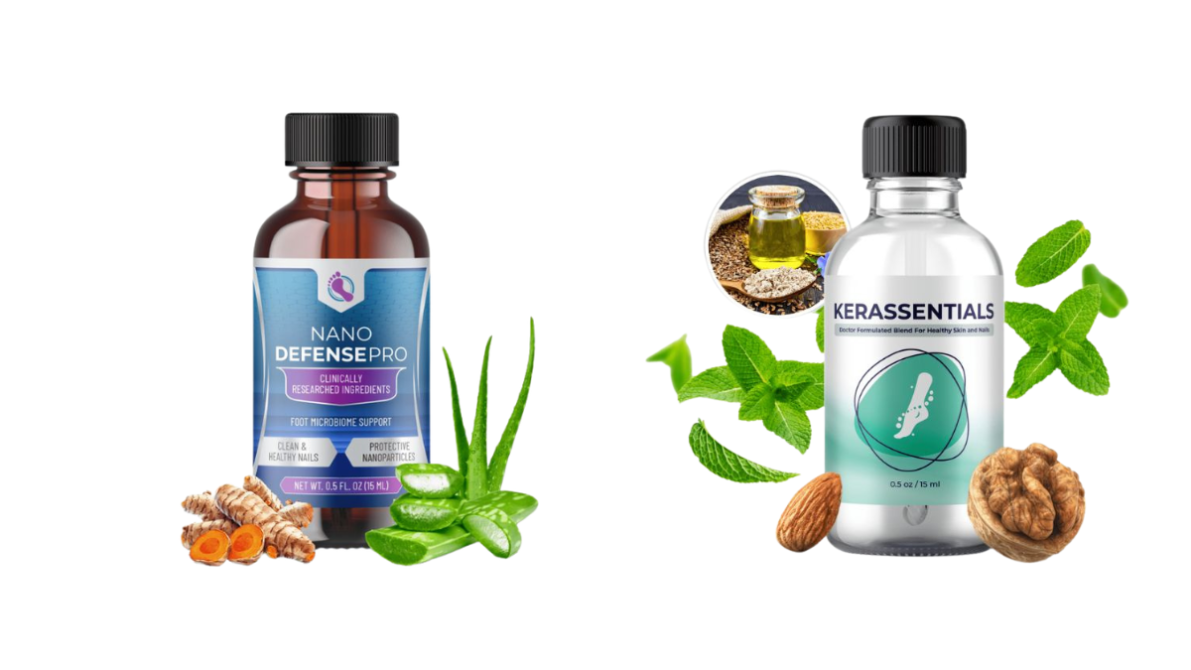
On incentives: two links below go to the sellers and pay this site a commission. Neither product comes out of this comparison recommended without qualification, and the section on what actually clears nail fungus points somewhere else entirely.
These statements have not been evaluated by the Food and Drug Administration. These products are not intended to diagnose, treat, cure, or prevent any disease. Roughly half of abnormal-looking nails aren’t fungal — and one thing a discoloured nail can be is a melanoma. A dark streak under a nail that appears without injury needs prompt medical assessment, not a topical.
Before comparing anything, here’s the number both products are up against.
There is a prescription topical for toenail fungus — a 10% solution of an actual antifungal drug, applied daily for 48 weeks. In a phase 3 study of patients with 20 to 50% nail involvement, its complete cure rate at 52 weeks was 17.8%.
Fewer than one in five, with a real drug at pharmaceutical concentration, applied every day for the better part of a year.
Kerassentials vs NanoDefense Pro is therefore a comparison between two products walking into a benchmark that humbles prescription medicine. And the thing each claims as its differentiator — traditional essential oils on one side, nano-encapsulation on the other — is an argument about what’s being delivered, not about whether it gets where it needs to go.
The nail plate doesn’t care which payload you choose. But there is a real difference between these two, and it’s about evidence rather than technology.
What Each One Is
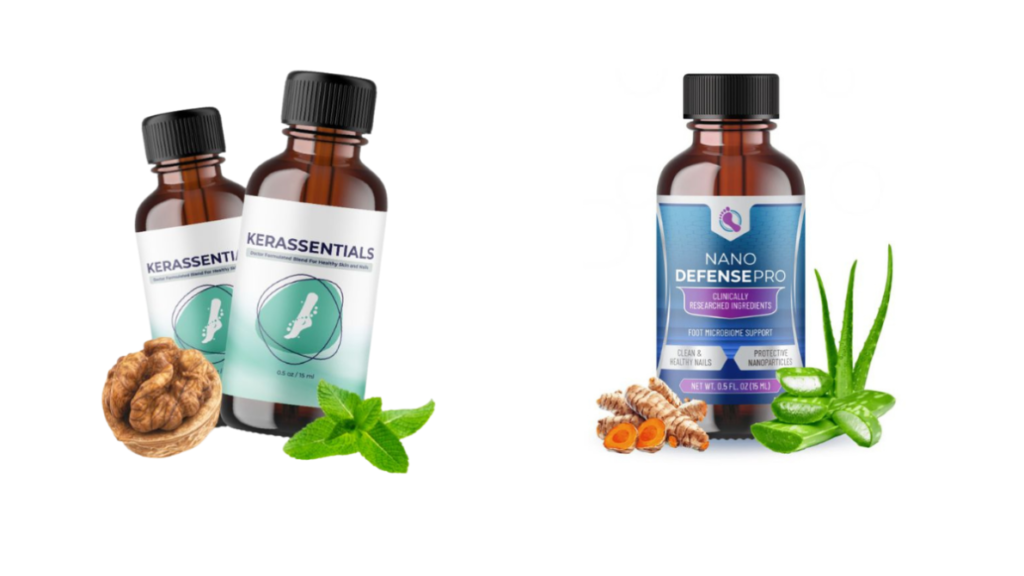
Kerassentials is a topical oil applied to nails and surrounding skin, built on eight ingredients including tea tree oil and undecylenic acid — the traditional essential-oil approach to nail fungus.
NanoDefense Pro is a topical liquid applied with a dropper for about 60 seconds daily, built on six ingredients: nano-silver, nano-curcumin, nano-quercetin, luteolin, deoxyribonuclease (DNase) and Cape aloe. It’s positioned as a next-generation approach using nano-encapsulation, with a 180-day money-back guarantee.
Kerassentials: The Traditional Essential Oil Approach
Two of its ingredients are worth knowing about specifically.
Tea tree oil is the most clinically studied essential oil for nail fungus. That’s not marketing — it has a randomised trial, which almost nothing in this category does.
Undecylenic acid is a genuine, recognised antifungal, long used in over-the-counter products. The qualification matters and comes later: it’s established for skin infections, not for nail.
NanoDefense Pro: The Nano-Technology Claim
The framing here is that nano-encapsulated molecules are dramatically smaller than conventional treatments, enabling deep penetration and elimination of fungal colonies at the root.
Our NanoDefense Pro review works through what the published research on each ingredient actually shows. The headline finding is unusual enough to have its own section below.
Where Kerassentials vs NanoDefense Pro Actually Separates
Four dimensions, and they don’t all favour the same product.
Evidence for the lead ingredient. Kerassentials ahead, clearly — and the gap is wider than you’d expect.
Guarantee length. NanoDefense Pro ahead, by a lot.
Dose transparency. Neither publishes concentrations.
Marketing accuracy. Kerassentials ahead — its claims match what its ingredients are known for.
Before the table, one thing worth setting up: this Kerassentials vs NanoDefense Pro comparison is unusual because the product with the weaker science has the stronger commercial terms.
| Kerassentials | NanoDefense Pro | |
|---|---|---|
| Lead ingredient | Tea tree oil | Nano-silver |
| Randomised trial for it | ✅ Yes, 1994 | ❌ No — outperformed by griseofulvin |
| Concentrations published | ❌ No | ❌ No |
| Guarantee | Category norm | ✅ 180 days |
| Manufacturer identified | ⚠️ Unclear | ❌ Not identified |
| Independent reviews | ❌ None verifiable | ❌ None verifiable |
Tea Tree Oil Has a Trial
This is the single biggest difference between the two.
Tea tree oil was tested against a pharmaceutical antifungal in a randomised trial — 117 patients, comparing 100% tea tree oil against 1% clotrimazole solution over six months. Both produced comparable results.
Comparable to a pharmaceutical is a meaningful sentence for an essential oil. It’s why tea tree oil is the one botanical in this category that clinicians will acknowledge.
What That Trial Actually Found
Now the calibration, because “comparable to clotrimazole” needs context.
Comparable meant a cure rate in the high teens — in line with what topical treatments achieve generally, and consistent with the 17.8% benchmark at the top of this article.
And the dose matters: the trial used 100% tea tree oil, undiluted, applied twice daily.
Kerassentials contains tea tree oil as one of eight ingredients, at an undisclosed concentration. That’s a different proposition from the trial, and it’s the recurring problem in this category — the ingredient can be real, the trial can be real, and the product still not deliver what the trial delivered.
Nano-Silver Has a Problem
Here’s the finding that decides the evidence comparison, and it’s genuinely surprising.
A 2017 in vitro study tested silver nanoparticles against Microsporum canis, Trichophyton mentagrophytes and Microsporum gypseum — and found them LESS active than griseofulvin, with MIC values of 170–200 μg/mL for the nanoparticles against 25–100 μg/mL for griseofulvin.
Griseofulvin is an old, largely superseded antifungal. The headline ingredient underperformed it.
So the ingredient that gives the product its identity — the one in the name, the one the whole “nano” framing is built on — has the weakest published evidence of anything in the formula.
The Ingredient That Isn’t in the Marketing
The corollary is interesting.
Quercetin is the best active in NanoDefense Pro, and it barely appears in the marketing. A 2023 review found quercetin active against Candida, Cryptococcus, Aspergillus and dermatophytes, with MIC values of 0.5 to 16 μg/mL — mechanisms including oxidative stress and membrane disruption.
Dermatophytes are the main cause of nail fungus. That’s directly relevant, and the MIC values are far more favourable than nano-silver’s.
There are still no human trials for onychomycosis with it. But within this formula, the marketing is pointing at the wrong ingredient.
Nano-curcumin has preclinical and animal data. Luteolin has preliminary work, including some synergy with terbinafine. DNase is included on a plausible biofilm theory with no human validation in this context. Cape aloe is supportive rather than antifungal.
Does “Nano” Solve the Barrier?
The question the whole comparison turns on.
Nano-encapsulation is a real pharmaceutical technique, and reducing particle size genuinely can improve penetration of some barriers. It isn’t a made-up concept.
But the obstacle here is specific. The nail plate is dense, dead, tightly packed keratin — one of the toughest barriers your body produces. It’s why prescription topicals fail four times out of five.
No published data establishes that this particular formulation crosses it. And the claim of molecules being a thousand times smaller than conventional treatments isn’t accompanied by particle size data, penetration measurements, or a study on the finished product.
Kerassentials makes no equivalent technology claim — which means it has nothing extra to substantiate. Its ingredients face the same barrier, honestly.
Undecylenic Acid: Real Antifungal, Wrong Tissue
Kerassentials’ second active deserves the same scrutiny.
Undecylenic acid is a genuine antifungal with a long over-the-counter history — for athlete’s foot, jock itch and ringworm. All skin infections.
Over-the-counter topical antifungals are established for fungal infections of skin, where the drug reaches the organism easily. They are not established for nail infections, because of the barrier described above.
An ingredient being a real antifungal and being effective against nail fungus are two different claims. Only the first is settled.
Neither Publishes a Dose
Both products list ingredients. Neither publishes a concentration for any of them.
Kerassentials names eight. NanoDefense Pro names six. In both cases you know what’s in the bottle and not how much.
Concentration Is the Dose in a Topical
This matters more here than for a capsule, and it’s worth understanding why.
With an oral supplement, the dose is milligrams swallowed. With a topical, the dose is concentration at the surface — how much active sits against the tissue, and for how long.
That’s why the tea tree oil trial specified 100%. That’s why the prescription benchmark specifies 10%. Concentration is the intervention.
A product listing tea tree oil without a percentage could contain 30% or 0.5%. Those are different products wearing the same ingredient name, and neither company lets you tell.
Neither has an advantage here. Both fail the same check.
Guarantees: 180 Days Versus the Category Norm
NanoDefense Pro’s 180-day guarantee is the longest in this category, and it’s a genuine advantage worth stating plainly.
It matters more here than in most categories, for a reason specific to nails: a toenail takes roughly 12 to 18 months to grow out completely. Even with successful treatment, the nail doesn’t look normal until the damaged portion grows off the end. A 60-day window closes long before you could reasonably judge anything.
180 days doesn’t cover full regrowth either — nothing does — but it’s the only guarantee in this category that reaches the point where you might see the first clear nail emerging from the base.
Advantage: NanoDefense Pro, clearly.
Reviews You Can’t Read
Both products are sold direct only, which means neither has a verified-purchase review pool.
NanoDefense Pro displays 12,396 “verified reviews” and a 4.98-star rating on its official site, with no link to any platform where those reviews can be read. Its manufacturer isn’t publicly identified, and multiple domain clones exist.
Neither product gives you independent feedback to weigh. Treat any testimonial you encounter for either as unverified.
What Both Products Share
More than separates them, honestly.
Both are topical, facing the same keratin barrier. Neither publishes concentrations. Neither has a clinical trial on the finished formula. Neither is sold anywhere that collects verified reviews. And both are far less effective than the prescription options, which is not a close comparison.
Before Either: Is It Actually Fungus?
The most important section, and it applies before any purchase decision.
Roughly half of abnormal-looking nails aren’t fungal. Clinical guidance is explicit that accurate diagnosis should precede treatment, using potassium hydroxide microscopy, fungal culture or PCR.
What else produces a thick, discoloured, crumbling nail:
Nail psoriasis, which looks almost identical and is treated completely differently. Repeated trauma, common in runners and anyone whose shoes are slightly short. Lichen planus, which can scar the nail permanently if untreated.
And subungual melanoma. A dark brown or black streak or patch under a nail — especially one appearing without injury, widening over time, or extending into surrounding skin — needs prompt assessment. It’s uncommon, frequently mistaken for a bruise or fungus, and delay costs more here than anywhere else in this article.
If you have diabetes, any foot or nail problem warrants professional assessment rather than self-treatment, because reduced sensation and circulation change the risk profile entirely.
What Actually Clears Nail Fungus
The honest hierarchy, and neither product is on it.
Get it diagnosed. KOH microscopy, culture or PCR confirms whether it’s fungal. This step decides everything and it’s the one people skip.
Why oral works better is worth understanding, because it’s counterintuitive. The nail plate blocks almost everything applied to it. But the nail grows from the nail matrix — living, blood-supplied tissue under the skin at the base. Oral antifungals reach the matrix through the bloodstream and become incorporated into the nail as it grows out. They arrive from underneath, where the infection is.
Prescription topicals — efinaconazole, tavaborole, ciclopirox — are the option for mild-to-moderate disease or when oral isn’t safe. Lower cure rates, fewer interactions.
And prevention, which is free: keep feet dry, rotate shoes so they dry fully, wear something in communal showers, don’t share clippers, and treat athlete’s foot promptly since it commonly precedes nail infection.
Which Case Is Stronger, and For Whom
On evidence, Kerassentials. Tea tree oil has a randomised trial that held its own against a pharmaceutical antifungal. Nano-silver was outperformed by griseofulvin in vitro, and a second study found colloidal silver didn’t improve antifungal activity. That’s not a close call.
On commercial terms, NanoDefense Pro. 180 days versus the category norm, in a condition where visible change takes a year or more. That’s a real advantage and the strongest argument for it.
Neither is recommended for moderate or severe nail fungus, and both are substantially less effective than prescription options.
Who Kerassentials might suit: someone with mild, early nail changes confirmed as fungal, who prefers a topical, understands the concentration is undisclosed, and is using it alongside proper diagnosis rather than instead of it.
Who NanoDefense Pro might suit: the same person, if the longer refund window is what makes trying it feel reasonable — accepting that the ingredient the product is named for has the weakest evidence in its own formula.
Who should skip both: anyone who hasn’t had the nail tested, anyone with diabetes or circulation problems, anyone with a dark streak under a nail, and anyone hoping to avoid a prescription for an infection that responds to one.
Where That Leaves You
The title of this comparison is the summary: one has a trial, one has a prefix.
That’s the honest difference. Tea tree oil earned its place in this category through a randomised comparison against a real drug. “Nano” is a description of particle size, and in this product it’s attached to an ingredient that lost to griseofulvin.
But the more useful conclusion is the one both share. Both are oils applied to the outside of a barrier built to keep things out. The prescription version of that approach, at pharmaceutical strength, applied daily for a year, works fewer than one time in five.
If nail fungus is confirmed and it bothers you enough to spend money on it, the conversation worth having is about oral terbinafine — most effective, inexpensive as a generic, and the liver monitoring that makes people nervous is a blood test.
For the full analysis of each, see our Kerassentials review and our NanoDefense Pro review. Both sit inside our guide to skin and joint supplements, which explains why delivery route decides more than ingredients in this category.
Current terms are on the Kerassentials and NanoDefense Pro sites.
Frequently Asked Questions
Which works better, Kerassentials or NanoDefense Pro?
Neither has a clinical trial on its finished formula, so the honest comparison is between their lead ingredients. Tea tree oil has a randomised trial in 117 patients where it performed comparably to 1% clotrimazole.
Nano-silver was found less active than griseofulvin in a 2017 study, and a 2022 study concluded colloidal silver doesn’t improve antifungal activity. On evidence, that favours Kerassentials — though both face the same barrier, and neither publishes concentrations.
Does nano-technology help topical treatments penetrate the nail?
Nano-encapsulation is a real technique and can improve penetration of some barriers. What’s missing here is evidence that this specific formulation crosses the nail plate — no particle size data, no penetration measurements, no study on the finished product. The nail plate is dense dead keratin, which is why even prescription topicals at pharmaceutical strength cure fewer than one in five people.
Is tea tree oil actually effective for nail fungus?
It has the best trial of any essential oil in this category — 117 patients, comparable results to 1% clotrimazole over six months. Two qualifications: comparable meant a cure rate in the high teens, and the trial used 100% undiluted tea tree oil twice daily. A product containing tea tree oil as one of eight ingredients at an undisclosed concentration is a different proposition.
Why does the guarantee length matter so much here?
Because a toenail takes 12 to 18 months to grow out completely. Even with treatment that works, the nail doesn’t look normal until the damaged portion grows off the end. NanoDefense Pro’s 180 days is the longest in this category and the only one that reaches the point where you might see clear nail emerging at the base. A 60-day window closes long before you could judge anything — which is worth knowing whichever product you choose.

Raphael Albert is the founder and content creator of Nutra Pulse. Passionate about health, nutrition, fitness, and wellness, he spends his time researching scientific studies, health trends, and evidence-based lifestyle strategies to create informative and easy-to-understand content. While he is not a doctor or licensed healthcare professional, his goal is to help readers make more informed wellness decisions. All content is for educational purposes only and should not replace professional medical advice. Always consult a qualified healthcare provider regarding your health concerns.