Transparency note: this site normally earns a commission when readers buy through our links. There are no purchase links in this article — the individual reviews it points to carry their own disclosures.
These statements have not been evaluated by the Food and Drug Administration. These products are not intended to diagnose, treat, cure, or prevent any disease. Sudden hearing loss in one ear, sudden vision loss or a curtain across your vision, and vertigo with weakness or slurred speech are medical emergencies — not reasons to compare supplements. The second section of this article explains each, and it’s the reason the article exists.
Hearing and vision get sold together because they decline together. Hearing and vision supplements occupy the same shelf, target the same age bracket, and use the same language about protecting your senses as you get older.
Biologically they have almost nothing in common. Your cochlea contains hair cells that convert vibration into nerve signals and do not regenerate once damaged. Your retina contains photoreceptors supported by a pigment layer that degrades through a completely different process. Add balance — which depends on the vestibular system in your inner ear, but also on your eyes, your joints and your brain integrating all three — and you have three separate systems under one marketing umbrella.
That matters for two reasons.
The first is that what a supplement can plausibly do differs enormously between them, and there’s one area where the evidence is genuinely good.
The second is more urgent, and it’s why this article puts a safety section second rather than last. Some symptoms in this category are time-critical medical emergencies where the treatment window is measured in days. If you’re reading this because something changed recently, the next section is the one that matters.
Read This First: Three Symptoms That Can’t Wait
These aren’t “see your doctor if it persists” situations. They’re “get seen now” situations, and the reason is that the window for effective treatment closes.
Sudden hearing loss in one ear
This is the one most people don’t know about, and the consequences of not knowing are permanent.
Sudden sensorineural hearing loss (SSNHL) is an otolaryngologic emergency. It’s defined as a rapid loss of at least 30 decibels across three consecutive frequencies, developing over 72 hours or less, usually in one ear. It’s often accompanied by a feeling of fullness in the ear and by tinnitus.
Failure to treat within 72 hours of onset greatly diminishes the likelihood of full recovery, and typically results in permanent hearing loss. The American Academy of Otolaryngology guideline recommends audiometry within the first 14 days of symptoms, with corticosteroids offered as initial treatment within the first two weeks.
Read that timeline again. Days, not weeks. In 71 to 90% of cases no cause is ever identified, which means there’s nothing to feel or see that tells you it’s serious — the sudden change is the warning.
If your hearing drops noticeably in one ear, especially with fullness or new ringing, that’s an urgent care or ENT visit today. Not a supplement, and not a wait-and-see.
Sudden vision loss, or a curtain across your vision
A sudden increase in floaters, flashes of light, or a dark shadow or curtain moving across part of your visual field can indicate retinal detachment. It’s painless, which is exactly why people delay — and delay is what determines whether vision is preserved.
Sudden painless loss of vision in one eye, or a sudden dark area in your field, needs same-day emergency eye assessment.
Vertigo with neurological symptoms
Most dizziness is benign and inner-ear related. But vertigo occurring together with slurred speech, weakness or numbness on one side, double vision, difficulty swallowing, severe unsteadiness or a sudden severe headache can indicate a stroke in the posterior circulation.
Those combinations are emergency calls, not supplement questions. Vertigo alone, especially triggered by head position and lasting under a minute, is a different situation — and usually benign.
None of this means dizziness or ringing ears are always serious. Most aren’t. The point is that a small number of presentations have a closing window, and knowing which ones is worth more than anything else on this page.
Vision: Where the Evidence Is Genuinely Good — and Where It Isn’t
This is the one area in this category with a real, large, well-conducted trial behind it — and it’s also the most commonly misapplied.
The AREDS and AREDS2 trials tested a specific combination of antioxidants and zinc in people with age-related macular degeneration. The finding: the formulation reduces the risk of progression from intermediate AMD to advanced AMD by around 25%.
Read that sentence carefully, because three things follow.
It reduces progression, in people who already have intermediate AMD. It does not prevent AMD from developing in healthy eyes, and there’s no established benefit in early AMD.
It doesn’t restore vision. Damage already done isn’t reversed.
It doesn’t affect cataract. Cataract is a clouding of the lens, a structurally different problem, and AREDS2 found no effect on it.
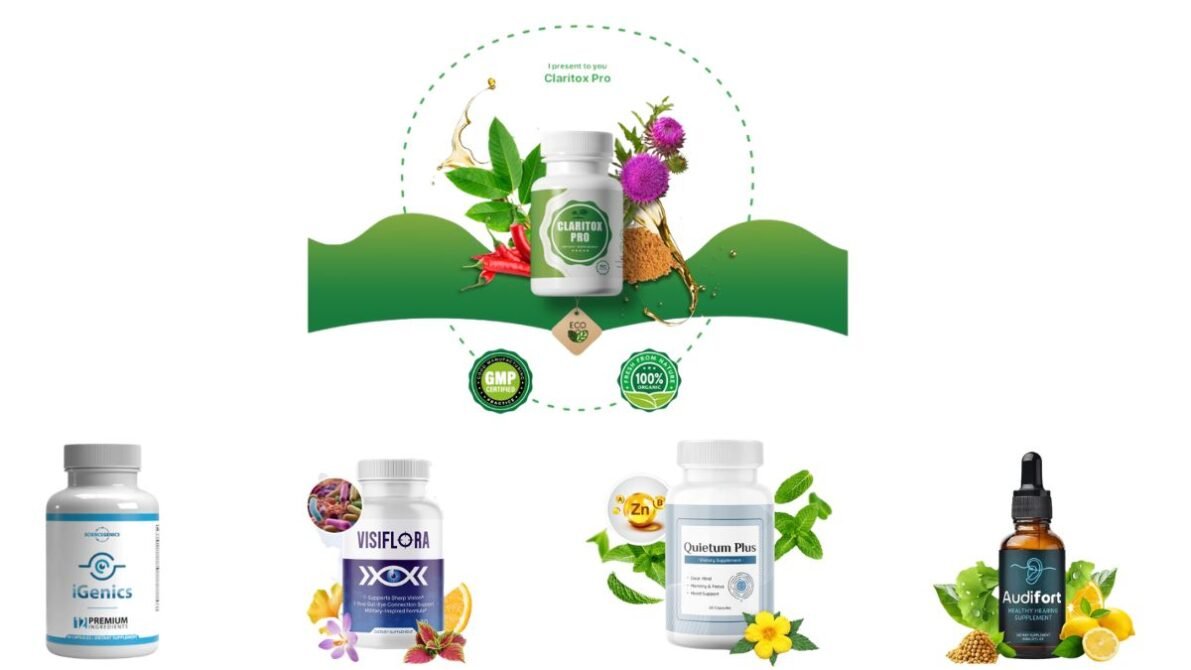
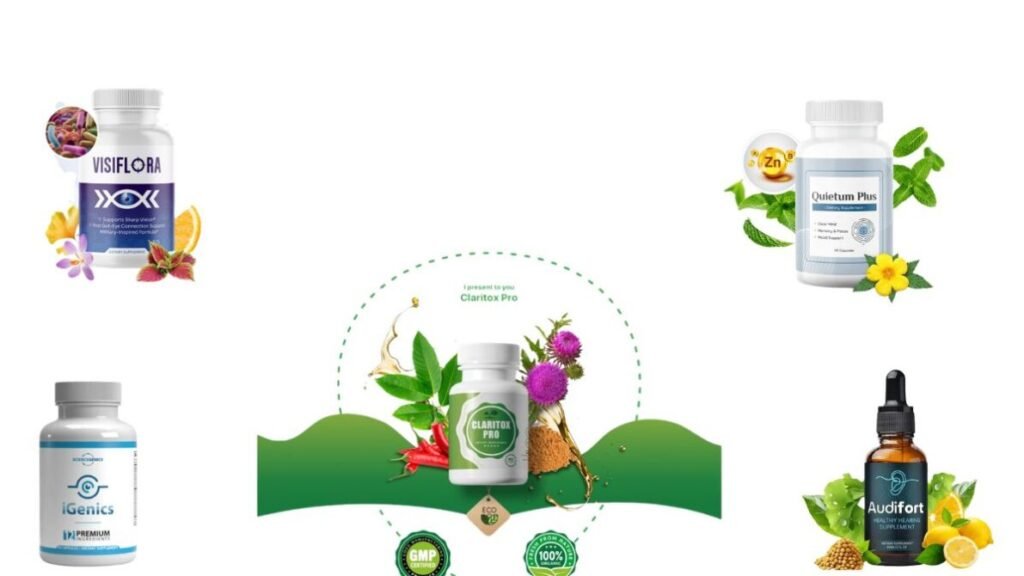
Our iGenics review covers a product built on the AREDS2 core — lutein, zeaxanthin, zinc, copper, vitamins C and E — and works through where that application holds and where it stretches. It also covers the one ingredient in that formula that genuinely earns its place: saffron, which has a randomised crossover trial in 100 adults over 50 with mild to moderate AMD showing a modest but significant improvement, additive to AREDS.
Our VisiFlora review covers a 22-ingredient formula that adds a gut-eye axis framing to the AREDS-style base.
And here’s the safety point that matters most in vision supplements, because the affected group is large and overlaps precisely with the target market.
The original AREDS formulation contained beta-carotene, and it was removed from AREDS2 for a specific reason: high-dose beta-carotene was associated with increased lung cancer risk in current and former smokers. Since smoking is one of the strongest modifiable risk factors for macular degeneration, a substantial share of people shopping for eye supplements are current or former smokers.
If you smoke or used to, check the label for beta-carotene before buying anything for your eyes — and if it isn’t published, that’s a reason to ask before ordering.
Two more cautions worth knowing in this category: ginkgo is associated with bleeding risk and eye surgeons commonly advise stopping it one to two weeks before cataract surgery, and alpha-lipoic acid and chromium warrant a conversation if you take medication for blood sugar.
Hearing and Tinnitus: The Harder Problem
Vision has AREDS. Hearing has nothing comparable, and it’s important to say that plainly.
Age-related hearing loss (presbycusis) involves the loss of cochlear hair cells, which do not regenerate in humans. Noise-induced damage works the same way. Once those cells are gone, no nutrient replaces them — and any product implying otherwise is describing something biology doesn’t currently allow.
Tinnitus is more complicated, and slightly more hopeful. It’s a symptom rather than a disease, frequently arising from hearing loss, sometimes from noise exposure, medication, ear wax, jaw problems or blood vessel issues. Some of those causes are treatable, which is the reason to have it assessed rather than self-treat.
Two products in this category target that space.
Our Audifort review covers a liquid dropper containing more than 20 ingredients — grape seed, green tea, capsicum, gymnema, GABA, maca, ginkgo and zinc among them — taken once daily, with a sublingual absorption claim. The formula carries a 90-day guarantee, which is the longest in this category and a genuine point in its favour. The arithmetic problem it runs into is covered in its own section below.
Our Quietum Plus review covers a capsule with 18 plant-based ingredients, including less common additions like motherwort and dong quai, with a 60-day guarantee.
Both are built on a circulation-and-antioxidant premise: improve blood flow to the cochlea, reduce oxidative stress, support the auditory nerve. That premise isn’t absurd — cochlear blood supply is genuinely relevant to hearing health. What doesn’t exist is trial evidence that either formula changes hearing thresholds or tinnitus severity in a measurable way.
What does have evidence for tinnitus, and it’s worth knowing: cognitive behavioural therapy has the strongest support of any intervention for tinnitus distress. It doesn’t silence the sound; it substantially reduces how much the sound bothers you, which for most people is the outcome that matters. Sound therapy and hearing aids also help many people, because treating the underlying hearing loss often reduces the tinnitus.
Balance: A Symptom With Many Causes
The third system is the one where matching product to problem is hardest, because dizziness is a symptom with an unusually long differential.
Our Claritox Pro review covers a capsule marketed for balance and dizziness. Two observations from researching it are worth carrying into any purchase in this space.
The ingredient list differs between the brand’s various websites. One names berberine, chromium, banaba, milk thistle, cayenne and resveratrol. Another names ginkgo, bacopa and alpha-lipoic acid. A third refers to eight clinically proven ingredients without matching either list. When “the official site” says different things depending on which one you land on, that’s worth resolving before ordering.
And the most commonly listed formula is a metabolic one. Berberine, chromium and banaba are the standard ingredients of blood sugar supplements — they appear across that entire category. There’s a defensible thread connecting glucose regulation to dizziness in specific circumstances, but a formula assembled from glycaemic ingredients and sold for vestibular balance is worth recognising for what it is.
Worth knowing too: at least one of the brand’s pages states that it has FDA approval. The FDA does not approve dietary supplements, and it does not approve the facilities that make them. A facility can be FDA-registered, which means the agency knows it exists and may inspect it. Registration is not approval, and the distinction appears on supplement pages across every category.
The most useful thing for dizziness isn’t a product — it’s a diagnosis. Benign paroxysmal positional vertigo, the most common cause, is diagnosed with a simple positional test and treated with a repositioning manoeuvre that a physiotherapist or GP can perform in minutes, often with immediate results. That’s a genuinely fixable problem, and no supplement competes with it.
The Dropper Arithmetic
One format issue recurs across this category and deserves its own explanation, because it applies to any liquid supplement you’ll encounter.
A dropper serving is roughly 1 millilitre. That’s the whole budget — and most of it is carrier: water, glycerin, flavouring.
So when a product advertises 20 or more ingredients in a dropper, the arithmetic constrains the answer before you look at any research. Ginkgo trials for cognition use 240 mg daily. Zinc for hearing-related studies uses tens of milligrams. Twenty ingredients cannot each occupy a meaningful fraction of 1 mL.
And the sublingual claim doesn’t solve it. Sublingual absorption is a real pharmaceutical route — it bypasses first-pass liver metabolism, which matters for some drugs. What it doesn’t do is change how much material fits in a millilitre. The route affects what proportion of a dose reaches your bloodstream, not how large the dose is.
That’s a useful check for any liquid supplement: count the ingredients, then ask whether a millilitre could plausibly hold clinical doses of that many things.
Structural Decline vs Treatable Causes
The single most useful distinction in this category, and the one that determines whether a supplement is even the right kind of answer.
Structural, age-related processes — what supplements don’t reverse:
Presbycusis. Cochlear hair cells lost to age or noise don’t regenerate. Hearing aids are the intervention, and modern ones are genuinely good.
Cataract. A clouded lens. Surgery replaces it, and it’s among the most successful procedures in medicine. AREDS2 found supplements don’t affect it.
Advanced macular degeneration. Damage already done to the macula isn’t reversed by nutrition. What AREDS2 supports is slowing progression from the intermediate stage.
Treatable causes worth identifying — where the answer is a diagnosis:
Ear wax. A common and completely reversible cause of hearing loss and sometimes tinnitus, fixed in one appointment.
Medication-related tinnitus. A long list of drugs can cause or worsen it, including high-dose aspirin, some antibiotics and some diuretics. Often adjustable.
BPPV. The commonest cause of vertigo, treated with a repositioning manoeuvre.
Refractive change and dry eye. Both cause blurring and strain that people sometimes attribute to age-related decline, and both are straightforward to correct.
Sudden sensorineural hearing loss. As covered above — treatable, if caught inside the window.
And what genuinely protects both senses, with better evidence than anything in a bottle: not smoking, managing blood pressure and diabetes, protecting your ears from loud noise, wearing UV-blocking sunglasses, and getting regular eye and hearing checks. Treating hearing loss with hearing aids is also associated with better cognitive outcomes, which is a benefit no supplement in this space has demonstrated.
How to Choose Hearing and Vision Supplements
Five checks, in the order that eliminates the most products fastest.
1. Which system does it actually target? Vision, hearing or balance — they’re different biology, and a product claiming all three is claiming a lot.
2. Does it match a condition with evidence? For intermediate AMD, the AREDS2 formulation has a real trial. For presbycusis, nothing does. Knowing which situation you’re in decides whether a supplement is even the right category of answer.
3. Can the format carry the dose? Count the ingredients and consider the volume. A dropper with 20+ ingredients cannot deliver clinical amounts, whatever the absorption route.
4. Check for beta-carotene if you smoke or used to. This is the most specific safety check in this category, and it’s a label read that takes ten seconds.
5. Count the official websites and compare their ingredient lists. Two of the products covered here appear across multiple domains that don’t agree on the formula. Whichever page you buy from, screenshot the ingredients and the refund terms that day.
The Full Library, by Target System
Everything covered above, with the central finding of each.
Vision
- iGenics review — how AREDS2 evidence gets stretched, and the one ingredient in the formula that genuinely earns its place
- VisiFlora review — 22 ingredients, a gut-eye framing, and the beta-carotene question for smokers
Hearing and tinnitus
- Audifort review — 20+ ingredients in a 1 mL dropper, and why the sublingual claim doesn’t change the arithmetic
- Quietum Plus review — an 18-ingredient capsule on a circulation premise, and what tinnitus evidence actually supports
Balance and vertigo
- Claritox Pro review — a largely metabolic ingredient list sold for vestibular balance, and websites that disagree with each other
Frequently Asked Questions
Can supplements reverse hearing loss?
No. Age-related and noise-induced hearing loss involve the death of cochlear hair cells, which don’t regenerate in humans. No nutrient replaces them. Some causes of hearing difficulty are reversible — ear wax being the most common — which is why assessment matters more than supplementation. For permanent loss, hearing aids are the intervention, and they’re associated with benefits beyond hearing itself.
What should I do about sudden hearing loss in one ear?
Seek medical care today. Sudden sensorineural hearing loss is treated as an emergency: failure to treat within 72 hours greatly reduces the chance of full recovery, and guidelines recommend audiometry within 14 days with corticosteroids offered in the first two weeks. It usually comes with ear fullness and new tinnitus, and in most cases no cause is ever found — so the sudden change itself is the signal.
Do AREDS2 supplements work?
For a specific group, yes. The AREDS2 formulation reduces the risk of progression from intermediate to advanced age-related macular degeneration by around 25%. It does not prevent AMD in healthy eyes, does not restore vision already lost, and does not affect cataract. If you have intermediate AMD, it’s worth discussing with your ophthalmologist — including whether the specific product you’re considering matches the studied formulation.
Is beta-carotene safe in eye supplements?
Not for everyone. High-dose beta-carotene was associated with increased lung cancer risk in current and former smokers, which is why it was removed from the AREDS2 formulation. Since smoking is a major risk factor for macular degeneration, a lot of people buying eye supplements fall into that group. Check the label, and if the ingredient list isn’t published, ask before ordering.
Do tinnitus supplements work?
No supplement has demonstrated a measurable reduction in tinnitus severity in good-quality trials. What does have evidence is cognitive behavioural therapy, which reduces tinnitus distress substantially even though it doesn’t silence the sound, along with sound therapy and — where hearing loss is present — hearing aids. Tinnitus is also worth having assessed, because some causes are treatable.
When is dizziness a medical emergency?
When it comes with slurred speech, weakness or numbness on one side, double vision, difficulty swallowing, severe unsteadiness or a sudden severe headache — that combination can indicate a stroke and needs emergency care. Dizziness alone, particularly if triggered by head position and lasting under a minute, is usually benign positional vertigo, which is diagnosed with a simple test and often fixed with a repositioning manoeuvre.
Why do so many of these products come as liquid drops?
Drops feel more advanced and allow a sublingual absorption claim. The constraint is volume: a dropper serving is roughly a millilitre, most of it carrier. A formula with 20 or more ingredients can’t deliver clinical doses of them in that space, and sublingual delivery changes what proportion is absorbed rather than how much is there.
What actually protects hearing and vision long term?
Not smoking, managing blood pressure and blood sugar, protecting your ears from loud noise, UV-blocking sunglasses, and regular checks. For established hearing loss, hearing aids. For intermediate AMD, the AREDS2 formulation under an ophthalmologist’s guidance. Those are the interventions with real evidence, and most of them cost nothing.

Raphael Albert is the founder and content creator of Nutra Pulse. Passionate about health, nutrition, fitness, and wellness, he spends his time researching scientific studies, health trends, and evidence-based lifestyle strategies to create informative and easy-to-understand content. While he is not a doctor or licensed healthcare professional, his goal is to help readers make more informed wellness decisions. All content is for educational purposes only and should not replace professional medical advice. Always consult a qualified healthcare provider regarding your health concerns.