Money first: two links below go to the seller and pay this site a commission. This review opens by showing you that the customer testimonials appear on a different product too, so you can judge how much that commission bought.
These statements have not been evaluated by the Food and Drug Administration. This product is not intended to diagnose, treat, cure, or prevent any disease. Two ingredients here can lower blood sugar, and one is contraindicated in pregnancy. If you take any medication — particularly for diabetes — talk to a pharmacist before starting, not after.
Partway down the Ignitra sales page, three customers give their verdict. James Wilson, 53, from Texas: “I feel better already, my energy is great.” Josh Simpson, 55, from Washington: “This is something I swear by daily it’s that good.” Both marked Verified Purchase.
I recognised them immediately, because I’d read the exact same sentences a few weeks earlier — same names, same ages, same states, same “Verified Purchase” badge — on the sales page for a prostate supplement called Prosta Peak.
The third testimonial is attributed to Jessica Anderson, 47, from Florida: “I was struggling to figure something out until I took this, amazing!” On the prostate product, that identical sentence belongs to Mark Edwards, 45, from Florida. The quote stayed; the person changed.
So before we get to a single ingredient, that’s the starting point of this Ignitra review. Two of the three verified customers are the same people saying the same thing about two unrelated products, and the third is a quote with a new name attached. You can check this yourself in about a minute by opening both pages side by side.
What follows is what’s actually in the bottle — which turns out to include one genuinely good ingredient, at a dose that can’t possibly be there.
What Ignitra Is
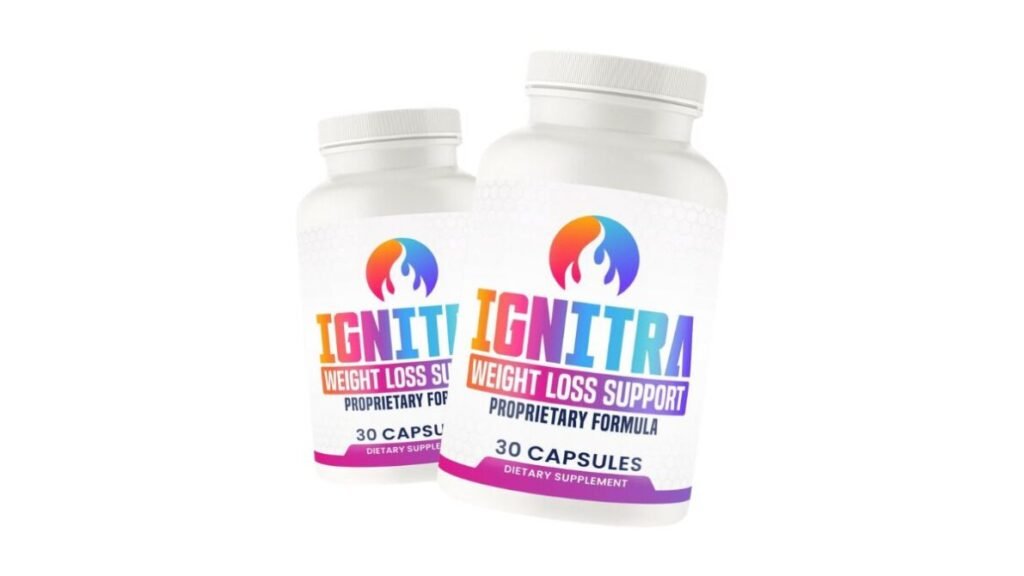
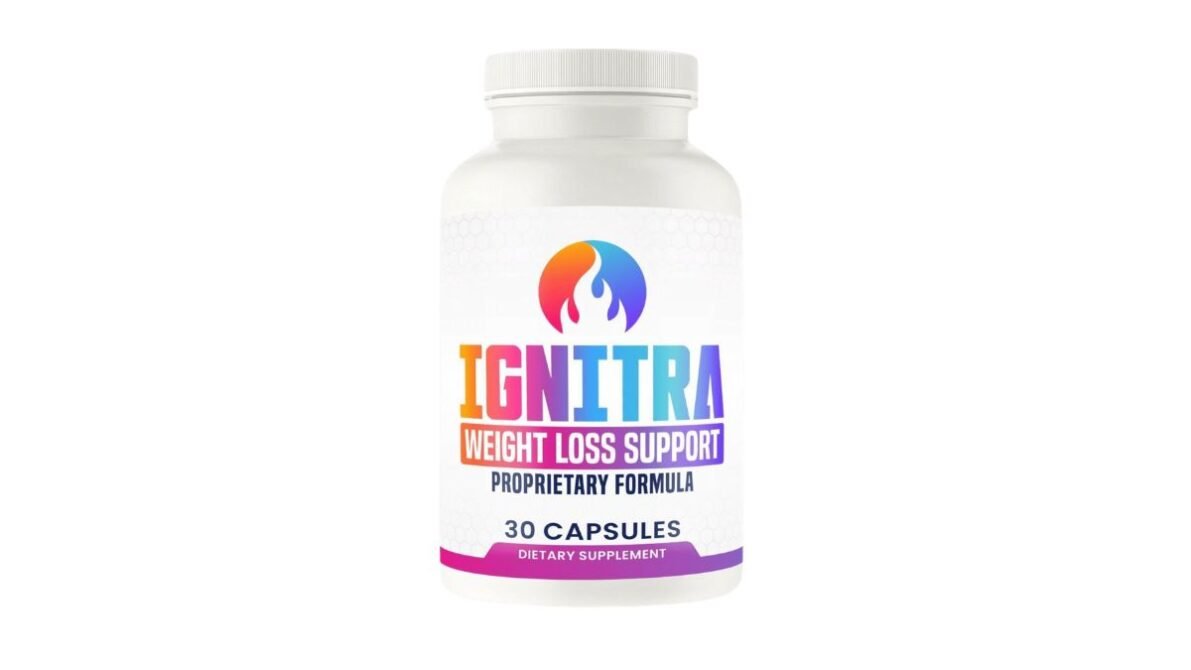
A capsule, sold through the Ignitra official website with ClickBank processing payment, marketed as support for metabolism.
The page describes “a unique blend of 11+ ingredients.” Six are named: riboflavin, mangosteen powder, prickly pear extract, konjac extract fibre, turmeric extract, and berberine HCl.
The FAQ is worth reading for what it doesn’t say. Asked “What’s inside?”, the answer is: a unique proprietary blend of natural plants and nutrients. Asked “What is the best way to take it?”, the answer is: simply take Ignitra with water and you’re good to go. No capsule count, no timing, no milligrams for anything — not even how many capsules constitute a dose.
If that structure feels familiar, it should. The page shares its layout, its headline formulas, its pricing tiers, its guarantee wording, and its entire FAQ text with at least two other supplements sold by the same operation, with only the product name and the health area swapped.
“11+ Ingredients” — Six Named, and They Contradict Each Other
The page lists its ingredients twice, in two separate blocks. Read both and they disagree.
In the first block, prickly pear “may help reducing energy absorption,” support “glowing skin and shiny hair,” and help maintain glucose metabolism. In the second block, the same ingredient “supports a healthy inflammatory response and helps defend against oxidative stress.” Not a single claim carries over.
Riboflavin goes from neurological function, eye health, and iron levels in the first block to energy production and red blood cell formation in the second. Konjac goes from glucose metabolism, weight management, and regularity to cholesterol maintenance and digestive health. Berberine goes from glucose metabolism, weight loss, and cardiovascular health to gut bacteria balance and immune function.
Two lists of the same six ingredients, on the same page, assigning them different jobs. That isn’t a formulation being described from two angles — it’s boilerplate assembled twice.
And then there’s the arithmetic. “11+ ingredients” appears three times. Six are named. The other five, whatever they are, you’re buying unseen.
The Reference List Is About Prescription Weight-Loss Drugs
At the foot of the page sit the logos of Harvard, Stanford, Yale, and Columbia — the last spelled “colombia” in the image filename, the same misspelling that appears on the operation’s other products — with no disclaimer of affiliation beneath them. Under the logos, sixteen references, presented as bare URLs with no titles, authors, journals, or years.
I opened them. The picture is remarkable.
References 3 and 5 are the same link, duplicated. That link goes to a 2016 review titled “Glucagon-like peptide 1 in the pathophysiology and pharmacotherapy of clinical obesity” — a detailed examination of GLP-1 biology and, principally, of liraglutide, the injectable prescription GLP-1 analogue marketed as Saxenda. It discusses dosing, phase III trial results, cost-benefit for the NHS, and the drug’s adverse event profile including pancreatitis and thyroid carcinoma signals.
Reference 2 is a study on postprandial GLP-1 response to a high-fat meal. Reference 8 is a Diabetes Care paper on GLP-1 responses being heritable and blunted in obesity.
None of these papers is about riboflavin, mangosteen, prickly pear, konjac, turmeric, or berberine. They’re about the hormone that prescription weight-loss injectables mimic — the most famous and most effective drug class in obesity medicine.
A botanical capsule with no published doses is citing the pharmacology of injectable prescription drugs as its scientific backing. Nothing in the bottle is a GLP-1 analogue. Nothing in the bottle has been shown to produce GLP-1 effects at any dose a capsule could carry.
Konjac Fibre: An Approved Claim at a Dose That Can’t Fit
Here’s the ingredient with the strongest regulatory standing, and it’s instructive.
Glucomannan, the soluble fibre in konjac root, holds one of the very few approved European health claims for weight management. The conditions are specific: 3 grams per day, taken as three separate 1-gram doses before meals, each with one to two large glasses of water, in the context of an energy-restricted diet. A separate claim for cholesterol maintenance requires 4 grams daily.
Three grams. To reach it you typically need six 500 mg capsules a day, because beyond about 700–800 mg per capsule they become too large to swallow comfortably.
Ignitra is a capsule containing eleven-plus ingredients and doesn’t state how many you take. Even in the most generous reading, the glucomannan here is a fraction of a gram — a small share of one capsule shared with ten other things. The approved claim doesn’t reach it, and neither does the mechanism, which depends on bulk fibre swelling in the stomach before a meal.
It’s worth knowing the independent picture too, because the approved claim is not the last word. A meta-analysis of eight randomised trials found no statistically significant difference in weight loss between glucomannan and placebo — a mean difference of about a fifth of a kilogram, with a confidence interval crossing zero. Adverse events included abdominal discomfort, diarrhoea, and constipation.
So the position is: at 3 grams a day the claim is legally permitted and the evidence is contested. At whatever’s in this capsule, neither applies.
There’s a safety note attached, and it matters more for tablets and dry capsules than for powders. Glucomannan absorbs many times its weight in water and can swell before reaching the stomach. Case reports of oesophageal obstruction exist, Australia requires warning labels on glucomannan tablets, and anyone with swallowing difficulty should avoid it. Take it with a full glass of water, never dry, never lying down. It also slows the absorption of oral medicines — space anything you take by a couple of hours.
Berberine Is the Real Ingredient Here
If you strip away the marketing, berberine is the one component with genuine, meaningful human evidence, and I’d rather say so clearly than bury it.
A meta-analysis of randomised placebo-controlled trials found berberine significantly reduced triglycerides, fasting plasma glucose, and waist circumference, along with LDL cholesterol, total cholesterol, and BMI, with a favourable safety profile in the trials analysed. That’s a real result across real endpoints.
A separate meta-analysis of nine trials in 547 patients with type 2 diabetes offers the useful counterweight: berberine-family preparations lowered fasting glucose and HbA1c, but produced no significant change in weight or BMI. So the honest summary is that berberine is a glucose-and-lipid ingredient with modest anthropometric effects — not a fat burner.
Now the dose. Berberine trials overwhelmingly use 500 mg two or three times daily — 1,000 to 1,500 mg a day, sometimes 400 mg three times daily. Those are the amounts that produced the results above.
One capsule, shared with ten or more other ingredients, cannot carry a gram of berberine. Berberine alone at trial dose is physically most of a large capsule. So the ingredient that could work is present at an amount the page won’t disclose and the format can’t accommodate.
That’s the whole product in one paragraph: a genuinely evidence-backed compound, in a vehicle that can’t deliver it, sold with references about injectable drugs.
The Rest of the Formula
Turmeric is familiar territory and comes with a caveat worth repeating: turmeric-associated liver injury is documented. The Drug-Induced Liver Injury Network published a series of cases attributed to turmeric supplements, with a median patient age in the mid-fifties and most cases in women — which is close to this product’s target buyer.
Prickly pear has some small research on fat binding, mostly around branded extracts at defined doses. Nothing here tells you which extract or how much.
Mangosteen has minimal human evidence for metabolism.
Riboflavin is a B vitamin. It’s genuinely involved in energy metabolism at the cellular level, which is why it appears on labels like this. Supplementing it helps if you’re deficient, and most people aren’t.
The five unnamed ingredients are the largest single unknown in the formula, and there’s nothing to say about them because nothing is said about them.
Who Should Be Careful
- Anyone on diabetes medication. Berberine lowers blood glucose. Combined with metformin, a sulfonylurea, or insulin, that’s additive, and additive means hypoglycemia risk. Tell your prescriber before starting.
- Anyone pregnant or breastfeeding. Berberine is contraindicated — it crosses the placenta and can displace bilirubin, carrying a kernicterus risk in newborns. This one is a firm no.
- Anyone taking statins, immunosuppressants, digoxin, or blood thinners. Berberine inhibits CYP3A4 and P-glycoprotein, the enzyme and transporter handling a large share of prescription drugs.
- Anyone with swallowing difficulty or oesophageal narrowing, because of the glucomannan.
- Anyone taking oral medication on a schedule — glucomannan slows absorption; space doses.
- Anyone with liver disease, given the turmeric.
- Anyone who’s had bariatric surgery or has a history of bowel obstruction — bulk fibre needs medical input in that situation.
What I Liked
“No stimulants” appears to be accurate. Unlike some thermogenics that claim this while containing bitter orange and green tea, none of Ignitra’s named ingredients is a stimulant. Credit where it’s due.
Berberine and glucomannan are defensible choices. Someone picked ingredients that actually have literature, rather than exotic-sounding filler. The problem is the format, not the shortlist.
One-time payment, no subscription. Clearly stated, no auto-rebill.
The footer says the right thing. It explicitly encourages telling your physician about changes you make and discussing concerns with a doctor.
The references are real papers. Wrong subject entirely, one of them duplicated — but they’re genuine, findable research, not fabricated citations.
Things to Consider
The testimonials appear on another product, with two names and quotes carried over intact.
“11+ ingredients,” six named.
The two ingredient blocks contradict each other.
No dose for anything — including how many capsules to take.
Sixteen references, none about any ingredient, one duplicated, several about prescription GLP-1 drugs.
University logos with no affiliation disclaimer, and “Columbia” misspelled in the file path.
Struck-through prices of $790, $828, and $1,176 that nobody has ever paid.
“97% of customers order 6 bottles” with no source.
The page template is shared with unrelated products from the same operation.
The Bonuses Are About Something Else Entirely
Order three or six bottles and you get two ebooks. Both are about blood sugar: “Balance Your Blood Sugar Blueprint” and “The Blood Sugar Solution: Unlocking Your Weight Loss and Wellness.”
That’s a curious pairing for a product sold as metabolism support rather than glycemic support — and it’s a clue about which funnel the bonus material was originally written for.
The description of the second one is the part I’d flag. It promises “a simple and quick method that you can do to start losing weight immediately” and “one strange ritual to tap into your weight loss that you’ve never heard of before.” Immediate weight loss and strange rituals are the vocabulary of the thing this product is otherwise trying not to sound like. Worth noting too that “The Blood Sugar Solution” is the title of a well-known published book by a different author.
Price, Guarantee, and What Independent Reviews Show
Two bottles run $79 each ($158), three run $69 each ($207), and six run $49 each ($294), with free shipping on the larger bundles and a 180-day money-back guarantee. Current pricing is on the Ignitra site.
Those figures are identical — to the dollar, including the struck-through anchor prices — to the prostate supplement mentioned at the top of this review. Same tiers, same fake list prices, same guarantee language.
Read the guarantee carefully. The headline says you can write in “at any time in the next 180 days” and get every cent back. The FAQ says something narrower: “you can just return what you haven’t used.” Those aren’t the same promise. If you buy, keep bottles sealed until you’ve decided, and get the refund terms confirmed in writing before you send anything.
On independent feedback: there is none. The product is sold direct only, so there’s no verified-purchase pool, and the search results are affiliate content. Given what the on-page testimonials turned out to be, treat every Ignitra review you encounter — including positive ones with specific numbers — as unverified until someone shows you a receipt.
Final Verdict
Ignitra is a template with ingredients poured into it.
That sounds harsh, so let me be precise about what’s defensible. Berberine has genuine meta-analytic support for glucose and lipid markers. Glucomannan holds a real approved health claim. Neither is a silly choice. If this were a two-ingredient product at trial doses with a printed label, it would be worth discussing seriously.
It isn’t. It’s an undisclosed blend of eleven-plus things in a capsule, where berberine’s evidence rests on 1,000–1,500 mg daily and glucomannan’s approved claim requires 3 grams split across three pre-meal doses. Those two ingredients alone, at the amounts that produced the published results, would fill several capsules on their own. Meanwhile the reference list borrows the credibility of injectable prescription drugs, the university logos carry no disclaimer, and the customers giving five-star reviews also endorse a prostate supplement in identical words.
Who this suits: I can’t construct a buyer profile. The ingredients worth having are available individually, at published doses, for less money — berberine in particular is inexpensive and widely sold with the milligrams on the bottle.
If you’re drawn to what’s in here: buy berberine on its own, at a stated dose, and take it with your doctor’s knowledge if you’re on any glucose-lowering medication. If you want glucomannan, buy it as a standalone fibre and follow the 1 gram before meals protocol with plenty of water. Both cost a fraction of $294.
And the part that outperforms both: for metabolic health, the interventions with real effect sizes are dietary pattern, resistance training to preserve muscle, sleep, and — if you qualify — prescription options your doctor can discuss with you. Berberine at a proper dose is a reasonable adjunct to that. It is not a substitute for it.
If you’re comparing thermogenics, our CitrusBurn review covers another product in this category — and the questions from this article travel well: does the label state a dose, and do the cited references have anything to do with what’s in the bottle?
Frequently Asked Questions
Are the Ignitra testimonials real?
Two of the three appear verbatim on the sales page for an unrelated prostate supplement — same names, same ages, same states, same “Verified Purchase” label. The third quote appears there too, attributed to a different person. You can verify this by opening both pages side by side. Whatever the explanation, those specific endorsements can’t be taken at face value.
How much berberine is in Ignitra?
The page doesn’t say, and that’s the central problem. Published berberine trials use 500 mg two or three times daily. Since Ignitra is a proprietary blend of eleven-plus ingredients in a capsule and doesn’t state a capsule count, there’s no way it approaches that — and no way to know what it does contain.
Is it safe to take with my diabetes medication?
Ask your prescriber first. Berberine lowers blood glucose and stacks with metformin, sulfonylureas, and insulin, which raises hypoglycemia risk. It also interacts with CYP3A4 and P-glycoprotein, affecting a wide range of prescription drugs. Berberine is also contraindicated in pregnancy and breastfeeding.
Does the 180-day guarantee cover me if I’ve used it?
The headline suggests yes; the FAQ says you return “what you haven’t used,” which reads narrower. Get the terms in writing from support before ordering, keep any bottles you’re not using sealed, and start a refund conversation well inside the window rather than at the end of it.

Raphael Albert is the founder and content creator of Nutra Plus. Passionate about health, nutrition, fitness, and wellness, he spends his time researching scientific studies, health trends, and evidence-based lifestyle strategies to create informative and easy-to-understand content. While he is not a doctor or licensed healthcare professional, his goal is to help readers make more informed wellness decisions. All content is for educational purposes only and should not replace professional medical advice. Always consult a qualified healthcare provider regarding your health concerns.