
On incentives: two links below go to the seller and pay this site a commission. The section on finding out whether it’s actually fungus is the one that matters most, and it argues for an appointment rather than a purchase.
These statements have not been evaluated by the Food and Drug Administration. This product is not intended to diagnose, treat, cure, or prevent any disease. Roughly half of abnormal-looking nails are not fungal — and one of the things a discoloured nail can be is a melanoma. A dark streak or patch under a nail that appears without injury needs a doctor promptly, not a treatment bought online.
Start with the benchmark, because it reframes everything that follows.
There is a prescription topical treatment for toenail fungus. It’s a 10% solution of an actual antifungal drug, applied daily to the nail for 48 weeks, and it costs several hundred dollars a course. In a phase 3 study of patients with 20–50% nail involvement, its complete cure rate at 52 weeks was 17.8%.
Fewer than one in five. With a real drug, at pharmaceutical concentration, applied every day for the better part of a year.
That’s not a criticism of the drug. It’s a description of how hard this particular problem is — and it’s the standard any bottle of oil is walking into.
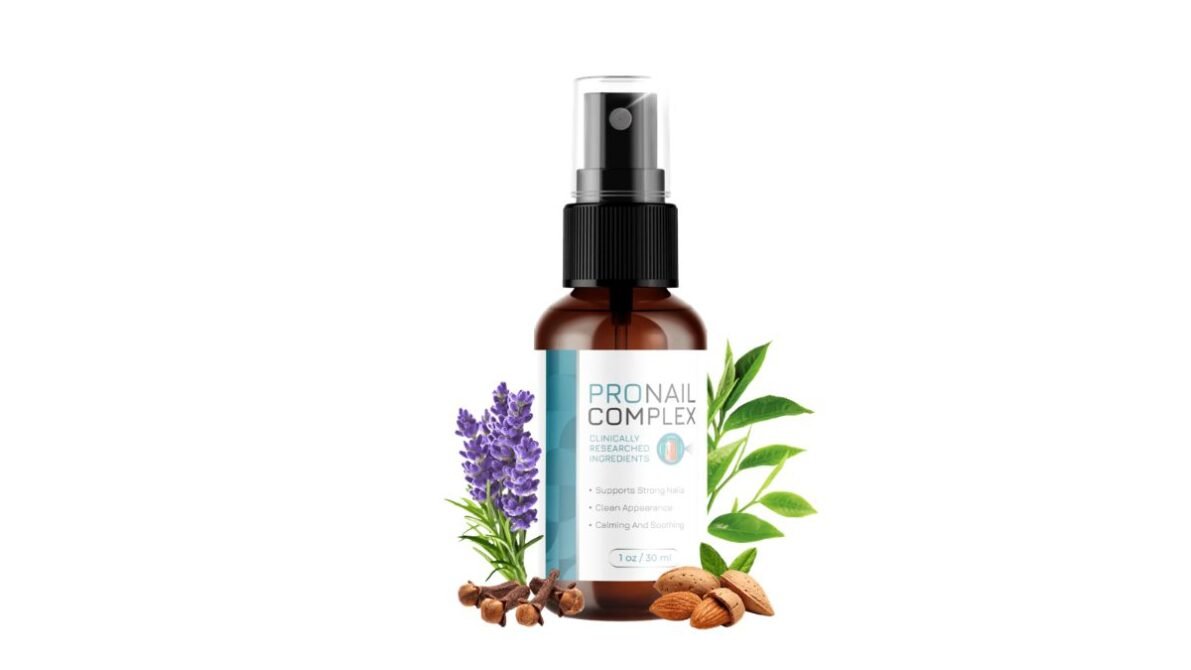
ProNail Complex is a mist spray of sixteen oils and vitamins, and this review is mostly about why that benchmark exists: a dense sheet of dead keratin sitting between whatever you spray on and the infection underneath it.
What ProNail Complex Is
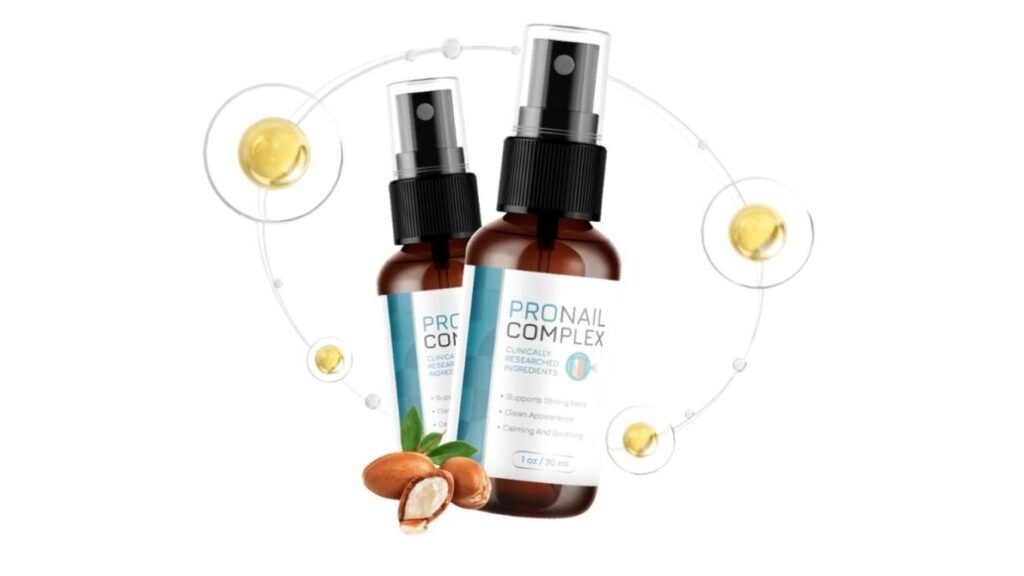
A topical mist spray, sold through the official site with ClickBank as the retailer of record and a 60-day money-back guarantee.
The page describes it as a doctor-formulated formula that releases ingredients as micro particles so they can reach deep under skin and nails, and calls the contents “an optimally dosed proprietary blend” — a phrase that means the opposite of what it sounds like, since a proprietary blend is precisely one where the doses aren’t disclosed.
Sixteen ingredients are named: mineral oil, sweet almond oil, organic flaxseed oil, tea tree oil, aloe vera, canola oil, vitamin E, walnut oil, camphor oil, clove bud oil, jojoba oil, chia oil, lemongrass oil, lavender oil, menthol, and undecylenic acid.
Worth noticing what most of that list is. Mineral oil, canola, jojoba, chia, sweet almond, flaxseed and walnut oils are carriers and emollients — the base a formula is mixed into, not the active part. That’s not a criticism in itself; every topical needs a vehicle. It does mean the list is longer than the working part of the formula.
One thing deserves genuine credit up front: the product’s own claim language is careful. It says it “supports healthy toenails” rather than promising to cure an infection. That’s compliance-aware writing, and plenty of competitors don’t bother. The bonus material is less restrained — one guide is explicitly about nail growth “after fungus recovery” — but the headline claim is defensible.
The Nail Plate Is the Whole Problem
Here’s the anatomy, and it explains the 17.8% figure better than anything else could.
Your nail plate is dead, tightly packed keratin — one of the densest barriers your body produces. Fungal nail infection typically lives underneath and within it, in the nail bed and the deeper layers of the plate itself.
So a topical treatment has to cross that sheet to reach the organism. Most can’t. Topical treatments alone generally cannot cure onychomycosis because of insufficient nail plate penetration — that’s the standard clinical position, not a fringe view. The reason prescription topicals like efinaconazole outperform older ones is specifically that they penetrate the keratin barrier better, and even then the cure rate is what it is.
ProNail Complex’s page addresses this directly, claiming micro particles that reach deep under skin and nails. That’s the right problem to be claiming to solve. There’s no published evidence I could find that this formula achieves it, and no particle size, concentration or penetration data is offered.
Why This Question Has the Opposite Answer to Teeth
A short detour, because the contrast is genuinely useful and it’s counterintuitive.
For dental problems, swallowed supplements struggle: plaque is a biofilm on the outside of a tooth, and tooth enamel has no blood supply at all, so nothing systemic reaches it. There, topical wins and systemic can’t compete.
For nail fungus, it flips completely — and the reason is one small anatomical difference.
Unlike enamel, the nail grows from a living, blood-supplied structure: the nail matrix, tucked under the skin at the base. Oral antifungals travel through the bloodstream, reach the matrix and nail bed, and become incorporated into the nail as it grows out. They arrive from underneath, where the infection is, instead of trying to fight through the plate from above.
That’s why the hierarchy is what it is. Oral therapy is the most effective treatment for onychomycosis of any severity, with higher cure rates and shorter treatment periods than topical therapy — and terbinafine is recommended as first-line, being both the most effective oral agent and less expensive than topical alternatives.
Same question — does the product physically reach the problem? — with opposite answers, decided by whether the affected tissue has a blood supply feeding it.
Worth knowing if you ever compare a nail product to a dental one and wonder why the advice reverses.
Undecylenic Acid Is the One Recognised Antifungal Here
Of the sixteen ingredients, one is an actual recognised antifungal, and it deserves a fair account.
Undecylenic acid is a fatty acid with genuine antifungal activity, long used in over-the-counter products for athlete’s foot, jock itch and ringworm. It works — for skin infections.
That qualifier is the point. Over-the-counter topical antifungals are established for fungal infections of skin, where the drug reaches the organism easily. They are not established for nail infections, because of the barrier described above. An ingredient being a real antifungal and being effective against nail fungus are two different claims, and only the first is settled here.
ProNail Complex also publishes no concentration for it. OTC antifungal products that make skin claims carry a stated percentage on the label precisely so you know what you’re getting; a proprietary blend doesn’t.
Camphor and menthol round out the actives. Both are recognised OTC ingredients — but as external analgesics, the counterirritant category that produces cooling and warming sensations. They’re the reason a product like this feels like it’s doing something. That sensation is real and it isn’t antifungal.
Tea Tree Oil, and What It Achieved
Tea tree oil is the ingredient with the most direct research in this specific condition, and the honest summary is instructive.
The best-known trial compared 100% tea tree oil against 1% clotrimazole solution in toenail onychomycosis over six months. Both produced roughly comparable results — and roughly comparable meant a cure rate in the high teens, in line with what topicals achieve generally.
Two things follow. First, tea tree oil isn’t folk nonsense; it has measurable antifungal activity and a trial where it held its own against a pharmaceutical. Second, that trial used 100% tea tree oil, undiluted, applied twice daily. ProNail Complex contains tea tree oil as one of sixteen ingredients at an undisclosed concentration, which is a very different proposition.
This is the recurring shape of the whole category: the ingredient can be real, the trial can be real, and the product still not deliver what the trial delivered, because concentration is the mechanism.
Sixteen Ingredients, No Amounts — and a Tree Nut
Three practical points about the ingredient list.
No concentrations, for a topical. This matters more here than for a capsule. With topicals, the concentration is the dose — how much active sits against the surface and for how long. “Optimally dosed proprietary blend” tells you it’s dosed correctly while declining to say what the doses are.
Walnut oil is a tree nut. If you have a tree nut allergy, that belongs on your radar. Refined nut oils are often tolerated and reactions to topical application are uncommon, but this is a product applied daily for months, and you should know it’s in there. Sweet almond oil is also present.
Several ingredients are known contact sensitisers. Tea tree oil, clove bud, lemongrass, lavender, camphor and menthol are all associated with contact dermatitis in susceptible people — tea tree oil particularly when oxidised. That’s a real consideration for something applied to skin around the nail daily for six months.
Practical step: patch test on your inner forearm and wait 24 hours before regular use. That’s sensible with any new topical and especially one with this many botanical actives.
First, Find Out Whether It’s Actually Fungus
This is the section I’d most want read, and it’s the reason a doctor’s visit beats a purchase.
Roughly half of abnormal-looking nails aren’t fungal. Clinical guidance is explicit that accurate diagnosis matters before starting treatment, because therapy is lengthy and can cause adverse effects — and the recommended approach is a potassium hydroxide preparation with fungal culture, PAS stain, or PCR.
What else produces a thick, discoloured, crumbling nail:
Nail psoriasis, which can look almost identical and is treated completely differently. Notably, one of ProNail Complex’s own bonus guides is about psoriasis and eczema — which is an odd thing to bundle with a product for a condition psoriasis is routinely mistaken for.
Repeated trauma, common in runners and anyone whose shoes are slightly too short.
Lichen planus, which can scar the nail permanently if untreated.
Subungual melanoma. This is the one that matters. A dark brown or black streak or patch under a nail, especially one that appears without injury, widens over time, or extends into the surrounding skin, needs prompt medical assessment. It’s uncommon, it’s frequently mistaken for a bruise or fungus, and delay costs more here than anywhere else in this article.
If you have diabetes, any foot or nail problem is a reason to be seen rather than self-treat — reduced sensation and circulation change the risk profile entirely, and podiatry input is standard care.
Getting a diagnosis is quick, often available through a pharmacist referral or GP, and it determines whether anything you buy has a chance of working.
What I Liked
The claim language is restrained. “Supports healthy toenails” rather than a cure claim is compliance-aware and better than most of this market.
Undecylenic acid and tea tree oil are legitimate choices. Both have genuine antifungal activity, and whoever selected them was reading real material rather than picking exotic names.
ClickBank is the retailer of record, giving the refund an independent route rather than relying on the seller’s own returns desk.
The footer says the right thing — it explicitly encourages informing your physician of changes and discussing concerns with a doctor, and notes the information isn’t a substitute for professional consultation.
A references page exists, which is more infrastructure than several competitors offer.
Topical application is genuinely low-risk. Whatever else is true, oils applied to a toenail don’t carry the liver considerations that oral antifungals do — which is a real reason some people are prescribed topicals despite lower cure rates.
A 60-day guarantee, and the pricing arithmetic reconciles correctly, which is not something I can say about every product in this space.
Things to Consider
No concentration for any ingredient, in a format where concentration is the mechanism.
The nail plate barrier means prescription topicals at 10% cure fewer than one in five.
Undecylenic acid is established for skin fungus, not nail fungus.
The tea tree oil trial used 100% undiluted oil, not a blended fraction.
Seven of sixteen ingredients are carrier oils.
Walnut and sweet almond oil are tree nut derivatives.
Several ingredients are recognised contact sensitisers.
Bonus #3 is a breathing-exercise gut cleanse with no connection to nails.
“97% of customers order 6 bottles” and “14,369 reviews” both appear with no source or destination.
Six months of treatment is the framing, wrapped around a 60-day guarantee.
Who Should Be Careful
Anyone with diabetes. Foot and nail problems in diabetes need professional assessment, not self-treatment. Reduced sensation and circulation mean a minor issue can become a serious one, and podiatry care is standard.
Anyone with peripheral arterial disease or neuropathy, for the same reasons.
Anyone immunocompromised, where fungal infections behave differently and warrant medical management.
Anyone with a tree nut allergy, given the walnut and almond oil content.
Anyone with sensitive skin, eczema, or known fragrance allergy — patch test first, and stop if irritation develops.
Anyone pregnant or breastfeeding should check topical botanical blends with a doctor, since safety data for this combination doesn’t exist.
Children, for whom camphor in particular warrants caution.
And the urgent one: a dark streak or patch under a nail with no history of injury, a nail change accompanied by pain, swelling, redness or discharge, or any nail change that’s spreading quickly — those need a doctor promptly rather than a treatment.
What Actually Clears Nail Fungus
The honest hierarchy, in order of evidence.
Get it diagnosed first. KOH microscopy, culture or PCR confirms whether it’s fungal. This step decides everything else and it’s often skipped.
Oral terbinafine is first-line for confirmed onychomycosis of any severity — highest cure rates, shortest course, and typically cheaper than topical alternatives. It requires a prescription and often liver function monitoring, which is exactly why the diagnosis matters: nobody should take it for a nail that turns out not to be infected.
Prescription topicals — efinaconazole, tavaborole, ciclopirox — are the option for mild-to-moderate disease, or when oral treatment isn’t safe. Lower cure rates, fewer interactions, applied daily for up to 48 weeks.
Expectation management, which nobody offers. A toenail takes roughly 12 to 18 months to grow out completely. Even with successful treatment, the nail doesn’t look normal until the infected portion has grown off the end. Slow visible progress is not treatment failure — and it’s the single most common reason people abandon something that was working.
And prevention, which is free: keep feet dry, rotate shoes so they dry fully between wears, wear something on your feet in communal showers and pool areas, don’t share nail clippers, and treat athlete’s foot promptly, since it commonly precedes nail infection.
Price, Guarantee, and the Verdict
Pricing runs $79 per bottle for two ($158), $69 each for the three-bottle option ($207), and $49 each on the six-bottle package ($294), with free shipping on the larger orders and three bonus ebooks. Current terms are on the ProNail Complex site, with ClickBank handling refunds.
Note the mismatch worth planning around: the six-bottle package is described as a 180-day supply, and the guarantee is 60 days. If you buy it, judge the product inside the refund window rather than on the six-month framing — and remember that a toenail’s growth rate means visible change is slow regardless of what works.
The verdict. ProNail Complex is a carefully worded, low-risk topical containing two ingredients with genuine antifungal activity, sold into a condition where the best prescription topical — a real drug at 10% concentration, applied daily for a year — completely cures fewer than one in five people. The nail plate is why, and no particle-size claim in the marketing is supported by published penetration data for this formula.
Who it might reasonably suit: someone with mild, early nail changes that have been confirmed as fungal, who prefers a topical approach, who has patch tested, and who understands they’re buying possible marginal improvement rather than a cure. As something applied alongside proper diagnosis and while considering real treatment, it’s not unreasonable. As a substitute for finding out what’s wrong, it’s the wrong purchase.
Who should skip it: anyone who hasn’t had the nail looked at, anyone with diabetes or circulation problems, anyone with a dark streak under a nail, and anyone hoping to avoid a prescription for an infection that responds to one.
What I’d do instead: get the nail tested, and if it is fungal, ask about oral terbinafine. It’s the most effective option, it’s inexpensive as a generic, and the liver monitoring that makes people nervous is a blood test. If oral isn’t suitable for you, prescription topicals exist with published cure rates you can actually weigh.
If you’re comparing products in this space, our Kerassentials review covers another topical nail oil — and the question that decides both is the same one: can anything applied to the surface get through the nail plate to where the infection actually is?
Frequently Asked Questions
Do topical treatments work for toenail fungus?
Poorly, on their own. Clinical guidance is that topicals alone generally can’t cure onychomycosis because they don’t penetrate the nail plate sufficiently. Even prescription topicals at pharmaceutical concentration, applied daily for 48 weeks, achieve complete cure in fewer than one in five people. Oral therapy has substantially higher cure rates because it reaches the nail from underneath, through the blood supply to the nail matrix.
How do I know if it’s actually fungus?
You need a test — potassium hydroxide microscopy, fungal culture, or PCR. Roughly half of abnormal-looking nails aren’t fungal. Psoriasis, repeated trauma and lichen planus all mimic it, and a dark streak under a nail can be a melanoma. Diagnosis takes one appointment and determines whether any treatment has a chance of working.
What’s actually in ProNail Complex, and how much?
Sixteen ingredients are named — mostly carrier oils, plus tea tree oil, undecylenic acid, camphor and menthol as the potentially active components. No concentration is published for any of them, which matters more for a topical than a capsule, because concentration at the surface is the mechanism.
How long before I’d see anything?
Longer than most people expect, with any treatment. A toenail takes roughly 12 to 18 months to grow out fully, so the damaged portion has to grow off the end before the nail looks normal. That’s true of successful treatment too — which is why slow visible progress isn’t the same as failure, and why the 60-day guarantee window is the practical point at which to judge whether you’re persisting.

Raphael Albert is the founder and content creator of Nutra Pulse. Passionate about health, nutrition, fitness, and wellness, he spends his time researching scientific studies, health trends, and evidence-based lifestyle strategies to create informative and easy-to-understand content. While he is not a doctor or licensed healthcare professional, his goal is to help readers make more informed wellness decisions. All content is for educational purposes only and should not replace professional medical advice. Always consult a qualified healthcare provider regarding your health concerns.
1 thought on “ProNail Complex Review: The Nail Plate Problem Nobody Mentions”