How this page pays for itself: it contains affiliate links to both products, and if you buy through one we may earn a small commission at no extra cost to you. It doesn’t tilt the comparison – you’ll see below that our main finding is a criticism that applies to both.
These statements have not been evaluated by the Food and Drug Administration. Neither product is intended to diagnose, treat, cure, or prevent any disease, including diabetes. Blood sugar problems are a medical matter – if you have diabetes, prediabetes, or take glucose-lowering medication, talk to your clinician before adding either supplement; nothing here replaces professional care or monitoring.
New to this category? Our guide to the best liver and weight-loss supplements shows where blood sugar formulas fit, and for the full breakdowns see our individual Sugar Defender review and Gluco6 review. This head-to-head pulls them side by side.
Sugar Defender vs Gluco6: The One-Minute Answer
In the Sugar Defender vs Gluco6 matchup, the deciding factor isn’t which one “works better” – it’s that both hide the numbers you’d need to know, just in different ways. Both are ClickBank blood sugar supplements for adults worried about glucose, both share the two most-studied ingredients in the category (gymnema and chromium), and both carry a 60-day money-back guarantee.
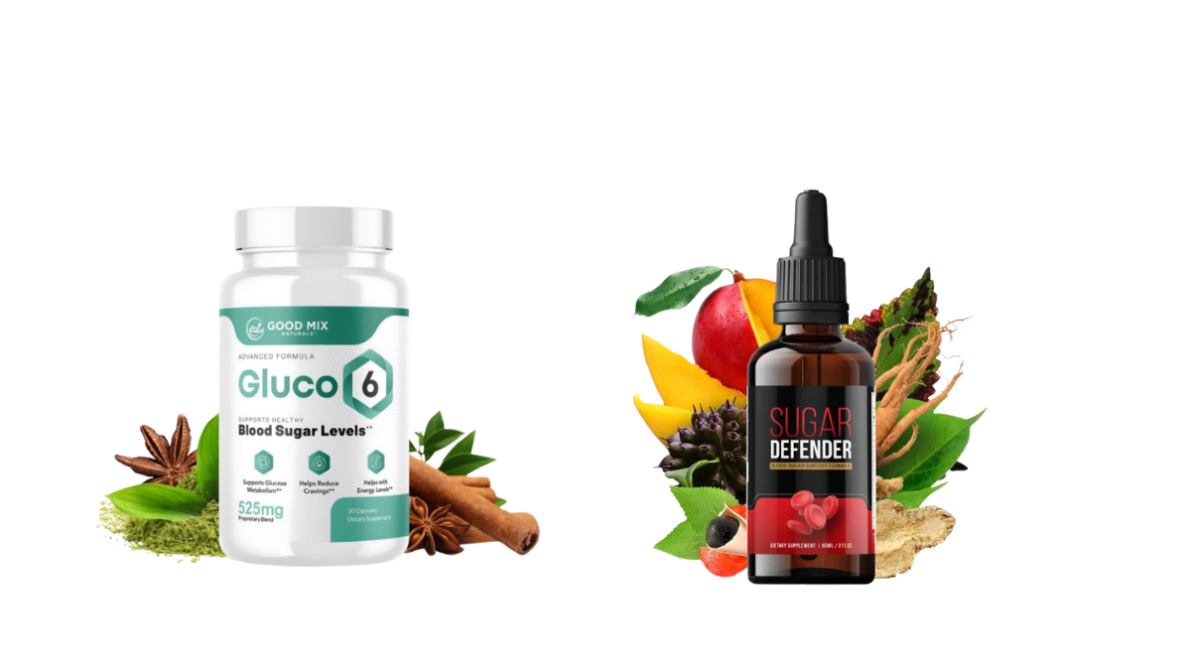
Where they split is format and disclosure: Sugar Defender is a liquid sublingual dropper cramming 24 ingredients into a single 1 ml daily dose, while Gluco6 is a once-daily capsule built around a proprietary “Sukre” blend. Neither prints a full per-ingredient dose panel. So the honest comparison isn’t “adequate vs inadequate” – it’s which label lets you verify more, and the answer is: not much, on either side.
Settle this first: if your blood sugar is genuinely elevated, that’s a conversation with a doctor and an A1c test – not a dropper or a capsule bought online. Both products explicitly position themselves for glucose “already within a normal range,” and neither replaces medication or monitoring.
Why This Comparison Is Harder Than the Sales Pages Admit
Here’s the thing about comparing these two: almost every “Sugar Defender vs Gluco6” table online is invented. Reviewers print tidy milligram figures for each ingredient as though the labels disclosed them – they don’t. Those numbers get copied from one affiliate page to the next until a fictional “fact” looks settled.
We’re not doing that. This comparison sticks to what can actually be checked: the published ingredient lists, the delivery format, the price, the guarantee, who processes payment, and whether the doses are disclosed at all. That last one is where both products stumble, and it’s the most useful thing you can know before spending a cent.
How We Compared Them
We didn’t start with “which lowers blood sugar more,” because no head-to-head trial of these two exists and formulas in this space change quietly. Instead we anchored the comparison to things you can verify with the label in hand:
- Is the per-ingredient dose disclosed, or pooled in a blend? Not “is it adequate” – just, can you see it?
- Does the format allow a clinical dose at all? A 1 ml dropper and a single capsule each have hard volume limits.
- Do the shared ingredients match their studied doses? Gymnema and chromium have known effective ranges.
- Price, guarantee, and how identifiable the seller is.
Everything below flows from those checks, and where the evidence is genuinely mixed, we say so.
What Sugar Defender Actually Is
Sugar Defender is a liquid dietary supplement taken as a sublingual dropper – about 1 ml (one full dropper) daily, under the tongue or in water before breakfast. Per the Sugar Defender official website, it’s a plant-based, adaptogen-heavy formula highlighting eight ingredients (Eleuthero, Coleus Forskohlii, Maca, African Mango, Guarana, Gymnema, Panax Ginseng, Chromium), with the marketing claiming “24 natural ingredients” in total once the supporting compounds are counted. It’s made in a US GMP facility, sold through ClickBank, and backed by a 60-day guarantee at roughly $49-$79 per bottle.
Its distinguishing pitch is the sublingual liquid format and the adaptogen angle – the idea that stress-driven cortisol worsens glucose control, so calming adaptogens help indirectly. That’s a plausible framing. The problem, as we’ll see, is the math of fitting 24 ingredients into 1 ml.
What Gluco6 Actually Is
Gluco6 is a once-daily capsule taken with water before breakfast. Per the Gluco6 official website, it markets “six clinically studied ingredients” built around a proprietary blend it calls “Sukre,” plus the shared category staples (gymnema, chromium, cinnamon) and a mild energy component (TeaCrine and green tea). Its headline mechanism claim is targeting GLUT-4 glucose transport. It’s made in a US GMP-certified facility, sold through ClickBank, and backed by a 60-day guarantee at roughly $39-$69 per bottle.
Its distinguishing pitch is the “Sukre” ingredient and the GLUT-4 story – a more “modern cellular energy” angle than Sugar Defender’s adaptogens. The catch: “Sukre” is a proprietary name with little independent published evidence, and the blend hides how much of anything you’re getting.
What They Share: Gymnema and Chromium
Strip away the branding and both formulas rest on the same two-ingredient foundation – gymnema sylvestre and chromium – which happen to be the two most-studied compounds in the category. That’s the good news for both. Gymnema’s gymnemic acids briefly blunt sweet taste (reducing cravings) and may modestly lower fasting glucose; chromium supports insulin receptor sensitivity. So neither product is built on nonsense – the core is legitimate. The trouble is that “contains gymnema” and “contains a studied dose of gymnema” are different claims, and neither label lets you confirm the second.
Disclosed vs Not Disclosed: The Real Sugar Defender vs Gluco6 Divide
This is where the two products actually separate, and it’s the fairest lens we have. We’re deliberately not saying one is “adequately dosed” and the other “underdosed” – nobody can, because the numbers aren’t fully public. The verifiable statement is narrower: how much does each label let you check? Gluco6 discloses a bit more – some materials name a few actives with amounts before pooling the rest into the ~525 mg “Sukre” blend.
Sugar Defender discloses less – it names ingredients but publishes zero per-ingredient milligrams, and packs all 24 into 1 ml. So on transparency alone, Gluco6 edges ahead, but “ahead” here means “slightly less opaque,” not “transparent.” Both fail the single check that matters most in this category: a full, per-ingredient dose panel you can compare against the research.
Sugar Defender’s Core Problem: 24 Ingredients in 1 ml
Here’s the honest math the sales page skips. A detailed ingredient analysis makes the point plainly: Sugar Defender packs 24 active compounds into a 1 ml daily dose, and that volume is a hard ceiling. Gymnema’s studied dose is 300-400 mg/day; berberine (also on the list) needs 500-1,500 mg; cinnamon works in the gram range.
You cannot fit even one of those clinical doses into a fraction of a 1 ml dropper, let alone 24 ingredients sharing the same milliliter. Sublingual delivery does bypass first-pass liver metabolism, which helps small, potent molecules – but it doesn’t rewrite the volume problem. The format is the limitation, and it’s structural, not a matter of “maybe the dose is fine.”
Gluco6’s Core Problem: The “Sukre” Blend and an Unverifiable Star Ingredient
Gluco6’s capsule format gives it more room than a 1 ml dropper, so in principle it can carry bigger doses – a real structural advantage. But it spends much of that advantage on a proprietary blend. The headline ingredient, “Sukre” (described on some pages as originating from Sudan), is a branded name with little independent, published human evidence tied to it, and the blend structure means you can’t see how much Sukre, gymnema, or cinnamon you’re actually getting. So Gluco6 trades Sugar Defender’s volume problem for a disclosure problem: the room exists, but the label won’t tell you how it’s used. Better format, same unanswered question.
Gymnema Sylvestre: The Shared Ingredient With the Best Case
Since gymnema anchors both, it deserves an honest grade. Its evidence is the better of the two shared ingredients: a 2021 systematic review and meta-analysis of 10 studies (419 participants) found gymnema significantly reduced fasting glucose, post-meal glucose, and HbA1c versus baseline in type 2 diabetics.
A randomized controlled trial in metabolic syndrome used 300 mg twice daily for 90 days. But note the theme: those benefits came at 300-400 mg/day of standardized extract. Whether either product delivers that is exactly what the hidden doses prevent you from knowing. Evidence grade: moderate for the ingredient, at a dose neither label confirms.
Chromium, Cinnamon and the Supporting Cast
Chromium, the other shared ingredient, has consistent if modest evidence: as an insulin-sensitizing trace mineral, it shows small fasting-glucose and A1c improvements, typically at 200-1,000 mcg/day. Some third-party pages list ~200 mcg for both products, but that figure isn’t confirmed on either official panel. Cinnamon (in both) shows fasting-glucose drops but mixed A1c results, and needs gram-level doses that a capsule or dropper struggles to reach. Sugar Defender’s adaptogens (Eleuthero, Maca, Ginseng) and Gluco6’s TeaCrine add energy and stress-support rationale but little direct glucose evidence. Evidence grade: chromium modest-and-real; the supporting botanicals preliminary for glucose specifically.
Format: Sublingual Drops vs Capsule
This is a genuine, verifiable difference rather than a marketing one. Sugar Defender’s sublingual liquid absorbs faster and bypasses first-pass metabolism, but carries the 1 ml volume ceiling and a daily taste some users dislike. Gluco6’s capsule is more convenient, travels better, has no taste issue, and structurally allows larger doses – but sends everything through normal digestion. If you hate swallowing pills or want fast absorption of small molecules, the dropper appeals; if you want the physical room for a real dose and daily convenience, the capsule wins. Neither format overcomes its product’s disclosure gap.
Price and Guarantee
These are close. Gluco6 runs slightly cheaper (roughly $39-$69/bottle) versus Sugar Defender (roughly $49-$79/bottle), both with tiered multi-bottle discounts landing near $49/bottle at six bottles. Both offer a 60-day money-back guarantee through ClickBank, which genuinely lowers the risk of a fair 6-8 week trial – the window most of these ingredients need to show anything. On pure economics, Gluco6 has a small edge; neither is expensive enough for price alone to decide it.
Sugar Defender vs Gluco6 at a Glance
Before the table, one framing note so the Sugar Defender vs Gluco6 numbers read fairly: a “not disclosed” cell is the finding, not a gap we left blank – it means the label genuinely doesn’t tell you.
| Feature | Sugar Defender | Gluco6 |
|---|---|---|
| Format | Sublingual liquid (1 ml/day) | Capsule (1/day) |
| Ingredients named | ~24 (8 highlighted) | ~6 core + “Sukre” blend |
| Per-ingredient doses | Not disclosed (zero mg shown) | Partly disclosed; rest in ~525 mg blend |
| Shared core | Gymnema, Chromium | Gymnema, Chromium, Cinnamon |
| Signature angle | Adaptogens (stress/cortisol) | “Sukre” + GLUT-4 story |
| Energy component | Guarana, Ginseng | TeaCrine, green tea |
| Typical price | ~$49-$79/bottle | ~$39-$69/bottle |
| Guarantee | 60-day (ClickBank) | 60-day (ClickBank) |
| Core weakness | 1 ml can’t carry clinical doses | Proprietary blend hides doses |
What Real Users Are Saying
Neither seller’s on-site reviews hold up as evidence: the same “Jonathan T. – Texas” and “Lauren N. – New Hampshire” quotes appear word-for-word across multiple Gluco6 domains, and Sugar Defender’s pages repeat a “Sean B.” template of their ownand can’t be treated as independent evidence – the traceable pattern is similar for both: some users report steadier energy and fewer sweet cravings over three to six weeks, with a comparable share reporting no change.
Sugar Defender draws more complaints about taste; Gluco6 about price relative to a hidden formula. Neither shows the dramatic “my doctor was amazed” transformations its funnel implies. Treat any glowing on-site testimonial for either with real skepticism.
A Red Flag They Share: Too Many “Official” Sites
Both products are sold across a sprawl of look-alike “official” domains with different prices and wildly inconsistent review counts – Gluco6 pages alone claim anywhere from 1,794 to 19,748 reviews depending on which one you land on, and Sugar Defender shows a similar spread. That’s a sign of a broad affiliate network, not necessarily fraud, but it means the “official site” you reach may not be the canonical one. For both, confirm you’re buying through the legitimate ClickBank checkout with the 60-day guarantee attached, and save your order confirmation.
Medication Interactions & Safety
This matters more for these two than for most supplements, because they’re aimed at people who may be on glucose-lowering drugs – and because the hidden doses mean you can’t hand a pharmacist an accurate list. The key flags apply to both: gymnema and chromium can lower blood sugar, so stacking either product on insulin, sulfonylureas, or SGLT2 inhibitors risks hypoglycemia and needs prescriber oversight and tighter monitoring.
Any berberine content (listed on Sugar Defender) adds meaningful drug-interaction potential and isn’t advised in pregnancy. Sugar Defender’s guarana and ginseng add stimulant effects; Gluco6’s TeaCrine is milder but still stimulatory. If you’re pregnant, nursing, diabetic, or on any prescription, clear either one with your doctor first. This isn’t boilerplate – it’s the direct consequence of glucose-lowering ingredients at undisclosed doses.
Who Might Pick Which
If you’re leaning toward one: Sugar Defender fits someone who prefers a liquid over pills, likes the adaptogen/stress angle, and understands the 1 ml format is a real dose limitation. Gluco6 fits someone who wants capsule convenience, a slightly lower price, marginally more disclosure, and the physical room for a bigger dose – while accepting that the “Sukre” blend keeps the actual amounts hidden. But the more important sorting is out of this decision entirely: if your glucose is genuinely elevated, neither is the answer – a clinician, an A1c test, diet, and exercise are, with a well-dosed single-ingredient supplement (a standardized gymnema or a disclosed berberine) as a more transparent add-on.
When to See a Doctor, Not a Supplement
This section outranks the whole comparison. Blood sugar is a genuine medical marker, and both products are marketed at people whose numbers may already be drifting. See a clinician – not a dropper or a capsule – if you have classic high-glucose symptoms (excessive thirst, frequent urination, blurred vision, unexplained weight loss, persistent fatigue), a known prediabetes or diabetes diagnosis, or you’re on any glucose-lowering medication. An A1c test is inexpensive and tells you what no supplement label can. Using either product to avoid that test can let a treatable, progressive condition advance quietly – which is the opposite of what you want.
Final Verdict: Sugar Defender vs Gluco6
On the Sugar Defender vs Gluco6 question, there’s no clean winner, because both fail the same essential test in mirror-image ways: Sugar Defender’s 1 ml format can’t physically carry clinical doses, and Gluco6’s proprietary “Sukre” blend won’t tell you the doses it could carry. If forced to choose on verifiability alone, Gluco6 edges it – slightly more disclosure, a capsule with real dosing room, and a lower price – but “edges it” means marginally less opaque, not genuinely transparent.
Both share a legitimate core (gymnema, chromium) and a real 60-day guarantee, and both live in messy multi-domain funnels with recycled testimonials. The honest bottom line: treat either as an optional, low-stakes experiment alongside diet and exercise – not a glucose solution – and put a doctor and an A1c test ahead of both. As always, “may support” is the ceiling, and real blood sugar concerns belong with a clinician first.
Frequently Asked Questions
Is Sugar Defender or Gluco6 better for blood sugar?
Neither has been proven better – there’s no head-to-head trial, and both hide key doses. On transparency, Gluco6 discloses slightly more and its capsule format allows larger doses than Sugar Defender’s 1 ml dropper, but its “Sukre” proprietary blend still conceals amounts. Both share the two best-studied ingredients (gymnema, chromium). For genuinely elevated blood sugar, a clinician and an A1c test matter more than either product.
What’s the main difference between Sugar Defender and Gluco6?
Format and signature ingredient. Sugar Defender is a sublingual liquid built on adaptogens (Eleuthero, Maca, Ginseng) with 24 ingredients in a 1 ml dose; Gluco6 is a capsule built on a proprietary “Sukre” blend and a GLUT-4 story. Both contain gymnema and chromium, both cost similarly, and both offer a 60-day guarantee – but neither fully discloses its per-ingredient doses.
Do Sugar Defender or Gluco6 actually lower blood sugar?
Their core ingredients (gymnema, chromium) have modest clinical evidence at specific doses, but because neither product discloses whether it hits those doses, you can’t assume the finished formula replicates the studies. Any effect is likely gradual (4-8 weeks) and modest, works only alongside diet and exercise, and neither product treats or reverses diabetes.
Are Sugar Defender and Gluco6 safe with diabetes medication?
Only with a doctor’s oversight. Both contain ingredients that can lower blood sugar, so combining them with insulin, sulfonylureas, or other glucose-lowering drugs risks hypoglycemia. Sugar Defender may also contain berberine (notable drug interactions). Because the doses aren’t disclosed, you can’t vet them precisely – which is exactly why anyone on medication should check with a prescriber first.

Raphael Albert is the founder and content creator of Nutra Plus. Passionate about health, nutrition, fitness, and wellness, he spends his time researching scientific studies, health trends, and evidence-based lifestyle strategies to create informative and easy-to-understand content. While he is not a doctor or licensed healthcare professional, his goal is to help readers make more informed wellness decisions. All content is for educational purposes only and should not replace professional medical advice. Always consult a qualified healthcare provider regarding your health concerns.