Affiliate Disclosure: This article contains affiliate links. If you purchase The Brain Song through a link on this page, we may receive a commission at no additional cost to you.
FDA Disclaimer: The Brain Song is a digital audio product, not a dietary supplement or medication. The information on this page is for general educational purposes only. It is not intended to diagnose, treat, cure, or prevent any disease or medical condition. Do not use this product as a substitute for professional medical evaluation or treatment.
The central question in this The Brain Song review isn’t whether gamma waves and BDNF exist in neuroscience. They do. The more important question is whether a commercial 12-minute audio file has been tested well enough to prove that it produces the specific effects claimed on the sales page.
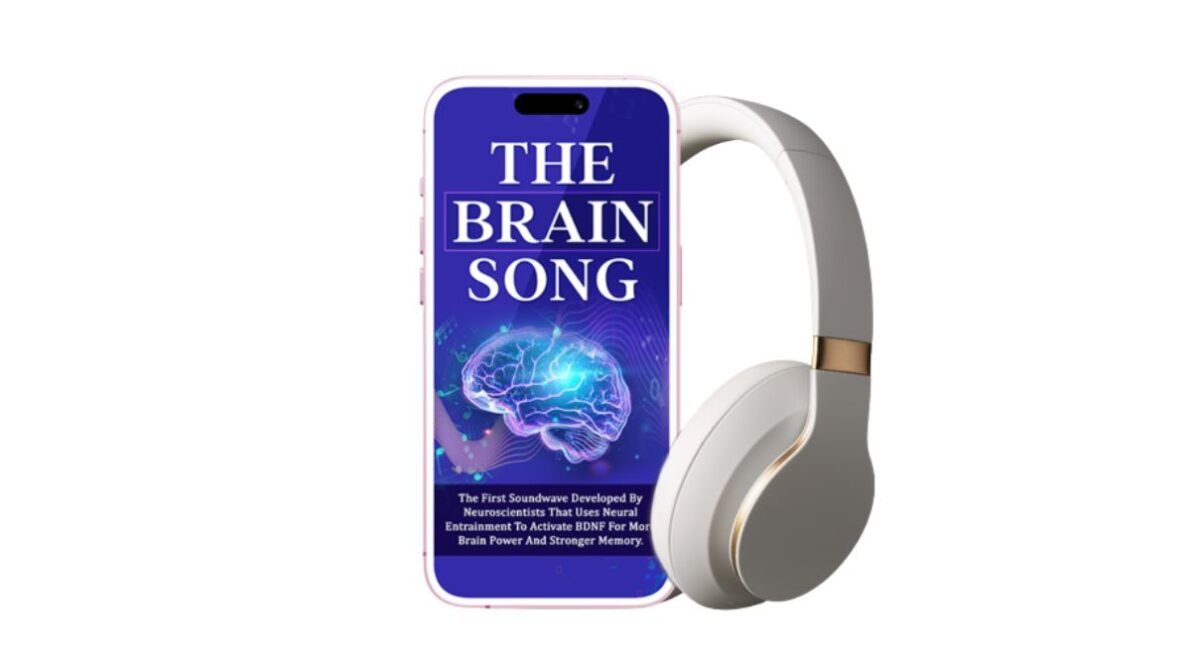
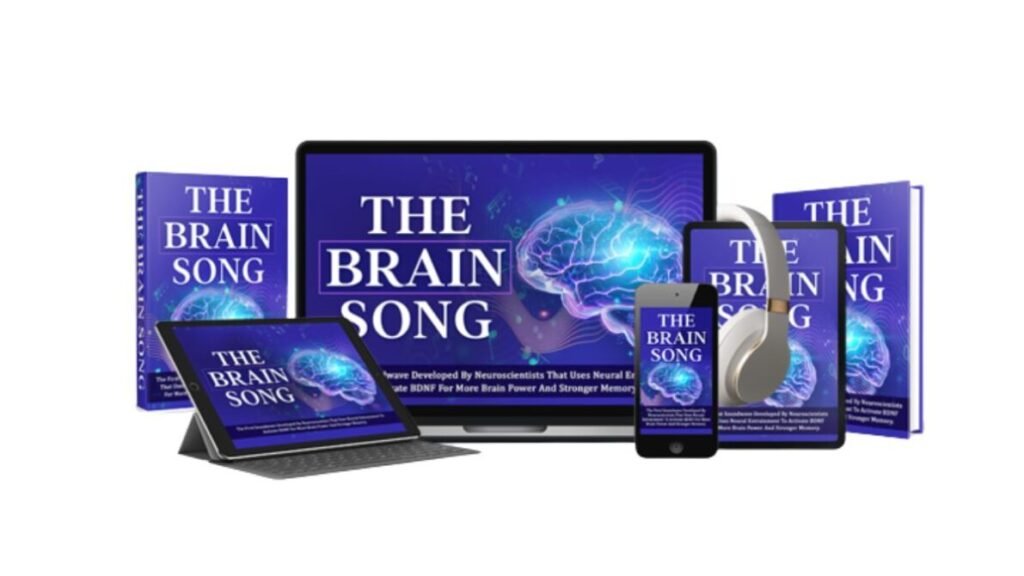
The Brain Song is a digital audio program marketed for focus, learning, memory support, and general mental wellness. The current offer describes it as a 12-minute track that uses sound patterns intended to guide the brain toward gamma frequencies.
The page also connects gamma activity with BDNF, or brain-derived neurotrophic factor. BDNF is a real protein involved in processes related to neural plasticity, learning, and memory. However, a legitimate scientific concept is not the same thing as product-specific evidence.
This review separates those two questions.
Quick Answer: Does The Brain Song Work?
The Brain Song is a simple digital product with one clear advantage over many supplement-based products: there is no hidden dose, proprietary blend, or unidentified ingredient to investigate. It is an audio file, not a capsule formula.
That makes the product easier to evaluate from a transparency standpoint. The buyer knows the basic format, the approximate listening time, and the delivery method.
The limitation is efficacy.
The current sales page explains a theory involving gamma brainwaves, learning, and BDNF, but it does not present a peer-reviewed clinical trial testing the finished Brain Song audio file. No product-specific evidence was located showing that this exact track increases BDNF, improves memory, or produces a reliable improvement in focus.
The most accurate conclusion is cautious:
- The neuroscience concepts behind the marketing are real areas of research.
- Auditory stimulation can influence subjective experience and, in some circumstances, brain activity.
- Research on auditory beats and gamma entrainment remains mixed.
- The Brain Song itself has not been publicly demonstrated in a rigorous product-specific trial.
- Results may vary depending on the listener, listening environment, expectations, headphones, and the actual audio design.
What Is The Brain Song?
The Brain Song is a digitally delivered audio program. The current offer page describes it as a 12-minute daily audio intended to support focus, learning, and general brain wellness.
The product is not a supplement, nootropic capsule, medication, or app. It does not contain saffron, Huperzine-A, vitamins, herbs, or any other ingestible formula.
The page states that the product is delivered digitally and that product images are used for visualization only.
The current offer connected to the supplied HopLink lists the price as $39 and states that ClickBank is the retailer. The associated offer page is hosted at gobrainsong.com.
Some other websites using The Brain Song name describe the product as a 17-minute program, while the current destination page linked for this review describes a 12-minute audio. That difference should be treated as a version or consistency issue. Buyers should confirm the duration and exact contents shown at checkout before ordering.
How We Evaluated The Brain Song
This type of product requires a different review method from a supplement.
There is no dose-to-study comparison because The Brain Song is not a formula containing measurable ingredients. Instead, the relevant questions are:
- What exactly does the product claim to do?
- Is the underlying scientific concept supported?
- Has the finished audio file been tested?
- Are the listening instructions clear?
- Are the purchase and refund terms visible?
- Does the marketing go beyond what the available evidence can support?
The distinction between concept-level research and product-level testing is especially important here.
Research about gamma oscillations does not automatically validate every audio file advertised as “gamma-based.” Likewise, research involving BDNF does not prove that listening to The Brain Song increases BDNF.
The Main Finding: The Theory Is Plausible, but the Track Is Not Clinically Validated
The current sales page says that The Brain Song uses sound patterns to guide the brain toward gamma frequencies. It also refers to BDNF as a molecule associated with learning, focus, and brain wellness.
Those statements combine several different layers of evidence:
- BDNF is a real neurotrophin involved in synaptic function and plasticity.
- Gamma oscillations are a real form of neural activity studied in relation to attention, perception, and memory.
- Auditory stimulation can affect how a person experiences sound, relaxation, alertness, or concentration.
- It has not been established that this particular commercial track produces a predictable gamma response in every listener.
- It has not been established that the track increases BDNF in listeners.
- It has not been established that the finished product improves memory or learning in a controlled clinical trial.
That last distinction is the one buyers should keep in mind.
The product’s scientific language describes a hypothesis. It does not substitute for a study of the product itself.
Gamma Waves and Learning: What the Science Actually Says
Gamma oscillations generally refer to relatively fast patterns of neural activity, often discussed in the range of approximately 30 to 100 Hz, although definitions vary by research setting.
Researchers have examined gamma activity in relation to attention, sensory processing, memory, and coordination between brain regions. That does not mean that more gamma activity is always better. Brain activity is context-dependent, and a useful neural pattern in one task may not be beneficial in another.
Some laboratory studies have investigated whether rhythmic auditory stimulation can influence brain oscillations. A 40-Hz sound, binaural beat, or monaural beat may be used to test whether the brain shows activity related to the stimulus frequency.
However, the existence of an auditory response does not establish a clinically meaningful improvement in memory or focus.
A small study examining binaural and monaural beat stimulation tested attention and working memory in a limited group of young adults. The results should not be generalized to all listeners, all audio programs, or adults over 40.
A systematic review of binaural-beat research also found that the evidence for reliable brain entrainment and psychological effects remains uneven. Studies vary substantially in audio design, frequency, duration, headphones, outcome measures, and participant characteristics.
In practical terms, gamma-related audio is a researchable idea. It is not a guaranteed shortcut to sharper thinking.
This systematic review of binaural beats and brain entrainment is useful because it examines the broader evidence rather than relying on marketing language from one product.
BDNF, Plasticity, and Memory
BDNF stands for brain-derived neurotrophic factor. It is involved in neuronal development, synaptic signaling, and forms of neural plasticity.
That is why BDNF frequently appears in discussions about learning and memory. Research on BDNF and synaptic plasticity is substantial, but the way BDNF is measured and interpreted matters.
For example, a blood measurement of BDNF is not automatically equivalent to a direct measurement of what is happening in a particular brain region. A short-term change in a biomarker also does not necessarily translate into a meaningful improvement in day-to-day memory.
Research reviews describe BDNF as an important part of the biology of plasticity and learning. They do not establish that any audio product can reliably increase BDNF or deliver a predictable cognitive benefit.
The current Brain Song page uses wording that connects gamma waves with BDNF activity. That is a scientifically inspired explanation, but the page does not provide a peer-reviewed study showing that the Brain Song track itself changes BDNF levels.
For that reason, this The Brain Song review does not state that the product raises BDNF.
A relevant review on BDNF secretion and synaptic plasticity can be found in this PubMed-indexed neuroscience article. It supports the importance of BDNF in neural plasticity, not the efficacy of The Brain Song.
Does Audio Entrainment Improve Focus?
Audio may help some people focus for reasons that do not require a special neurological mechanism.
A short, consistent listening routine may:
- Create a transition into a work or study session
- Reduce distracting environmental sounds
- Encourage a calm, structured routine
- Make the listener more attentive to the task at hand
- Produce a relaxation response that feels subjectively helpful
Those possibilities are different from proving that a track changes BDNF or reliably produces a beneficial gamma state.
Expectation may also influence how a person experiences a product. Someone who listens in a quiet room, puts away their phone, and commits to a focused 12-minute period may feel more organized afterward. That result may be real for the listener, even if it does not prove the advertised neurological mechanism.
The product should therefore be evaluated as a wellness audio routine rather than as a clinically validated cognitive intervention.
What I Liked
It Is Not Hiding a Dose or Ingredient
This is one of the fairest positive points to make.
With a supplement, a reviewer may need to investigate undisclosed amounts, proprietary blends, ingredient identity, extract standardization, and comparisons with clinical trial doses. None of those issues applies in the same way to an audio file.
The Brain Song is presented as media. There is no hidden saffron dose, no unidentified botanical, and no capsule label that prevents the buyer from knowing how much of an ingredient is present.
That does not prove effectiveness. It does remove an entire class of transparency problems that often affects supplement reviews.
The Product Format Is Simple
The page describes a short, daily listening routine. A 12-minute format may be easier for some people to use consistently than a lengthy meditation program or a complicated cognitive-training system.
The offer does not require the buyer to swallow anything, change medication, follow a restrictive diet, or perform an elaborate exercise protocol.
The Price and Delivery Terms Are Visible
The current offer lists the price as $39 and says that the product is delivered digitally.
That gives the buyer a basic understanding of what is being purchased. There are no shipping charges for a physical product because the offer is for digital delivery.
The Page Includes Important Disclosures
The offer page states that ClickBank is the retailer and that ClickBank’s role does not constitute an endorsement or scientific validation of the product’s claims.
It also says that the product is provided on an “as is” and “as available” basis and advises consumers to consult a healthcare professional when dealing with health-related issues.
Those disclosures do not validate the product, but they help clarify the commercial relationship.
Things to Consider
The Finished Audio File Has Not Been Publicly Tested
The most important limitation is the absence of a product-specific clinical trial.
The page references neuroscience, gamma frequencies, BDNF, learning, and focus. I did not locate a peer-reviewed randomized trial testing the exact Brain Song audio file against a suitable control condition.
Without such a study, it is not possible to determine:
- Whether the audio reliably produces the intended frequency response
- Whether listeners show measurable changes in brain activity
- Whether any brain activity change persists after listening
- Whether the audio improves attention or memory beyond placebo or relaxation effects
- Whether the advertised 12-minute format is sufficient
- Whether results are consistent in older adults
A study of gamma stimulation in general is not a study of this commercial track.
The Page Does Not Explain the Audio Design in Technical Detail
The offer discusses advanced sound patterns and gamma frequencies, but it does not provide enough technical information for an independent reviewer to reproduce or assess the method fully.
The page does not clearly identify:
- The exact frequencies used
- Whether the track contains binaural beats, monaural beats, isochronic tones, music, or another method
- Whether headphones are required
- The sound levels recommended
- Whether the track is intended for passive listening or active tasks
- Whether the audio has been tested with EEG or another measurement method
Those omissions make it difficult to compare The Brain Song with published auditory-stimulation protocols.
“Science-Inspired” Is Not the Same as “Science-Proven”
The product uses neuroscience terminology that may sound more definitive than the evidence allows.
Words such as “activate,” “guide,” and “support” can cover a wide range of meanings. A product may be inspired by a scientific theory without having demonstrated the advertised result.
The responsible interpretation is that The Brain Song is based on a neuroscience-inspired concept. It has not been proven to improve memory, increase BDNF, or produce a specific cognitive outcome.
Duration Information Is Not Consistent Across Domains
The current linked offer describes a 12-minute track. Other websites associated with The Brain Song describe a 17-minute version.
This may reflect different versions, different landing pages, or recycled promotional material. It is not enough to conclude that the product is fraudulent, but it is a reason to verify the current offer details before purchase.
The buyer should confirm the actual duration and included files on the checkout or delivery page.
Safety and Listening Considerations
The Brain Song is non-ingestible and does not involve a supplement dose or drug interaction. That makes its risk profile different from a nootropic formula.
Even so, audio products are not automatically appropriate for everyone.
Use caution if you are sensitive to repetitive tones, have a history of migraines triggered by sound, experience tinnitus, or find certain audio patterns uncomfortable. Stop listening if the track causes headache, dizziness, nausea, agitation, ear discomfort, or worsening tinnitus.
Keep the listening volume comfortable. Do not use headphones at a level that causes pain or ringing in the ears.
Do not listen while driving, cycling in traffic, operating machinery, or performing any activity that requires full environmental awareness.
The Brain Song should not be used as a treatment for attention-deficit/hyperactivity disorder, anxiety, depression, dementia, memory loss, or any other neurological or mental-health condition.
Persistent or worsening memory problems should be assessed by a qualified healthcare professional. Seek prompt medical attention for sudden confusion, sudden weakness, trouble speaking, a new severe headache, sudden loss of vision, or other acute neurological symptoms.
Who Should Be Cautious?
Consider speaking with a healthcare professional before using the product if you:
- Have sound sensitivity or tinnitus
- Experience migraines associated with audio or sensory stimulation
- Have a neurological condition
- Are using the product because of persistent memory changes
- Are attempting to replace prescribed treatment with an audio program
- Experience anxiety or discomfort when listening to repetitive sounds
- Plan to use the track during activities that require attention to surroundings
The product’s non-drug format does not make it a replacement for diagnosis or treatment.
What Real Users Are Saying
The sales page includes user feedback and broad statements about sharper thinking, focus, and mental clarity.
Those statements are promotional testimonials displayed by the seller. They are not equivalent to independently verified customer reviews or a controlled clinical study.
I did not identify enough independent, verifiable review data to claim that users consistently experience a particular cognitive effect. Individual reactions to audio can vary considerably, especially when the product involves relaxation, expectation, and subjective concentration.
A fair buyer should distinguish between:
- Testimonials displayed on the sales page
- Independent reviews with verifiable purchase information
- Personal reports on discussion forums
- Controlled research using a comparable audio protocol
- A clinical trial testing The Brain Song itself
These sources answer different questions.
Price, Guarantee, and Refund Policy
The current offer lists The Brain Song at $39 with digital delivery.
The page states that purchases are backed by a 90-day money-back guarantee, subject to the applicable terms. It advises buyers to retain proof of purchase and original packaging when submitting a refund request.
Because the product is digital, the wording about “original packaging” is not especially clear for this offer. Buyers should save the order confirmation, receipt, and delivery information.
The current page provides links for product support and order support. Product-related questions should be directed to the seller, while payment and order issues are handled through ClickBank.
The exact refund procedure, eligibility conditions, and processing time should be confirmed from the current terms or through ClickBank support before assuming that every purchase circumstance qualifies automatically.
Affiliate Link and ClickBank Rules
The HopLink supplied for this review is:
The Brain Song official website
The link redirects to the current Brain Song offer at gobrainsong.com and includes a ClickBank tracking parameter.
The product page states that ClickBank is the retailer. Under ClickBank’s current affiliate guidance, commissions may be structured as revenue share or CPA. The applicable percentage or flat payout can depend on the seller’s product-level settings, commission groups, upsell arrangements, or affiliate-specific terms.
The exact commission for this HopLink was not publicly verifiable from the link itself. The public offer page does not show the affiliate payout, CPA amount, refund rate, or any private affiliate incentive.
ClickBank’s current rules also indicate that:
- A tracking link must be used for the referral to be attributed correctly.
- Commission may be calculated differently for initial sales and recurring transactions.
- Commission-group settings can take precedence over ordinary product or account-level rates.
- CPA arrangements may apply differently from revenue-share arrangements.
- Refunded or reversed transactions can affect the final commission amount.
Therefore, no specific payout percentage is stated in this article.
Related Reading
For a formula that at least names one probiotic strain with a checkable code, see our Synaptigen review.
Final Verdict
The Brain Song is easier to evaluate for transparency than a supplement with an undisclosed formula.
There is no hidden ingredient dose, no proprietary blend, and no unidentified capsule content. The format is clear: a digitally delivered audio product designed for a short daily listening routine.
That is a legitimate positive point.
The central weakness is not the existence of gamma waves or BDNF. Those are real scientific concepts. The weakness is the gap between the concepts and the evidence for this specific commercial track.
The current offer does not provide a peer-reviewed clinical trial demonstrating that The Brain Song increases BDNF, produces a reliable gamma response, or improves focus and memory in a consistent way. The product may help some listeners create a calm or structured focus routine, but that possibility should not be confused with proof of a direct neurological effect.
My conclusion is cautious consideration for general wellness listening, not a strong cognitive recommendation.
The Brain Song may appeal to someone who wants to try a short audio routine and understands that the result is subjective and variable. It should not be purchased as a treatment for ADHD, anxiety, depression, dementia, memory loss, or another medical condition. Persistent cognitive changes deserve professional evaluation.
Frequently Asked Questions
What is The Brain Song?
The Brain Song is a digitally delivered audio product marketed as a short listening routine for focus, learning, memory support, and general mental wellness. The current offer describes a track lasting approximately 12 minutes.
Does The Brain Song increase BDNF?
That has not been established. BDNF is a real protein associated with neural plasticity, learning, and memory, but no product-specific clinical evidence was located showing that listening to The Brain Song increases BDNF.
Are gamma waves scientifically real?
Yes. Gamma oscillations are a legitimate subject of neuroscience research involving attention, sensory processing, and memory. However, research on gamma activity or auditory stimulation does not automatically prove that this specific commercial track produces a reliable gamma response or improves focus.
Can The Brain Song replace treatment for a medical condition?
No. The Brain Song should not be used as a treatment or substitute for professional care for ADHD, anxiety, depression, dementia, memory loss, or another neurological or mental-health condition. Persistent or worsening cognitive symptoms should be evaluated by a qualified healthcare professional.

Raphael Albert is the founder and content creator of Nutra Pulse. Passionate about health, nutrition, fitness, and wellness, he spends his time researching scientific studies, health trends, and evidence-based lifestyle strategies to create informative and easy-to-understand content. While he is not a doctor or licensed healthcare professional, his goal is to help readers make more informed wellness decisions. All content is for educational purposes only and should not replace professional medical advice. Always consult a qualified healthcare provider regarding your health concerns.