On incentives: two links below go to the seller and pay this site a commission. The most damaging thing in this review comes from the seller’s own footer, which should tell you how much the commission shaped it.
These statements have not been evaluated by the Food and Drug Administration. This product is not intended to diagnose, treat, cure, or prevent any disease. A cavity that has broken through enamel does not heal, and bone lost to gum disease does not grow back. Bleeding gums that persist, a tooth that aches, or gums pulling away from teeth are reasons to book a dental appointment.
DentaBiome’s origin story is unusually specific. Breakthrough Scandinavian research, uncovered by Jim Hartwell, described as an Oral Microbiome Researcher who has dedicated his work to studying how postbiotic compounds affect gums and enamel. He’s quoted directly, explaining why he took a different approach from conventional toothpastes. His name appears twice on the page, attached to the discovery that the product is built on.
Scroll to the footer and you’ll find this, in the site’s own words:
“Jim Hartwell is a fictionalized character and is a pen name.”
I want to be precise about what that does and doesn’t mean. Disclosing it is the legally correct thing to do, and plenty of sellers don’t bother. It’s the footer being honest.
It also means the expert opinion anchoring the entire product — the researcher, the dedication, the Scandinavian breakthrough — is a character. There’s nobody to look up, no publication record to check, no credentials to verify.
That’s where this DentaBiome review has to start, because everything else on the page traces back to a discovery attributed to someone who, by the seller’s own admission, isn’t a person.
And here’s what makes it genuinely interesting rather than simply dismissible: the molecular target underneath the story is real.
What DentaBiome Is
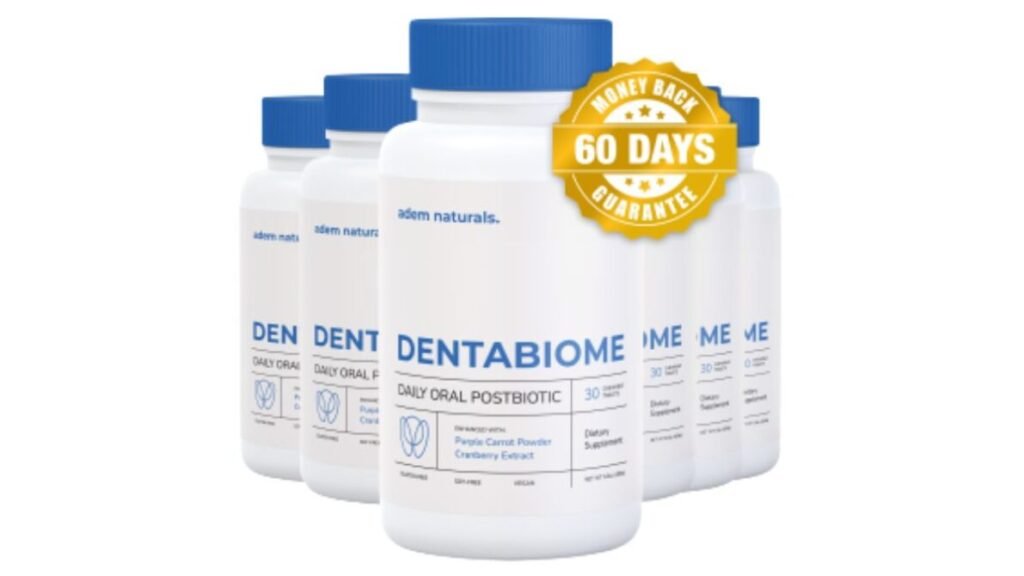
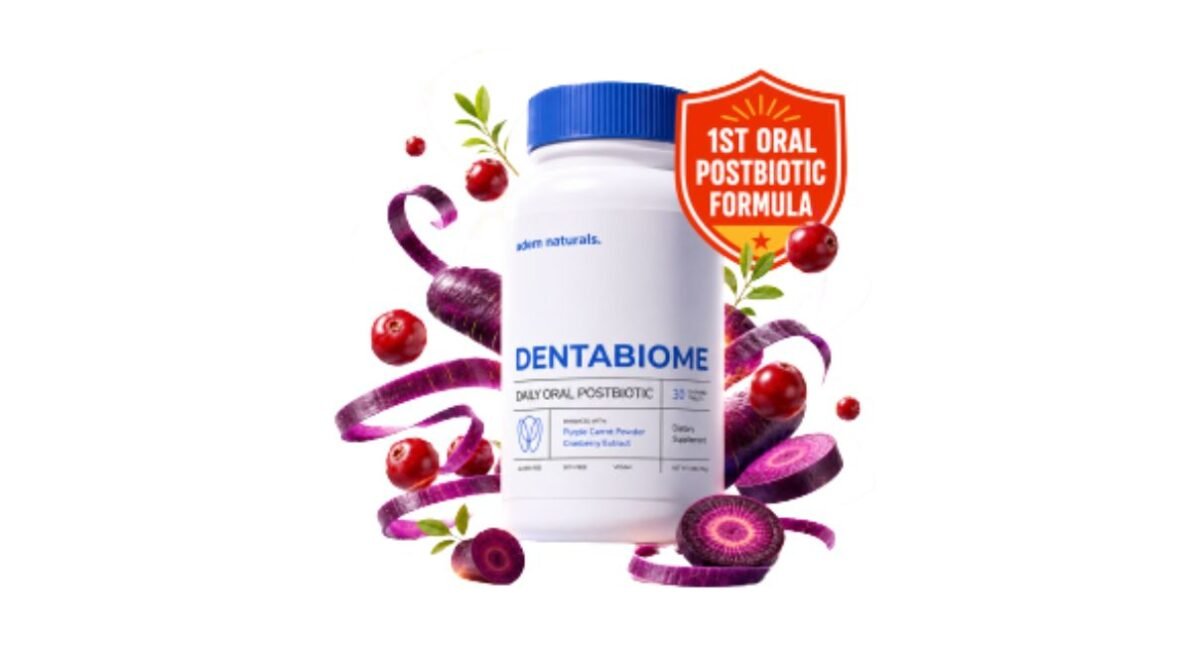
A chewable Berry Frost tablet, one daily, chewed or dissolved for about 30 seconds. Sold through the official site with ClickBank as the retailer of record and a 60-day money-back guarantee that explicitly accepts empty bottles.
The format deserves immediate credit. A chewable is the right route for oral health. Dental disease happens on surfaces — biofilm attached to teeth, bacteria in gum pockets, enamel demineralising at the surface in contact with saliva. Something that dissolves in your mouth puts its contents where the problem is. That’s the opposite of the swallowed mineral tablets this category is full of, and it matters more than any single ingredient.
The ingredient list is presented as a “matrix” of eleven entries: a dual-strain L. plantarum complex, L. salivarius, L. rhamnosus, BioFresh™ Clean Complex, xylitol, purple carrot powder, cranberry extract, a Berry Frost flavour blend, a “Postbiotic Stability Matrix,” “Remineralization Support,” and “Saliva Activation Carriers.”
Those last three aren’t ingredients. They’re descriptions of properties, listed as though they were components. No amount is published for anything.
FabM Is Real Science. The “Acid-Lock” Is Not.
Here’s where this product is more sophisticated than most, and it deserves a careful answer.
The page is built around breaking something called the “FabM acid-lock,” described as the root cause of tooth decay — a barrier protecting harmful bacteria that must be dismantled.
FabM is genuine. It’s an enzyme in Streptococcus mutans, the main cavity-causing bacterium. Research published in the Journal of Bacteriology established that the fabM gene product is responsible for synthesising monounsaturated fatty acids in the bacterial membrane, and is necessary for the organism’s survival at low pH. That work came out of the University of Rochester, and it’s been replicated and extended since. A review of S. mutans biology confirms that inactivating fabM results in extreme sensitivity to low pH, inability to maintain internal pH balance, and reduced virulence in a rat caries model.
So this isn’t an invented enzyme. It’s a well-characterised target, published in respectable journals, directly relevant to dental caries.
“Acid-lock,” however, appears nowhere in the scientific literature. It’s a marketing coinage laid over a real gene name.
And the coinage misdescribes what FabM does. It isn’t a lock protecting bacteria from your defences. It’s the mechanism by which S. mutans survives its own acid — the organism ferments sugar, produces acid, and adjusts its membrane fatty acids so it can tolerate the environment it created. There’s no barrier to break open. There’s a bacterium making itself acid-resistant.
That distinction matters because the product’s entire promise — dismantle the lock and let your mouth heal — describes an action on something that isn’t structured the way it’s described.
What the FabM Research Actually Did
This is the part that decides whether any of it transfers, and the answer is careful.
The studies didn’t inhibit FabM with a compound. They deleted the gene. Researchers created a mutant strain of S. mutans that couldn’t produce the enzyme at all, then observed what happened.
What happened was genuinely striking. Animals infected with the fabM-deleted strain developed fewer and less severe carious lesions than those infected with the normal strain, and the mutant was poorly transmissible from host to host.
That’s real, and it’s why FabM is discussed as a potential therapeutic target.
But read the distance between that and a chewable tablet:
Genetic knockout is not enzyme inhibition. Removing a gene from a laboratory strain before infection is a different intervention from applying something to bacteria already living in a mouth.
Rats are not people, and a controlled infection model is not a human mouth with hundreds of bacterial species.
No published research shows that any supplement inhibits FabM in humans. I looked. If DentaBiome has such data, it isn’t cited on the page, and no reference list appears there at all.
So the honest summary: the target is real, the target is interesting, and the leap from “deleting this gene reduces caries in rats” to “this chewable breaks the acid-lock in your mouth” is the entire product, unsupported.
Postbiotics: The One Genuine Advantage
Now a point in the product’s favour, and it’s a real one.
DentaBiome describes its bacterial components as postbiotics — non-living. The page argues this means full potency retained, no risk of bacterial overgrowth, and no destruction by saliva.
Postbiotics are a legitimate, formally defined category — non-viable microorganisms or their components that confer a health benefit. And the stability argument is genuinely valid: live probiotics do face survival challenges, they degrade in storage, and their viable count at the point of use is often far below the label figure.
Here’s why that’s interesting in this specific case. The most similar product on the market sells the same supporting ingredients as live probiotics — and that product’s central weakness is precisely that live organisms must survive manufacturing, storage and your saliva to do anything, with no CFU count published to check against. DentaBiome’s postbiotic framing sidesteps that problem entirely.
That’s a real formulation argument, honestly made.
The wording lets it down. The page calls them “postbiotic strains” — but a strain is a living lineage. Postbiotics are inactivated cells or their metabolites; they don’t come in strains, and they don’t “eradicate” bacteria in the way a colonising organism might compete with them. And no amount is published for any of them, in a category where there isn’t even a standard unit yet.
The Same Trademarked Blend as Another Product
This takes a minute to verify and it reframes the product.
DentaBiome’s ingredient list includes BioFresh™ Clean Complex, xylitol, cranberry extract and purple carrot powder, alongside four bacterial components.
Another chewable oral health product on the market lists BioFresh™ Clean Complex, organic xylitol, cranberry extract and purple carrot powder, alongside four probiotic strains.
Same trademarked blend name. Same three supporting ingredients. Same number of bacterial components. The difference is that one calls them probiotics and the other calls them postbiotics.
I can’t tell you whether that’s one manufacturer supplying both, one brand licensing from another, or one formula repositioned. No page discloses a manufacturer.
What it means practically: if you’ve researched one of these, you’ve largely researched both — and the “world’s first” framing on DentaBiome’s page is difficult to sustain when the same trademarked complex appears in a competing product. Our ProvaDent review covers that one in detail.
Where the 47% and the 99.9% Come From
The page carries several precise-sounding numbers: harmful bacteria eradicated by over 99.9%, 47% fewer harmful bacteria in 24 hours, 60% reduction in 8 days, gum disease bacteria inhibited by 36%, absorption 3 times faster than capsules.
Each carries an asterisk. Follow the asterisk to the FAQ and you find the source:
“Based on self-reported customer feedback.”
Read that against what the numbers claim to measure. A customer cannot self-report a 47% reduction in harmful bacteria. Bacterial load is measured by culture, qPCR or sequencing — a laboratory procedure. Nobody chewing a tablet at home knows their S. mutans count on day one versus day two.
So these aren’t clinical measurements presented as clinical measurements. They’re figures with a laboratory shape, sourced to something that cannot produce them.
One more, checkable in ten seconds: the scarcity panel states that in July, 8,894 of 12,600 bottles were sold, labelled as “20% Sold.” Eight thousand eight hundred and ninety-four out of twelve thousand six hundred is about 71%.
Xylitol, Cranberry, Purple Carrot — and No Doses
Setting aside the framing, what’s actually in here that could do something?
Xylitol is the strongest ingredient, and it’s genuinely good. S. mutans takes it up but can’t ferment it into acid, which suppresses growth over time. That’s why it’s in dental chewing gums worldwide.
The catch is quantity. A randomised school-based trial delivering xylitol through gummy snacks used 11.7 to 15.6 grams daily, split across three doses, and other clinical work has used 6 to 10 grams. Frequency matters as much as total, because the mechanism is repeatedly denying bacteria fermentable substrate. One chewable tablet, shared with ten other listed components, cannot hold six grams.
Cranberry extract has interesting laboratory work on proanthocyanidins interfering with bacterial adhesion. Human oral outcome data is thin.
Purple carrot powder supplies anthocyanins. The page credits it with calming gum inflammation and disrupting bacterial communication — the second is a quorum-sensing claim with no human evidence behind it here.
BioFresh™ Clean Complex is described as a revolutionary enzyme blend. No enzymes are named, no amounts given, and no research cited. For enzymes specifically that’s a problem, because enzymes are measured in activity units and degrade with storage.
What I Liked
The chewable format is correct. It acts where dental disease is. That’s the fundamental thing to get right in this category and many products don’t.
FabM is a real, well-published target. After reviewing products built on invented conditions with no literature at all, choosing an actual enzyme from actual peer-reviewed research is a step up — even if the leap to a supplement isn’t supported.
The postbiotic stability argument is legitimate, and it addresses a genuine weakness in live-probiotic oral products.
Xylitol is a genuinely good inclusion, whatever the amount.
The disclaimer is unusually honest. It discloses the fictional character, states that names and identifying details have been changed, says results are not typical or guaranteed, and tells readers not to delay professional advice. That’s more candour than most pages in this market show.
ClickBank is the retailer of record, and the 60-day guarantee explicitly covers empty bottles — a genuinely consumer-friendly term.
One-time payment, no subscription, clearly stated.
Things to Consider
The researcher behind the product is fictional, per the site’s own footer.
“Acid-lock” is not a scientific term, and it misdescribes what FabM does.
The FabM research is genetic knockout in bacteria and rats, not enzyme inhibition by a supplement in humans.
The percentage claims are sourced to self-reported customer feedback, which cannot produce bacterial-count measurements.
The scarcity figures don’t reconcile — 8,894 of 12,600 is 71%, not 20%.
No doses for anything, and three “ingredients” are properties rather than components.
The same trademarked blend appears in a competing product.
No reference list appears on the page, despite claims of being backed by published research.
“Reverse Tooth Decay – For Good” is the headline, and cavitated decay does not reverse.
“Reverse Tooth Decay” and Who Should Be Careful
The headline promise needs a direct answer, because it’s the most consequential claim on the page.
Early enamel demineralisation can remineralise. A white-spot lesion, where minerals have leached out but the surface is intact, can harden again — from saliva, fluoride, and reduced acid exposure. That’s real, and it’s the honest version of “reversing decay.”
A cavity cannot. Once the surface has broken and bacteria are inside the tooth, no mineral, bacterium or postbiotic rebuilds that structure. It needs a filling. Left alone it reaches the pulp, and then it needs a root canal or extraction.
A product promising to reverse tooth decay “for good,” aimed at people who already have visible problems, risks exactly the delay that turns a small filling into a large one.
Who should be careful:
Anyone with a tooth that aches, is sensitive to hot or cold, or has visible damage — that’s a dental appointment, not a chewable.
Anyone with persistently bleeding gums, gums pulling away from teeth, or loose teeth. Gingivitis is reversible; periodontitis destroys bone permanently.
Anyone with a swelling in the face or jaw, or a bad taste that won’t shift — possible abscess, needs same-day care.
Anyone significantly immunocompromised should discuss oral microbiome products with their clinician, even non-living ones.
Anyone with IBS or sensitive digestion, since xylitol is a polyol and can cause bloating and laxative effects if swallowed regularly.
Dog owners — xylitol is severely toxic to dogs, and a sweet berry-flavoured chewable kept in a bag or on a counter is exactly the kind of product veterinary poison centres get called about. Store it out of reach.
Parents — a sweet chewable is something children may help themselves to.
What Actually Prevents Decay
The hierarchy hasn’t changed and it’s cheap.
Fluoride, applied topically. The single most evidence-backed intervention in preventive dentistry. Brush twice daily, spit rather than rinse, and leave a film on the teeth.
Mechanical plaque removal. Brushing and cleaning between the teeth daily. Biofilm is physically attached; removing it is physical.
Reduce the frequency of sugar exposure, not just the amount. Each exposure triggers an acid attack — three sweet things at once does less harm than three across the day.
Professional cleaning at the interval your dentist recommends, which finds problems while they’re small.
And saliva. It’s the delivery system for remineralisation, so dry mouth raises risk substantially. It’s often medication-related and often adjustable, which makes it worth raising with a doctor.
If the xylitol appeals to you, dental xylitol gum or mints designed to deliver gram quantities across the day match what the research used, and cost a fraction of a supplement bottle.
Price, Guarantee, and the Verdict
Pricing is presented with a discount of up to 65%, a countdown timer, and a stock level permanently marked LOW. Current figures are on the DentaBiome site, with ClickBank handling the transaction.
The 60-day guarantee accepting empty bottles is the genuinely good part of the offer. The FAQ recommends 3 to 6 months of consistent use for full results, which sits outside that window — so judge it inside 60 days, not on the longer framing.
On reviews: 759 verified reviews and a 4.9 rating are displayed with no link to where they can be read, and no third-party platform is named. The product is sold direct only, so no verified-purchase pool exists independently.
The verdict. DentaBiome gets the route right, picks a real molecular target, makes a legitimate argument for postbiotics over live probiotics, and includes xylitol — and then attributes the whole thing to a researcher its own footer admits is fictional, wraps a real enzyme in an invented “acid-lock,” and sources laboratory-shaped percentages to customer self-report.
Who might reasonably try it: someone with healthy teeth and mild gum irritation who brushes, flosses and sees a dentist, who wants a pleasant daily addition, and who understands they’re buying an unquantified blend rather than a treatment. Buy the smallest package and judge inside 60 days.
Who should skip it: anyone with an existing cavity, anyone with persistent bleeding gums who hasn’t been seen, and anyone buying on the promise of reversing decay.
What I’d do instead: fluoride toothpaste used properly, daily interdental cleaning, xylitol gum if you like the mechanism, and the cleaning appointment. Decades of evidence, and none of it needs a bottle.
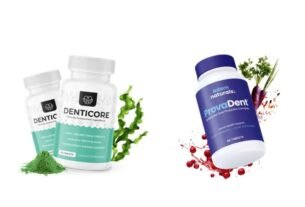
For context on how this category divides, our ProvaDent review covers the chewable that shares this product’s trademarked blend but sells its bacteria as live probiotics — the comparison is genuinely instructive. And our DentiCore review covers the opposite error entirely: a mineral tablet you swallow, for a problem that lives on the surface of your teeth.
Frequently Asked Questions
Is the FabM acid-lock real?
FabM is real — a genuine enzyme in Streptococcus mutans, published in peer-reviewed research, which helps the bacterium tolerate the acid it produces. “Acid-lock” is not a term found in the scientific literature, and it misdescribes the mechanism: FabM doesn’t lock anything, it makes the bacterium acid-resistant. The published research deleted the gene in laboratory strains and tested them in rats; no study shows a supplement inhibits FabM in a human mouth.
Are postbiotics better than probiotics for teeth?
The stability argument is genuine — non-living postbiotics don’t have to survive manufacturing, storage and saliva the way live probiotics do, and there’s no overgrowth risk. That’s a real advantage over live-organism products. What’s missing is the same thing missing from most of this category: published amounts, and human trials on the specific preparation.
Can DentaBiome reverse tooth decay?
Early enamel demineralisation — a white-spot lesion with an intact surface — can remineralise, mainly through saliva and fluoride. A cavity that has broken through the surface cannot, by any product. It needs a filling, and delaying that turns a small restoration into a large one.
Is it safe if I have a dog?
The product contains xylitol, which is severely toxic to dogs even in small amounts, causing rapid hypoglycaemia and potentially liver failure. Because this is a sweet chewable people keep in bags and on counters rather than in a cabinet, store it well out of reach and call a vet immediately if your dog eats any.

Raphael Albert is the founder and content creator of Nutra Pulse. Passionate about health, nutrition, fitness, and wellness, he spends his time researching scientific studies, health trends, and evidence-based lifestyle strategies to create informative and easy-to-understand content. While he is not a doctor or licensed healthcare professional, his goal is to help readers make more informed wellness decisions. All content is for educational purposes only and should not replace professional medical advice. Always consult a qualified healthcare provider regarding your health concerns.