
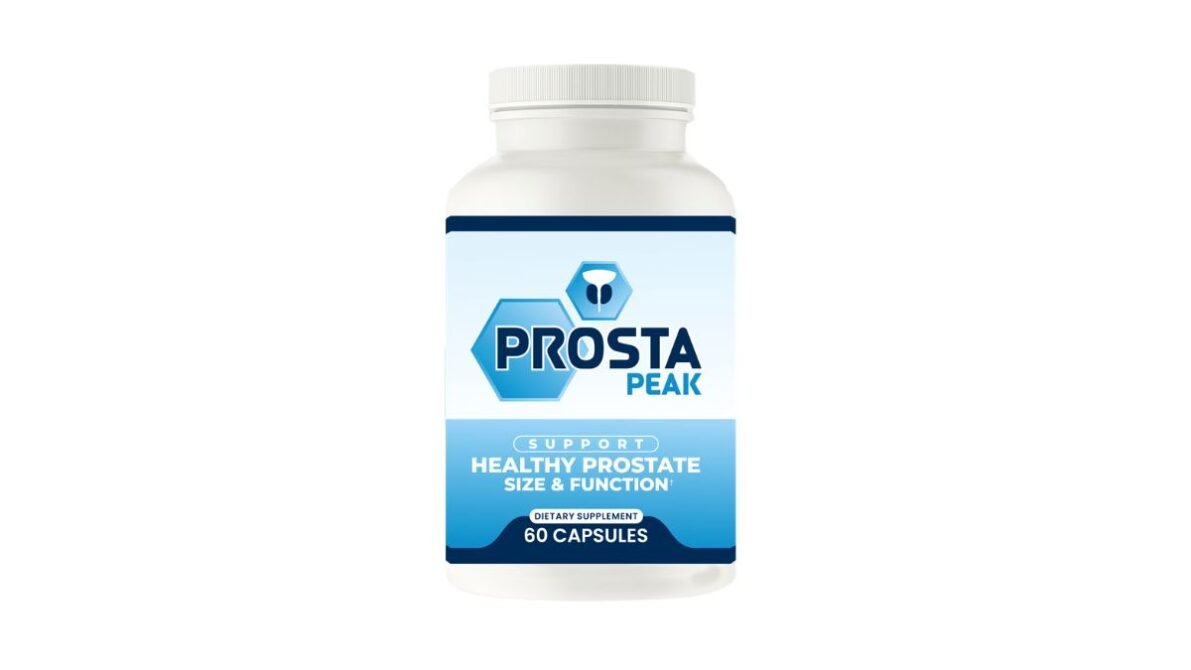
On the money: two links below go to the seller and pay this site a commission. This review opens by telling you to see a doctor instead, which should give you a sense of how heavily that weighed.
These statements have not been evaluated by the Food and Drug Administration. This product is not intended to diagnose, treat, cure, or prevent any disease. Urinary symptoms in men over 50 have several possible causes, and an enlarged prostate is only one of them. No supplement can tell you which one you have. If your symptoms are new, changing, or bothering you, that’s a doctor’s appointment — and this article is meant to be read before it, not instead of it.
Before we discuss a single ingredient, here’s the thing that matters more than everything else in this article.
Getting up three times a night, a stream that starts and stops, the feeling that you never quite empty — those symptoms in a man over 50 usually mean benign prostatic hyperplasia. An enlarged prostate. Common, not dangerous, and very treatable.
Usually. The same symptoms can also come from prostate cancer, bladder cancer, a urethral stricture, a neurological condition, or diabetes. And there is no way — none — to tell which one you have from how it feels. That’s what a PSA test, a digital exam, and a conversation with a doctor are for.
This is the specific reason the prostate supplement category worries me more than any other I look at. A man buys six bottles, feels vaguely better, and spends the next eight months not making the appointment. One affiliate write-up of this very product notes the same thing, citing forum discussions about men who delayed seeing a doctor because they assumed a supplement was enough.
So that’s the frame for this Prosta Peak review. Not “does it work” but “what does buying it cost you.” Which brings us, finally, to what’s in the bottle — and the formula turns out to have problems of its own.
What Prosta Peak Is — and the “20+” Problem
A capsule, sold through the Prosta Peak official website with ClickBank handling payment, in two, three, or six-bottle packages.
The page advertises “a unique blend of 20+ ingredients” and repeats the figure three times. Six are actually named: cat’s claw, green tea, pygeum, raspberry, soursop, and saw palmetto.
Then, roughly halfway down the same page, a header reads: “Proprietary Blend of 4 Plants and Minerals.” Beneath it, four items — green tea extract, raspberry, saw palmetto, and pygeum.
Twenty-plus, or four. The page says both, within a couple of screens of each other. I can’t reconcile them and neither can you, because there is no supplement facts panel anywhere on the site.
It goes further than that. The FAQ asks “What’s inside?” and answers: a unique proprietary blend of natural plants and nutrients. That’s the whole answer. And “What is the best way to take it?” is answered with “simply take Prosta Peak with water and you’re good to go” — without saying how many capsules, or when. This is the first product I’ve reviewed that doesn’t tell you the dose of the product itself, let alone of any ingredient.
Saw Palmetto Has Been Tested More Than Almost Any Supplement
Saw palmetto is the anchor of this entire market, so it’s worth knowing exactly how well it has been studied. The answer is: unusually well, with public money, by people with no commercial stake. And the results are not good.
The STEP trial, published in the New England Journal of Medicine in 2006, gave 225 men with moderate-to-severe symptoms 320 mg daily for a year. No significant improvement over placebo in symptom scores, peak flow, post-void residual volume, prostate size, or quality of life.
Researchers then asked whether the dose had been too low. The CAMUS trial escalated 369 men from 320 mg to 640 mg to 960 mg per day over 72 weeks — triple the standard dose. Symptom scores fell 2.20 points on saw palmetto and 2.99 points on placebo. The difference, such as it was, favoured the placebo. The NIH, which funded the work, summarised it plainly: saw palmetto is no more effective than placebo for urinary symptoms.
A 2023 Cochrane review of 27 randomised trials in 4,656 men reached the same conclusion — little or no benefit alone. An earlier Cochrane review of 32 trials found no improvement in urinary flow or prostate size at double and triple doses. The Merck Manual’s professional edition carries all of this.
One genuinely useful finding from CAMUS, and I want to state it because it cuts the other way: saw palmetto had no effect on PSA levels at any dose. That matters. Finasteride, a prescription BPH drug, roughly halves PSA and doctors adjust for it. Saw palmetto doesn’t appear to mask the marker, so it isn’t hiding a cancer signal from your bloodwork. Small comfort, but real, and worth knowing.
Bottom line: the most-studied ingredient in the category, tested rigorously at up to three times the usual dose, doesn’t beat a sugar pill.
Pygeum Is the One With Real Evidence
Here’s where I’d defend part of the formula.
A Cochrane review pooled 18 randomised trials in 1,562 men and found that those taking Prunus africana bark extract were roughly twice as likely to report symptom improvement, with about a 19% reduction in nocturia, a 24% reduction in residual urine volume, and a 23% improvement in peak urine flow. European urology guidance treats it as a reasonable option once serious causes have been excluded.
Real evidence, real effect sizes, and better than saw palmetto’s.
The caveats are the usual ones and they’re specific. The trials averaged around 64 days and most were small and older, so the review called for larger rigorous studies. And the dose is precise: roughly 100 mg per day of a lipophilic bark extract standardised to about 14% triterpenes and 0.5% n-docosanol. That standardisation is the intervention — raw powdered bark isn’t the same product.
Prosta Peak tells you pygeum is in there. It doesn’t tell you how much, what extract, or what standardisation. So the one ingredient with genuine support arrives with none of the information that would let you know whether you’re getting what the trials used.
Soursop Doesn’t Belong in Anything You Take Daily
This is the section I’d want anyone considering six bottles to read.
Soursop — Annona muricata, also sold as graviola — contains annonacin, a mitochondrial complex I inhibitor. That places it in the same mechanistic family as compounds known to damage dopamine neurons.
The epidemiology is not subtle. An unusual cluster of atypical parkinsonism was identified on Guadeloupe and linked to consumption of Annonaceae plants, soursop chief among them. Similar patterns appeared in New Caledonia, Guam, and among Afro-Caribbean and Indian populations in London. The syndrome doesn’t respond to L-DOPA, the standard Parkinson’s treatment, and post-mortem examination shows widespread tau accumulation. A 2022 study in Movement Disorders found that Annonaceae consumption was associated with worse disease severity and greater cognitive deficits in people with degenerative parkinsonism. In some patients who stopped consuming it, progression halted; in at least one, symptoms receded.
Now the fair part, because this deserves proportion. That epidemiology involves heavy, sustained intake of fruit, juice, and leaf infusions over years — not a fraction of a capsule. A small amount of soursop is not going to give anyone parkinsonism.
But three things stop me from waving it away. Researchers have specifically tested dietary supplements containing Annonaceae species and found neurotoxic activity in them — supplements, not just fruit. Prosta Peak recommends daily use for three to six months and won’t say how much soursop is in a capsule. And the target buyer is a man between 45 and 70, which is precisely the age band where neurodegenerative disease begins to declare itself.
Set against all that, ask the obvious question: what is soursop doing in a prostate supplement? It has no prostate evidence whatsoever. The page’s own bullet points for it say digestion, inflammatory response, and immunity — nothing about the prostate at all. It’s an ingredient with a documented neurotoxicity literature, present for no stated reason, in an undisclosed amount, recommended daily for half a year.
That’s not a risk I’d take for a benefit nobody has claimed.
The Rest of the List Reads Like a Template
Look at what the page says each ingredient does and a pattern appears immediately.
Cat’s claw: may boost immunity, may reduce stiffness, may support bone health. Raspberry: may improve heart health, may aid weight loss, supports healthy aging. Green tea: heart health, weight loss — and, in the second box, “may support healthy liver function.”
Not one of those bullets mentions the prostate. Four of the six named ingredients are described entirely in terms of immunity, bones, weight, digestion, and liver — the generic boilerplate that appears on every supplement page regardless of what it’s selling. Only saw palmetto and pygeum get prostate-specific claims, and saw palmetto’s is the one the trials contradict.
Worth adding: green tea extract carries its own consideration. The European Food Safety Authority concluded that green tea catechins at or above 800 mg of EGCG daily are associated with liver enzyme elevations, and that no safe supplemental dose could be identified. Undisclosed amount again.
“Scientific References” That Cite Nothing in the Bottle
At the bottom of the page sits a section headed “Scientific References,” preceded by the logos of Harvard, Stanford, Yale, and Columbia.
Sixteen citations follow. They’re real papers in real journals — genuinely so, and better formatted than most. Read what they’re about, though.
References one through seven and twelve through fifteen concern what benign prostatic hyperplasia is: its definition, terminology, epidemiology, pathology, and hormonal drivers. References eight through eleven and sixteen examine whether NSAIDs, allopurinol, and antidiabetic drugs affect BPH risk.
Not one of the sixteen is about saw palmetto. Or pygeum. Or cat’s claw, soursop, green tea, or raspberry. There is no citation for any ingredient in the product.
What the list establishes is that BPH exists and has been studied — which nobody disputes — and that three classes of prescription drugs, none of them in this bottle, have been examined for association with it. The evidence file is about the disease, not the remedy.
And unlike some pages that pull this move, there’s no disclaimer under those university logos. No line saying the product isn’t affiliated with or endorsed by them. The logos simply sit above a reference list containing nothing about the product.
Where the Photographs Came From
This one takes about thirty seconds to verify and I’d encourage you to do it.
Right-click the customer photographs and look at the image addresses. Two of the three testimonial images — the ones attributed to James Wilson of Texas and Josh Simpson of Washington — are served from a folder path reading getneurosurge. So are all four university logos.
NeuroSurge is a different supplement. The photographs presented as Prosta Peak customers, and the institutional logos presented as its scientific backing, are sitting in another product’s asset directory.
The testimonials themselves say almost nothing. “I feel better already, my energy is great.” “I was struggling to figure something out until I took this, amazing!” “This is something I swear by daily it’s that good.” Three men, three states, three quotes that mention no urinary symptom, no timeframe, and no specific change. To the company’s credit, an asterisk below notes these are not typical user results.
What I Liked
The references are real papers. Poorly matched to the product, but genuine, properly formatted, and mostly from decent journals. That’s more effort than a lot of pages make.
Pygeum is a legitimate inclusion. Of everything here, it’s the ingredient a urologist might actually acknowledge.
Saw palmetto doesn’t interfere with PSA. Not a benefit, but a genuine absence of harm worth stating.
A 180-day guarantee, one-time payment. Six months is generous and there’s no auto-rebill.
The footer says the right thing. It explicitly encourages informing your physician of changes you make and discussing concerns with a doctor. Buried, but present, and more than some competitors manage.
Things to Consider
The page contradicts itself on ingredient count. “20+” in three places, “4” in a header on the same page.
No dose for anything — including the product. The FAQ doesn’t say how many capsules to take.
The flagship ingredient failed its two largest trials and two Cochrane reviews.
Soursop has a neurotoxicity literature and no prostate rationale.
Zero references relate to any ingredient.
University logos with no affiliation disclaimer.
Testimonial photos and logos come from another product’s asset folder.
The bonuses aren’t about the prostate. Both free books are erectile dysfunction guides, which quietly repositions this from a urinary product to a sexual performance one — a different and more emotionally loaded sell.
“97% of customers order 6 bottles” appears with no source, next to struck-through prices like $1,176 that nobody has ever paid.
Who Should Be Careful
- Anyone who hasn’t had their symptoms assessed. This is the big one, and it’s why it’s also the first section of this review.
- Anyone with a family history of prostate cancer, or of African-Caribbean descent, where baseline risk is higher and screening conversations should start earlier
- Anyone with a personal or family history of Parkinson’s or other neurodegenerative disease — given the soursop content and its undisclosed amount, I’d avoid this outright
- Anyone taking blood thinners — green tea and several botanicals here can interact
- Anyone with liver disease, or already taking a green tea extract product
- Anyone on medication for BPH already, since combining without telling your prescriber makes it impossible to know what’s working
And treat as urgent, not as a supplement question: blood in the urine, inability to pass urine at all, fever with urinary symptoms, or new bone pain. Those need same-day medical attention.
Price, Bonuses, and What Independent Reviews Show
Two bottles run $79 each, three run $69 each, and six run $49 each — $294 for the largest package. The 180-day guarantee applies to what you haven’t used. Current pricing is on the Prosta Peak site.
On independent feedback: there is effectively none, and what exists is odd.
The product is sold direct, so there’s no verified-purchase pool. Search results are dominated by ACCESS Newswire press releases — paid advertorials — syndicated onto financial news portals where they can look like editorial coverage. There is a Trustpilot page, but it’s registered to a lovable.app subdomain rather than the official site, and it carries a single review.
The affiliate content contradicts both the official page and itself. One write-up praises Prosta Peak for “transparent labeling” and for containing “proven botanicals like saw palmetto and beta-sitosterol” — but the official page publishes no label, and beta-sitosterol isn’t among the listed ingredients. Which is a shame, because beta-sitosterol actually has better BPH evidence than saw palmetto does. Different pages list different mailing addresses and a differently-spelled brand domain. Several mention a post-purchase upsell sequence.
Treat all of it as unverified.
Final Verdict — What Actually Helps
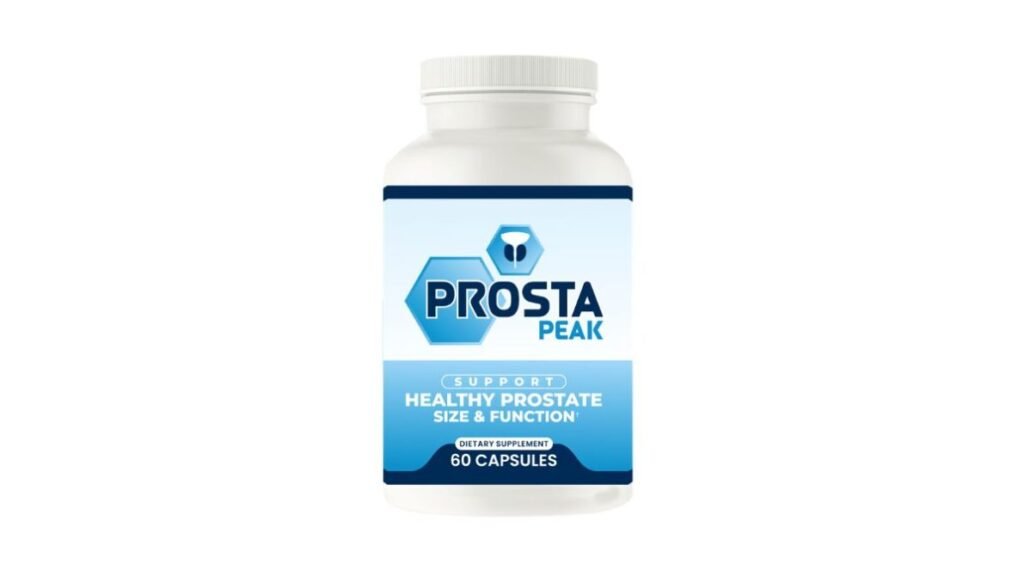
Prosta Peak is built on an ingredient that failed the two largest trials ever run on it, plus one ingredient that genuinely works at a dose the product won’t disclose, plus a neurotoxic-potential botanical with no reason to be there, backed by a reference list that cites nothing in the bottle and photographs borrowed from another product.
I can’t construct a buyer profile for this one. Usually I can. Here, the ingredient with the best evidence is available on its own, standardised, at the studied dose, for a fraction of $294 — without the soursop.
If you want to try a supplement, the checklist is short and worth holding any product to: a published supplement facts panel with per-ingredient amounts; pygeum standardised to roughly 14% triterpenes at about 100 mg daily, or beta-sitosterol, which outperforms saw palmetto in the trial data; nothing in the formula you can’t find a reason for; and third-party testing.
What actually helps, and costs nothing: cutting fluids in the two or three hours before bed, easing off evening alcohol and caffeine, double voiding, and checking whether anything you already take — antihistamines and decongestants are common culprits — is making things worse. If symptoms are bothersome, prescription options for BPH are inexpensive, well-studied, and work substantially better than anything in this category.
And the appointment. Please make the appointment.
If you’re comparing options in this space, our Total Control 24 review covers another prostate formula, and the same checklist above is the one to apply to it.
Frequently Asked Questions
Does saw palmetto work for an enlarged prostate?
The best evidence says no. The NEJM STEP trial and the JAMA CAMUS trial — the latter testing up to triple the usual dose over 72 weeks — both found it no better than placebo, and a 2023 Cochrane review of 27 trials in 4,656 men reached the same conclusion. Smaller, older studies were more positive, but the large rigorous ones weren’t.
Will taking Prosta Peak affect my PSA test?
Saw palmetto specifically was shown in the CAMUS trial to have no effect on PSA at any dose, so it shouldn’t mask that marker. That said, tell your doctor about every supplement you take before any prostate workup — it’s their job to interpret the whole picture, and they can only do that if they know.
Is the soursop in it dangerous?
Probably not at whatever small amount is in a capsule, and I want to be proportionate about that. But soursop contains annonacin, a neurotoxin epidemiologically linked to an atypical, treatment-resistant parkinsonism, researchers have found neurotoxic activity in Annonaceae-containing supplements specifically, and the amount here isn’t published. Since it has no prostate benefit to weigh against that, there’s nothing to justify the uncertainty.
Can a supplement replace seeing a urologist?
No, and this is the point worth taking from the whole article. Urinary symptoms in men over 50 can come from an enlarged prostate, but also from prostate or bladder cancer and several other conditions, and they feel the same from the inside. Get assessed first. Then decide about supplements with actual information in hand.

Raphael Albert is the founder and content creator of Nutra Plus. Passionate about health, nutrition, fitness, and wellness, he spends his time researching scientific studies, health trends, and evidence-based lifestyle strategies to create informative and easy-to-understand content. While he is not a doctor or licensed healthcare professional, his goal is to help readers make more informed wellness decisions. All content is for educational purposes only and should not replace professional medical advice. Always consult a qualified healthcare provider regarding your health concerns.
1 thought on “Prosta Peak Review: The Ingredients Matter Less Than What You Might Be Delaying”