Where the money goes: two links below are affiliate links and pay this site a commission on a sale. Read the two safety sections and judge for yourself whether that bought anything.
These statements have not been evaluated by the Food and Drug Administration. This product is not intended to diagnose, treat, cure, or prevent any disease. Never stop, reduce, or skip diabetes medication because of a supplement. Doing so can be dangerous. If you want to change how your blood sugar is managed, that decision belongs to you and your doctor together — with lab work, not with a bottle.
Most supplement stories fall apart the moment you look up the mechanism. This one is more interesting, and I want to give it its due before taking it apart.
The GlucoBerry pitch goes like this: insulin isn’t the whole picture. Insulin moves excess sugar to your kidneys, and your kidneys have a “Blood Sugar Drain” that flushes it into your urine. In half of Americans, a sticky gray protein clogs that drain, so the sugar comes back into the bloodstream. Dissolve the clog and your blood sugar improves.
Here’s the thing: there is a glucose drain in your kidneys, and it matters enormously. Your kidneys filter glucose out of your blood constantly, and a transporter protein called SGLT2 pulls most of it back in before it reaches your urine. An entire class of prescription diabetes drugs — the gliflozins — works by blocking SGLT2 so that glucose leaves the body in urine instead. That’s real, important, well-established pharmacology.
So the story isn’t invented from nothing. It’s a real mechanism, retold with the direction reversed. SGLT2 isn’t a clog that needs dissolving; it’s the pump that pulls sugar back in, and the therapeutic move is to block it, not to clear it. This GlucoBerry review is largely the work of tracing where the retelling parts company with the research — and it parts company in more than one place, including which organ the main ingredient actually acts on.
What GlucoBerry Is
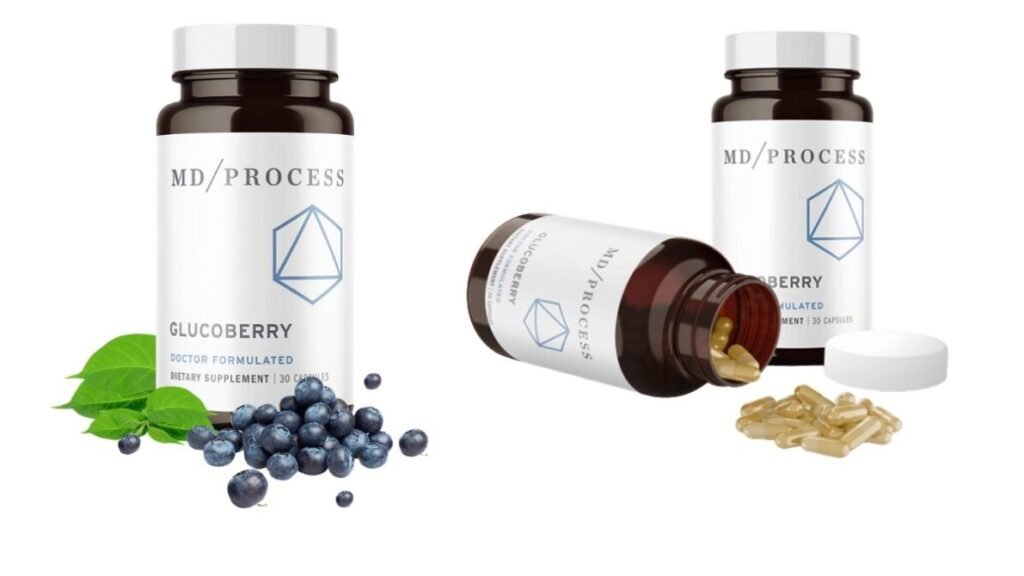
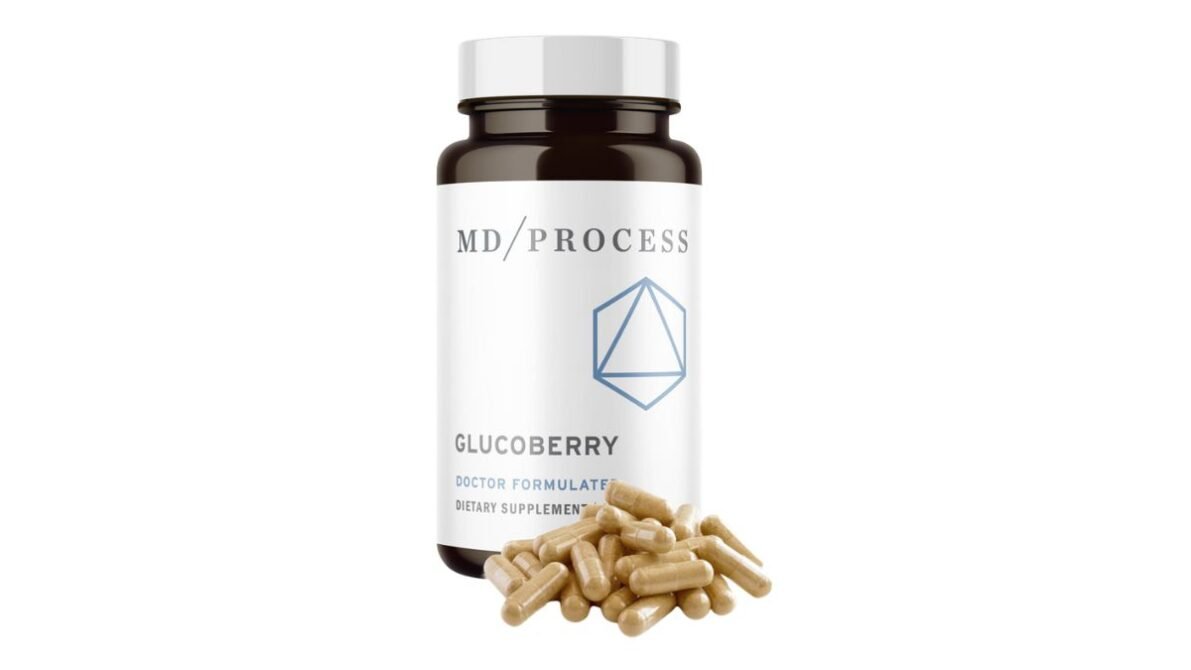
A single capsule taken daily with food, sold by MD/PROCESS® through the GlucoBerry official website with ClickBank processing payment.
Four ingredients are named: a standardised maqui berry extract, chromium, biotin, and gymnema sylvestre leaf.
Two things deserve immediate credit. The page links an image of the actual supplement facts label — most products in this category don’t. And it states a company address in Atlanta, a toll-free phone number, and a named formulator. After reviewing a dozen of these, that’s above the median for transparency.
The formulator is presented as Dr. Mark S. Weis, MD, who narrates the page in the first person. Press releases promoting the product describe him as a board-certified physician. I wasn’t able to independently verify his licensure, specialty, or board certification through the searches I ran, which isn’t evidence of anything either way — but it’s the kind of thing worth confirming yourself if a physician’s authorship is part of why you’re buying.
Harvard, Johns Hopkins, Yale — and Not One Link
The page invokes three universities. Harvard scientists are said to call the berry’s method a “promising new therapy.” A Johns Hopkins study is said to have discovered the Blood Sugar Drain. A Yale study is credited with finding that chromium works better paired with biotin.
There is not a single citation, link, DOI, author name, or journal title attached to any of them. Not one. For a page that says it was “formulated using the latest Ivy League research,” the research itself is entirely absent.
The top of the page carries an “As Featured On” row of media logos — most of which don’t even load, leaving empty image placeholders — under a line stating that MD/PROCESS® is not endorsed by, sponsored by, or affiliated with any of these organisations. That disclaimer is legally why the logos are allowed to be there. It’s also an admission that the association they create is not a real one.
The claim that “50% of Americans have too much of a sticky gray protein” carries no source either. It’s a striking statistic about half the country’s kidneys, and you’re asked to take it on the page’s word.
Maqui Berry: Real Research, Wrong Organ
Now the substantive part, because maqui berry genuinely has human research behind it — and reading it is what unravels the story.
The extract with the published trials is Delphinol®, standardised to at least 25% delphinidins. A double-blind, placebo-controlled crossover study in ten volunteers with moderate glucose intolerance found that taking it before a rice meal significantly lowered post-meal blood glucose and insulin compared to placebo. A separate dose-ranging study in prediabetic individuals found it lowered fasting glucose and insulin dose-dependently during oral glucose tolerance tests — though the authors describe that one as open and exploratory rather than controlled.
Real findings. Small studies, industry-affiliated authors, but real.
Now read the mechanism those papers propose. The first study examined the effect on sodium-glucose symport in rodent jejunum — a section of the small intestine. The proposed action is inhibition of SGLT1, the transporter that absorbs glucose from food in your gut. The dose-ranging paper lists three candidate mechanisms: inhibition of intestinal glucose transporters, an incretin-mediated effect, or improved insulin sensitivity.
Kidneys appear nowhere. Clogs appear nowhere. Dissolving a protein appears nowhere.
SGLT1 is in the intestine. SGLT2 is in the kidney. They are different transporters in different organs doing different jobs, and the research behind GlucoBerry’s headline ingredient points at the first while the sales page tells a story about the second.
If maqui berry does what the studies suggest, it may modestly blunt how much glucose you absorb from a meal. That is a reasonable thing for a supplement to do. It is not what you were told you were buying.
Worth adding: affiliate write-ups of this product have propagated the confusion in both directions. Some say GlucoBerry works by “enhancing SGLT2 inhibitors.” Others say it “restores the levels of the SG2 protein” — which, read literally, would mean more glucose reabsorption, the opposite of the goal. When the retellings of a mechanism contradict each other on whether the product raises or lowers the thing in question, that tells you the mechanism was never load-bearing.
Where Does the 23% Come From?
The page states that daily maqui berry extract “improved long-term blood sugar markers by 23%.” No citation.
The largest published trial I could find on the standardised extract ran three months in 31 subjects with moderate glucose intolerance. Average HbA1c went from 5.65% at baseline to 5.35% after three months. That’s a drop of 0.30 percentage points — roughly a 5% relative reduction, and a statistically significant one.
Meaningful for a berry extract. Not 23%.
I can’t tell you what the 23% refers to, because nothing on the page says. It may describe a different marker, a different analysis, or a different study. Without a source, it’s unverifiable — and an unverifiable number attached to a health outcome is worth treating as decoration rather than data. Two other details worth holding: the baseline HbA1c of 5.65% is at the very edge of normal, and the paper appeared in a journal supplement issue with authors affiliated to the ingredient’s manufacturer.
Chromium, Biotin, and Gymnema
Chromium is the most-studied of the three and the most disappointing. It’s an essential trace mineral, and the page cites twenty-six peer-reviewed studies. What it doesn’t mention is that larger pooled analyses have generally found little to no meaningful effect on glycemic control in people who aren’t chromium-deficient — which, in a well-fed population, is most people. Affiliate write-ups list the dose at 600 mcg, many times typical dietary intake.
Gymnema sylvestre has genuine traditional use and some human data, mostly small and methodologically limited. The page says a study of 58 men and women found “an impressive effect” on HbA1c and that GlucoBerry contains that exact dose. Matching a trial dose is a good instinct and I’d praise it if the study were identified. It isn’t.
Biotin is where this gets serious, and it gets its own section.
The Biotin Problem Nobody Mentions
This is the most useful thing in this article and no affiliate page covers it.
Biotin interferes with laboratory tests. Not in a theoretical way — in a way that made the FDA issue a safety communication in 2017 and update it in November 2019, after receiving adverse event reports and one report of a patient death following a potentially falsely low troponin result.
The mechanism is mundane and that’s what makes it dangerous. A great many blood tests are immunoassays built on biotin-streptavidin binding. Extra biotin in your bloodstream competes with the test’s own chemistry, and results come back wrong — sometimes high, sometimes low, depending on the assay design.
The affected list is long and includes tests this audience actually gets. Falsely decreased: troponin, TSH, NT-proBNP, ferritin, hCG. Falsely increased: T4, T3, cortisol, testosterone, vitamin B12, folate. Documented consequences have included misdiagnosis in cardiac, thyroid, and fertility contexts.
Now the proportion, because this needs to be fair. Interference is dose-dependent. Multivitamin-level doses — up to about 1,000 mcg — have not been reported to cause it. The problems come from the high-dose products, some containing 20 mg, which is hundreds of times the recommended intake. I don’t know GlucoBerry’s biotin content; the label image exists but I can’t read the figure from it, and the sales copy never states it.
So here’s the practical instruction, whatever the number turns out to be. Look at the label, and tell your doctor you take biotin before any blood test. That matters more here than in most products, because the people buying a blood sugar supplement are people getting regular bloodwork — and they’re in the age band where a troponin test is a realistic possibility on a bad night. The FDA also notes there isn’t enough information to say how long you’d need to stop beforehand to avoid interference, so “I stopped yesterday” isn’t a reliable answer.
An Abbott survey found 17% of US respondents took biotin, and only 3% knew it could affect lab results. That gap is the whole reason this section exists.
If You Take Diabetes Medication, Read This First
Both gymnema and chromium can lower blood glucose. That’s the point of them. It’s also why they need a conversation with whoever prescribes your medication.
If you take insulin, a sulfonylurea, or another agent that lowers glucose, adding something that does the same thing is additive. The result can be hypoglycemia — shakiness, sweating, confusion, and in severe cases loss of consciousness. This isn’t hypothetical; it’s the standard caution attached to every glucose-lowering botanical.
The way to handle it is not to avoid the supplement reflexively. It’s to tell your prescriber before you start, and to check your levels more often in the first few weeks so that a dose adjustment happens deliberately rather than as a surprise.
And the part that concerns me most about how this product is sold. The page’s central argument is that focusing on insulin is not the answer — that other approaches “are fine and do work for some people, but they don’t address the problem.” For a reader with type 2 diabetes, that framing sits uncomfortably close to a reason to take their prescribed treatment less seriously. I don’t think the page intends that. I do think it’s the predictable effect of telling someone their medication addresses the wrong thing.
So, plainly: nothing in this bottle is a substitute for diabetes treatment, and no supplement is a reason to change a prescription. If your numbers improve, that’s a conversation with your doctor about adjusting medication — a conversation they lead, with lab work in hand.
What I Liked
The label is published. An actual supplement facts image, linked from the page. That single decision puts this ahead of most of the category.
A named formulator, a real address, a phone number. Atlanta office, toll-free line, named physician. Accountability infrastructure that many competitors simply don’t have.
Maqui berry is a legitimate, well-chosen ingredient. It has published human trials, a standardised extract, and a plausible mechanism. The mechanism just isn’t the one advertised.
Matching a trial dose is the right instinct. Saying “we used the exact amount from the study” is how a formulator should think, even though the study goes unnamed.
The guarantee is unusually good — see the next section, because it genuinely is.
The disclaimer under the media logos exists, and the FDA statement and “consult your physician” language are present in the footer.
Things to Consider
Three universities invoked, zero citations.
“50% of Americans” has no source.
“23%” has no source, and the largest published trial shows roughly a fifth of that.
The mechanism points at the intestine, not the kidney.
Biotin content isn’t stated in the copy, and biotin interferes with lab tests.
Chromium’s pooled evidence is much weaker than “26 studies” implies.
The gymnema study is unnamed, which makes the dose-matching claim unverifiable.
“Only GlucoBerry offers unique support to your Blood Sugar Drain” describes a mechanism that no published research on this ingredient supports.
The framing quietly demotes insulin-focused treatment, which is the last thing a diabetic reader needs to hear.
The Guarantee Is Genuinely Good — Here’s the Fine Print
I’ve spent several of these reviews finding that a headline guarantee was contradicted by the actual policy page. So let me report the opposite result plainly, because it’s earned.
GlucoBerry advertises a 180-day “Empty Bottle” guarantee. I read the refund policy page. It says: return any remaining unopened bottles within 180 days and receive a full refund, and opened or empty bottles do not need to be returned.
That matches the promise. It is the single best refund policy I’ve examined in this category, and it deserves to be said without qualification.
Four practical details from the same page. The window runs from your order date, not delivery, so shipping time comes out of your 180 days. Return shipping is your cost. You must send back any remaining sealed bottles along with the packing slip. And the return address is in Aurora, Colorado, not the Atlanta address in the site footer — send it to the wrong one and you’ll have a problem.
Price and What Independent Reviews Show
Two bottles run $69 each plus $9.95 shipping, three run $59 each, and six run $39 each with free US shipping — $234 for the largest package. The copy also references a $59 single-bottle offer against a struck-through $129, though the order options begin at two bottles. Current pricing is on the GlucoBerry site.
On independent feedback: there isn’t any, and the substitute is worse than usual here.
The product is sold direct only, so no verified-purchase pool exists. What fills the search results is affiliate content placed in the sponsored “marketplace” and “brand connect” sections of genuine newspapers, plus wire-service press releases republished on financial portals. Those placements are paid, they carry newspaper mastheads, and they read like reporting. They aren’t.
The content in them contradicts itself and the official page — different prices, different bottle counts, and mutually incompatible accounts of the mechanism. At least one describes GlucoBerry as a “diabetes cure supplement,” which is both false and the kind of claim that gets companies into trouble with regulators. Treat every GlucoBerry testimonial you encounter, positive or negative, as unverified.
Final Verdict
GlucoBerry is a better-built product than its story deserves, sold with a mechanism that the research on its own main ingredient does not support.
Maqui berry extract has real human trials. The company publishes its label, names its formulator, answers a phone, and honours an unusually generous refund policy. Those things are not nothing, and after a dozen reviews in this space I don’t take them for granted.
But the Blood Sugar Drain is a retelling of SGLT2 biology with the arrows reversed; the maqui berry research describes an intestinal transporter, not a renal one; three universities are invoked without a single citation; the two headline statistics have no source; and the biotin nobody mentions can distort the very blood tests you’d use to see whether any of this is working.
Who it might reasonably suit: someone with prediabetes rather than diabetes, not on glucose-lowering medication, who has discussed it with their doctor, who understands they may be buying a modest reduction in post-meal glucose absorption rather than a kidney unclogging, and who tells their lab about the biotin. That’s a real person, and the refund policy makes trying it low-risk for them.
Who should skip it: anyone on insulin or a sulfonylurea who hasn’t spoken to their prescriber, anyone who’d be tempted to treat improved numbers as permission to reduce medication, and anyone buying the story rather than the ingredient.
And the part with evidence beyond anything in this bottle: for prediabetes, structured lifestyle programmes reduce progression to type 2 diabetes more than any supplement ever tested — diet pattern, physical activity, modest weight loss, sleep. For established diabetes, your prescribed treatment is the intervention, and the SGLT2 drug class this page borrows its story from is available on prescription with outcome data no berry can approach. Both of those are conversations with a doctor, and both are free or cheap.
If you’re comparing options in this space, our Gluco6 review covers another blood sugar formula — and the two questions from this article are the ones to carry over: which organ does the cited research actually describe, and does the label state every dose.
Frequently Asked Questions
Is the “Blood Sugar Drain” a real thing?
Partly. Your kidneys do filter glucose, and a transporter called SGLT2 reabsorbs most of it before it reaches urine — that’s genuine physiology, and prescription drugs called SGLT2 inhibitors work by blocking it. What isn’t established is the sales page’s version: a “sticky gray protein” clogging that system in half the population, dissolvable by a berry. No citation is offered for that, and the published research on maqui berry describes an intestinal transporter instead.
Can GlucoBerry replace my diabetes medication?
No, and please don’t treat it as though it could. Never stop, reduce, or skip prescribed diabetes medication because of a supplement. If your readings improve, that’s a reason to talk to your doctor about adjusting treatment — a decision they make with lab work, not one to make alone.
Should I tell my doctor I’m taking it?
Yes, for two specific reasons. Gymnema and chromium can lower blood glucose, which stacks with insulin and sulfonylureas and raises hypoglycemia risk. And the biotin can interfere with common blood tests, including thyroid and troponin assays, producing results that don’t match your actual condition. Both are manageable — but only if your doctor knows.
Is the 180-day guarantee real?
The written refund policy does match the claim: opened or empty bottles don’t need to be returned, and any remaining sealed bottles go back for a full refund. Note that the clock starts on your order date rather than delivery, return shipping is your expense, and the return address is in Colorado, not the Atlanta address shown in the site footer.

Raphael Albert is the founder and content creator of Nutra Plus. Passionate about health, nutrition, fitness, and wellness, he spends his time researching scientific studies, health trends, and evidence-based lifestyle strategies to create informative and easy-to-understand content. While he is not a doctor or licensed healthcare professional, his goal is to help readers make more informed wellness decisions. All content is for educational purposes only and should not replace professional medical advice. Always consult a qualified healthcare provider regarding your health concerns.